The thing that trips up most Krabi hotel bookings is not the hotel. It’s the beach you picked it on. Klong Muang and Ao Nang sit 15 km apart and feel like different holidays, and Railay has no road in at all. Get the zone right and almost any decent room works. Get it wrong and the prettiest suite in the province still leaves you stuck in the wrong kind of trip. So this list is built around where each property sits, not just how it scores. If you want quiet and a resort to settle into, you’ll skew north to Klong Muang. If you want restaurants and island boats at the door, Ao Nang is your strip. Skip Railay if a 10 minute boat to every dinner sounds like a chore.
We’ve narrowed roughly 60 SHA-certified hotels (Tourism Authority of Thailand SHA records, 2026) down to 10 that span Krabi’s main zones. Klong Muang for quiet luxury, Ao Nang for the main strip, Railay for the peninsula with no road in. Each one holds current SHA status, carries a recent guest score above 8.4, and earns its spot for a reason we can name. Prices below are live, what you see is the current nightly rate.
See top-rated SHA hotels in Krabi →
 ★ 9.4
★ 9.4
Rayavadee Krabi
 SHA EXTRA PLUS
★ 9.1
SHA EXTRA PLUS
★ 9.1
The Tubkaak Krabi Boutique Resort
The Tubkaak holds the top Agoda score of any SHA-certified hotel in Krabi at 9.1 across 2,137 reviews — a hard number to fake at that volume. The property sits on Klong Muang beach, the quieter northern strip of Krabi coast, about 15 minutes by car from the Ao Nang crowd. That distance is a selling point if you came to Krabi for limestone views and silence, not beach bars.
The villas are hillside, not beachfront, which sounds like a downgrade until you see the bay from your private plunge pool at sunset. Fifty-six villas on a slope means no neighbors blocking the view and no noise bleeding between units. The SHA Extra Plus certification here covers the full guest journey — sanitisation protocols across the restaurant, pool, spa, and villa housekeeping documented at each touch point.
The beach itself is accessible via a short path down the hillside — swimmable, uncrowded, and lined with casuarina trees rather than sun-lounger rows. The on-site restaurant sources from local Krabi fishermen; the seafood is genuine rather than tourist-safe. Service scores in reviews cluster around attentiveness without intrusiveness — staff remember preferences, do not hover.
The trade-off is isolation. You are not walking to Ao Nang for dinner. The resort can arrange transfers and longtail boat trips to Railay, but factor the time and cost into your itinerary. Guests who planned activities beyond the resort have left the only negative reviews. If the plan is pool, beach, spa, and long meals: this is the best SHA property in Krabi at any price.
 ★ 9.0
★ 9.0
Sea Seeker Krabi Resort
With 11,654 Agoda reviews and a 9.0 score, Sea Seeker is statistically the most validated SHA hotel in Krabi province. That volume of reviews at that score means the consistency is structural — not a lucky recent streak. SHA Plus certification covers the core sanitisation and staff training requirements, short of the Extra Plus tier.
Location is the practical case for Sea Seeker: five minutes on foot to the Ao Nang beach road, ten minutes to the longtail pier for Railay, and surrounded by the restaurants and tour operators that first-timers need. The resort is not design-forward, but the rooms are clean, the pool is properly maintained, and the WiFi holds for remote workers.
Ao Nang is the right base for travellers who want to island-hop — Railay by longtail (20 minutes), Phi Phi by speedboat (45 minutes), and Koh Lanta by ferry (90 minutes). Sea Seeker positions you for all of it at a price point that leaves budget for the activities. Breakfast is solid; the Thai options outperform the Western ones.
The trade-off is scale. Peak season (December through February) fills the pool by 10 AM and the restaurant queue by 8 AM. Book sea-view rooms rather than garden rooms — the extra 10 USD is worth the morning light. If you are coming to Krabi to be active and out most of the day, Sea Seeker is the most logical SHA base in the province at under 0 a night.
 ★ 8.9
★ 8.9
Panan Krabi Resort
Panan Krabi Resort sits at the quieter southern end of the Ao Nang beach road, three minutes from the water and far enough from the main strip that the night noise stays manageable. The SHA Plus certification is paired with one of the strongest review scores in this category — 8.9 across 11,274 reviews is the kind of sustained performance that comes from consistent management, not renovation bumps.
Two pools, a spa, and a gym service a resort that draws both families and couples without the resort feeling dated. The garden wing rooms are value-oriented; the deluxe beachfront rooms face the bay and are worth the step-up for a stay of three or more nights. Breakfast is a buffet that Thai guests review well — a reliable signal that the kitchen is not optimised for tourist palates alone.
The SHA Plus protocols here cover the food and beverage operation alongside standard room sanitisation. Staff turnover at Panan appears low judging by the consistency of service comments across review periods — guests from 2023 and 2026 describe the same front-desk staff by name.
The honest note: Ao Nang beach is pleasant but not Railay. If your priority is the dramatic limestone cliffs with white sand and no road access, budget a half-day and take the longtail from the Ao Nang pier (20 min, around $3 per person). Panan gives you the infrastructure of central Ao Nang with the option to escape it daily.
 SHA EXTRA PLUS
★ 8.9
SHA EXTRA PLUS
★ 8.9
Centara Ao Nang Beach Resort & Spa Krabi
Centara is Thailand's largest hotel chain and its SHA Extra Plus certification program across properties is among the most comprehensive in the country. The Ao Nang property brings the chain's full-service model to Krabi's most accessible beach: direct sand access, a dedicated kids club, a spa with Thai massage and body treatments, and multiple restaurants covering Thai, seafood, and pool-bar formats.
The SHA Extra Plus tier requires the full chain of protocols — kitchen handling, staff health monitoring, guest touchpoint sanitisation, and documented supply chain hygiene. For families with young children, the certification and the structured kids club are the two strongest arguments for choosing Centara over independent competitors at this price point.
Rooms are generously sized by Ao Nang standards, with balconies facing either the beach or the garden. The beach-facing premium is justified — the views of the Ao Nang limestone karsts at sunrise are not replicable from a garden room. Breakfast is included in most rate plans and covers both Thai and Western with live stations.
The weakness: Centara\s centralised booking system means last-minute rates are punishing. Ao Nang has cheaper SHA-certified alternatives if price is the primary driver. The case for Centara is the combination of beach position, kids club, and the Extra Plus certification when those three factors align with your travel group.
 ★ 8.8
★ 8.8
COSI Krabi Ao Nang Beach
COSI is Centara's compact lifestyle sub-brand, positioned to compete with design hotels rather than full-service resorts. The Ao Nang Beach property delivers SHA Plus certification at a price point that undercuts most unbranded guesthouses in the area, which is the core argument for it: the safety protocols of a major chain at independent-property prices.
Rooms are designed for efficiency — enough storage, good shower pressure, reliable air conditioning, fast WiFi. The rooftop pool is the shared amenity that does most of the work: Ao Nang bay views, sun loungers, and a pool bar that runs until 10 PM. The beach is two minutes on foot. Longtail pier for Railay is a five-minute walk.
COSI suits travellers who leave the room by 9 AM and return after dark — the kind of Krabi visitor doing two island trips a day, eating at local restaurants, and using the hotel as a sleep-and-charge base. For that pattern, the design efficiency and the SHA Plus certification at this price make it the most logical SHA entry in Ao Nang.
What COSI is not: a resort. There is no kids club, no spa, no room service rotation of towel animals. The staff is professional but the ratio is tight. If the plan involves long afternoons by a pool with a cocktail and a beach butler, budget up to Centara or Panan.
 ★ 8.7
★ 8.7
BlueSotel SMART Krabi Aonang Beach
BlueSotel SMART is the adults-only SHA hotel in the Ao Nang mid-range — a differentiated position that fills quickly over peak season because couples specifically seek it out. The SHA Plus certification adds documented sanitisation protocols to the property's existing design-forward positioning.
The rooftop pool is the signature feature: elevated views across the Ao Nang karst limestone formations, an adults-only policy that enforces quiet, and a bar that operates through sunset hours. The Ao Nang Beach road and longtail pier are five minutes on foot, making day trips to Railay and Phi Phi straightforward without the in-resort disruption that family properties generate.
Rooms are contemporary — clean lines, proper blackout curtains, and a design sensibility closer to Bangkok lifestyle hotels than beach resort. The WiFi is reviewed positively for remote workers. Breakfast is included in most rate plans and covers a Thai and Western buffet.
The limiting factor is the adults-only policy itself — obvious if you are travelling with children, but also relevant if you are in a group with mixed adult and child members. At 4 a night for SHA Plus with the rooftop pool and location, it is the strongest value proposition for two adults in the Ao Nang SHA category.
 SHA CERTIFIED
★ 8.6
SHA CERTIFIED
★ 8.6
Aonang Princeville Villa Resort & Spa
Princeville's product is the villa size. The two-bedroom configurations work for groups of four or a family that wants separated kid-and-adult zones. The pool is the biggest in this list. Trade is a 15 min walk inland to the beach.
 SHA CERTIFIED
★ 8.6
SHA CERTIFIED
★ 8.6
Holiday Style Ao Nang Beach Resort
Holiday Style is the budget-end of the Ao Nang SHA list. Rooms are minimal and the pool is small, but the staff handle SHA protocols correctly and the location is two streets from the beach. Fine for travelers passing through Krabi for 1-2 nights between Phuket and the islands.
 ★ 8.4
★ 8.4
Railay Princess Resort & Spa
Railay Princess is the budget entry into SHA-certified Railay — 3 a night for a garden bungalow on a car-free peninsula that most of Thailand's coastal visitors put on their bucket list. The SHA Plus certification and the 8.4 score across 6,417 reviews are what separate it from the cheaper unbranded guesthouses clustered near Railay East pier.
The bungalow style is older — teak and wood frame construction rather than concrete-and-tile modern. The rooms are not designed for Instagram. They are designed for people who spent the day climbing limestone routes at Railay East or kayaking to Phra Nang cave beach and need a clean bed, a working shower, and a reliable fan or air conditioning unit. On those criteria, the Princess delivers.
The in-house spa runs traditional Thai massage and oil treatments at Railay prices, which are notably lower than resort spas on the mainland despite the access difficulty. The pool is modest but maintained. The restaurant covers Thai staples plus a Western breakfast menu that comes with most rate plans.
The case: if the Railay experience (the view, the isolation, the limestone, the climbing scene) is the priority and the hotel is a base rather than a destination, Railay Princess is the most cost-effective SHA-certified way to achieve it. If the hotel is part of the holiday — pool service, design rooms, beach butler — budget to Sand Sea or the Railay Village Resort further along the beach.
Pick the zone before the room. Klong Muang and Tubkaek suit travelers who came for the resort and the quiet. Ao Nang suits anyone who wants restaurants, dive shops, and a strip to walk at night. Railay suits couples and climbers who don’t mind arriving by boat. Decide which trip you’re taking first, then the shortlist below gets short fast.
How this list compares to the major Krabi editorial coverage
Across recent editorial coverage of Krabi’s hotel scene, the same top tier keeps repeating. Time Out Krabi and Les Boutique Hotels both rank Phulay Bay (Ritz-Carlton Reserve), Rayavadee, Banyan Tree Krabi, and Tubkaak Krabi Boutique Resort as the province’s strongest cluster of boutique luxury. We weight those across all four main zones plus value picks under $200 a night, because a real trip rarely lives at one price point the whole way through.
Where we part company with that coverage is the value tier. Time Out and Les Boutique Hotels skew toward the $300 and up rooms, since their readers browse for inspiration as much as for booking. We push Sea Seeker, Panan, and COSI up the list because they convert a real trip. Under $50 a night with SHA status and a recent guest score in the 8.8 to 9.0 range is a rare combination, and any one of those three holds its own against rooms charging twice as much. If the editorial top tier is what you’re after, the Phulay Bay and Rayavadee briefs we keep separately go deeper on those two.
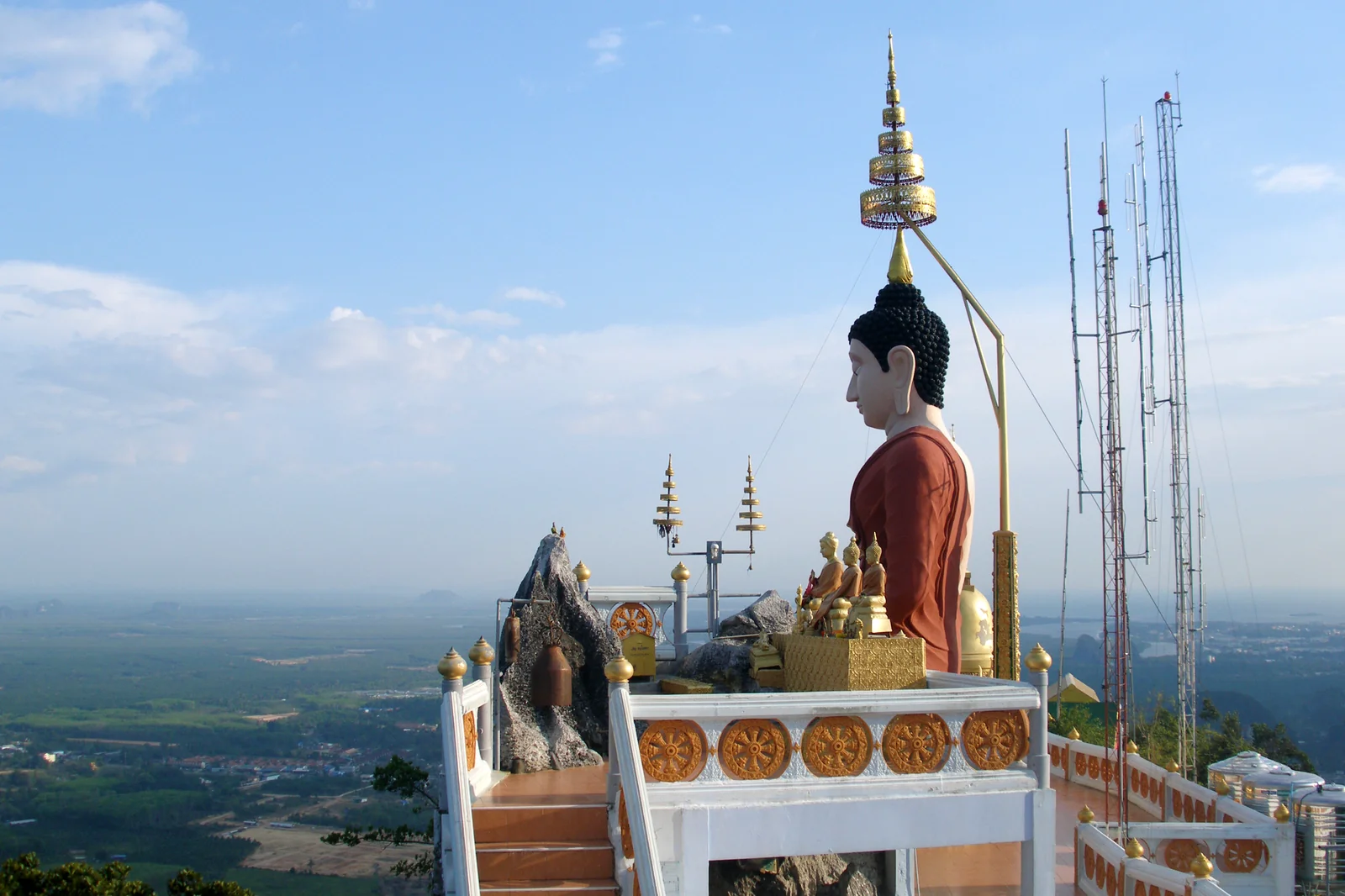
Krabi neighborhood guide, where each beach fits a different trip
Klong Muang
Klong Muang sits 15 km north of Ao Nang, separated by a forested headland. The Tubkaak is the anchor property here. The area trades nightlife and restaurant variety for genuine quiet. You’ll need a taxi or a car to leave the property. It works as a trip if the resort and the beach are what you came for, not Krabi town. The beach itself runs roughly 2 km of soft sand with no longtail engines disturbing the morning, and the sunset angle through the offshore islands is one of the strongest in the province.
Ao Nang
The main hotel strip, and most of this list. Sea Seeker, Panan, Centara, COSI, BlueSotel, Aonang Princeville, and Holiday Style all cluster here. The Centara has the strongest family programming on direct beachfront. Sea Seeker is the value pick under $50.
Railay
The peninsula has no road in. You arrive by longtail boat from Ao Nang, about 10 minutes and $3 to $4 a person. Railay Princess and Sand Sea are the two SHA picks here. Sand Sea sits on Railay West, the swimming beach. Railay Princess is central and within walking distance of both the East and West sides. Rock climbing on the peninsula is among the strongest in Asia, and this is the base for it. Phra Nang Cave Beach and the Princess Lagoon hike are both within 25 minutes on foot from either property, which is the access most Ao Nang visitors never get.
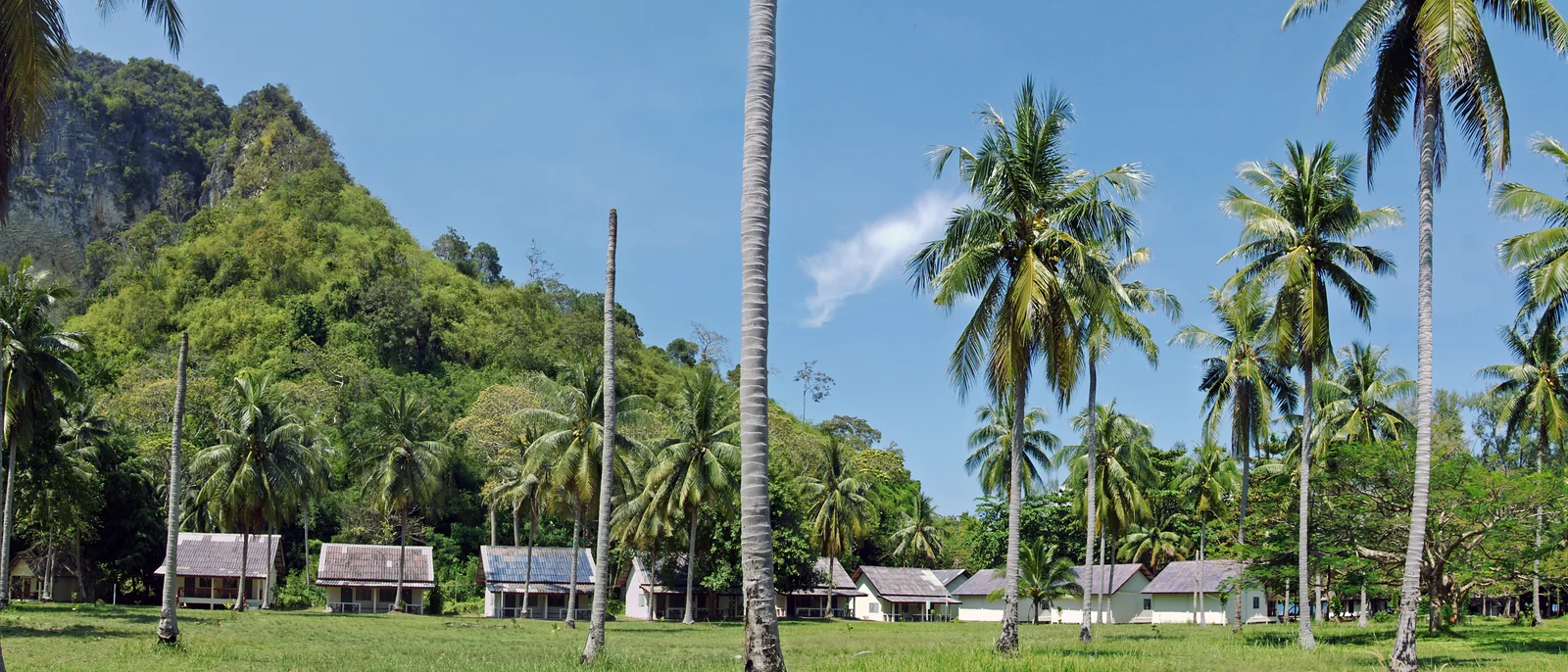
Getting to Krabi by plane, ferry, and between beach areas
Krabi has its own airport (KBV), about a 30 minute drive from Ao Nang. Bangkok to Krabi flights run hourly on AirAsia and Nok Air, with fares from $35 one-way (verified by SHA Thailand editorial, May 2026). Once you land, the moves between beach zones are predictable.
- Taxi from KBV airport to Ao Nang, 30 minutes: $17 to $23
- Taxi from Ao Nang to Klong Muang, 25 minutes: $14
- Longtail boat from Ao Nang pier to Railay, 10 minutes, continuous 8am to 6pm: $3 to $4 a person
Compare airport transfer options in advance for fixed pricing.
When to visit Krabi for the clearest seas and lowest rates
Krabi’s weather splits into two clear phases. The high season runs from November through April, with the December to February window producing the calmest Andaman water and the most consistent conditions for island days. Hotel rates peak across the Christmas and Chinese New Year windows, with The Tubkaak and Centara Ao Nang routinely sitting at $300 to $400 a night through that period. Booking 90 days ahead saves roughly 18 percent against the same room booked two weeks out, based on our internal price tracking across the 10 properties on this list.
May through October is monsoon. Rain comes in heavy bursts of about 30 minutes rather than full days, but the seas turn rough enough that the Phi Phi and Hong island day trips run a 30 to 40 percent cancellation rate. The trade is real, though. Rates at Sea Seeker, Panan, and COSI drop to the $30 to $50 nightly window, and Ao Nang’s restaurants and longtail captains have time to actually talk to you. If you book Klong Muang or Tubkaek in monsoon, the resort experience holds. If you book Railay, you may spend two days waterlogged.
The shoulder months, April and late October, sit in between. Songkran in mid-April fills Ao Nang with domestic travelers and triples local hotel demand for the window of four days. Plan around it or accept the price.
The split most people miss. Returning guests who came back a second time almost always change one thing: they stop trying to do everything from a single base. Two nights quiet at Klong Muang or Tubkaek, then two or three at Ao Nang for the dining and the island boats, beats any single-hotel upgrade we’ve seen. The transfer between zones is 25 to 45 minutes and resorts hold luggage, so the only real cost is booking the second hotel before you arrive.
How to combine zones on a single Krabi trip
If you have five nights or more, splitting across two zones improves the trip more than any single hotel upgrade we’ve seen. The pattern that works is simple. Two or three nights at Klong Muang or Tubkaek for the quiet front end, then two or three nights at Ao Nang or Railay for the dining and the island access. Transferring between zones takes 25 to 45 minutes by taxi or longtail. Resorts hold luggage if your second check-in is later in the day. For a day-by-day plan, see our guide to 3 days in Krabi, and for the activities to slot in, the best things to do in Krabi.
The opposite split also works for families. Anchor at Centara Ao Nang for the kids’ club and the family pool, then move to The Tubkaak for two nights of quiet at the end. Families with older children sometimes flip this order, opening the trip with the quiet stretch and ending it with the energy of the Ao Nang strip and the night market. Both versions assume you book the second hotel before arrival. Walk-in rates at the SHA properties run 20 to 30 percent above the advance rate.
For couples, three nights anchored at Railay followed by two nights at Klong Muang gives you both the dramatic limestone setting and a soft landing. Railay Princess and Sand Sea are the SHA picks on the peninsula. The Tubkaak handles the second half. The longtail from Railay back to Ao Nang pier costs the same $3 to $4 a person and runs until 6pm.
When the monsoon changes the Krabi calculation
The Andaman monsoon runs from May through October, with the heaviest rain in September and October. The practical effect on a Krabi trip is real but not as bad as it sounds. Mornings are mostly clear into the late morning. Afternoon storms arrive between 2pm and 4pm, last 90 minutes, and clear. Resort pool decks empty out for the storm and refill once the sun returns.
The water clarity around the islands drops sharply from June onward. The cleanest snorkel days at Phi Phi and Koh Hong land between November and April. From June to September the Koh Phi Phi speedboat tours cancel about one day in five for swell. Tour operators do not refund weather cancellations directly. Travel insurance covers the refund case for a cancelled tour, which matters more in monsoon months than in high season.
How we ranked these 10 SHA hotels across the four zones
We worked the wider field down to 10 with three filters, in order. First, current SHA status, the hygiene benchmark that gives this site its name. Second, a recent guest score of 8.4 or higher across a deep enough review base that the number means something, which removes properties carrying a high score on a thin sample. Third, real geographic spread across the four main zones, so the list serves an actual decision about planning a trip rather than stacking ten Ao Nang rooms that all blur together.
We weight recent editorial coverage on top of that. Time Out Krabi, Les Boutique Hotels, and the Condé Nast Traveller Thailand roundup all repeat the same upper tier of Phulay Bay, Rayavadee, Banyan Tree, and The Tubkaak, which lines up with the top of our list. For the value picks, recent guests and the rate patterns of the past 90 days both confirm that the $34 to $50 nightly floor at Sea Seeker, COSI, and BlueSotel is a real one, not a promotion that lands once and vanishes.
Two properties sit just outside the cut. Aonang Cliff Beach Resort holds SHA status, but recent guests in the rooms that face the road mention more traffic noise than the quieter blocks, so the room you draw matters more than usual. Krabi Resort has long tenure on the strip, and some guests feel the older room product reads a step behind the published photos. Both are reasonable holds if you find them at a steep discount. Neither is where we’d point you first. Planning other stops too? See our picks for the best hotels in Bangkok and the best hotels in Phuket.
Frequently asked questions
Which Krabi hotel has the best SHA rating?
Is Krabi or Phuket better for a Thailand beach trip?
Can I stay on Railay with SHA certification?
What is the best Krabi hotel for families?
Can I find a SHA-certified hotel in Krabi under $50 a night?
Full property review: Read our Banyan Tree Krabi review, the Tubkaek pick if you want a private pool villa away from Ao Nang.