The 13:30 Phi Phi Cruiser ferry leaves Tonsai Pier and reaches Rassada Pier in Phuket in about two hours for 450 baht ($14). That is the sailing to book if you are heading back to the Koh Phi Phi to Phuket route with a flight to catch. The speedboats are faster at 50 minutes to an hour, but they cost more and the reliable ones stop by mid-afternoon. The big ferry is the cheaper, steadier ride. The speedboat buys back an hour you may not need.
We mapped the return leg on time, cost, and the part nobody plans for, the transfer off Rassada Pier. The honest finding has three parts. The trip back runs on a flight clock, not a holiday one. The roughest water is September and October, not the boat type, and that is what decides whether you feel sick. The ticket is cheaper bought on Phi Phi than pre-booked through a Phuket agency. Below sits the schedule, the ferry-versus-speedboat call, the Rassada transfer, and the airport math.
Koh Phi Phi to Phuket ferry at a glance
- Big ferry duration: about 2 hours, Tonsai Pier to Rassada Pier
- Speedboat duration: 50 minutes to 1 hour
- Big ferry fare: 450 to 600 baht ($14 to $18) one way
- Speedboat fare: 755 to 950 baht ($24 to $29) one way
- Ferry operators: Phi Phi Cruiser, ChaoKoh, Andaman Wave Master, Chureang Travel
- Speedboat operators: Bundhaya, Kanichta, PP Sabai Marine, PP Cabana Express
- Departure pier (Phi Phi): Tonsai Pier (ท่าเรือต้นไทร). Some north-coast resorts use Laem Tong instead.
- Arrival pier (Phuket): Rassada Pier (ท่าเรือรัษฎา), east side, 4 km from Phuket Town
- Last reliable departure: 17:00 speedboat, 15:00 scheduled ferry
- Crossing distance: 42 km across the Andaman Sea
- Rassada to Phuket Airport: 33 km, 45 to 60 minutes by taxi, 700 to 900 baht ($21 to $27)
Big ferry or speedboat back to Phuket
Two boat types run the return. The big ferry is the steady, cheap option and it keeps sailing when the sea turns rough. The speedboat is faster and pricier, and it is the first service cancelled in bad weather. For the trip back, the decision is usually about your flight time, not your comfort. Pick the ferry unless you are short on hours before a Phuket departure. Heading the other way first? The Phuket to Koh Phi Phi ferry guide covers the outbound leg.
Big ferry, the steady choice
The scheduled ferry takes about two hours and costs 450 to 600 baht ($14 to $18). It has an air-conditioned cabin, an open top deck, a toilet, and a small snack counter. The ride is stable, which matters in the May-to-October monsoon when the swell builds. French travelers on the Routard forum describe the ferry as the calmer choice in rough seas, and it is the boat that still runs when the speedboats are grounded. Check current ferry times and fares before you leave the island.
Speedboat, the time-priority choice
The speedboat covers the same water in 50 minutes to an hour for 755 to 950 baht ($24 to $29). It earns its price only when you are racing a flight and the morning ferry has already gone. The tradeoff is the ride. Speedboats slam across the chop, and Chinese travel writers on SenseLuxury are blunt that the bounce is worst in September and October. If you are prone to motion sickness, the hour you save on a speedboat is the hour you spend feeling green.
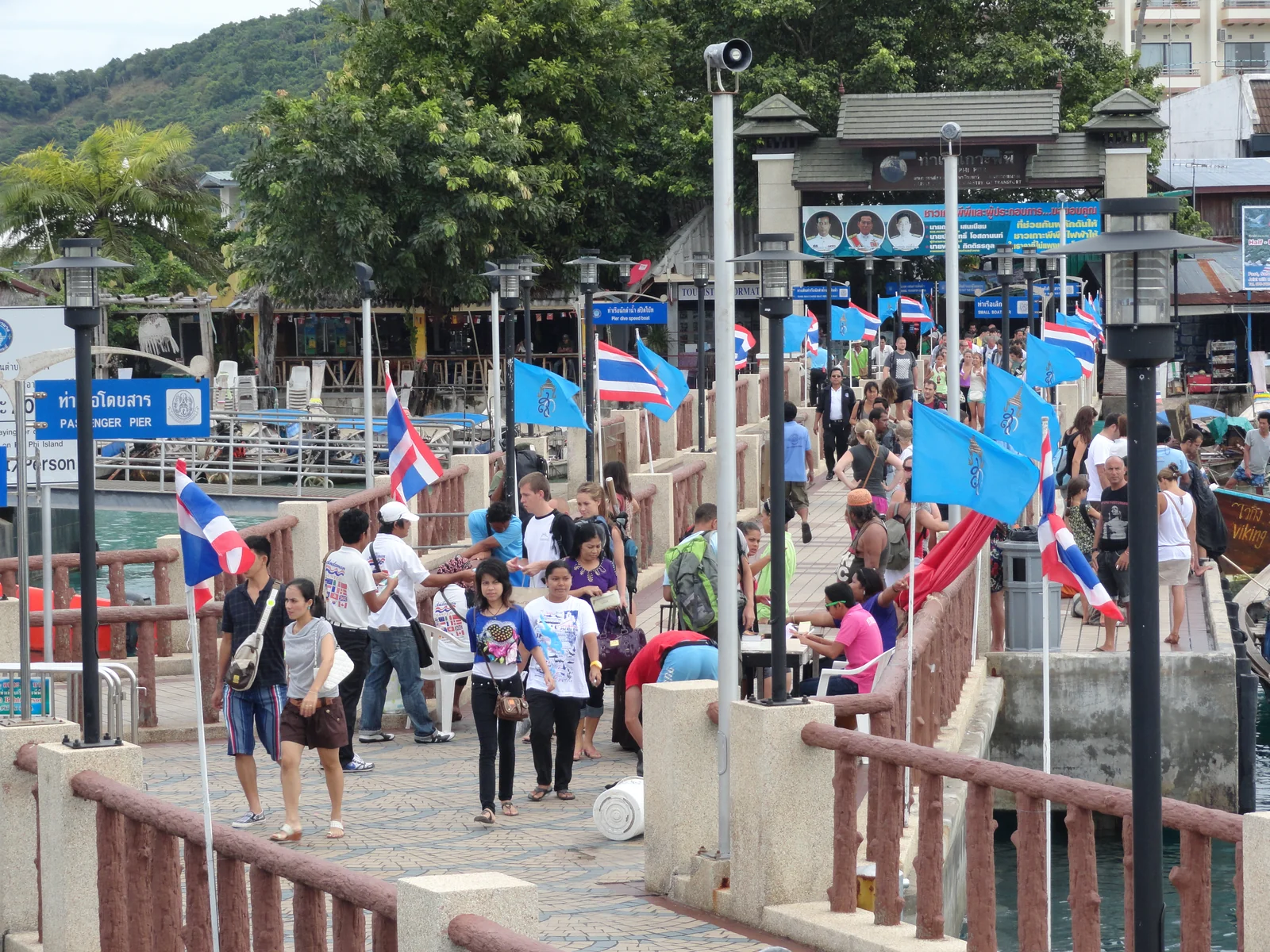 Photographer: Fabio Achilli. Source: Wikimedia Commons. License: CC BY 2.0.
The Koh Phi Phi to Phuket schedule and last safe departures
Sailings run from morning to mid-afternoon, then thin out fast. The first ferries leave Tonsai around 09:00 and the cluster of departures sits between 09:00 and 15:00. The last scheduled big ferry leaves at 15:00. Speedboats run a little later, with the last reliable service around 17:00, arriving Rassada near 18:00.
The window is the trap on the return leg. Miss the 15:00 ferry and only the speedboat tier remains for the evening. Miss the last speedboat and you are staying another night on Phi Phi, because there is no overnight boat. Book the morning if your Phuket flight is the same day, and treat the afternoon sailings as backup, not the plan.
What the crossing costs and where the ticket is cheaper
The headline fares are simple. Big ferry 450 to 600 baht. Speedboat 755 to 950 baht. The detail that saves money is where you buy. Thai travelers on Pantip point out that the return ticket bought on Phi Phi runs cheaper than the same leg pre-booked through a Phuket agency, where the markup can roughly double the price. If you did not lock a round trip on the way out, buy the return at a Tonsai counter or online direct rather than through a hotel desk.
One more line item catches people out. The Phi Phi national park and pier fees are paid on the island side, not on exit, so the boat fare back to Phuket is the only ticket cost on the day you leave. Budget for the Rassada taxi separately, because that is where the real spend hides. For the wider Andaman network, our guide to ferries in Thailand maps the Krabi, Lanta, and Samui crossings. The ferry between Phuket and Koh Yao Noi is a quieter island option from the same coast.
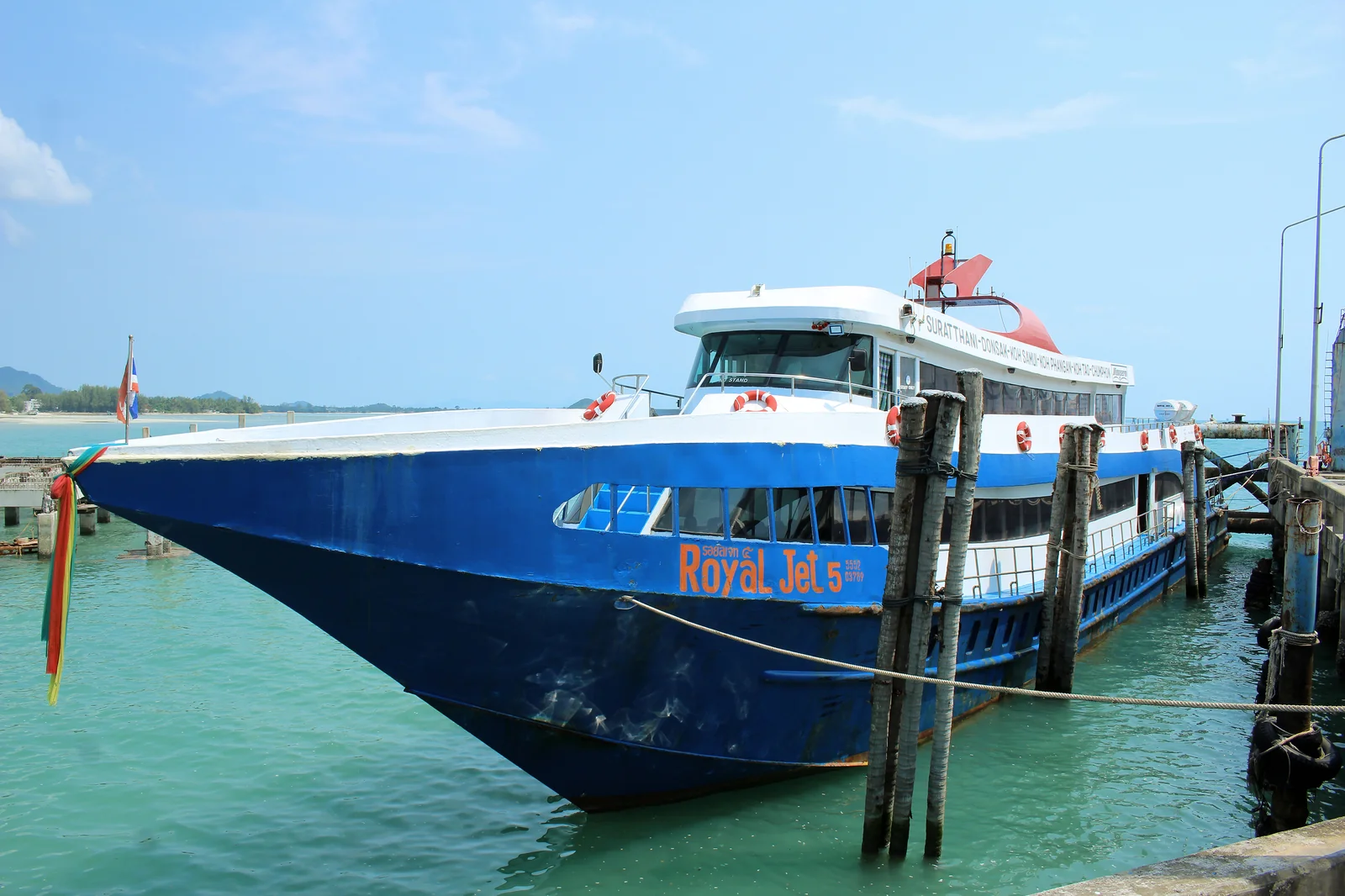 Photographer: Per Meistrup. Source: Wikimedia Commons. License: CC BY-SA 4.0.
Getting from Rassada Pier to your Phuket hotel
Rassada Pier has no public transport. Chinese travel guides flag this clearly, because the pier sits on the quiet east side of the island and the only way out is a taxi or a pre-booked transfer. Plan the onward leg before you step off the boat, or you will be negotiating with drivers on the dock with your bags in hand.
Typical taxi fares from Rassada are worth knowing in advance.
- Phuket Old Town: 200 baht ($6), about 10 minutes
- Patong: 700 baht ($21), 45 to 60 minutes, 21 km
- Kata or Karon: 800 to 1,000 baht ($24 to $30), 55 to 70 minutes, 25 km
- Phuket Airport: 700 to 900 baht ($21 to $27), 45 to 60 minutes, 33 km
Many ferry tickets bundle a shared minivan transfer to the main beach areas for 200 to 300 baht ($6 to $9) per seat. It is slower than a private taxi because it drops other passengers first, but it is the cheaper, simpler option if you are not on a tight clock.
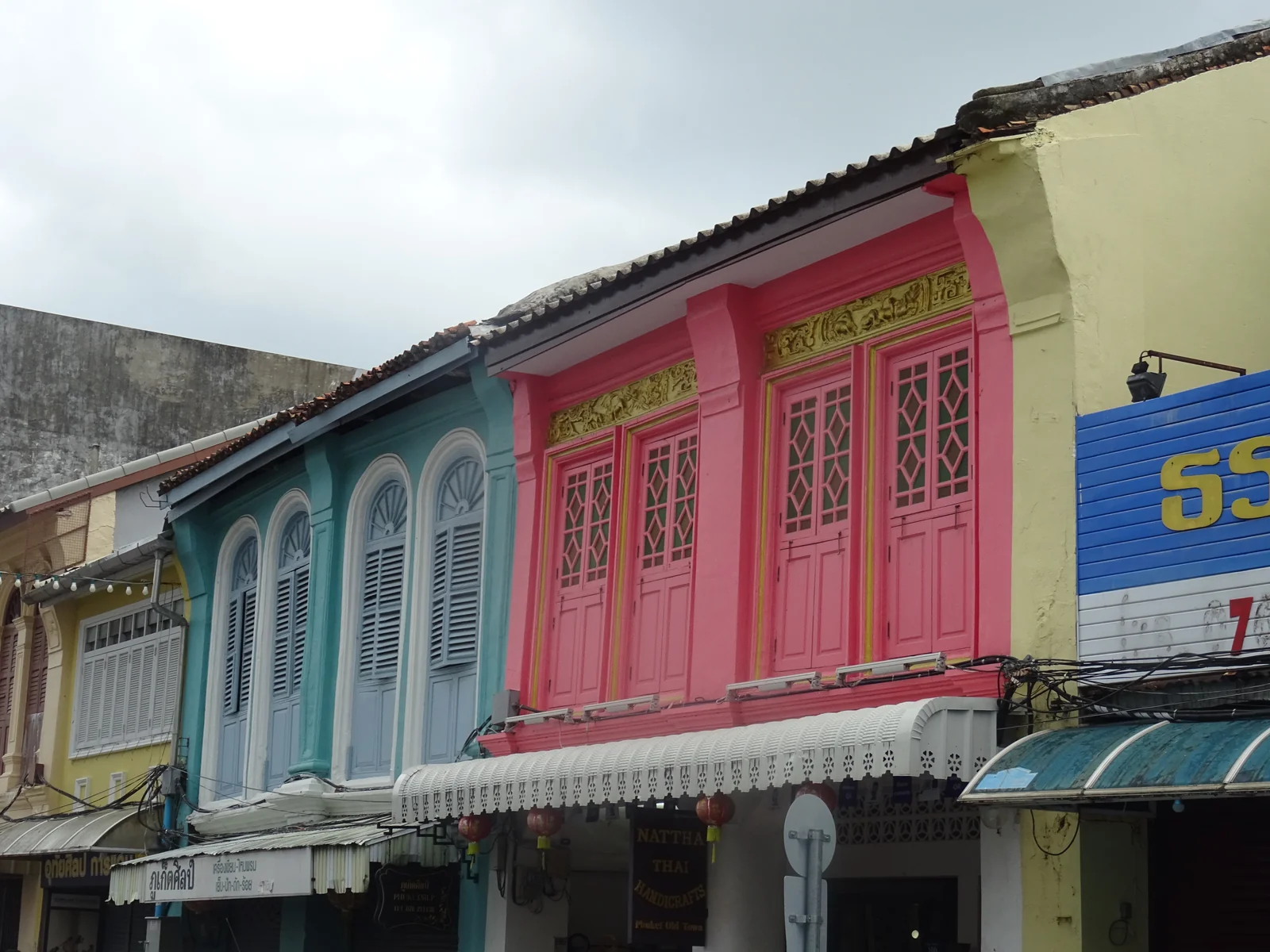 Photographer: Christophe95. Source: Wikimedia Commons. License: CC BY-SA 4.0.
Catching a flight out of Phuket the same day
The return ferry is usually an airport run, so work backward from your flight. The last scheduled ferry leaves Tonsai at 15:00 and reaches Rassada around 17:00. Add 45 to 60 minutes for the taxi to Phuket Airport, then the standard check-in buffer. That puts the earliest comfortable departure at roughly 19:30 to 20:00 if you take the afternoon ferry.
For a midday or early-afternoon flight, take a morning ferry or speedboat. Compare current Phuket flight times before you commit to a sailing. The 09:00 ferry lands you at Rassada around 11:00, at the airport by noon, with room for a 14:00 or later departure. Do not cut it to the speedboat in monsoon season, because that is the service most likely to be cancelled on the morning you need it.
Book the morning sailing for any same-day flight, even if your departure is in the evening. The afternoon boats leave no margin for a delayed crossing, a slow Rassada taxi, and the airport queue stacking up at once.
When the sea is roughest and how to avoid feeling sick
The boat type matters less than the calendar. September and October bring the biggest swell on the Andaman, and Chinese and German reviewers both single out those months as the rough ones regardless of whether you take the ferry or the speedboat. If your dates are flexible, the November-to-April high season is calmer water.
Three things help on a rough crossing. Sit midship on the lower deck where the engine vibration and the pitching are weakest. Take a motion-sickness tablet 30 minutes before boarding rather than after you feel it. Board last, not first, because Chinese travelers warn that early-boarded luggage ends up crushed at the bottom of the pile and can come off the boat damaged. One German tip worth packing for, the cabin air-conditioning runs cold on the two-hour ferry, so keep a layer in your daypack.
Frequently asked questions about the Koh Phi Phi to Phuket ferry
How long does the ferry from Koh Phi Phi to Phuket take?
How much does the Koh Phi Phi to Phuket ferry cost?
What time is the last ferry from Koh Phi Phi to Phuket?
Which is better, the ferry or the speedboat?
Which pier does the ferry use in Phuket?
How do I get from Rassada Pier to my hotel?
Can I take the ferry and still catch a flight the same day?
When is the sea roughest on the crossing?
Where to stay in Phuket after the ferry
Three SHA-certified picks for the night you land at Rassada, from a beach base to a town-side stopover near the pier. For the full list, see the best SHA hotels in Phuket roundup. Once you settle in, our 3 days in Phuket itinerary lays out the beaches and the old town. Staying out on the islands instead? See where to stay in Koh Phi Phi and the Krabi coast.