Thailand has two separate coasts of islands, and they do not keep the same calendar. One side is dry and easy to hop while the other is shut down by wind and cancelled boats. The Andaman chain, Phuket down through Phi Phi, Koh Lanta and Koh Lipe, runs cleanly from November to April. The Gulf triangle, Koh Samui, Koh Phangan and Koh Tao, stays hoppable from about February to September.
So the first island hopping decision is not scenery against parties. It is which coast is out of the monsoon the week you land. The two sides sit more than six hours apart with no boat between them. One trip of a week covers one coast, not both. Sort your dates first, then pick the routes below. Check current crossings between the Gulf islands to see what is running in your month.
We plan almost every Thailand island trip the same way. Lock the coast to the season, then chain three islands on one operator’s morning boats. What follows is how each coast links up, what the crossings actually cost, and the calendar that decides which side you should even book.
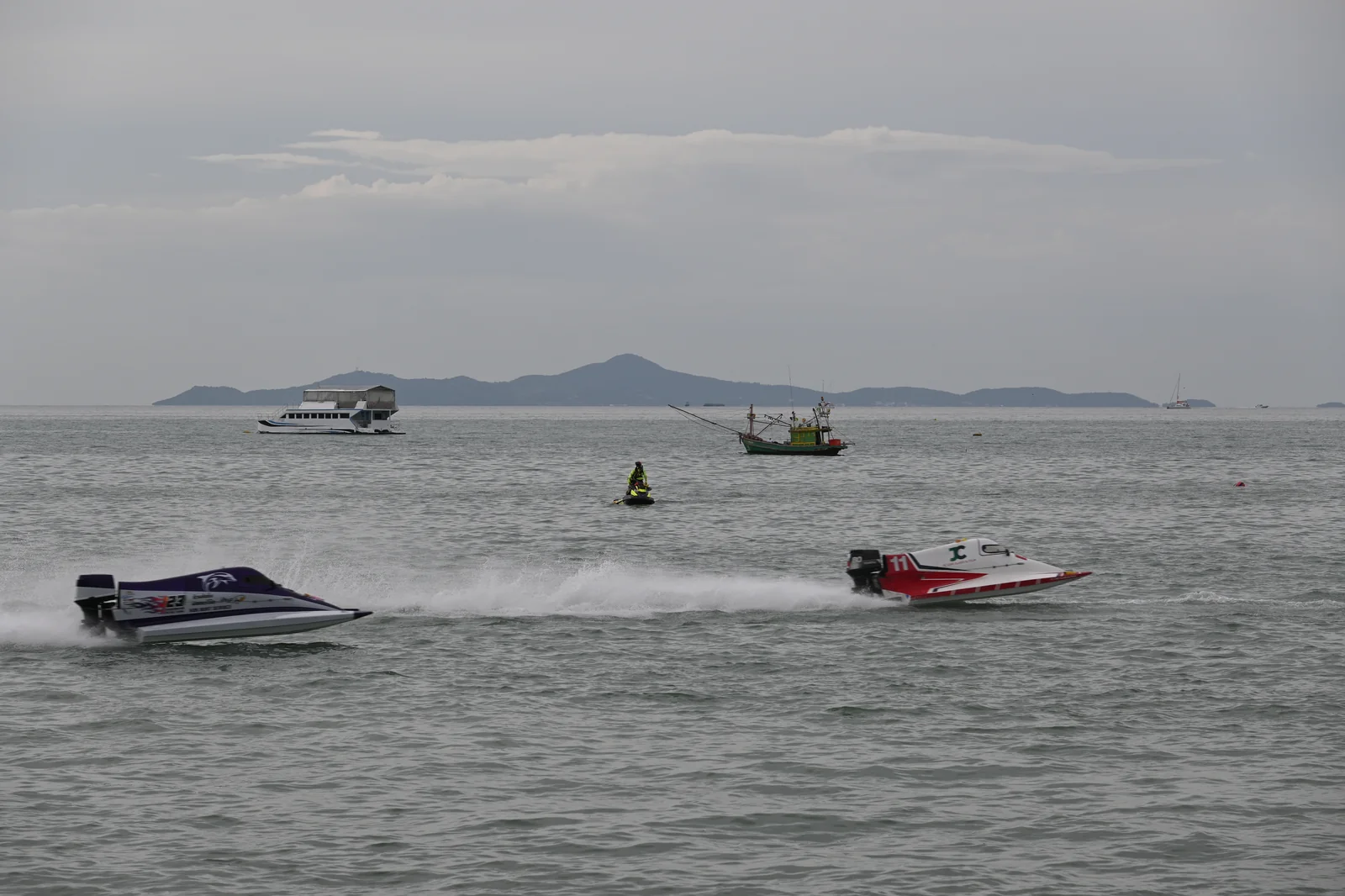 Photographer: PattayaPatrol. Source: Wikimedia Commons. License: CC BY-SA 4.0.
Why the first island hopping choice is a coast, not an island
Start with the map, because it settles the trip before you book a bed. Thailand’s islands fall into two clusters that do not connect by sea. The Gulf sits on the east, the Andaman on the west, and the mainland runs between them. There is no island to island ferry across that gap.
That is why dates beat taste here. Most guides sell the choice as calm scenery against loud parties. The honest version is a weather problem. Whichever coast is out of the monsoon in your travel month is the coast you hop. Here is how the two circuits compare:
- Gulf triangle: Koh Samui, Koh Phangan, Koh Tao. Hoppable roughly February to September. The cheapest and tightest loop, good for a first trip.
- Andaman chain: Phuket, Phi Phi, Koh Lanta, Koh Lipe. Best November to April. Wins on limestone scenery and clear water for diving.
- The gap: more than six hours and a mainland transfer separate the two coasts. Plan on one, not both, inside a single week.
- Both coasts: possible with two weeks or more, but you cross back through the mainland to switch sides.
Get that order right and the rest is easy. Pick the coast that is dry, then the islands sort themselves into a natural line of morning boats. Get it wrong and you spend the trip watching a pier board flash cancelled.
The Gulf triangle, Samui to Phangan to Tao on one ferry loop
The Gulf triangle is the loop we send most first timers to. Three islands, short crossings, frequent boats, and the lowest fares of any Thai island circuit. Koh Samui is the arrival hub because it is the only one of the three with an airport. From there the boats run north to Koh Phangan, then on to Koh Tao.
One fast catamaran operator ties the whole loop together from Maenam Pier on Samui, with several morning departures. The crossings and rough fares run like this:
- Samui to Phangan: 30 to 45 minutes, from about 280 THB ($8).
- Phangan to Tao: around 45 minutes, from about 420 THB ($12).
- Samui straight to Tao: 1.5 to 2 hours, from about 600 THB ($17).
There is a steadier alternative on the busiest leg. A larger ferry runs Samui to Phangan from Bangrak Pier, near Big Buddha, at a similar low fare. It is slower than the catamaran but rides flatter, which matters if anyone in your group turns green on boats. Reviewers who get seasick consistently prefer it for that first hop. Compare the boats on this crossing before you commit to one pier.
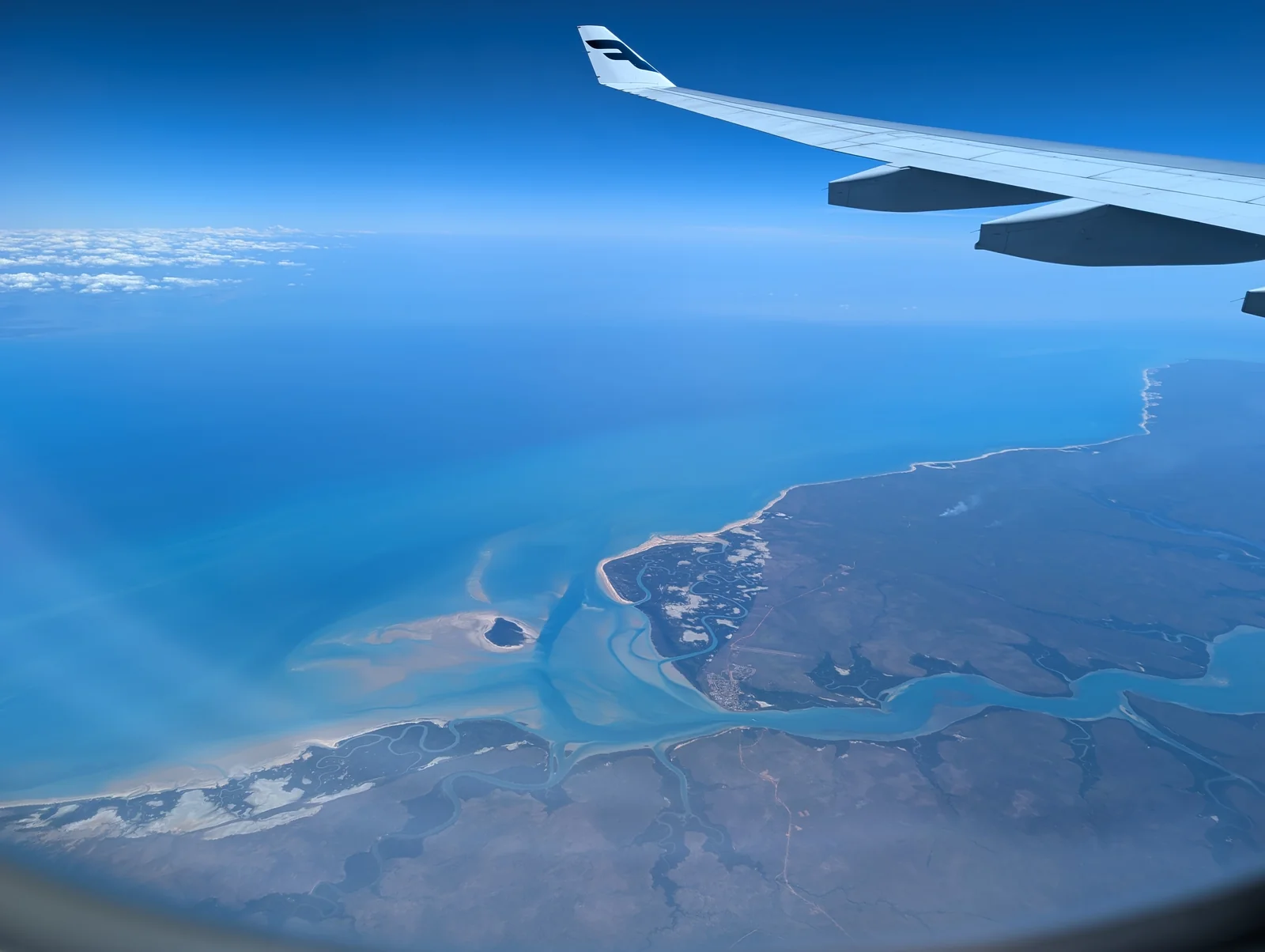 Photographer: Tej Bhat. Source: Wikimedia Commons. License: CC BY 4.0.
The catch on this loop is Koh Tao. The open water leg out to it gets genuinely rough from May to October in the southwest monsoon. Guides on Samui flatly advise taking motion sickness tablets about 30 minutes before you board. The smooth crossing that operators promise really only holds on the Samui to Phangan hop and in the calmer months.
Koh Samui is also where the emerald lagoons of Ang Thong come into play. A single speedboat day tour leaves around 08:30 from Samui or Phangan, from about $45 with the park fee, kayaking and snorkeling stops before it returns the same afternoon. There is no scheduled public ferry to Ang Thong and no way to sleep there, so unlike the three main islands you cannot base yourself in the park. It also closes during the roughest stretch, usually November into the middle of December. Slot it as a day out from Samui, not a stop on the loop. Find a marine park day tour if the lagoons are on your list.
The Andaman chain, Phuket to Phi Phi to Koh Lanta and down to Koh Lipe
The Andaman side trades the tight Gulf loop for scenery and distance. This is the coast of sheer limestone cliffs and the clearest water in the country. It runs as a line rather than a circle. The route heads south from Phuket through Phi Phi and Koh Lanta. For the committed, it carries all the way to Koh Lipe near the Malaysian border.
Rassada Pier on Phuket is the northern start. From there the ferries and speedboats step down the chain. The rough times and fares in high season:
- Phuket to Phi Phi: about 2 hours, 350 to 500 THB ($10 to $14), with four to six departures a day in peak season.
- Phi Phi to Koh Lanta: around 1.5 hours, 250 to 350 THB ($7 to $10), on a twice daily high season service into Saladan Pier.
- Koh Lanta to Koh Lipe: 4 to 5 hours, 800 to 1,200 THB (about $23 to $35), high season only.
The far south finale is the one to plan around. The direct Lanta to Lipe boat is one of the longest and most weather exposed crossings on the coast, and it mostly runs from November to April. Outside those months you are forced onto slower routes with several transfers through the mainland pier at Pak Bara instead. Check the Lipe crossing schedule before you build the far end of the chain.
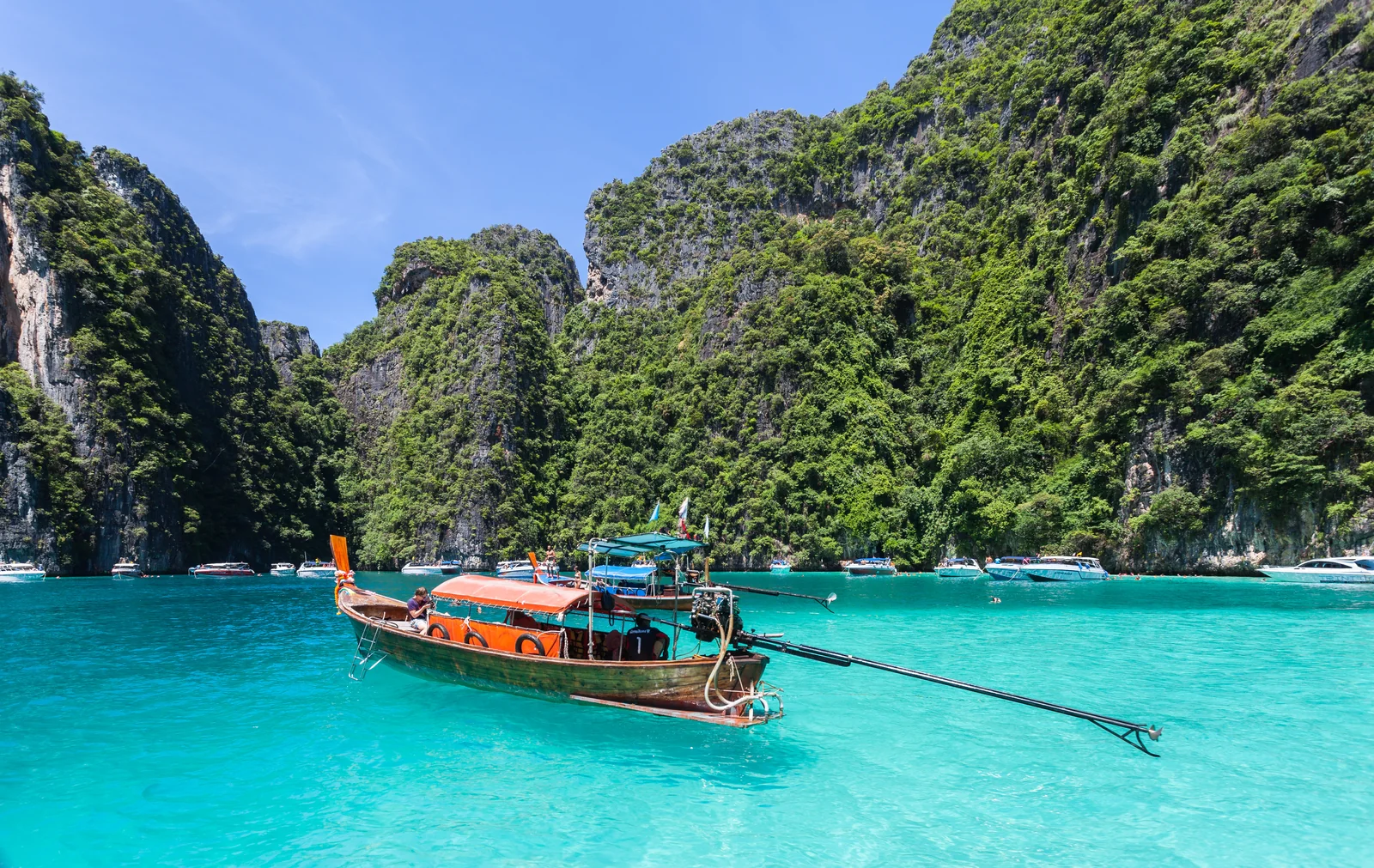 Photographer: Diego Delso. Source: Wikimedia Commons. License: CC BY-SA 3.0.
The honest warning on the Andaman is the monsoon. The entire chain runs primarily October to May. From June to September the southwest monsoon frequently cancels the Phuket to Phi Phi and the southbound Lanta legs in rough weather. A wet season Andaman plan can leave you stuck at a pier waiting on boats that simply do not sail that day. This is the single most common way island trips fall apart.
The monsoon calendar that decides which coast is even hoppable
This is the section to read before you book flights. The two coasts run opposite monsoons, so there is no single best month for all of Thailand. There is only the best month for the coast you want. Match your dates to the right side and the ferries take care of themselves.
- November to April: Andaman high season. Phuket, Phi Phi, Lanta and Lipe all run reliably. The Gulf is fine too for much of this stretch.
- February to April: the sweet spot. Both coasts are dry at once, so you get a real choice rather than a forced one.
- May to September: Andaman low season with frequent cancellations. Shift to the Gulf triangle, which holds up through most of this window.
- October to November: the Gulf gets its own wettest stretch and heavy rain, so the Andaman is the safer bet as it reopens.
If your dates are fixed, let them pick the coast and stop agonizing over vibe. If your dates are open, February and March are the two months when the whole country cooperates. For the wider seasonal picture across the mainland too, our guide to the best time to visit Thailand breaks it down region by region.
Ferry operators, piers, and the through tickets that include pier transfers
You almost never need a tour to move between the islands. Scheduled boats do the work daily, and the smart move is to book a through ticket that bundles the pier transfer. That single ticket covers the taxi or minibus from your hotel to the pier, so you skip haggling a fare at each end. Reviewers flag those hidden taxi costs as the usual way a cheap ferry turns pricey.
A few piers are worth knowing by name. In the Gulf, that is Maenam and Bangrak on Samui, Thong Sala on Phangan, and Mae Haad on Tao. On the Andaman, it is Rassada on Phuket, Saladan on Lanta, and Pak Bara on the mainland for Lipe. Check in at the pier, collect your sticker and luggage tag, and take a morning boat wherever you can. Afternoon crossings are the first to feel the weather.
Getting into the Gulf loop in the first place is its own small choice. Koh Samui has the only airport in the triangle, so the fastest entry is to fly straight in and start the loop the same day. That speed is expensive, because one carrier holds a near monopoly on the Samui airport and prices to match. Cost minded travelers often fly into cheaper Surat Thani on the mainland instead, then add a bus and ferry transfer across. Compare fares into Koh Samui against the mainland option before you decide. Coming down overland is cheaper. Our guides to reaching Koh Tao from the mainland and the Koh Phangan crossing map the slower routes. The short Chumphon ferry to Koh Tao is the fastest boat in.
Book the ferry as a through ticket that names your hotel pickup, not just the boat. The base speedboat fare looks cheap, but a separate taxi to the pier at each island quietly doubles it. A bundled ticket fixes the pickup and the transfer in one price, and it holds your seat on the morning departure, which is the one you want in any month with weather. Take the earliest boat you can and keep the afternoon as a buffer for delays.
How many days you need and what a week of hopping actually costs
A realistic minimum is seven days for one coast. That is enough to link three islands, say Samui, Phangan and Tao, without rushing the crossings. With 10 to 14 days the pace eases and you can fold in day tours like Ang Thong or a dive course on Tao. Two weeks is the floor if you insist on covering both the Gulf and the Andaman, because you lose the better part of a day switching coasts through the mainland.
On cost, budget at least $500 a person for a week and the Gulf loop will usually come in under that. The rough breakdown per traveler:
- Ferries: $20 to $30 every couple of days between islands.
- Beds: from about $50 a night for a solid mid range room, less for hostels and fan bungalows.
- Food: around $20 a day eating a mix of markets and casual restaurants.
- Day tours: roughly $45 for a marine park speedboat trip when you add one.
The Gulf triangle is the cheaper circuit on every line of that list. The Andaman costs more per crossing and pushes accommodation up in Phi Phi and Phuket. If budget is the deciding factor and your dates allow it, start with the Gulf. If your dates land November to April and scenery is the point, the Andaman earns the higher spend. To fold Samui into a wider plan, our three days in Koh Samui itinerary sets the pace on the ground.
Where to stay on Koh Samui between the ferry crossings
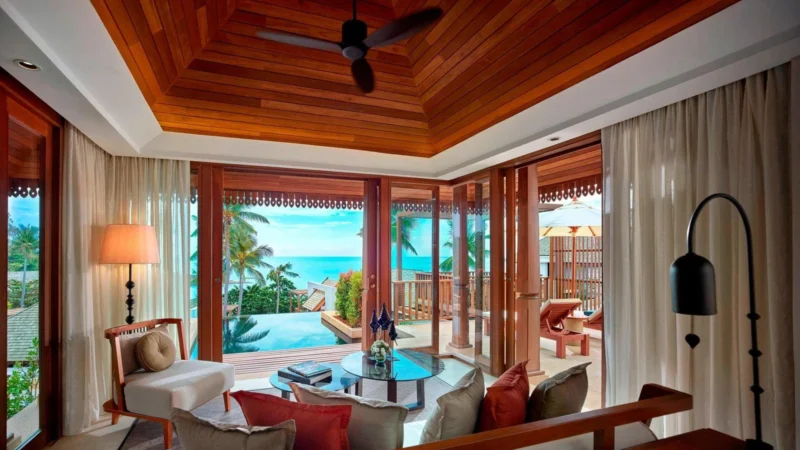
Koh Samui is the natural base for the Gulf loop, since it is the arrival airport and the pier hub for Phangan and Tao. Book your first and last nights here and treat the other two islands as hops out and back. All three below sit near the Bophut and Chaweng piers, so you are a short ride from the morning boats.


For the full picture on how we test the crossings and rate the operators we recommend, see how we review the routes across Thailand.