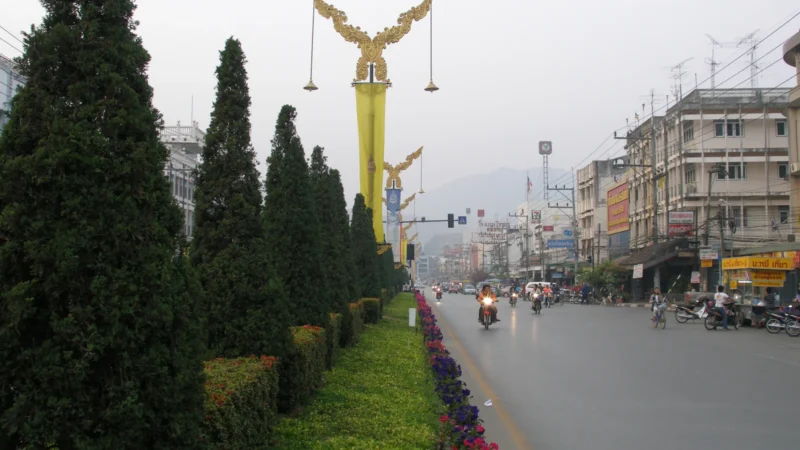
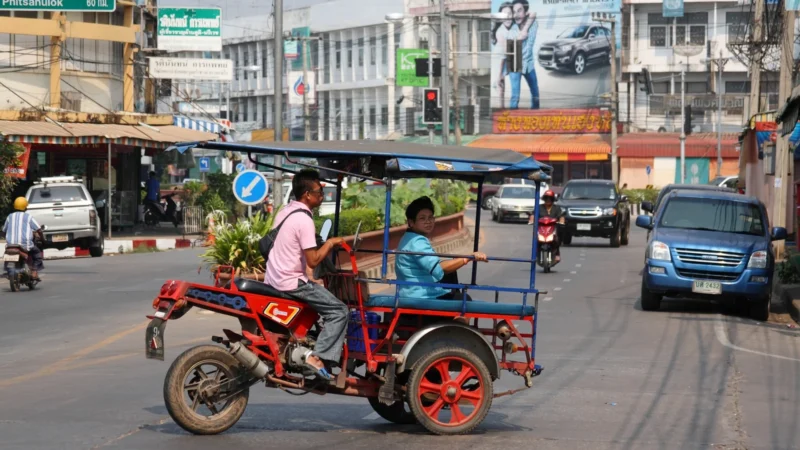
The choice between a plane, a train, a bus and a boat in Thailand is not a mood. Every overview sorts the modes by feeling. Plane for speed, train for romance, bus for budget, boat for islands. That framing falls apart the moment you price a real route. The mode that wins is the one the distance and the fare gap pick for you, and the answer changes corridor to corridor.
So treat this as a decision map, not a brochure. For each mode we give the break even, the real fare in baht and dollars, the travel time, and the failure mode nobody prints on the ticket. If you take one thing from this guide, read the corridor you are actually traveling and skip the rest. Thailand is the easiest country in the region to move around. There is a legitimate option on almost every route, so the job is picking the right one, not finding one at all.
Why the mode is a per route decision, not a vibe
Start with the one number that decides most trips. Above roughly six hours of road distance, a domestic flight wins outright, because the drive eats a working day and the ticket often costs about the same. Below three hours, the flight loses, because airport check in and the transfer to the terminal erase the speed the ticket implied.
Between those two lines sits the interesting middle, where the fare gap does the deciding. If the flight costs more than about $45 above the sleeper train on the same corridor, the overnight train pulls ahead, because it also deletes a night of hotel. That is the whole calculation. Distance sets the frame, the fare gap breaks the tie, and the mood you are in has nothing to do with it.
The rest of this guide runs each mode through that filter. If you want the full route by route trip shape rather than the mode logic, our Thailand itinerary frameworks lay out how the legs stitch together over 3 to 21 days.
 Photographer: Christophe95. Source: Wikimedia Commons. License: CC BY-SA 4.0.
When a domestic flight is worth it, and when it wastes money
Flights earn their place on the long hops where distance beats everything. Bangkok to Chiang Mai runs about 1 hour 20 minutes in the air. Bangkok to Phuket is roughly 1.5 hours. Booked two to three weeks ahead, the domestic carriers price these from about 800 THB (23 USD). That is the point at which any road option over six hours stops making sense. You can compare current fares before you commit to a slower mode.
The catch is the headline fare is bare. It buys the seat and nothing else. Once you add the extras and the ground time, the math tightens:
- Checked bags, seat selection and any food are paid separately on the low cost carriers.
- Airport check in and security cost 1 to 2 hours before the plane even moves.
- Most cheap flights leave from Don Mueang, which is a long transfer from central Bangkok.
As one guide puts it, the low cost carriers are cheap because they provide the bare minimum, and you pay for food, drinks and any checked baggage (Nomadasaurus). So the rule holds. On a corridor over six hours by road the flight wins. On a short hop the door to door time can erase the advantage the ticket price promised.
Is the overnight sleeper train worth 12 hours to save a hotel night
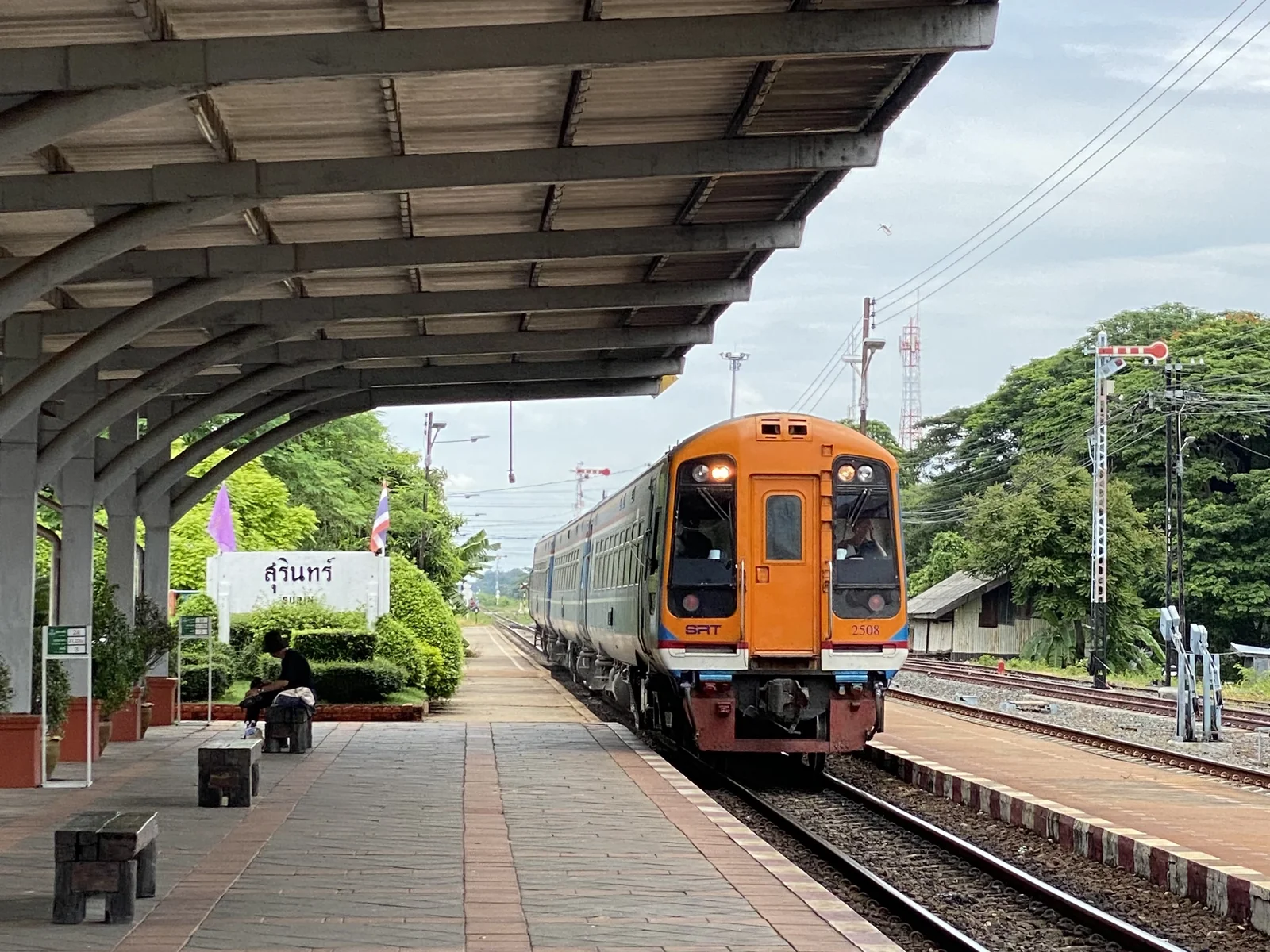
The sleeper is the one mode that turns travel time into saved money. The Bangkok to Chiang Mai overnight service runs 12 to 14 hours from the central terminal at Krung Thep Aphiwat. A berth in a second class air conditioned car costs 600 to 900 THB (from about 9 USD). That is less than a same day flight once you count the night of accommodation the train replaces, and the ride is safer and more scenic than the road. Check the current schedule and seat classes before you book a hotel for that night.
Two limits keep the train from being the default. Thai rail runs late often enough that the printed arrival is a hope, not a promise. Trains are often late or the journey takes longer than expected in Thailand, even where trains are punctual elsewhere (Nomadasaurus). The network is also thin. It covers only four main lines at a few departures a day. Many popular routes have no train at all, which pushes you back to a bus or a flight.
Book the sleeper berths early, especially the lower bunks. They sell out first because they are wider and have a window. If the overnight train is full, the corridor still works as a value pick by day, but you lose the saved hotel night that made the math attractive.
 Photographer: Reversemos.sapanaht. Source: Wikimedia Commons. License: CC BY-SA 4.0.
VIP buses and government coaches, the cheapest way to reach anywhere
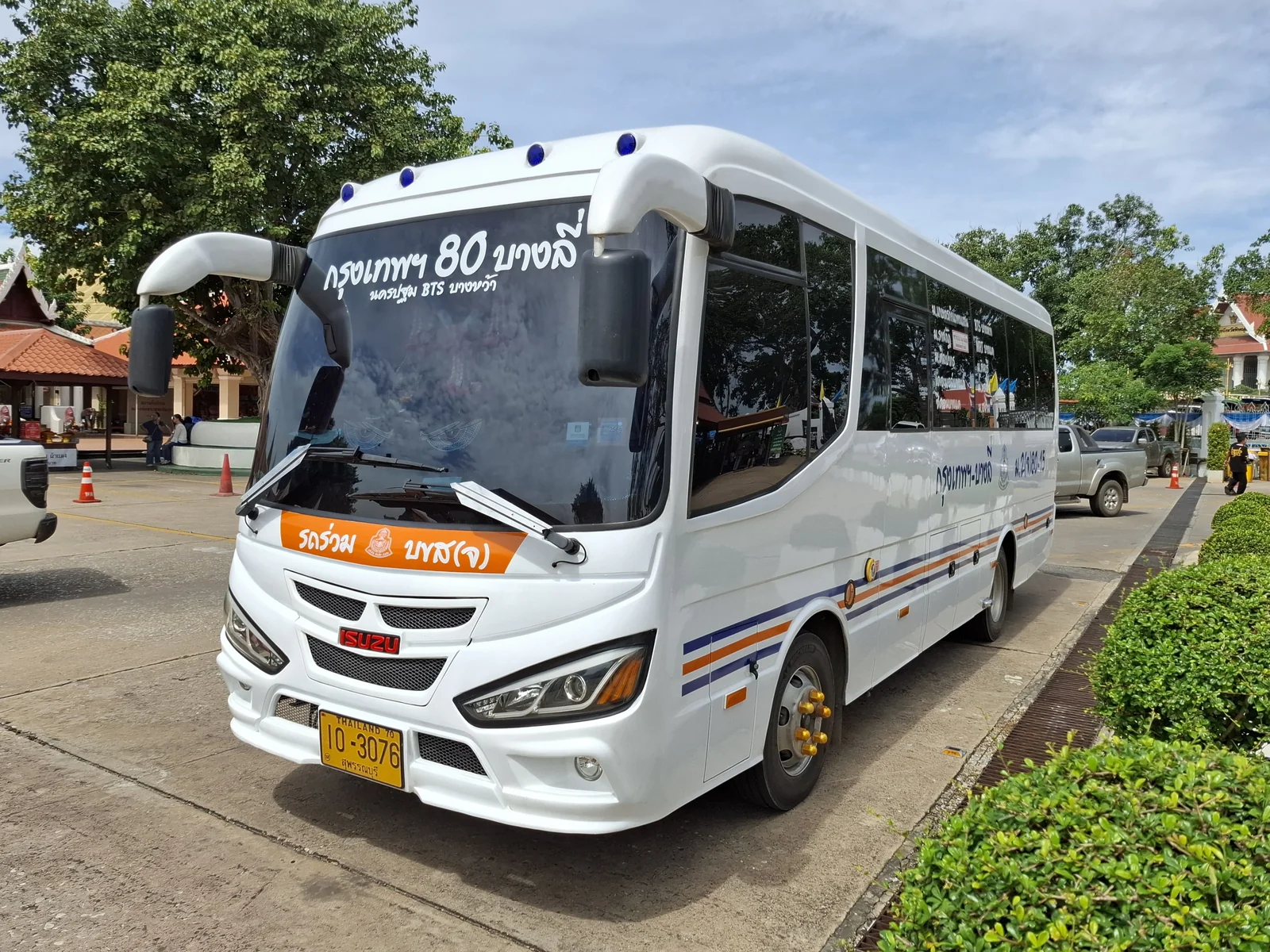
The bus is the mode that goes everywhere the other three cannot. Long distance routes run $15 to $45, from about 6 USD, and the state coaches undercut the private operators on most corridors. A bus reaches far towns that no plane and no train serves, which makes it the default for anywhere off the four rail lines. From Bangkok the northern and southern services leave from the Mo Chit and Sai Tai Mai terminals. You can compare coach operators on the busier corridors.
The trade off is speed and one recurring hazard. Buses are the slowest long distance option, and the warning that comes up again and again is theft on the overnight services. Bags stored in the hold are separated from you for hours. As one guide bluntly notes, it is not unheard of to show up at your destination and find all the bags have been completely cleaned out (Nomadasaurus). So anything valuable travels in the bag on your lap, never in the luggage bay under the coach.
For the specific northern run, our breakdown of the northern coach services covers the operators, seat classes and departure windows in detail.
Minivans are faster than the bus, but the rot tu trade off
The minivan, or rot tu, is the practical pick for short and mid distance legs under about three hours. It runs more often than the inter town bus and covers the ground faster, priced from around 200 THB (5 USD). Routes like Chiang Mai to Pai or an airport transfer into town are where it beats every alternative. You can check minivan times on those regional corridors.
The cost of that speed is the driving. Aggressive pace and hard braking draw constant complaints, and drivers can be aggressive rather than relaxing to ride with (Thai Holiday Guide). The paired hazard is at the terminal, where touts claim your bus is cancelled to funnel you onto a pricier van. Keep the seatbelt on, avoid the front row if speed worries you, and ignore anyone telling you the scheduled bus just vanished.
The two legs travelers ask about most both work well by van. See the Pai minivan run for the 762 curves north, and the Pattaya minivan route for the fast hop to the coast.
The rot tu terminal scam follows a script. Someone in a lanyard tells you the government bus is full or cancelled, then walks you to a van counter charging more. The scheduled bus is almost always running. Buy bus tickets at the official terminal window, not from a person who approaches you on the concourse.
Ferries and the mainland to island legs no plane or train covers
Every Thai island trip ends with a boat. Crossings run $6 to $24, from about 6 USD. The fast catamarans and larger car ferries link the Gulf triangle of Samui, Phangan and Tao out of the Chumphon, Surat Thani and Donsak piers. On the Andaman side the boats run from Phuket and Krabi to Phi Phi, Lanta and Lipe. Through tickets bundle the pier transfer, so the boat is the only sensible way onto most islands. Check the crossing times and operators before you lock a plan.
The one thing that will cancel a plan is weather. The Andaman ferries are seasonal. The smaller island services to Koh Lipe and Koh Lanta shut down through the May to October southwest monsoon on rough seas. A wet season island plan on the west coast can be cancelled the day you travel, with no boat running at all (Thai Holiday Guide). The Gulf side keeps running more reliably in those months, which is why Samui and Phangan hold up better in the rainy season than Phi Phi does.
If islands are the point of the trip, plan the sequence with our island hopping guide, which maps the piers and the boat legs between them.
 Photographer: Patiparn.Nice2002bkk. Source: Wikimedia Commons. License: CC0.
Getting around town with the BTS, MRT and Grab instead of a car
In town you do not need a rental, and most guides actively steer you away from one. In Bangkok the Skytrain and the metro run roughly 06:00 to midnight every few minutes and skip the traffic entirely. The Chao Phraya Express Boat crosses the riverside for about $1. When you leave the rail, book a Grab so the price is fixed before you get in.
The reason to fix the price is the meter. The rail only covers central Bangkok. The moment you leave it you are back on the roads, where some drivers still take tourists the long way and charge an arm and a leg (Nomadasaurus). In Chiang Mai, Phuket and the provinces the same logic applies, with songthaews for cheap shared hops and a booked car for anything longer. For a day tour or a guided trip out of town, compare seat prices rather than negotiating at the curb.
Where to base yourself for a Thailand trip
There is no single hotel base for a country this size, because the mode logic assumes you move between hubs rather than settle in one. Most itineraries anchor on Bangkok for the first nights. From there, Chiang Mai in the north or a Gulf island in the south makes the second base. You pick the sleeper, the flight or the ferry for the leg between them. For how to sequence those bases against the transport above, start with our Thailand itinerary frameworks, then set the calendar around the ferry seasons using when to visit Thailand.
Frequently asked questions about getting around Thailand
What is the best way to get around Thailand?
Is it cheaper to fly or take the train in Thailand?
Are trains or buses better for getting around Thailand?
Are minivans in Thailand safe?
Do you need to rent a car to travel around Thailand?
How much does it cost to travel around Thailand?
We rate transport the way a traveler actually decides it, corridor by corridor against distance, fare and reliability, not by which mode sounds nicest. See how we test and rank for the method behind these calls.