Bay 7 at Chiang Rai Bus Terminal 1 is the whole answer to this route. A seat on the Mae Sai bus costs 39 baht at the window, with no reservation and no booking fee. The English booking layer prices the same 62 km at close to a thousand.
That gap is the first of three things this corridor gets wrong online. The second is which terminal you walk into. The third is the border, and it is the one that decides what time you need to be awake.
Before you fix a departure, check what is running on the corridor today. Counter boards and online inventory describe two different products on this road, and the price follows the channel rather than the seat.
So the local bus works for almost everyone, and the only real decision left is the clock. Take it early if you want the Golden Triangle loop in the same day. Skip the trip entirely if you booked Mae Sai as a visa run, because that door is shut.
 Photographer: Vyacheslav Argenberg. Source: Wikimedia Commons. License: CC BY 4.0.
Chiang Rai to Mae Sai at a glance
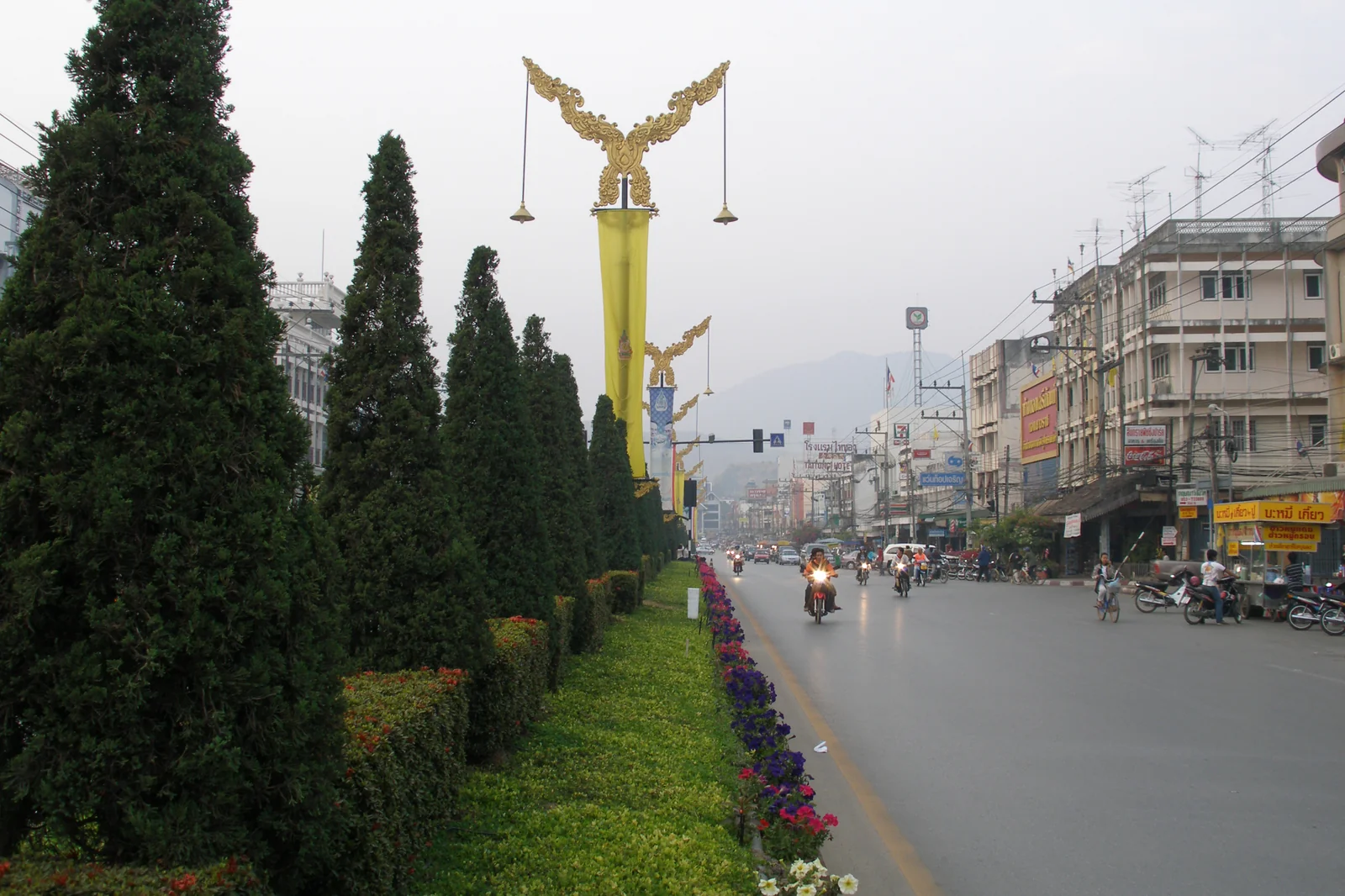
Start with the shape of the day. Ordinary buses leave the city center terminal through the daylight hours and run straight north up Highway 1 through Mae Chan. All of them terminate at Mae Sai Bus Station, out on the highway south of town.
The numbers that actually change the plan:
- Distance: 59 to 62 km north on Highway 1 (Phahonyothin, AH2). Booking sites say 59 km, Wikivoyage says 61 km, route planners return 62.1 km door to door.
- Journey time: 1 hour to 1 hour 30 minutes on the ordinary bus. 52 to 56 minutes in a car.
- Counter fare: $1 (THB 39 to 40) bought at the window, no advance purchase possible.
- Departure point: Chiang Rai Bus Terminal 1, bay 7, on Prasopsook Road in the city center.
- Arrival point: Mae Sai Bus Station on Highway 1, about 4.5 km south of the checkpoint on the Mae Sai River.
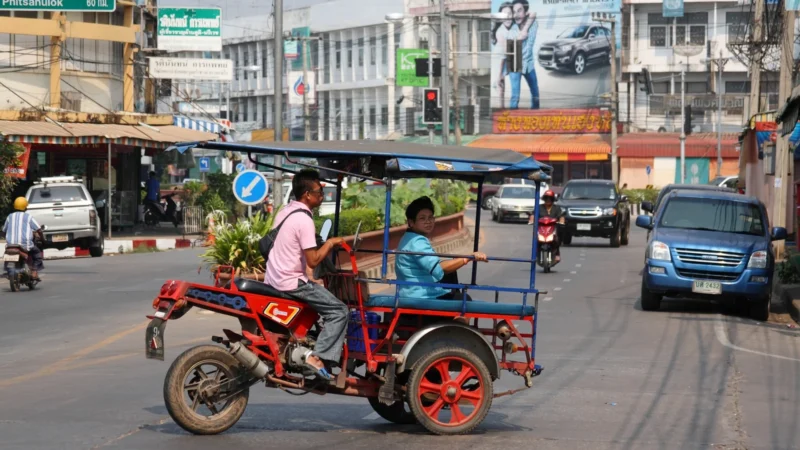
- The leg nobody prices in: a red songthaew from that bus station into town, $0.55 (THB 20) per passenger.
- Frequency: every 10 to 15 minutes by most local accounts, or hourly from 06:00 to 18:00 on the air conditioned service.
- Border status: the crossing into Tachileik has been closed to foreign nationals since mid 2024.
What the bus costs, and why the online price is different
This is the part no page on the first results screen reconciles. The seat barely changes. The channel you buy it through changes the number by a factor of roughly twenty five.
- Ordinary bus at the Terminal 1 window: $1 (THB 39 to 40).
- Minibus from the same building: $1.50 (THB 46 to 50).
- Shared minivan sold in advance online: $7 (THB 250).
- Direct taxi: $18 to $24 (THB 650 to 850) per vehicle.
- Nine seat VIP transfer from the airport: $91 (THB 3,200) per vehicle.
- The aggregator landing page for the route: from $28 (THB 1,000).
None of those figures is invented. They are six distribution channels stacked on one 62 km road, and only two of them are the bus a local would take. The booking layer indexes the coach product, so it quotes coach money for a provincial hop.
Rome2Rio goes further and reports no direct connection at all. It routes readers through Mae Chan and then a taxi, at 11 to 14 euro for the second leg. There is a direct bus, it leaves every quarter of an hour, and it costs less than a coffee.
Which Chiang Rai terminal the Mae Sai bus leaves from
Terminal 1, the old station in the city center. Not Terminal 2, which sits about 7 km south of town on the Superhighway at 75 Moo 6 Phahonyothin Road, San Sai. Getting this wrong costs a taxi fare in the wrong direction plus the wait for a service that runs a handful of times a day.
Both terminals are technically correct, which is why the confusion holds. Terminal 2 handles the long distance coaches. The frequent provincial service, the one that goes to Mae Sai every ten or fifteen minutes, works out of Terminal 1. Booking sites index the coach, so they name the terminal the coach uses.
Riding down from the north changes that. The through coach that runs Chiang Mai to Chiang Rai carries on to Mae Sai, and it calls at Terminal 2. Worth checking against the day’s departures before you cross town. Our Chiang Rai transport guide covers that leg in full.
How long the ride takes and what the last leg adds
Plan for 90 minutes on the ordinary bus. It stops through Mae Chan and the villages strung along Highway 1, which is where the extra half hour goes. The minibus clears the same road in about 1 hour 10 minutes, and a car does it in under an hour.
Then add the piece the guides leave out. Mae Sai Bus Station is not in Mae Sai in any useful sense. It sits on the highway roughly 4.5 km south of the checkpoint, a distance mapped by Hobo Maps and quoted differently by nearly every other source. Red songthaews shuttle that gap for THB 20 per passenger.
These are the older fan buses rather than coaches, and riders report that the ride runs hot on afternoon departures in the far north. Several also note that timetables and boards disagree on frequency. Build a buffer of half an hour into anything you have booked at the other end.
Whether a minivan or a private car beats the 39 baht seat
On this corridor, mostly not. The minivans leave when they fill rather than on a clock, which their own operator pages state plainly. On a quiet midday slot the wait can cost you more time than the ordinary bus would have cost you in journey time.
A private car is a different calculation and it turns on group size. It covers the run in 52 to 56 minutes and drops you at the border market rather than 4.5 km short of it. It can also hang a Doi Tung or Tham Luang stop off the same fare. Two people are paying something like sixteen times the bus fare to save half an hour.
From three or four passengers up, that stops being silly. If you are routing straight from Mae Fah Luang Chiang Rai International Airport, or moving with luggage and children, compare vehicle rates for the day before you commit. Read what the quote includes, because several transfer companies publish most vehicle classes as quote only.
What happened to the border crossing at Mae Sai
It is closed to foreign passports, and it has been since mid 2024. The conflict in Myanmar’s Shan State is the reason. Thai and Myanmar nationals still cross. Everyone else stops at the bridge.
This matters more than any fare on this page, because the crossing is why most itineraries send readers to Mae Sai in the first place. Wikivoyage still carried the closure as of December 2025. Thai forum replies through January 2026 were still answering the same question with the same three words, ยังข้ามไม่ได้, still cannot cross.
So do not build a visa run around it. If your Thai stamp is the reason you were heading north, our Thailand visa guide covers the options that actually work in 2026. Treat anything written before mid 2024 on this crossing as a historical document.
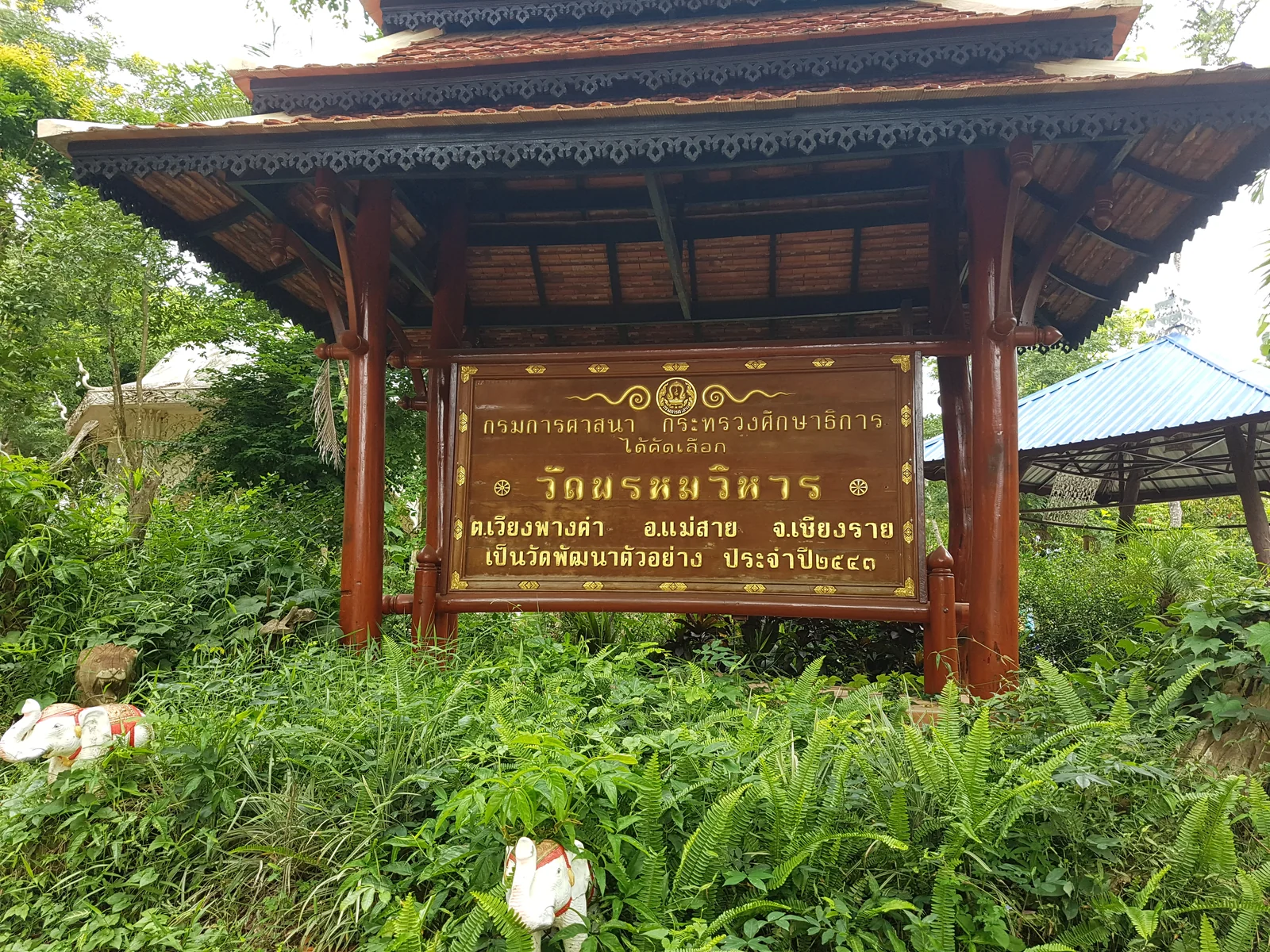 Photographer: Iudexvivorum. Source: Wikimedia Commons. License: CC0.
What is left in Mae Sai once you skip the crossing
Enough for a half day, not enough for a night. The town is a working trade post rather than a destination, and the market that runs up to the bridge lost its main draw when the crossing closed. What holds up is the ridge above town and the two sites on the road back south.
- Wat Phra That Doi Wao: the temple on the ridge, with a glass skywalk of 150 m opened on 9 November 2023. Entry is $1.40 (THB 50) for adults, open 07:00 to 20:00.
- Tham Luang cave: 8 km south off Highway 1, where the Wild Boars team was rescued in 2018. Chamber 1 is free. Chambers 2 and 3 run $43 (THB 1,500) for foreign visitors, October to June only.
- Doi Tung: the Mae Fah Luang Royal Villa and garden, about 30 km west at 1,389 m, at $2.50 (THB 90) each. The villa opens 07:00 to 17:30 and the garden 06:30 to 18:00.
Doi Tung is the one that justifies a vehicle. Reaching it on public transport means getting off at the Huai Khrai junction. From there it is a songthaew up the mountain at around THB 600, or a motorbike taxi at THB 80. If you would rather have the far north assembled for you, compare guided runs through the region instead of stitching three songthaews together.
The 14:00 songthaew that decides your whole day
Here is the number that should set your alarm. Blue songthaews run east from a stand in Mae Sai town center, a few hundred meters back from the bridge. They are how you reach the Golden Triangle without a car. They go roughly every 20 minutes, and they are a morning service.
Sop Ruak takes about 45 minutes for THB 50. Chiang Saen is another 15 minutes beyond it for THB 20. Departures cluster between about 08:00 and midday, and The Longest Way Home puts the last one for Chiang Saen at around 14:00.
Work backwards from that. A bus out of Chiang Rai at 08:00 puts you in Mae Sai by 09:30 and in town by 09:45. That is a blue songthaew with the whole loop still ahead of you. Leave at 11:00 and you have bought a market walk and a ride home. The fare never mattered on this route. The departure time is the entire trip.
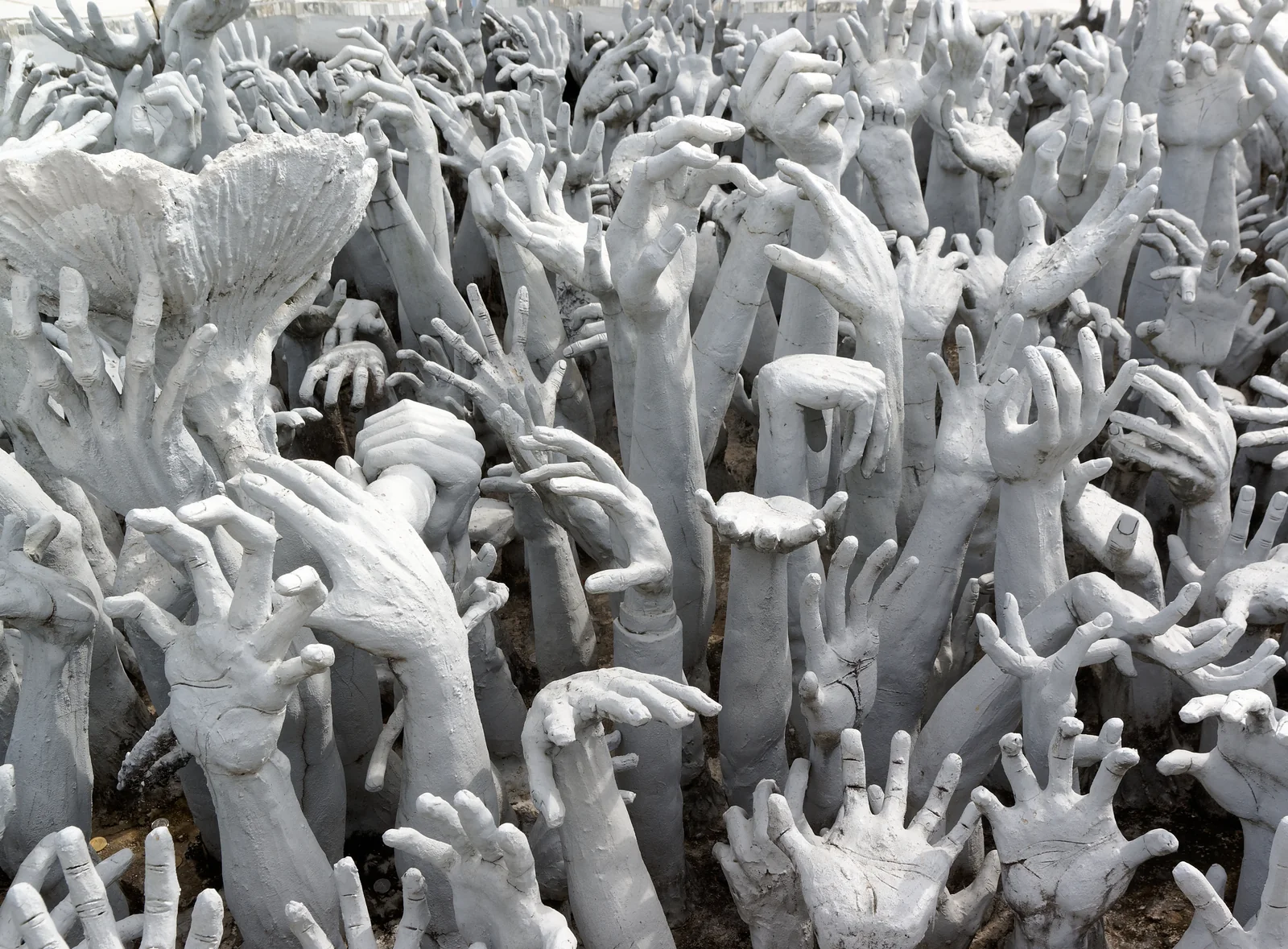 Photographer: Jakub Hałun. Source: Wikimedia Commons. License: CC BY-SA 4.0.
Where to stay at either end of the Mae Sai run
Base in Chiang Rai and treat Mae Sai as a day out. The town has guesthouses aimed at traders rather than travelers, and with the crossing shut there is little reason to sleep at the top of the country. Chiang Rai puts you near Terminal 1, near the airport and inside reach of the temples most people came north for.
For the wider trip, our Chiang Mai hotel roundup covers the usual base at the other end of the northern loop. The 3 days in Chiang Mai itinerary handles the days before you ride up. The Thailand transport overview sets out how the buses, trains and vans fit together, and the domestic flights guide covers the faster way into the far north.
Frequently asked questions about the Chiang Rai to Mae Sai bus
How do you get from Chiang Rai to Mae Sai?
How much is the bus from Chiang Rai to Mae Sai?
How long does the bus from Chiang Rai to Mae Sai take?
Which Chiang Rai bus terminal goes to Mae Sai?
Can foreigners cross the border at Mae Sai into Myanmar?
Is Mae Sai worth visiting from Chiang Rai?
How do you get from Mae Sai to the Golden Triangle?
How far is Mae Sai from Chiang Rai?
Can you visit Tham Luang cave from Mae Sai?
We rank a corridor on the decisions that change what the day costs, not on the mode that photographs best. See how we test and rank for the method behind these calls.