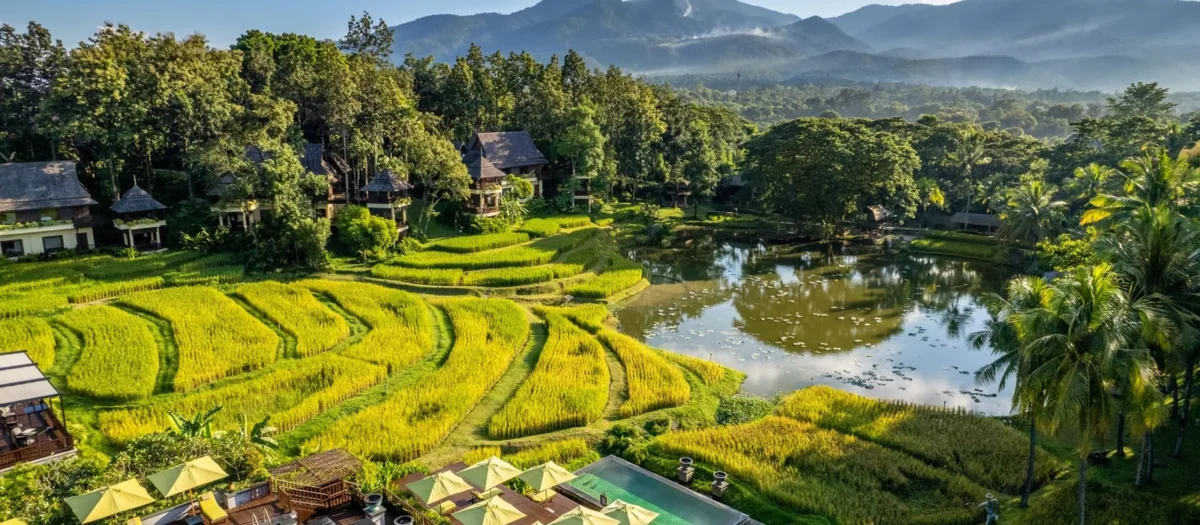
The thing returning guests remember about Four Seasons Resort Chiang Mai isn’t the teak architecture or the spa. It’s the two working rice paddies the whole resort is built around, cultivated by resident water buffaloes, with the planting in June and the harvest in November. No other Chiang Mai property hands you that view from the balcony. The entry Pavilion opens around $950 a night, with the Pool Villa Residence starting at $2,250. The catch is the same one it has carried for 30 years. The setting that makes the resort is also a drive of about 40 minutes from the city it borrows its name from. It works best if you want slow days on the property, and it works against you if you want a base for daily sightseeing in the Old City.
The setting is the reason this resort works. Mae Rim sits in a valley north of Chiang Mai, ringed by green hills and farmland, and Four Seasons has built the property around the two paddies. The architecture is teak floored pavilions with sala daybeds and outdoor rain showers, scaled to the landscape rather than dropped onto it. The catch is the drive into Chiang Mai itself. That distance turns into two to three hours of car time per day for anyone who wants nightly food in the Old City or daily temple hopping.
The short version is that Four Seasons Chiang Mai looks strongest for couples on a milestone trip and families willing to spring for the Pool Villa Residence. It also suits travelers who plan the stay around the Cooking Academy across four nights or more. The architecture, the Lanna spa program, and the Cooking Academy are the main draw. The catch is that the Mae Rim location actively competes with seeing Chiang Mai itself. If you book it for slow days on the property, the setting works in its favor. If you book it expecting easy access to the Old City and Doi Suthep, the friction shows up quickly.
Four Seasons Chiang Mai at a glance
Four Seasons Resort Chiang Mai opened in 1995 on 20 acres of valley land in Mae Rim, north of the city, and has spent three decades quietly becoming the reference point for upcountry luxury in Thailand. The architecture is Lanna teak pavilions and residences arranged around the two genuine working rice paddies. The buffalo program is real, not staged. Guests can join the planting in June or the harvest in November. Outside those windows the cycle plays out from a balcony.
 SHA EXTRA PLUS
★ 9.2
SHA EXTRA PLUS
★ 9.2
Four Seasons Resort Chiang Mai
Four Seasons Chiang Mai is the most ambitious resort in northern Thailand. The property sits in the Mae Rim valley, 40 minutes from Chiang Mai's Old City, with 99 villas built around working rice paddies that the resort actively cultivates with two resident buffaloes. The rice farming is genuine, not staged, and rotates through the same monsoon cycle as the surrounding farms.
The villas range from one-bedroom Pavilions at around $650 per night to multi-bedroom Pool Villas above $2,500. All accommodations are stand-alone Lanna-style structures with private terraces; the higher tiers add private pools. The resort runs morning farming activities (you can plant rice during the May-June planting season and harvest in October), elephant sanctuary visits (with the affiliated Elephant Parade House), and a Thai cooking school led by chef Ranadda.
The trade-off is location. Chiang Mai Old City is 40 minutes by car each way, which means most guests treat the resort itself as the destination rather than as a base. The shuttle into town runs three times daily; outside those windows, you're booking taxis. Service is famously high-touch (you'll have a butler assigned at check-in), and the spa is one of the few in Thailand that uses ingredients grown on the property. Book Four Seasons Chiang Mai if you want a destination resort experience. Skip if you came to walk the Old City.
The property runs 99 pavilions, residences, and villas. The footprint is broad and the landscaping does real work to break the resort into smaller zones, so the experience feels more like a Lanna village than a hotel. The catch is the same as it has been for 30 years. The property’s defining setting is also its defining distance. Mae Rim is 35 to 50 minutes from the Old City moat depending on Highway 107 traffic, longer on Sunday Walking Street evenings. That distance is the single most important variable in a Four Seasons Chiang Mai trip.
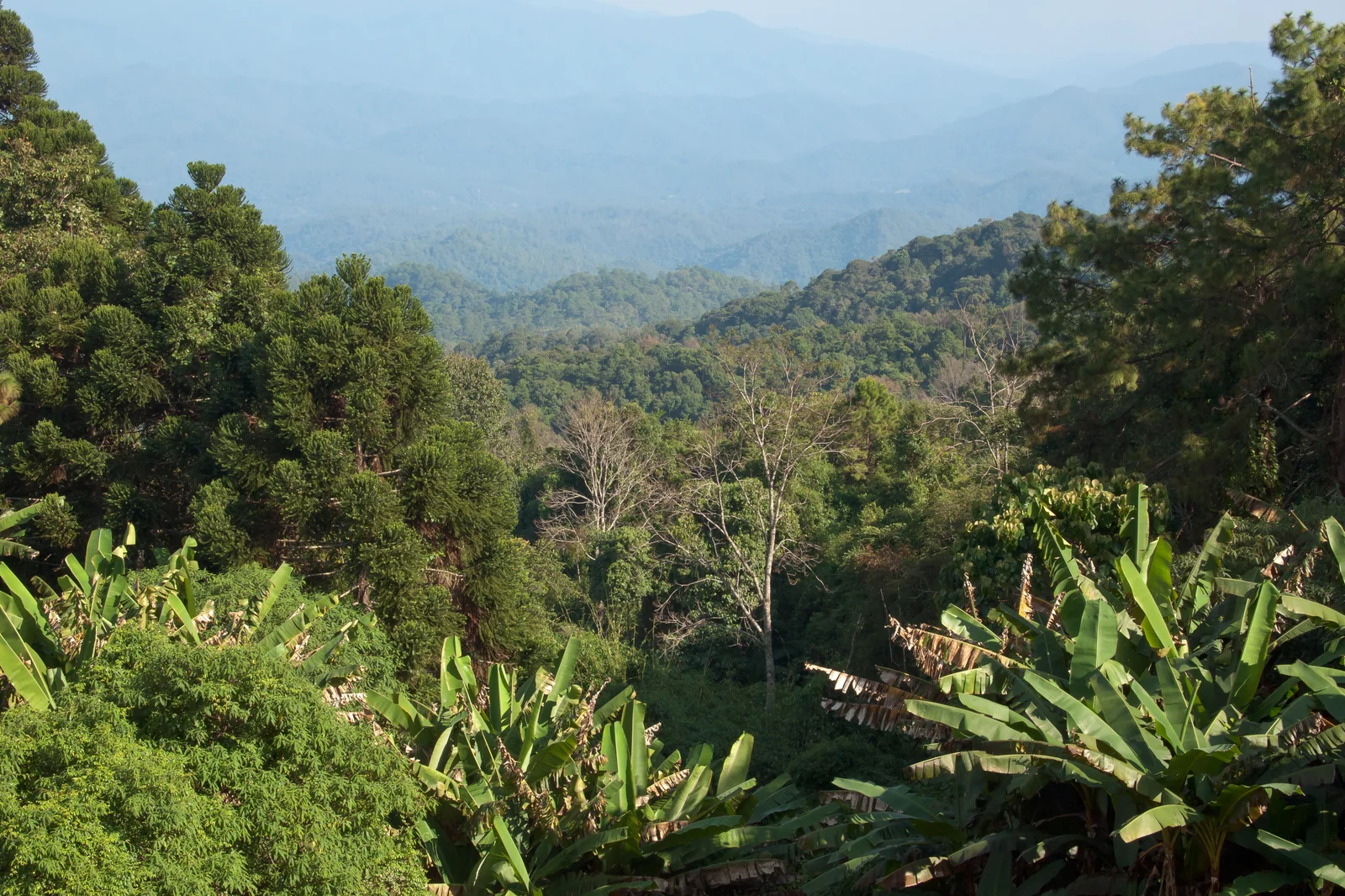 Photographer: Vyacheslav Argenberg. Source: Wikimedia Commons. License: CC BY 4.0.
Pavilion types and which one is worth the price jump
The room inventory splits along the same logic as the rest of the resort. Pavilion, residence, or villa. Most guests are really choosing between three.
The cheapest way in is the Pavilion in the standard category, opening around $950 a night. It is the room most couples actually book, and the materials carry the brand baseline. Teak floors, a sala daybed, a soaking tub, and an outdoor rain shower behind a private wall. Two thirds of the building is the balcony. The catch is which way the balcony faces. The standard Pavilion overlooks an access road or a service garden, not the paddy that draws people to the resort.
The room that actually changes the stay is the Upper Pavilion. The supplement is $180 to $250 a night over standard and it adds the rice paddy view. If the paddy is the reason for booking, this is the floor. The standard Pavilion overlooks the wrong direction.
The villa and family option is the Pool Villa Residence at 320 sqm with a heated infinity plunge that overlooks the paddy directly. This is the room the marketing photos sell, opening around $2,250 a night. The pool is heated November through February, which matters because Chiang Mai winter mornings drop to 14°C and an unheated villa plunge is unusable in that window. For families of four or a milestone trip where the room is the experience, this is the strongest fit on the menu.
In between sit the Garden Residence (200 sqm, separate living pavilion, courtyard sala, from $1,490) and the Two-Bedroom Residence Villa for larger groups. Both work for specific use cases, but neither is the default pick. The Pavilion or the Upper Pavilion covers most couples. The Pool Villa Residence covers most groups.
Rate snapshot
USD per night, room only, before tax and service.
- Pavilion: from $950
- Upper Pavilion (paddy view): from $1,130
- Garden Residence: from $1,490
- Pool Villa Residence: from $2,250
- Two-Bedroom Residence Villa: from $3,200
Low season (late April through early November, outside Songkran) runs 30 to 45 percent below. See current rates for your dates.
If the paddy view is the reason you’re booking, pay the Upper Pavilion supplement and don’t gamble on a standard Pavilion. The standard rooms face an access road or service garden, and the resort won’t guarantee a paddy outlook on the cheaper category. We’d also ask the reservations team to confirm the Khao restaurant table and the cooking academy slot in the same message as the room, since both book out 7 to 10 days ahead in high season.
The three restaurants and what each meal costs
The dining program splits cleanly into three rhythms across a stay of three to four nights. One signature dinner, one breakfast, and one or two pool bar lunches.
The one dinner to book ahead of arrival is Khao. It is the resort’s signature Lanna restaurant, with a tasting menu format and an a la carte option. It is the only place on property where the cuisine is treated as the main attraction rather than a competent house necessity. The signature dishes named in recent guest reviews from 2024 to 2026 are these three.
- Khao Soi Gai: served with the crispy noodle nest the dish is supposed to come with.
- Hang Lay Moo: pork belly braised slowly with ginger and pickled garlic, an actual Lanna recipe rather than a Bangkok interpretation.
- Sai Ua: the Northern grilled sausage with lemongrass and kaffir lime.
Khao seats roughly 60 covers and books out 7 to 10 days ahead in high season. Confirm the reservation when you confirm the room.
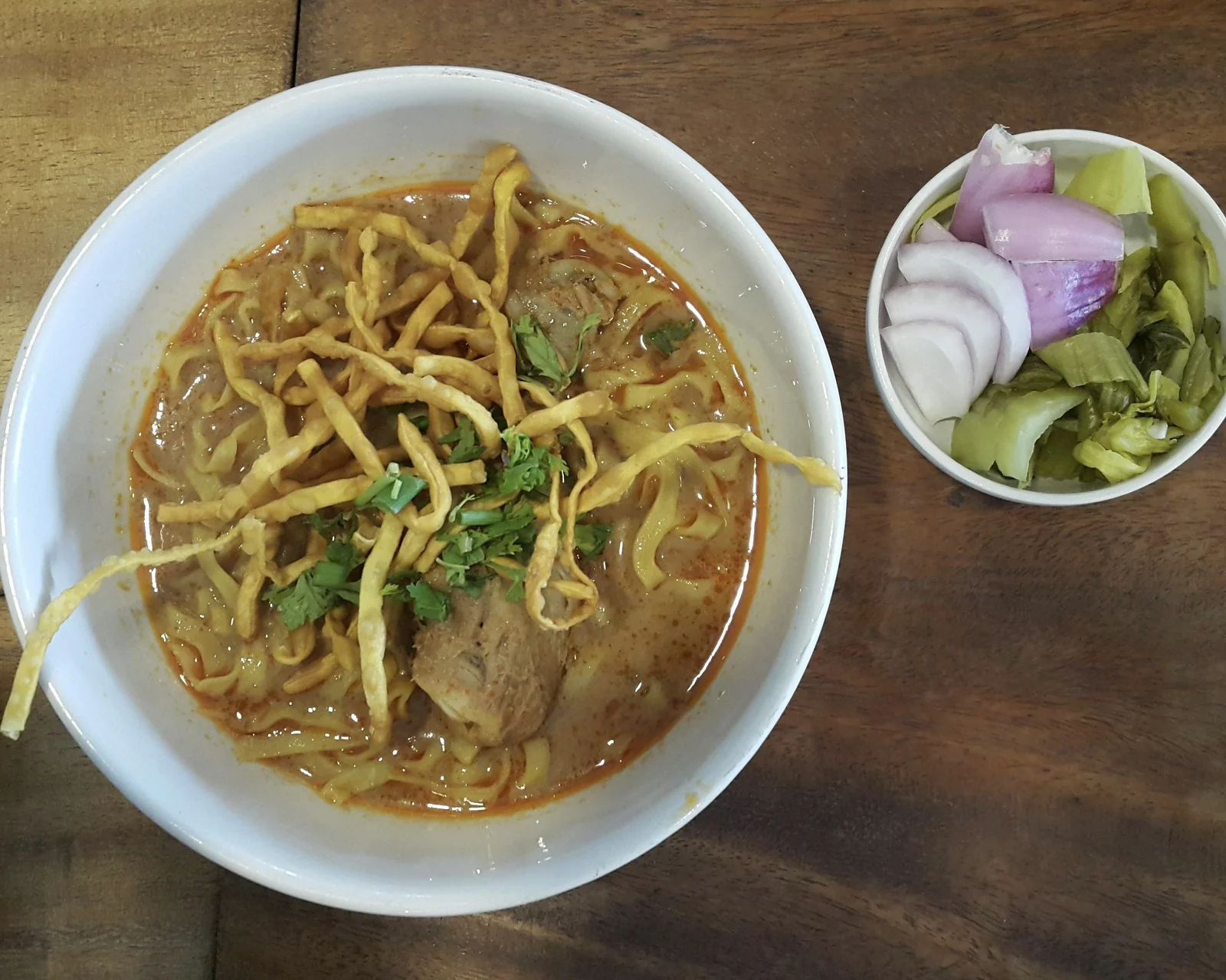 Photographer: Chainwit.. Source: Wikimedia Commons. License: CC BY-SA 4.0.
For the rest of the days, North handles breakfast and all day dining. The buffet rotates daily across 14 hot stations and a counter that cooks eggs and noodles to order. The international standards are competent. The parts worth queuing for are the Thai morning soup (khao tom) and the Northern sausage station. Breakfast runs $42 per person if not included in the rate, which adds $336 to a four night stay for two when bundled separately. Most package and advance purchase rates include it. Most flexible rates do not. Read the rate confirmation line item.
The Pool Bar covers lunch and the only sunset cocktail option on property. The bar closes at 9pm, which is a useful signal that this is a property designed for early mornings and slow evenings rather than nightcap people. For broader dining context, see the best restaurants in Bangkok roundup (Chiang Mai roundup pending) and the 3 Days in Chiang Mai guide for options in town.
Inside the cooking academy, schedule, cost, and what you actually learn
The Cooking Academy at Four Seasons Resort Chiang Mai is the single most cited reason guests return to this property in reviews from 2024 to 2026. The half day class is $130 per person and includes the market visit, the four dish session, and the meal cooked for lunch. The full day is $245 and adds a curry paste session and three additional dishes. Both run from 9am, and the half day finishes by 1.30pm.
The market visit is the part most cooking schools fake. At Four Seasons it is a real working market 15 minutes from the resort with actual vendors who supply the kitchen. Reviewers consistently note that the chef instructors name every herb in Thai and walk guests through the differences between holy basil, sweet basil, and lemon basil in the hand. The instruction is paced for guests who have never cooked Thai before. For experienced home cooks who can already make a curry paste from scratch, the half day is too basic. The private chef’s table format is the better question to ask.
The structural catch is that the class is on the resort grounds. The day you take the class is a day you do not see Chiang Mai. On a trip of three nights, the cooking school and a proper Old City day cannot both fit unless one is compressed. A minimum of four nights is the realistic floor for guests who want both.
Mae Rim reality, distance to the old city and transfer time
Mae Rim feels like Chiang Mai with the city moved 40 minutes away. Same Lanna culture, same Northern Thai food traditions, same temple and valley landscape, but stripped of the Old City traffic and the night market crowds. The resort sits on a working farm road, set against the hills that rise to Doi Suthep further south.
The catch is that this is not a base for sightseeing. The drive into the Old City is 35 to 50 minutes depending on Highway 107 traffic. The drive to Doi Suthep temple is 30 minutes. Sunday Walking Street evenings push the inbound drive past an hour after 5pm. For a property that prices from $950 a night, those drive times become hours of car time per day if the trip is built around the city.
Highway 107 is the only real link between the resort and town, and it clogs from about 5pm on weekend evenings when everyone heads to Sunday Walking Street. We’d take the resort’s 2pm scheduled shuttle into the Old City, do the market on foot, then book a Grab or the chauffeured car back rather than fight the inbound traffic at the wrong hour. If you want both a cooking academy day on property and a proper city day, plan on a minimum of four nights, because a trip of three nights can’t hold both.
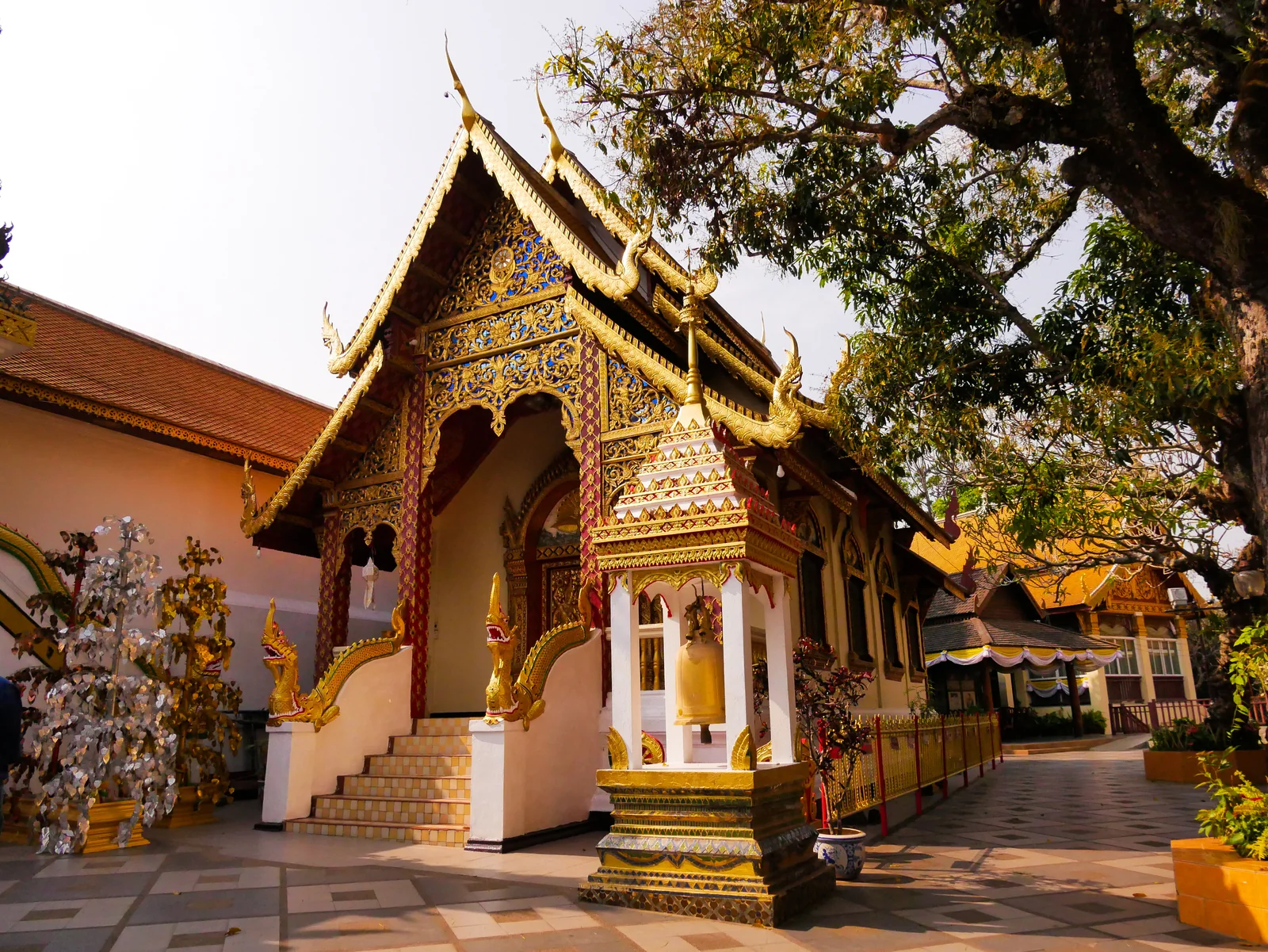 Photographer: กสิณธร ราชโอรส. Source: Wikimedia Commons. License: CC BY-SA 4.0.
At night, the area is quiet by design. No bars on the access road, no walkable food street, no after dark crowd to wander into. The Pool Bar closes at 9pm and Khao seats its last cover at 9.30pm. Guests who want nightlife with views go into Nimman or the Old City rooftops, both 35 to 50 minutes by car. For travelers building the trip around the property, that is the point. For travelers expecting the city at the front door, that is the friction.
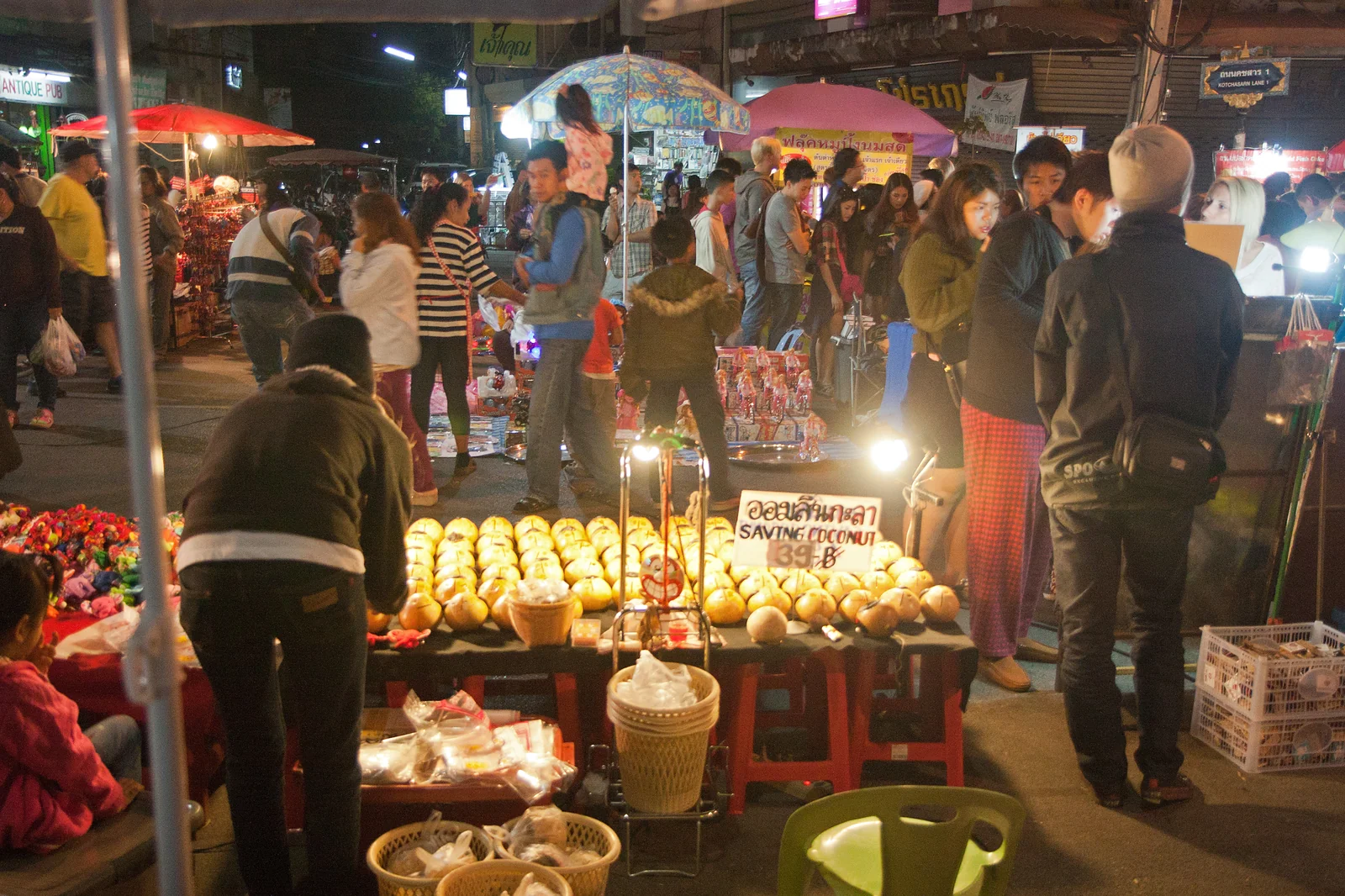 Photographer: Andrea Schaffer from Sydney, Australia. Source: Wikimedia Commons. License: CC BY 2.0.
What the rate includes (and what it doesn’t)
The practical layer. Each block stands alone.
Getting to the resort
Chiang Mai International Airport (CNX) is 40 minutes from the property. Three transport options cover the route.
- Resort chauffeured car (paid): around $55 USD one way to the Old City, $65 to Nimman, comparable from the airport.
- Scheduled shuttle: three departures daily out (10am, 2pm, 6pm) and back (1pm, 5pm, 9pm) at $20 round trip per person.
- Grab from town: $12 to $18 one way but expect a wait of 10 to 15 minutes for a driver willing to come up Highway 107.
The shuttle is the best value if the daily routine fits the schedule. The chauffeured car wins for evening returns and group logistics. Grab works for solo travelers and couples without much luggage.
The spa
The Spa at Four Seasons has 8 treatment pavilions arranged around a koi pond. Sample rates.
- Lanna Massage (signature, 90 minutes, traditional Northern herbs): $215
- Standard Thai massage off the resort in Chiang Mai town: $12 to $18
The case for staying on property is pavilion privacy, the 90 minute pacing against the 60 minute town standard, and a serious herbal poultice program. The case against is that any massage school in town will execute the same techniques for under $20. Book a single signature treatment for the experience, then visit Lila Thai Massage in Old City for the daily fix.
The Buffalo Walk and kids program
The resort runs a Buffalo Walk weekday mornings at 10am, included with the stay. The kids cooking class is 2 hours, $65 per child, scaled for ages 6 to 12. Both are operationally easy to slot into a half day at the property. For families of four planning a stay of four nights or more, these are part of why the rate makes sense.
SHA Extra Plus and brand context
The property holds SHA Extra Plus certification, the highest tier of the Safety and Health Administration program run by the Tourism Authority of Thailand, requiring base hygiene standards plus extended staff and supply chain checks. Certification is renewed annually and listed on the TAT registry. For broader SHA context, see the best SHA hotels in Chiang Mai roundup. Four Seasons points and brand benefits apply on direct bookings. Third party rates from live availability often undercut the direct flexible rate but do not earn brand points.
Other distances
- Chiang Mai Old City moat: 14 km south, 35 to 50 minutes by car depending on Highway 107 traffic
- Nimman: 13 km south, 30 to 45 minutes
- Doi Suthep temple: 18 km south, 30 minutes
- CNX airport: 20 km south, 40 minutes
- Sunday Walking Street (Tha Phae Gate): 14 km south, 45 minutes on weekend evenings
- Chiang Rai (for day trips): 195 km north, 3 hours by car
What recent guests consistently report after a stay
Recent guests praise the service and spa as the strongest two threads. Multiple stays describe staff as attentive without being intrusive and the spa therapists as among the best the guests have experienced anywhere in Thailand. The Mae Rim setting, the working rice paddies, and the buffalo program get cited as the visual character that no other Chiang Mai property offers.
The most common complaint is that the pavilion interiors feel dated against the rate. The property opened in 1995 and the last full refurbishment is showing its age in furniture and bathroom finishes. The secondary complaint is dining. Some guests note that with only three restaurants on a property 40 minutes from the Old City, the options feel narrow for a multi night stay. A few find the rates high, with a la carte mains routinely above $40.
Editorial coverage echoes the pattern. The Points Guy rates the spa program and the property’s pavilion architecture as the standout reasons to stay, with the location distance ranking as the main consideration. The Luxury Editor ranks the Cooking Academy and the resort’s Lanna design language as the deepest cultural draws on the property.
Who this resort suits best (and who should stay in the old city instead)
Four Seasons Resort Chiang Mai fits best for couples and small families who want a milestone Northern Thailand stay where the property itself is the experience. The Lanna architecture, the rice paddy and buffalo programming, the Cooking Academy, and the spa are what this resort does at a level few competitors match. Multi generational groups make the strong case in the Pool Villa Residence, where the private pool, the residence layout, and the kids cooking class turn the property into a genuine private base rather than a hotel to circulate through.
It fits less naturally for travelers building the trip around the Old City and Doi Suthep. The drive of 40 minutes into Chiang Mai turns into two to three hours of car time per day, and on a first time trip of three nights the cooking school competes directly with the city day. Solo travelers on a budget will not find a fit at a $950 rate floor, and guests who want walkable food streets after dark should look at a Riverside or Nimman property instead.
Three Chiang Mai alternatives if Four Seasons is fully booked
If you’re still deciding between properties rather than locked on this one.
- Anantara Chiang Mai Resort on the Ping River in the city center, from around $345 a night. Walking distance to Night Bazaar and the Old City, no Mae Rim commute, less of the residence and pavilion atmosphere.
- Raya Heritage on the same Ping River stretch, from around $295 a night. A quieter Northern boutique without the resort overhead, lighter on programming but stronger on intimacy.
For the heritage Lanna alternative in the same tier, see our Dhara Dhevi Chiang Mai review. For the wider shortlist with the same review criteria, see our best SHA hotels in Chiang Mai roundup and the 3 Days in Chiang Mai itinerary for the city side context.
Frequently asked questions
How far is Four Seasons Chiang Mai from the Old City?
Is Four Seasons Resort Chiang Mai SHA Plus certified?
What is the cheapest time to stay at Four Seasons Resort Chiang Mai?
Is the cooking school worth $130 per person?
Can you visit Four Seasons Chiang Mai for the day without staying?
What’s the best room at Four Seasons Resort Chiang Mai?
When is the rice paddy at its best?
Our take. Four Seasons Chiang Mai is a genuinely special property that asks the trip to bend around it rather than the city. The rice paddies and buffalo program are character no other Chiang Mai resort can offer, the Cooking Academy is the reason guests come back, and recent guests rate the service and spa as the standout threads. Against that, the pavilion interiors show their age at this rate, the dining is narrow across a multi night stay, and the drive of 40 minutes into the Old City turns into hours of car time if you build the trip around the city. Book it for slow days on the property across four nights or more, pay the Upper Pavilion supplement for the paddy view, and it earns the milestone. Come expecting a base for daily sightseeing and the distance will fight you.
Check current rates for your dates.