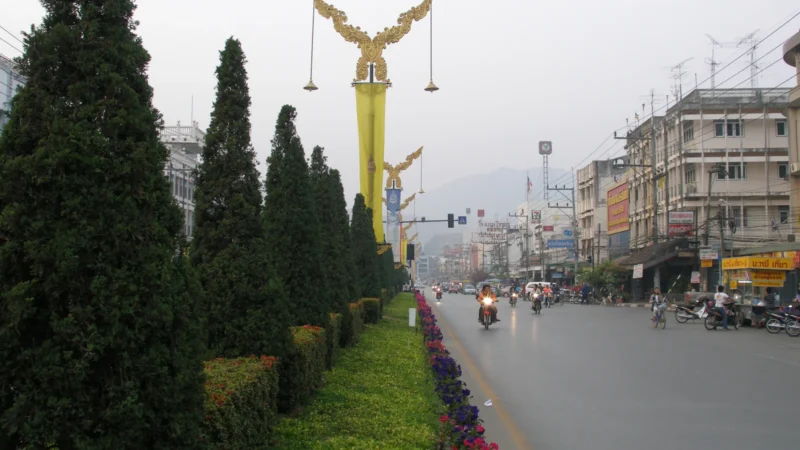
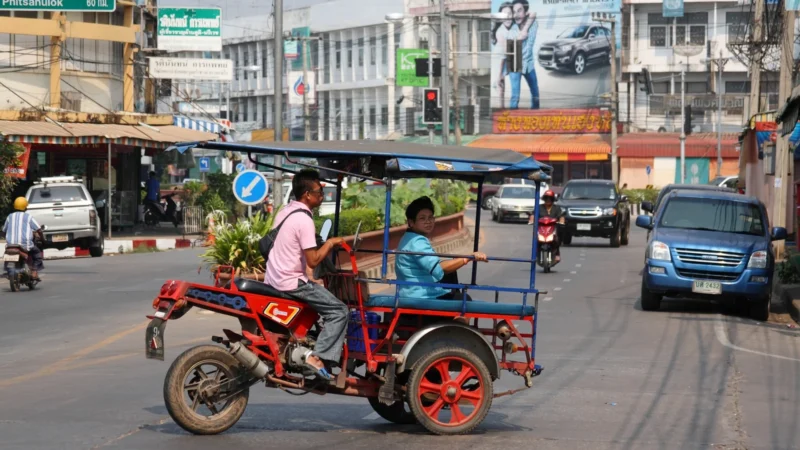
The mountain road to Pai packs 762 curves into roughly 135 kilometers. That single number decides how you should travel from Chiang Mai. The real question is not price. It’s which mode survives both your stomach and your riding skill.
Five ways make this trip and they are not equal. Two of them will not make some travelers sick. One empties a wallet. One sends undertrained riders to Chiang Mai clinics. One does not exist anymore.
Seats on the hourly minivan can sell out in high season, and in the wet months the road slows everyone down. Check current schedules and seats before you lock in a plan. If you already know the minivan is your pick, the operator level detail sits in our Pai minivan booking guide.
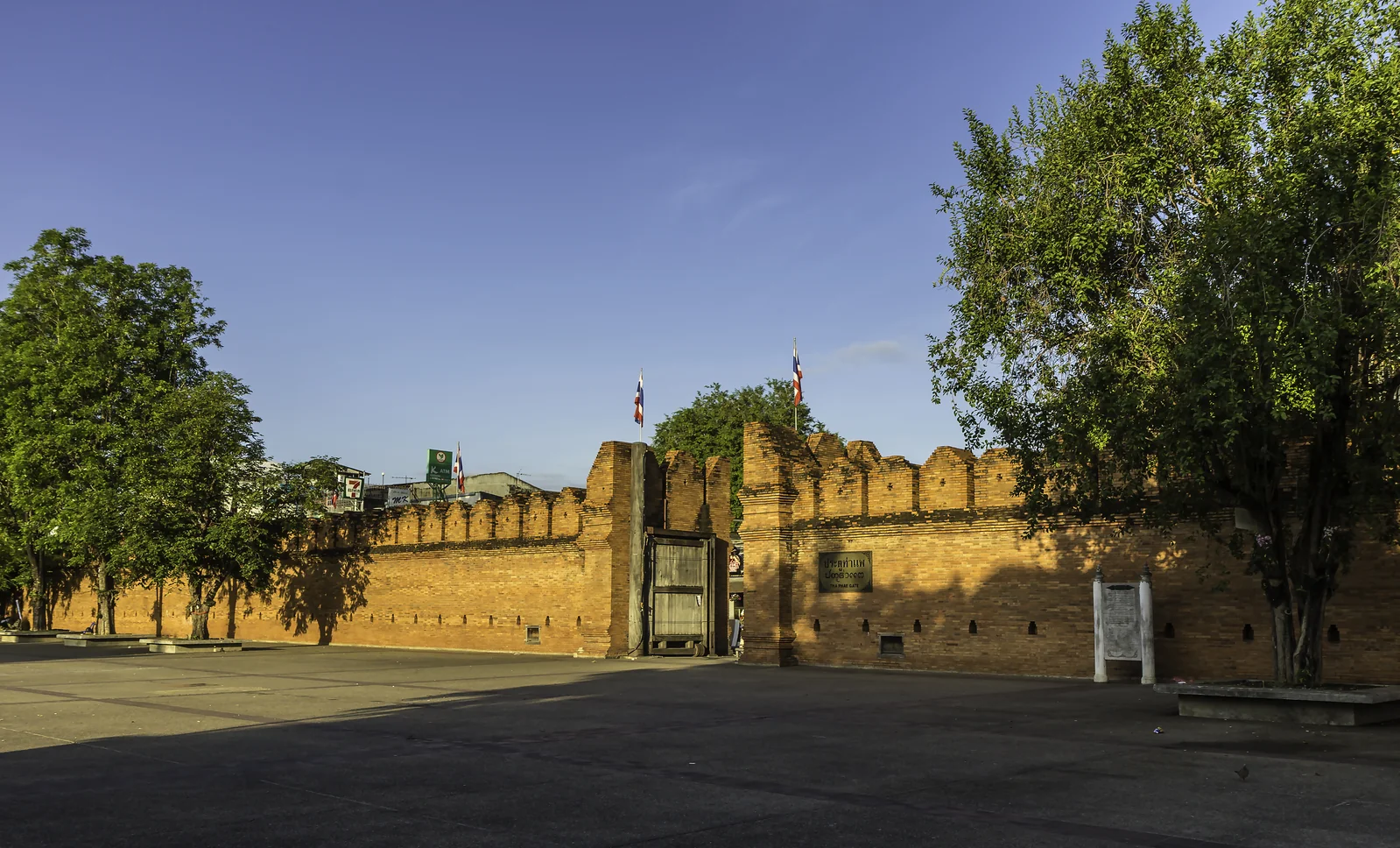 Photographer: Stefan Fussan. Source: Wikimedia Commons. License: CC BY-SA 3.0.
The road, the 762 curves, and five ways to survive it
Highway 1095 is the only sealed route from Chiang Mai to Pai. It climbs and drops through the Mae Hong Son hills, and the 762 curves are painted on souvenir shirts in Pai town for a reason. Motion sickness is the single most repeated complaint across every review of this trip, on every mode (TripAdvisor and transport aggregator guest reports, 2026).
So the decision is not really speed. The gap between the fastest option and the slowest is about 90 minutes. The decision is comfort, cost, and risk. Here is how the five options actually compare on the numbers that matter.
- Minivan (Aya or Prempracha): hourly from 06:30 to 17:30, about 3 to 3.5 hours, 150 to 180 THB (about $5).
- Green Bus 1227: three to four departures a day, about 3 hours 45 minutes, 150 THB ($4), reserved seats.
- Private car: on demand, about 2 hours 10 minutes door to door, 2,000 to 2,500 THB ($57 to $72).
- Motorbike self drive: your own schedule, about 3 to 4 hours, $6 to $8 a day to rent ($6 to $7), licensed riders only.
- Flight: no scheduled service in 2026. The route ended in 2017 and has not returned.
For most travelers the honest answer is the minivan, on price and frequency. Take the Green Bus if a larger coach settles your stomach. Take a private car if curves make you ill or you have small children. Only experienced, licensed riders should take on the road themselves. The rest of this guide is why.
The minivan, the default nine in ten travelers take
The shared minivan is the spine of this route. It leaves the Chiang Mai Arcade terminal roughly every hour from 06:30 to 17:30, costs 150 to 180 THB (about $5) one way, and reaches Pai in 3 to 3.5 hours depending on stops and season. Aya Service runs the best known fleet, and it doubles as Pai’s main scooter rental brand. Prempracha gets named on Thai forums as the calmer driver of the two (Pantip traveler threads, 2026).
The catch is the vehicle. These are 11 seat vans with no spare legroom, and the rear bench sits over the wheels where every curve hits hardest. Reviews repeatedly flag drivers who treat the road as a stage rather than a speed limit. That is why the driver hands out a plastic bag with your seat. One recent rider put it plainly, saying the driver handed out bags before departure and the whole van was silent by curve 400 (TripAdvisor, 2026).
Book a front row seat if you can, eat light, and take something for nausea before you leave. If you are traveling with a bag that will not fit under the bench, this is not the mode for you. Compare minivan times and fares and reserve ahead in November to February, when the seats fill early.
Green Bus 1227, a larger coach that trades speed for calm
Green Bus Thailand runs route 1227 with a full size coach of 25 to 35 seats, and it is the option to book from outside the country. Seats are reserved, the fare is 150 THB ($4) one way, and it is the cheapest legitimate operator on the road. It leaves from Arcade Terminal 2, and it takes about 3 hours 45 minutes. That is slower than the van, and for some travelers the slower pace is exactly the point.
We rate it the calmer choice on comfort, but it does not cure motion sickness for everyone. The coach still drives the same 762 curves. If you get sick from the turning itself rather than the speed, a bigger vehicle does not fix that. Reviewers describe it as a larger coach with reserved seats but only a handful of departures a day (transport aggregator reviews, 2026).
The real limit is frequency. Green Bus runs three to four Pai services a day against the vans’ ten or more. It also leaves from Terminal 2, not the older terminal that many Old City hotels still send taxis to by default. Confirm the terminal with your driver, and give yourself a buffer. Missing the last coach means falling back to a van anyway.
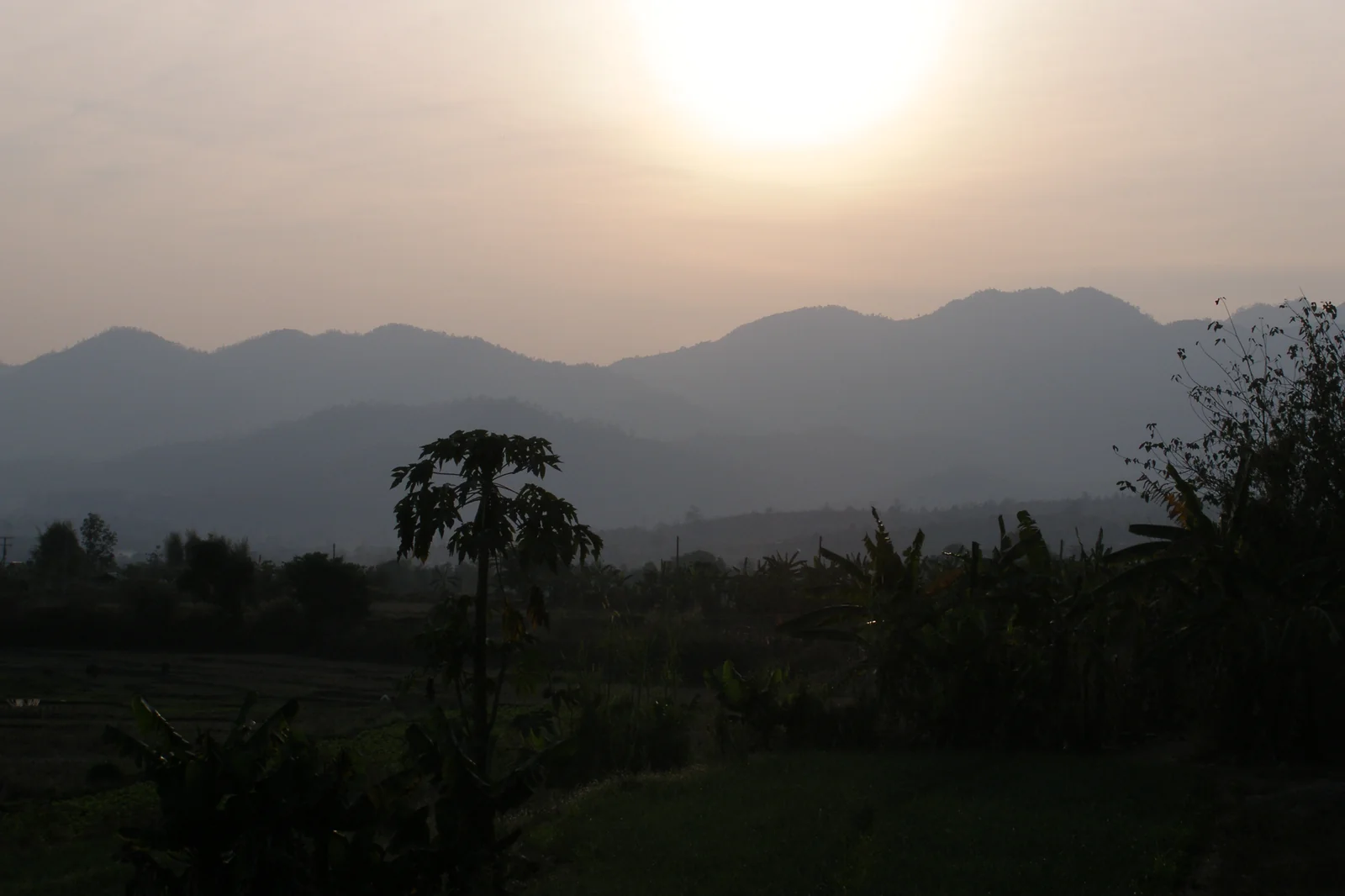 Photographer: Vyacheslav Argenberg. Source: Wikimedia Commons. License: CC BY 4.0.
Private car transfer, what comfort actually buys on Highway 1095
A private car is the answer for travelers who get carsick, families with small children, and anyone with luggage that will not survive a packed van. Booked through most Chiang Mai hotels, it runs $60 to $75 one way, which lands around $57 to $72. Door to door it takes about 2 hours 10 minutes. That is the fastest real option on this route (Rome2Rio operator listings, 2026).
Be clear on what the money buys. It is 12 to 15 times the minivan fare, and the driver still takes the same Highway 1095 through the same 762 curves. You are paying for suspension, a wider seat, and control over the stops, not a smoother road. What you gain that the van cannot offer is the freedom to pull over at the Mae Ya viewpoint or the Pai Memorial Bridge without asking a full vehicle to wait.
For two or three people splitting the cost, the gap to the minivan narrows fast. For a solo traveler on a budget it rarely makes sense. Ask your hotel to arrange the car the day before, and confirm the driver knows your Pai address, since many guesthouses sit down unpaved lanes.
Motorbike self drive, the romantic route and the crash reality
This is the mode backpacker blogs push hardest, and the one that fills Chiang Mai clinics. The pitch is real. On a rented 125 to 150cc bike you cover the 135 kilometers in 3 to 4 hours, stop for coffee and viewpoints, and hit the Mae Malai fruit market on the way. Riders who want more can loop back through Mae Hong Son over two to three days. Rentals run $6 to $8 a day (about $6 to $7).
Now the part the headlines skip. The road claims scooter riding tourists every season. Travelfish states it plainly, warning that the road to Pai injures riders every year and should not be attempted without real riding experience and a licence (Travelfish, 2026). You are mixing 762 curves with fast local traffic, gravel, and slick tarmac in the late monsoon from October into early November. Add undertrained tourists on underpowered scooters and the risk compounds.
Insurance is the detail most riders miss. Travel policies routinely void claims for anyone riding without a motorcycle licence or a helmet, which turns a minor slide into a five figure hospital bill. If you ride, ride within a licence and confirm your cover first. Check travel cover that includes riding before you collect the keys, and if the honest answer is that you have never ridden in traffic like this, take the van.
The Chiang Mai to Pai flight that no longer flies
People keep asking whether they can just fly, and it is easy to see why. A 30 minute hop over the whole road would skip every curve. Flight search sites still surface a Chiang Mai to Pai option, and older guides still list one. Both are wrong for 2026.
There is no scheduled commercial service. Kan Air, the last carrier to fly the route three times a week, ceased all operations on 20 April 2017, and nothing has replaced it. Pai Airport now handles only charters and general aviation. The fares that appear on aggregator sites either route the long way through Bangkok or do not exist at all. If flying matters to you, the real decision is how you reach Chiang Mai in the first place, covered in our Chiang Mai flights guide. From Chiang Mai, the road is the only way in.
Booking, pickup, and beating the motion sickness
Booking is simple once you know the pattern. Reserve a minivan or Green Bus seat a day ahead in peak months, from November to February and over Songkran in April. In the low season you can often turn up at the Arcade terminal and take the next departure. Most Chiang Mai hotels will book the seat and arrange a terminal taxi for a small fee, which is worth it because the terminals sit outside the Old City.
Pickup is where travelers lose time. Confirm whether your ticket includes a hotel pickup or expects you at the terminal, and confirm which terminal, since the vans and the coach do not share one. Aim to arrive 30 minutes early. Vans leave when full and will not wait for a late passenger.
Then there is the stomach. The motion sickness on this road is not a myth, and a little planning beats it. Take a motion sickness tablet about 30 minutes before departure. Sit in the front rows, away from the rear wheels. Keep your eyes on the horizon, not your phone. If curves reliably make you ill, pay for the private car or take the slower coach, and eat something light before you go rather than nothing at all.
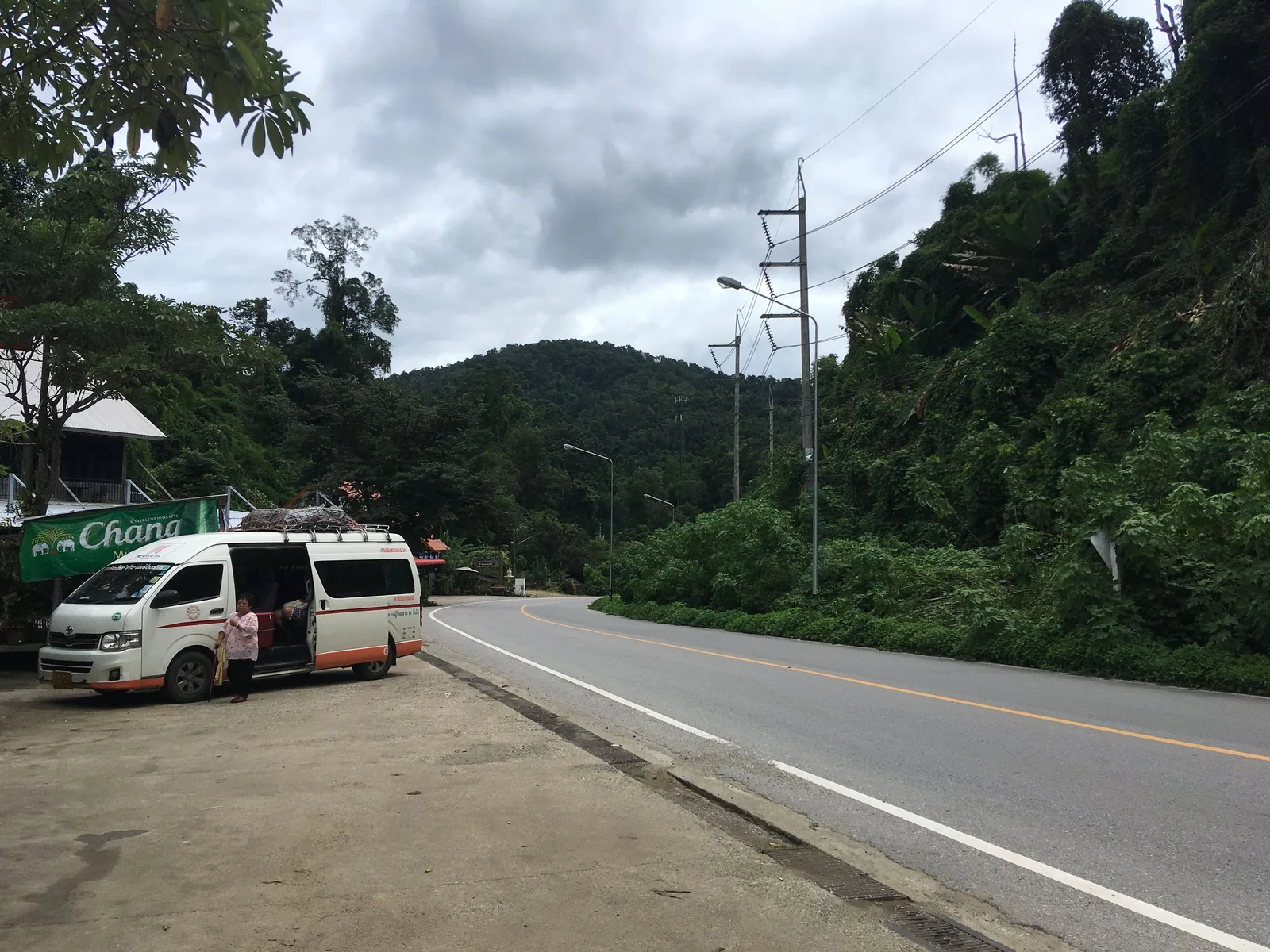 Photographer: Christophe95. Source: Wikimedia Commons. License: CC BY-SA 4.0.
Pai itself has no SHA certified hotels in our catalog yet, so most travelers base in Chiang Mai first and book a Pai guesthouse on arrival. If you want to lock the Chiang Mai half of the trip before you ride north, start with our Chiang Mai itinerary and the Chiang Mai things to do guide. To pick the right month for the whole run, our best time to visit Thailand guide covers the cool season that also makes this road easier. Prefer to skip the mountain drive entirely and stay north by rail and bus? See how travelers reach the region in the Chiang Mai bus guide.