The smog season is the one variable that breaks the usual logic of just flying cheap on the Bangkok to Chiang Mai flight, because demand drops from February to April but fares hold while the air quality tanks. The hop itself is short, about 1 hour 18 minutes on a route that runs roughly 145 departures a day across both Bangkok airports. Six airlines cover the lane year round. The cheapest fares run about $21 one way, Bangkok Airways tops out near $150 with a meal and lounge.
This guide tests the route on operator volume and the total trip cost including the Bangkok airport choice. It also covers the CNX taxi flat rate that most aggregator listings do not show, and the smog season window that changes the calculus from February to April.
Bangkok to Chiang Mai at a glance
- Flight time: 1 hour 15 minutes to 1 hour 25 minutes block to block
- Distance: 580 km north of Bangkok
- Weekly direct flights: about 1,025 across both Bangkok airports per current listings, May 2026
- Cheapest one way: from $21 on Thai VietJet or AirAsia, low season, no checked bag
- Full service one way: $80 to $150 on Thai Airways or Bangkok Airways with bag and meal
- Peak season premium: $40 to $80 added during cool season (November to February) and Songkran (mid-April)
- Bangkok airports: Suvarnabhumi (BKK) for full service carriers, Don Mueang (DMK) for LCCs
- Destination airport: Chiang Mai International (CNX), 3 km southwest of Old City moat
- CNX to Old City: 3 km, 10 to 15 minutes by road
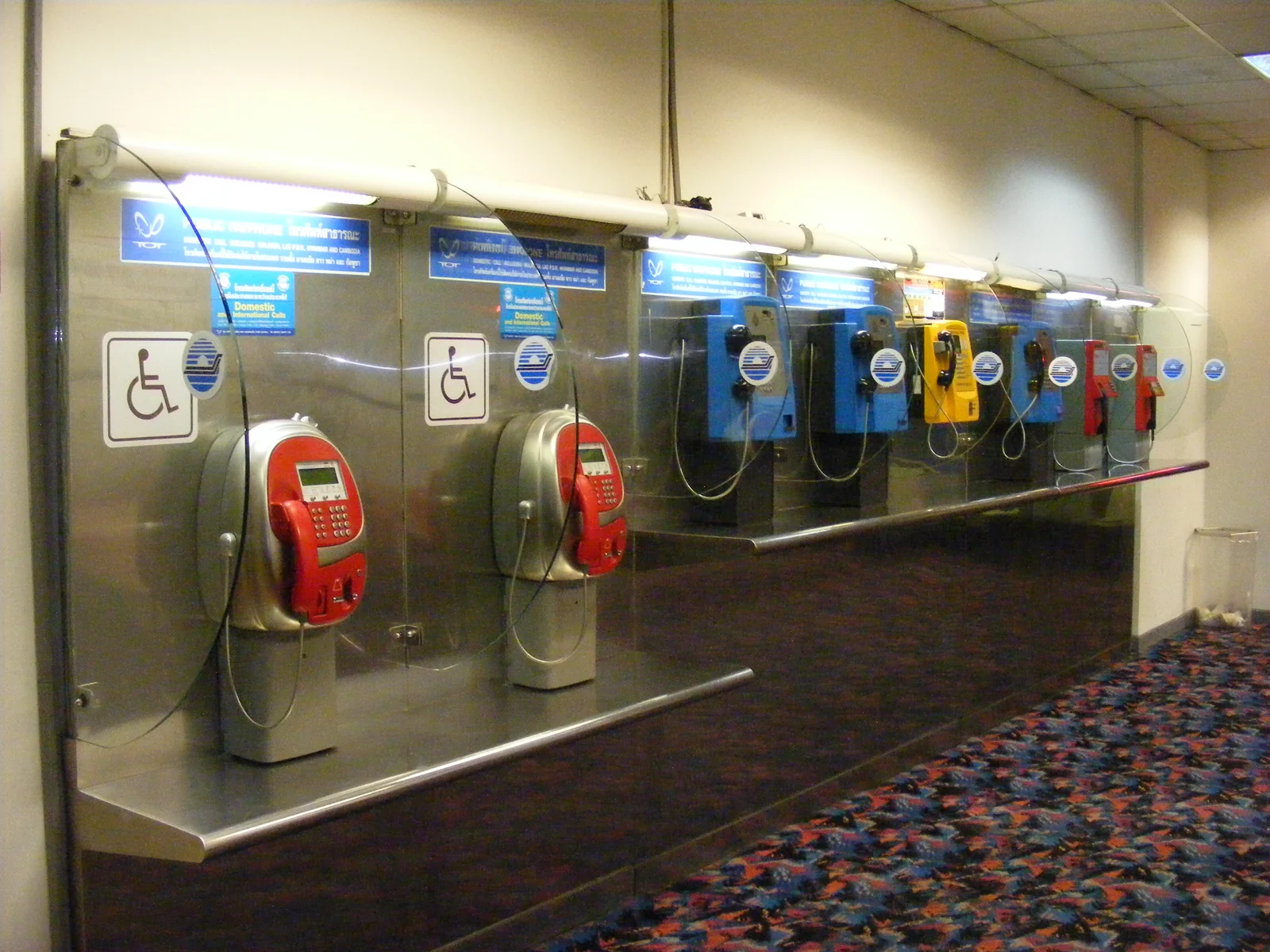 Photographer: User:Mattes. Source: Wikimedia Commons. License: CC BY-SA 3.0.
Six operators on the route and what each one buys you
Six airlines run the Bangkok to Chiang Mai flight route year round. Two fly from Suvarnabhumi only, three fly from Don Mueang only, Thai AirAsia covers both. Picking the right one depends on what you are trading off against the headline fare.
Thai VietJet and Thai Lion Air, the cheapest LCC tier
Both fly Don Mueang to Chiang Mai on similar pricing. Base fare runs in a narrow band outside Songkran, Yi Peng (November full moon), and Chinese New Year. The headline fare excludes checked baggage, seat selection, and any meal. A traveler with one suitcase lands at full-service price territory after add-ons.
- Base fare one way: from $21 low season, up to $48 mid-week mid-season
- Checked bag 20 kg: $12 to $22 added at booking
- Seat selection: $3 to $8
- Net all-in low season: $40 to $55 per traveler with bag
Smog-season cancellation rate is no higher than other seasons. The aircraft fly above the haze layer, only the visual approach changes. Thai VietJet’s on-time record beats Thai Lion Air’s by 5 to 8 percentage points across the May to October monsoon.
Thai AirAsia, the both-airport LCC option
Thai AirAsia runs about 30 weekly direct flights and is the only LCC operating from both Suvarnabhumi and Don Mueang. Base fare tracks Thai VietJet within $5. The Suvarnabhumi service is the practical advantage for travelers staying east of the Chao Phraya river. AirAsia’s on-time record on the lane runs roughly 8 to 12 percentage points above Lion Air across all seasons.
Bangkok Airways, the boutique option from Suvarnabhumi
Bangkok Airways runs the route from Suvarnabhumi with the included extras that LCCs strip out. The lounge access at BKK applies to every class, including the base economy fare. The carrier flies the ATR turboprop on most rotations rather than a jet, which sits closer to the cabin floor and feels more like a regional hop than a domestic mainline flight.
- Base fare one way: $85 to $150 mid-season
- Included: 20 kg checked bag, meal on board, lounge access at BKK
- Aircraft: ATR 72-600 turboprop on most departures
- Best for: Suvarnabhumi-side traveler with airport buffer time, plus passengers who route Bangkok Airways elsewhere in the trip
For travelers who string Chiang Mai together with Koh Samui later in the trip, Bangkok Airways is often the only direct option to Samui too, so the loyalty math compounds.
Thai Airways, the full-service incumbent
Thai Airways operates the route from Suvarnabhumi on Airbus A320 and occasional A330 widebody equipment at peak. Base fare matches Bangkok Airways at $80 to $150 one way including bag and meal. The widebody rides ground turbulence at the foothills better than the ATR or the LCC 737, though the operational record sits within a percentage point of Bangkok Airways across the year.
Nok Air, the price-led DMK alternative
Nok Air covers Don Mueang to Chiang Mai on price-matched fares to Thai Lion Air. Punctuality record is the weakest of the six per the published OTP data. For travelers transferring from another Nok Air route, sticking with the same group simplifies bag handling.
Suvarnabhumi or Don Mueang, the same airport math as the Phuket lane
The total cost comparison on the Bangkok to Chiang Mai flight tracks closely with the Phuket lane analysis. Suvarnabhumi has the rail link advantage. Don Mueang has only the LCC fare advantage on paper.
Suvarnabhumi (BKK) sits 30 km east of central Bangkok. The Airport Rail Link runs Phaya Thai to BKK in 30 minutes for THB 45. A Sukhumvit hotel reaches BKK door to door in 40 to 50 minutes for about $3 per person.
Don Mueang (DMK) sits 25 km north of central Bangkok. There is no rail link. A Sukhumvit hotel reaches DMK by taxi in 45 to 60 minutes off-peak, 75 to 90 minutes during evening rush. The DMK security queue runs 15 minutes slower than Suvarnabhumi on average.
- Sukhumvit hotel to BKK by rail: 40 to 50 minutes, about $3 per person
- Sukhumvit hotel to DMK by taxi: 45 to 90 minutes$0 350 to 500 including tolls
- BKK security queue average: 20 minutes
- DMK security queue average: 35 minutes
The cheapest Don Mueang LCC fare disappears against the taxi cost and the queue. The LCC stays worth it for travelers already in northern Bangkok, travelers booking far enough out for the base fare without bag, and travelers willing to trade time for budget.
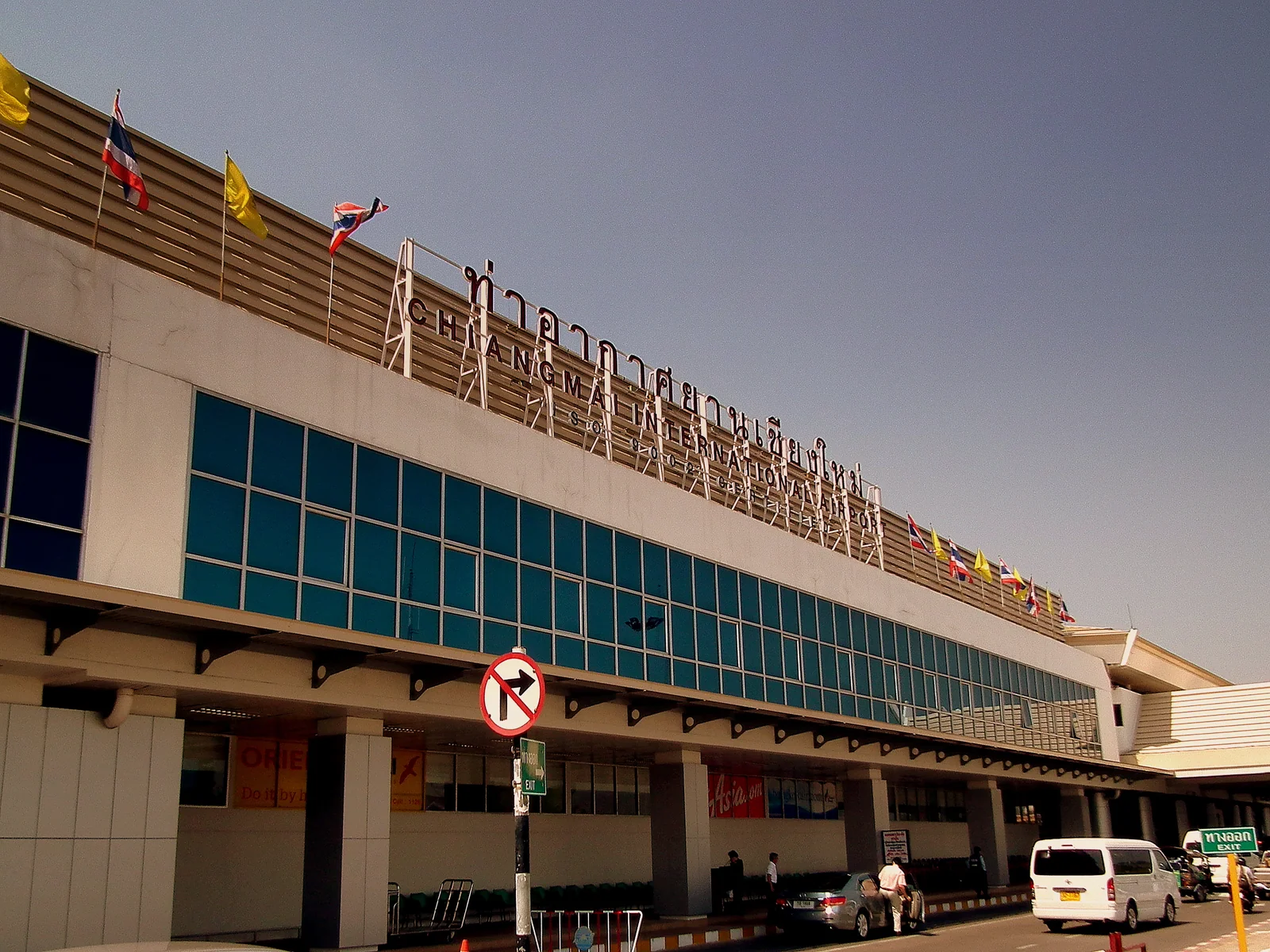 Photographer: calflier001. Source: Wikimedia Commons. License: CC BY-SA 2.0.
Chiang Mai airport on arrival and the CNX flat-rate taxi most aggregators hide
Chiang Mai International is a single terminal on the western edge of the city. Domestic arrivals deplane on the ground floor, clear to the arrivals hall in 8 to 14 minutes from wheels-down. The bottleneck is not the taxi queue, which moves fast, but the choice of transfer mode that hides real cost differences.
Five transfer options to Old City and Nimman, the zones most often booked by travelers arriving for the first time:
- CNX flat-rate taxi$0 150: The official airport flat rate to anywhere within Chiang Mai city. Many drivers push the metered alternative at THB 200 to 250. Ask explicitly for “flat 150” at the taxi queue counter.
- Metered taxi$0 200 to 250: Door to door for Old City. Up to THB 230 for Nimman. Standard meter, no airport surcharge.
- Grab or Bolt$0 110 to 200: App-based, no haggling, runs cheaper than the metered taxi for the Old City and Nimman runs.
- Tuk-tuk$0 100 to 150 haggled: Drivers claim THB 150 is fixed, real floor is THB 100 for the Old City. No AC, exposed to road dust, fine for hand-luggage only.
- Songthaew (red truck)$0 40 per person: The budget hack. Red trucks loop through the airport access road. Flag one outside the small road exit, not in the official taxi queue. Share with other passengers, drop close to the destination not at the door.
Pre-book the airport transfer if you land during the smog season window or in the Yi Peng festival weekend when fares spike and queue times stretch.
Best booking window and the smog-season exception
The route prices on lead time, Thai calendar, and a smog-season effect that does not match the demand drop. Off-peak base fares hold at the low end of every operator’s range from May through October outside school holidays. Cool season (November to February) and Songkran (mid-April) add 40 to 70 percent across every carrier.
The smog season runs February through April. Air quality routinely exceeds 200 AQI in March. Tourist demand drops noticeably during this window. Fares do not. The major operators hold pricing because business travel and Bangkok-resident weekenders fill the seats.
Aggregator comparison. The cheapest fares and the full-service listings surface the same inventory through GDS partners. Some per-route pages show bag and seat-selection fees inline, others do not. For the Bangkok to Chiang Mai lane, check current schedules and fares as the starting point.
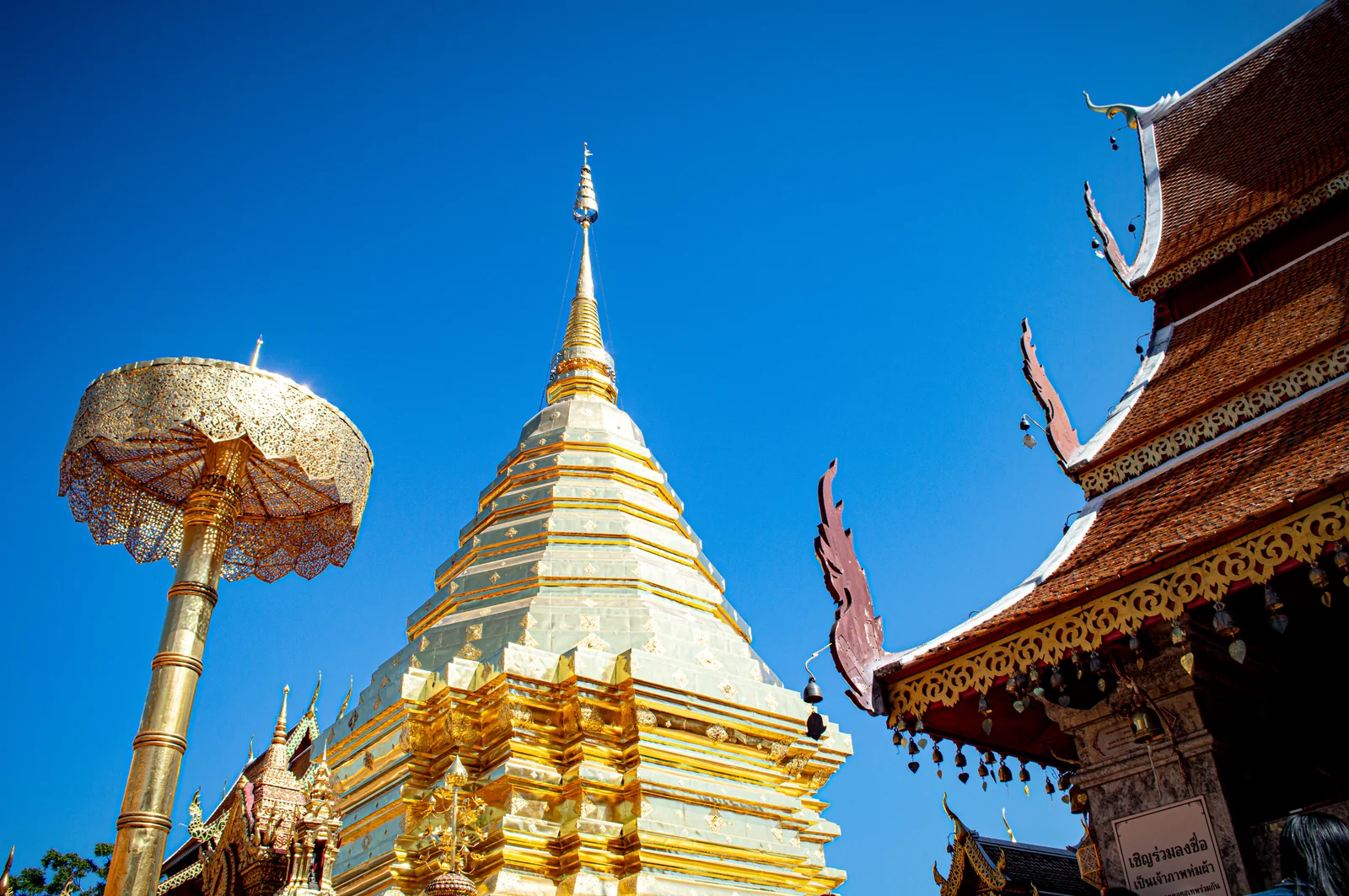 Photographer: Philip Nalangan. Source: Wikimedia Commons. License: CC BY 4.0.
See also our Chiang Mai transport guide.
Frequently asked questions about flying Bangkok to Chiang Mai
How long is the flight from Bangkok to Chiang Mai?
Which Bangkok airport should I fly from?
How much does a Bangkok to Chiang Mai flight cost?
Should I fly or take the overnight train?
How do I get from Chiang Mai airport to the Old City?
Is the smog season a real problem for Chiang Mai arrivals?
Where to stay in Chiang Mai after the flight
Three SHA-certified picks across the zones booked most often to anchor the first night after the flight.
Planning the wider trip helps too. See where to stay in Chiang Mai and our 3 days in Chiang Mai itinerary. Flying in from abroad, compare options in our Hong Kong flights guide. Adding the islands later, our Koh Samui flights guide covers the usual next hop.
For domestic and international Thailand flight strategy, BKK vs DMK airport choice, the Koh Samui monopoly, and season pricing windows, see our complete Thailand flight guide.