Ayutthaya sits 80 km north of Bangkok, and the cheapest way to reach it costs about $0.45. The catch is that most guides send you to the wrong building. They tell you to go to Krung Thep Aphiwat Central Terminal, the big new station on the MRT Blue Line at Bang Sue. That is correct if you want a reserved seat. It is wrong if you want the 15 baht third class ticket everyone actually means when they say “take the train to Ayutthaya.”
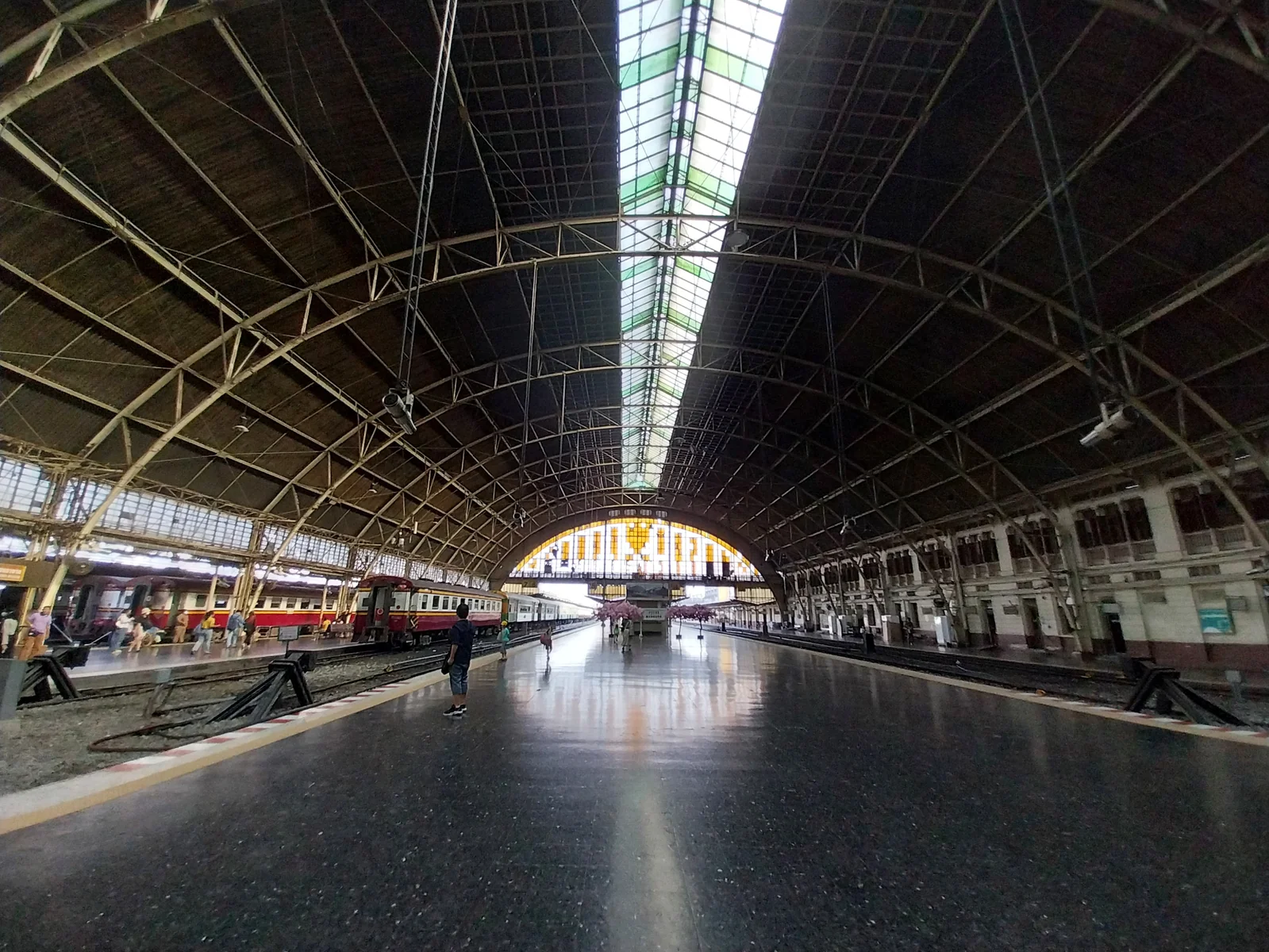
The State Railway still runs ordinary services to Ayutthaya out of Hua Lamphong, the old 1916 station downtown. Those carry third class only. They cannot be reserved. Which station you walk into is decided by the class you intend to ride, not by where you are going. Get that backwards and you either pay thirty times more than you planned or you stand at a counter that has nothing left to sell you. Full schedules and live pricing for the run sit on the Bangkok to Ayutthaya route page.
What the run costs and how long it takes
Every train heading north or northeast out of Bangkok stops at Ayutthaya, which is why frequency is high and the fare spread is so wide. You are buying a seat on a long distance service that happens to stop 80 km up the line. Current departures and prices are on the live schedule for this leg.
The hard numbers, per person, one way:
- Third class seat 15 baht (about $0.45). Fan cooled, bench seating, no reservation.
- Second class seat 60 baht (about $1.80).
- Second class air conditioned seat 240 baht (about $7).
- Second class air conditioned berth 550 baht (about $16).
- First class air conditioned berth 880 baht (about $26).
Journey time splits the same way the fares do. Express and special services run the leg in roughly one hour. Ordinary services average about one hour 45 minutes, and German rail blogs that ride this line regularly warn the real figure can stretch toward three hours when the northern line backs up. Book nothing tight on the far end.
Why there are two Bangkok stations on this route
Bangkok moved its long distance rail terminus to Krung Thep Aphiwat Central Terminal, and most travel writing has treated Hua Lamphong as closed ever since. It isn’t. Eleven ordinary services a day still work the Ayutthaya leg out of Hua Lamphong, and they carry third class only.
So the split runs like this. Anything reserved, anything air conditioned, anything express departs Krung Thep Aphiwat. The 15 baht bench seat departs Hua Lamphong. Both stations sit on the MRT Blue Line, so neither is hard to reach, but they are not interchangeable and the counter at one will not sell you the other’s ticket.
 Photographer: กสิณธร ราชโอรส. Source: Wikimedia Commons. License: CC BY-SA 4.0.
If you are already moving around the city on rail, the Bangkok Skytrain and metro guide covers the interchanges you’ll use to reach either terminal.
Reserved seats and how they sell out
Reserved classes out of Krung Thep Aphiwat are the comfortable option and the one that fails on a bad day. Japanese travel blogs covering this route report being told at the counter that Ayutthaya was sold out. Their fallback was a later ordinary train, taken just to get a seat at all. Short segments on long distance trains are released last, and Ayutthaya is a short segment on a train going much further north.
Named services worth knowing:
- SP21 departs 06:10, arrives 06:58. Fastest scheduled option on the day.
- Rapid No. 111 departs 07:50, arrives in just over an hour. The best single departure for a day trip.
- EX75 departs 08:45, arrives 09:41.
Tickets for reserved classes can be bought at the station up to two hours before departure, and for short hops they are often only released the day before. There is no way to lock a seat weeks out.
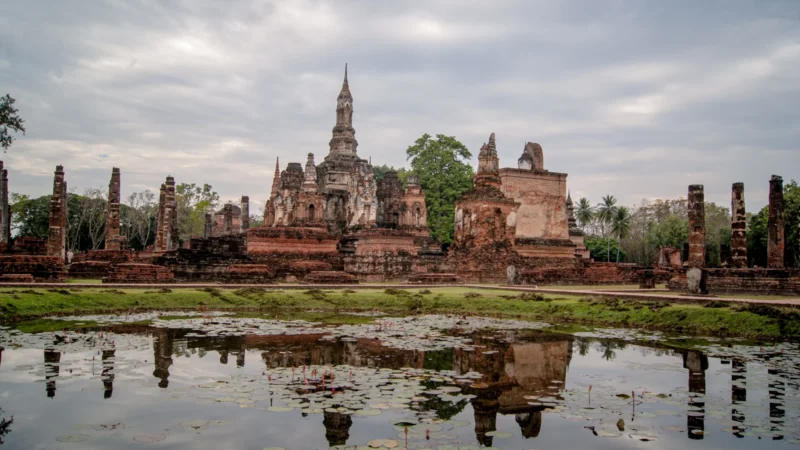
Take Rapid No. 111 at 07:50 and you’re walking the ruins before 09:30, which is the last hour of usable light before the heat sets in. Skip weekends and Thai public holidays entirely if you can. Those are the days the counters run dry and the historical park fills up.
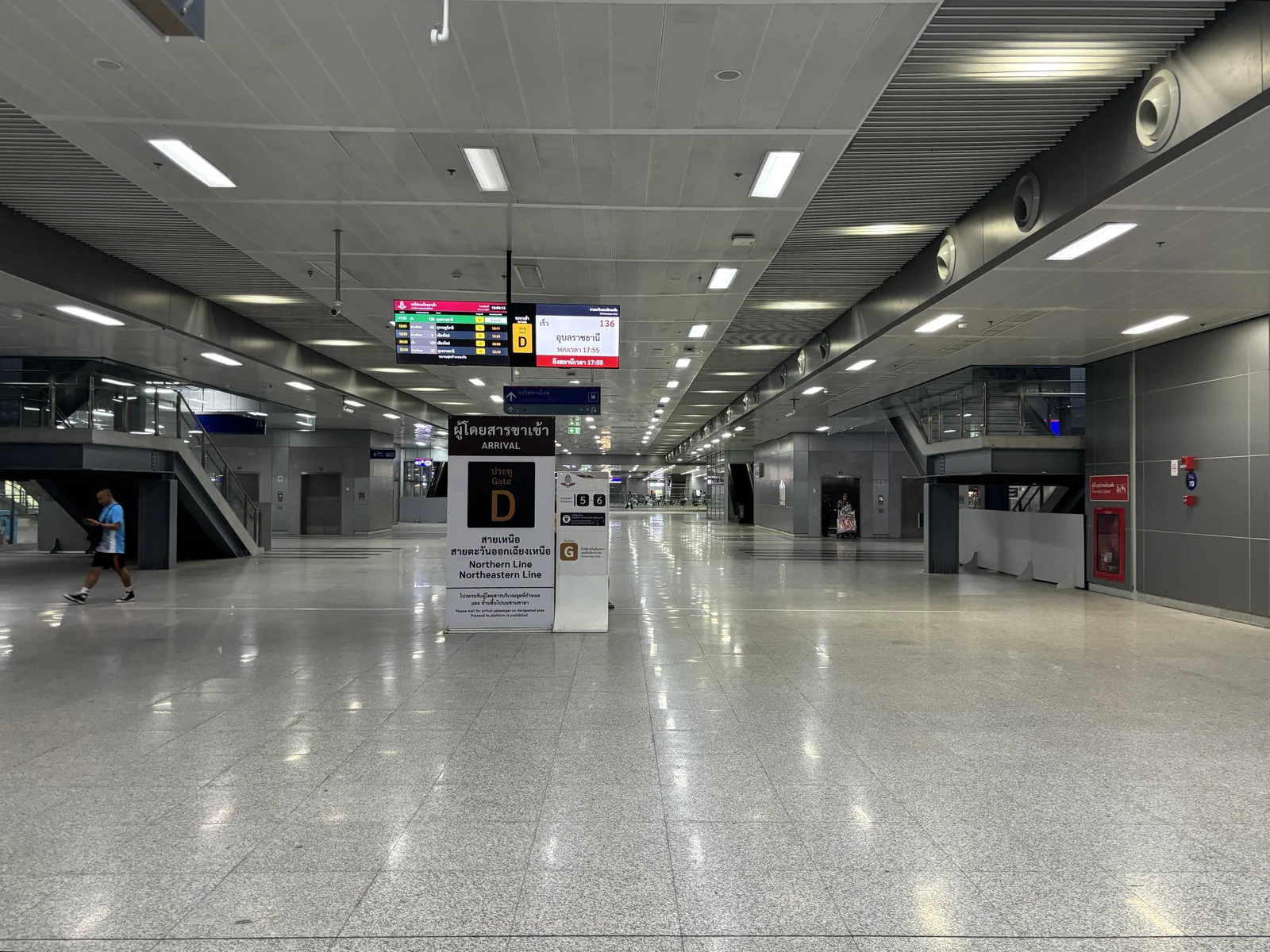 Photographer: MNXANL. Source: Wikimedia Commons. License: CC BY-SA 4.0.
Third class at 15 baht and what you give up
Fifteen baht buys a wooden or vinyl bench, fans instead of air conditioning, and open windows. For a run of under two hours in the morning, that is a reasonable trade. In the middle of a hot afternoon it is a different proposition, and the fans do not keep up.
The real constraint is not comfort, it’s the booking rule. Third class on ordinary trains cannot be reserved at all. You buy it on the day of travel, at the station where the journey starts. That means turning up at Hua Lamphong with time in hand and accepting that you take whichever service is next.
Two useful ordinary departures: No. 201 leaves at 10:15 and arrives 12:14, and No. 210 leaves at 18:21 and arrives 20:05. The second one is a return worth noting rather than an outbound.
When the minivan is the better call
The train is the cheapest way north and the more interesting arrival. It is not always the right pick. Minivans leave the Mo Chit New Van Terminal in Chatuchak for 60 to 100 baht, roughly $2 to $3, and run the trip in one to one and a half hours. They seat about 13 and leave when full, with waits that rarely pass 30 minutes.
That makes the van more predictable than an ordinary train and barely more expensive. Public buses from the Mo Chit Northern terminal cost a little less and take a little longer. Where the comparison gets stark is the top of the range:
- Third class train about $0.45.
- Minivan or bus roughly $1.50 to $3.
- Ride hailing car about $27 to $45 return.
- Metered taxi about $36 to $54.
Same 80 km, same road, and a spread of roughly a hundred times from bottom to top. Nothing about the destination changes.
Choose the van if you need to be in Ayutthaya at a specific hour. Choose the train if the arrival is part of the point, and use the live schedule for the Ayutthaya leg to see what is actually running on your date. Ayutthaya is one of several runs worth doing out of the capital, and the day trips from Bangkok guide covers how it stacks up against the others.
Getting back to Bangkok before dark
This is the part that catches people. Northbound delays propagate south, and the last usable return is the constraint on the whole day. Check the return time before you leave the station in the morning, not at five in the afternoon in the historical park.
Ordinary No. 210 arriving Bangkok at 20:05 is the late option. If the afternoon has already slipped, a van back from Ayutthaya is the safer bet than waiting on a train that is running an hour behind. Neither choice is expensive enough to agonize over.
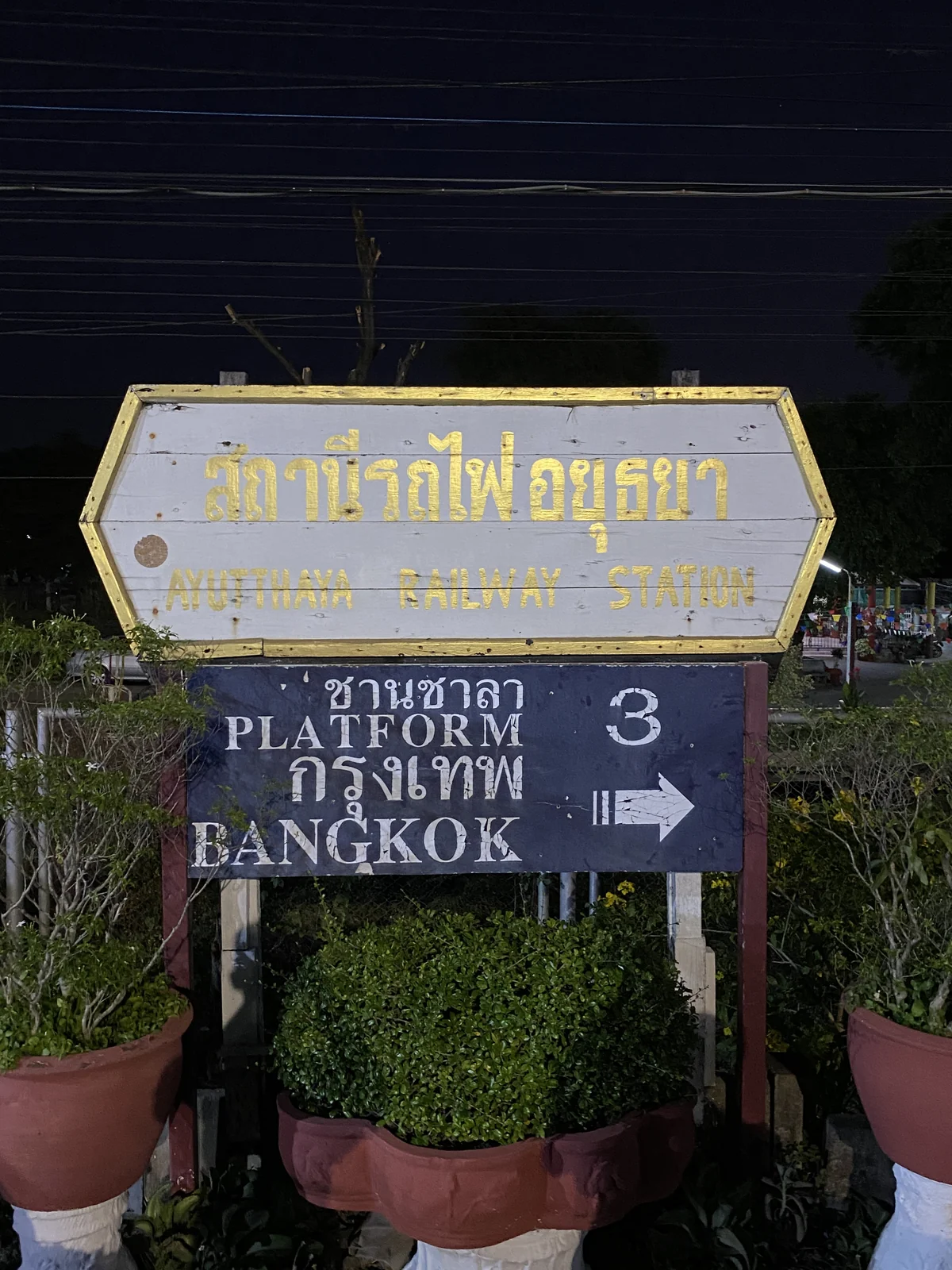 Photographer: Griff88. Source: Wikimedia Commons. License: CC BY-SA 4.0.
Ayutthaya station is on the wrong side of the Pa Sak river from the historical park. There’s a small passenger ferry from the pier a short walk from the station, or tuk tuk drivers waiting in the forecourt who will quote a half day rate. Renting a bicycle once you’re across is the cheapest way to cover the ruins, which are spread out further than the map suggests.
Where to base for the day trip
Almost nobody sleeps in Ayutthaya on a first visit, and there is no strong reason to. The run is short enough that Bangkok stays the sensible base, and you get a better hotel for the money. Staying near either rail terminal or on the MRT Blue Line is what actually matters, because that is what makes an early departure painless.
Our Bangkok hotel roundup covers the certified properties by neighborhood. The three day Bangkok itinerary shows where an Ayutthaya run fits without wrecking the rest of the trip. Plenty of people treat Ayutthaya as a stop on the way north instead of doubling back. If that’s the plan, the Chiang Mai transport guide and the Chiang Mai flights guide cover the onward legs. The Thailand transport overview puts the whole network in one place.
See also our Pattaya transport guide.
See also our Hua Hin transport guide.
See also our Kanchanaburi transport guide.
See also our Bangkok transport guide.