The first thing a good Bangkok cooking school hands you is not a knife. It is a basket. Before the wok ever heats up, a teacher walks you through a wet market, points at a wall of green and red chilies, and explains why the small ones are the ones that bite. That market walk is the part travelers remember long after they have forgotten the recipe. It is also what separates a class worth a morning from a class that is just a meal you cooked yourself.
We pulled together the eight Bangkok cooking schools that come up again and again across traveler reviews. Then we sorted them by what the price actually buys, the market visit, the number of dishes, the kitchen, and the part of town. The cheapest classes run about 1,000 baht (around $29). The most polished run past 3,000 baht (around $90). Below we lay out which one fits which kind of traveler, so you book the class that suits your trip rather than the first result that loads.
If you are still shaping the wider trip, our guide to the best things to do in Bangkok and the three day Bangkok itinerary both leave room for a morning in a kitchen. A class pairs well with a follow up evening on our Bangkok street food guide, where you taste the restaurant version of what you just learned to make. You can also join a guided Bangkok food tour to find the stalls a local would.
How to choose a Bangkok cooking class
Four things decide whether a class is right for you, and price is only one of them. The market visit is the first. Morning classes almost always include a walk through a fresh market, while afternoon and evening slots often skip it. If you want to learn how Thai cooks shop, book a morning.
The second is dish count. Budget schools tend to teach five or six dishes plus a curry paste pounded from scratch. The premium schools sometimes teach fewer, trading volume for a nicer room and a smaller group. The third is location, because a class far from your hotel can cost you ninety minutes of transfer at each end of the day. The fourth is diet, since most schools adapt for vegetarians but only one is built for it.
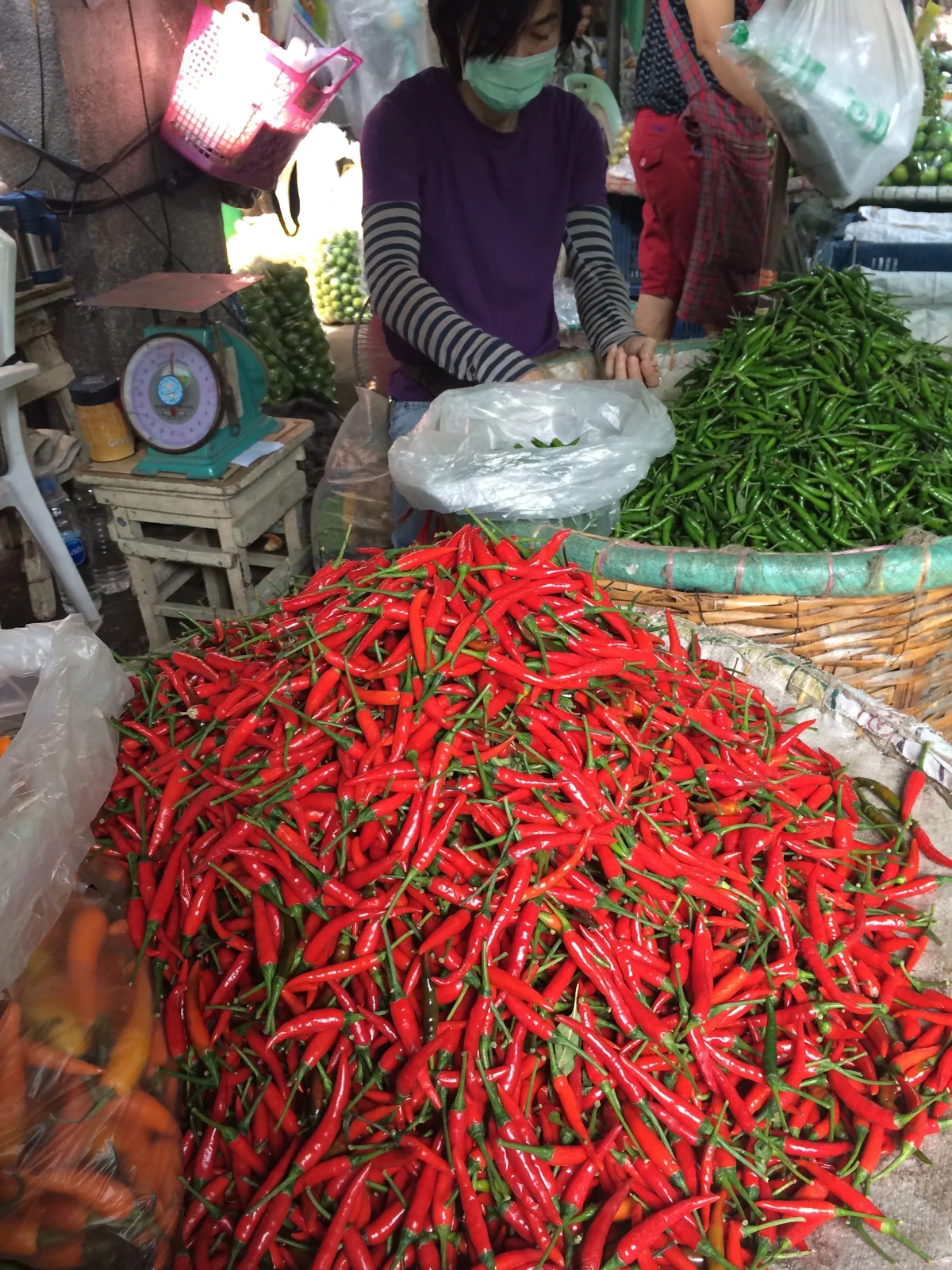 Photographer: Jtamad. Source: Wikimedia Commons. License: CC BY-SA 3.0.
One more thing worth knowing before you book. The most loved small schools fill days or weeks ahead, and several take only cash for the balance on the day. Reserve before you fly, and carry baht.
Book a morning class on your first or second day in Bangkok, not your last. If you fall for a dish, you then have the rest of the trip to hunt down the restaurant version and compare. Leaving it to the final morning means you cook it once and never taste a benchmark.
Sompong Thai Cooking School, the Silom value pick
Sompong (โรงเรียนสอนทำอาหารไทยสมพงษ์) is the school we point most budget travelers toward. It sits in Silom, a short walk from the Chong Nonsi train stop, and the morning class runs about 1,000 baht (around $29). For that you get a market tour at the nearby fresh market, then your own cooking station where you make five dishes plus a curry paste ground by hand.
The reason it works is the individual station. You are not watching a chef and taking notes. You cook every dish yourself, and the teachers move between stations correcting your heat and your timing. Travelers who took the morning class consistently single out the curry paste lesson as the thing they kept doing at home, a point the team at Minority Nomad made after their own session.
It works for the traveler who wants a real market walk and the most dishes per baht, and who is staying somewhere near Silom or Sathorn. The honest limitation is that the daily classes are small and book out ahead, and the kitchen is a simple walk up space rather than a polished studio. If you want atmosphere over value, look further down this list.
Silom Thai Cooking School, the cheapest broad menu
Silom Thai Cooking School (โรงเรียนสอนทำอาหารไทยสีลม) plays in the same price band as Sompong, around 1,000 baht (around $29) for a class of roughly four hours, and it also includes a market visit. The draw here is the dish count. Sessions typically run to six dishes, including a tom yum goong and a mango sticky rice, so you leave with the widest spread of any budget school.
The trade is pace. Silom runs a high volume of classes, which means larger groups and a quicker rhythm than the small premium kitchens. If you learn well in a busy room and want maximum recipes for minimum money, that is a fair deal. If you want a teacher’s full attention, it is not the one.
This is the class for the traveler who wants the longest recipe list at the lowest price and does not mind cooking elbow to elbow with a full group. It is a short walk from the Surasak and Chong Nonsi stops, which keeps the transfer cost near zero for anyone staying around Silom.
Getting there. The Silom cluster of Sompong, Silom Thai, and Blue Elephant all sit a short walk from the Chong Nonsi or Surasak train stops, so you can reach a morning class without a taxi. Amita and Baipai sit off the train map, which is why both fold a boat or a car transfer into the price.
Chef LeeZ, the most dishes and the longest waitlist
Chef LeeZ (เชฟลีซ) is the school that turns up at the top of the Bangkok rankings year after year, built on more than 1,750 traveler reviews. The signature class runs about four hours and teaches up to twelve dishes in one sitting. The menu is yours to choose, and a detailed market tour has the teacher explaining every ingredient and the substitutions you can find back home.
The price sits around 2,400 baht (around $69), which the school frames as under 200 baht per dish taught, the lowest cost per recipe of any class on this list. That math only holds if you actually want twelve dishes in a morning, which is a lot of cooking. The pace is closer to a workout than a leisurely class.
It works for the serious home cook who wants the highest dish count, careful technique, and notes they can use in their own kitchen. The catch is real: there is one small class a day, and it books out weeks ahead, so it is the first thing to reserve once your dates are set, not the last.
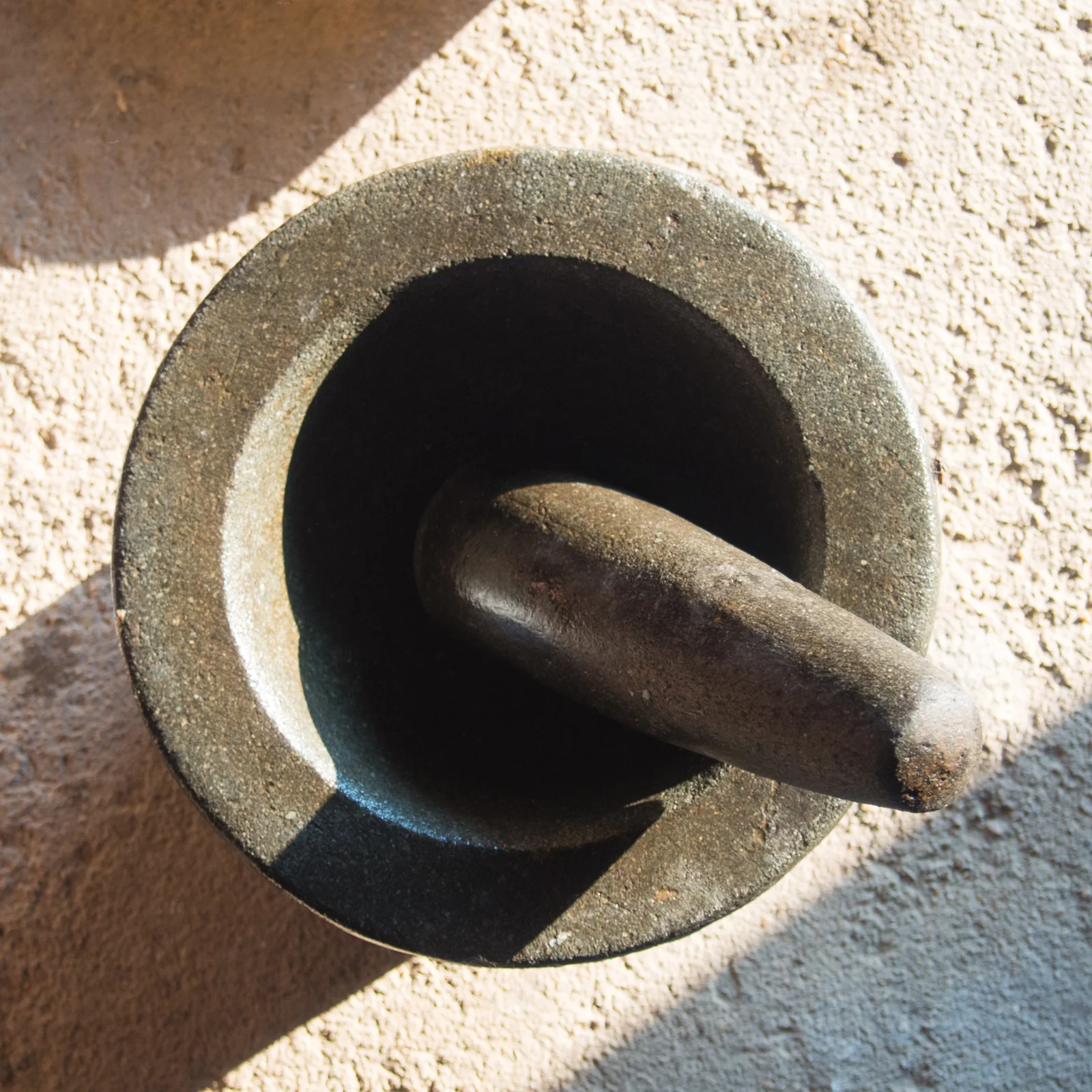 Photographer: Takeaway. Source: Wikimedia Commons. License: CC BY-SA 3.0.
Blue Elephant, the class inside a heritage mansion
Blue Elephant (บลูเอลิเฟนท์) is the most polished room on this list, and the most expensive. The class runs inside a restored 1903 mansion on South Sathorn Road, a short walk from the Surasak stop, and it is run by the team behind one of Bangkok’s best known Thai restaurants. The morning session includes a market tour and teaches four or five dishes, with the price around 3,300 baht (around $94).
You are paying for the setting and the standard, not the volume. The recipes are restaurant grade, the kitchen is beautiful, and the whole thing feels like a class at a culinary school rather than a home. For some travelers that is exactly the point. For others, four dishes for 3,300 baht reads as a lot of money for not much cooking.
Book it if you want a refined morning in a landmark building and you value atmosphere over recipe count. Skip it if your goal is to walk away with the most dishes, since the budget schools teach more food for a third of the price.
Amita Thai Cooking Class on the Bangkok canal
Amita (อมิตา) trades a central address for the prettiest setting of any class here. It runs from a home along the Bangkok Yai canal in Thonburi, on the quieter side of the river, and the morning includes a private long tail boat trip to reach it. The class costs around 3,000 baht (around $86) and teaches Thai staples like green curry, tom kha gai, and mango sticky rice in a garden kitchen with its own herb beds.
The host cooks alongside you, the pace is gentle, and the boat ride turns the commute into part of the experience. Reviewers who made the trip, including the writer behind The Insatiable Traveler, tend to describe it as the highlight of their Bangkok days rather than just a cooking lesson.
It works for the traveler who wants scenery, calm, and a home setting, and who does not mind that the location across the river adds travel time at both ends. If your schedule is tight or you are based far from the river, the logistics can eat the morning. Like the other small schools, it books out well ahead.
Baipai and Bangkok Bold, garden house versus studio
Two mid priced schools split the difference between budget and premium, and they suit very different travelers. Baipai (ใบไพล) runs from a traditional Thai house in the north of the city, with an open air kitchen, a calm garden, and free hotel pickup folded into the roughly 2,200 baht (around $63) price. It teaches four dishes at a relaxed pace, and the pickup matters because the school sits well away from the tourist core.
Bangkok Bold (บางกอกโบลด์) is the opposite in feel. It is a modern studio in the Old City, near Khao San and walking distance from the temples, and it runs around 2,500 baht (around $71). The approach is more contemporary, with a walk to a nearby market and a smaller dish count than the budget schools.
Choose Baipai if you want a garden setting and door service from your hotel and do not mind a longer ride. Choose Bangkok Bold if you are staying in the Old City and want a class you can walk to between temple visits. Both are good. Neither is the value leader, so the reason to pick them is the setting, not the menu.
May Kaidee, the vegan and vegetarian option
May Kaidee (เมย์ไก่ดี) is the one school here built around plants rather than adapting for them. The long running vegetarian kitchen near Khao San teaches a fully vegan menu of around ten Thai dishes, including tom kha and som tam, for about 1,500 baht (around $43). For a traveler who eats vegan, that dish count at that price is hard to match.
The setup is basic and not every session includes a market tour, so this is a class you book for the food and the value, not the polish. Meat eaters can enjoy it too, but the draw is the plant menu, and anyone hoping to learn seafood or meat techniques should look elsewhere.
It works for vegan and vegetarian travelers, and for anyone who wants a large, cheap menu of meatless Thai dishes near the Old City. Travel writer Claire of Claire’s Footsteps reached the same read after her plant based class in the city: strong value, simple room.
A note on neighborhoods. Sompong, Silom Thai, and Blue Elephant cluster around Silom and Sathorn, the easiest base if you also want rooftop bars and the river. May Kaidee and Bangkok Bold sit in the Old City near Khao San, best if your trip leans toward temples and markets. Amita and Baipai are out of the center, so factor the transfer into your plans.
What a Bangkok cooking class costs and what to book
The full spread runs from about 1,000 baht to 3,300 baht, and where you land depends on what you value. Here is the quick read on the eight schools by price and draw:
- Sompong, about 1,000 baht ($29): best value, real market tour, five dishes, Silom.
- Silom Thai, about 1,000 baht ($29): widest budget menu at six dishes, busier room.
- May Kaidee, about 1,500 baht ($43): vegan and vegetarian, around ten dishes, Old City.
- Baipai, about 2,200 baht ($63): garden house, hotel pickup, four dishes, far north.
- Chef LeeZ, about 2,400 baht ($69): up to twelve dishes, top ranked, books out weeks ahead.
- Bangkok Bold, about 2,500 baht ($71): modern Old City studio, walkable from Khao San.
- Amita, about 3,000 baht ($86): canal home, private boat, prettiest setting, across the river.
- Blue Elephant, about 3,300 baht ($94): heritage mansion, restaurant grade, four to five dishes.
If you want our shortlist, it comes down to three picks. Book Sompong if you want the most learning for the least money. Book Chef LeeZ if you are a keen cook chasing dish count and technique, and you can reserve early. Book Amita if the setting matters as much as the food and you want a morning you will photograph. Whichever you choose, a class slots neatly into a wider food trip, and you can keep the theme going with our roundup of the best Michelin restaurants in Bangkok for a celebration meal later in the week.
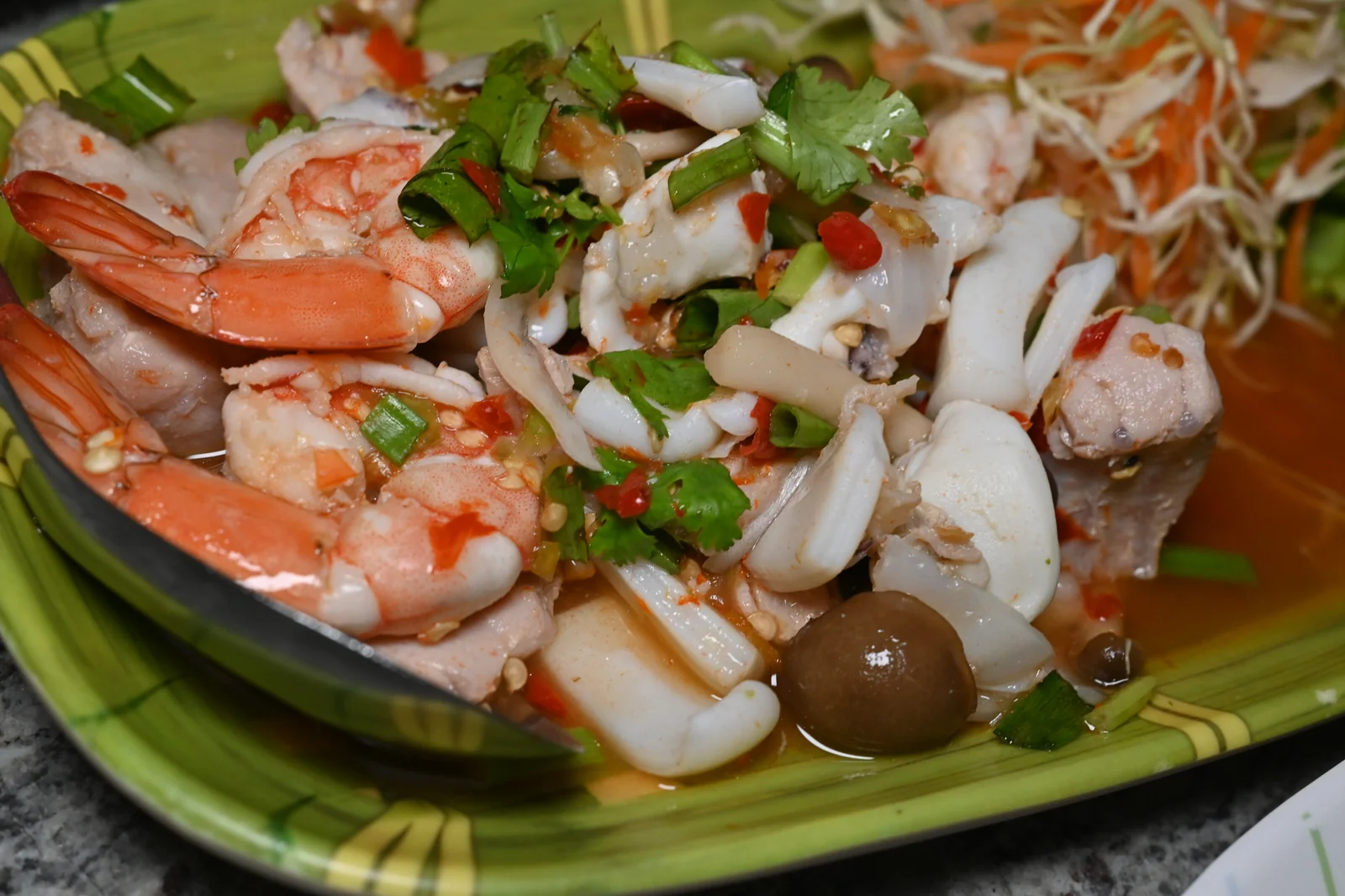 Photographer: Pattaya Patrol from Pattaya. Source: Wikimedia Commons. License: CC BY-SA 4.0.
You can find guided class options and current prices through our partner below, which is the simplest way to compare times and reserve a spot before they fill.
See cooking class times and live prices
Where to stay for a food first Bangkok trip
If eating is the point of your trip, base yourself where the food is. The riverside and Silom areas put you near the best markets, the cooking schools, and a quick ride to Chinatown. For a full set of options, see our guide to the best SHA hotels in Bangkok. Three picks that work well for a food led stay:
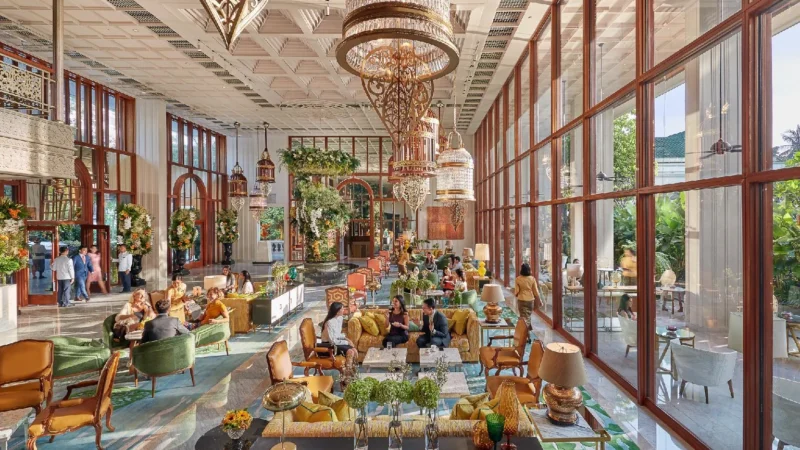
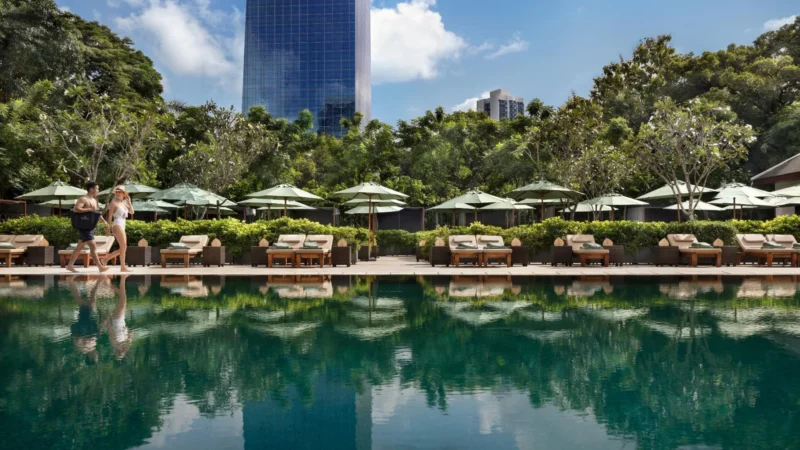
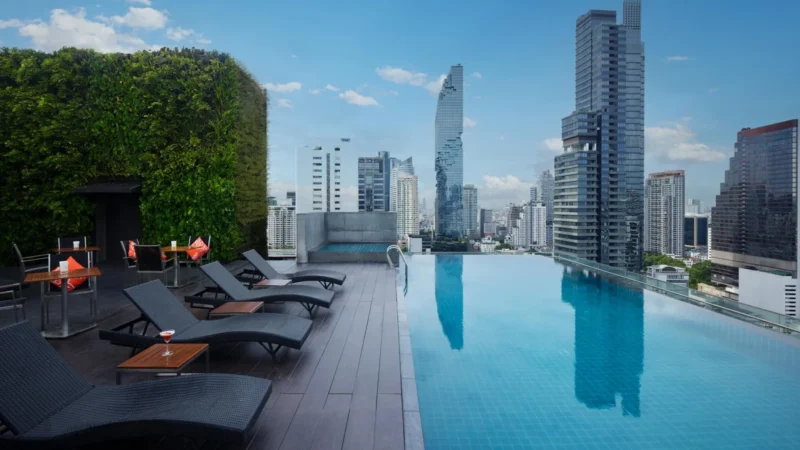
The Mandarin Oriental and Sukhothai put you on the river and in Sathorn, walking distance to the Silom schools and Blue Elephant. Amara sits closer to Chinatown, handy if your evenings lean toward street food. Planning the rest of the route? Our Thailand itinerary frameworks show where a Bangkok food stop fits across a longer trip.