Bangkok rewards the traveler who knows which corner to stand on and at what hour. The same noodle that costs 50 baht (about $1.40) near Rama V jumps to 120 baht (about $3.40) in a tourist stretch of Sukhumvit, and the same Chinatown stall that looks dead at noon is three deep in regulars by nine at night. The food is rarely the problem. Timing and the right block are.
This is a map, not a checklist. Twelve stalls and clusters, grouped by neighborhood, with the dish to order, what it costs, and the hour the place is actually good. We have read the reviews, cross checked the prices in baht, and weighted local turnover over tourist fame. Where a famous name is not worth the wait or the money for most travelers, we say so. If you only have one night, make it Yaowarat after dark. If you have three, spread the eating across the neighborhoods below.
One rule before you go. Bangkok street food is an evening scene more than a lunch one. Yaowarat barely exists at midday and comes alive after dark. Plan the big crawl for the cool hours, carry small baht notes, and treat the first stall as a warm up, not the whole meal.
How to read this Bangkok street food list
Every entry below carries three things. The dish that stall is known for, a price in baht with the rough US figure, and the window when it is worth your time. A stall can be excellent at 8pm and closed or coasting at 2pm, so the hour matters as much as the address.
Prices move with the catch and the season, so read them as a floor, not a fixed menu. A 50 baht noodle bowl is the local benchmark. Anything over 100 baht (about $2.85) for a single street plate is either crab, a tourist stretch, or a Michelin name. All three are flagged where they appear.
Most of these stalls take cash only. A few of the newer night market vendors now accept Thai QR payment through PromptPay, but do not count on it. Bring notes in the 20 to 100 baht range and you will never be the person holding up the line.
Yaowarat and Chinatown, the city after dark
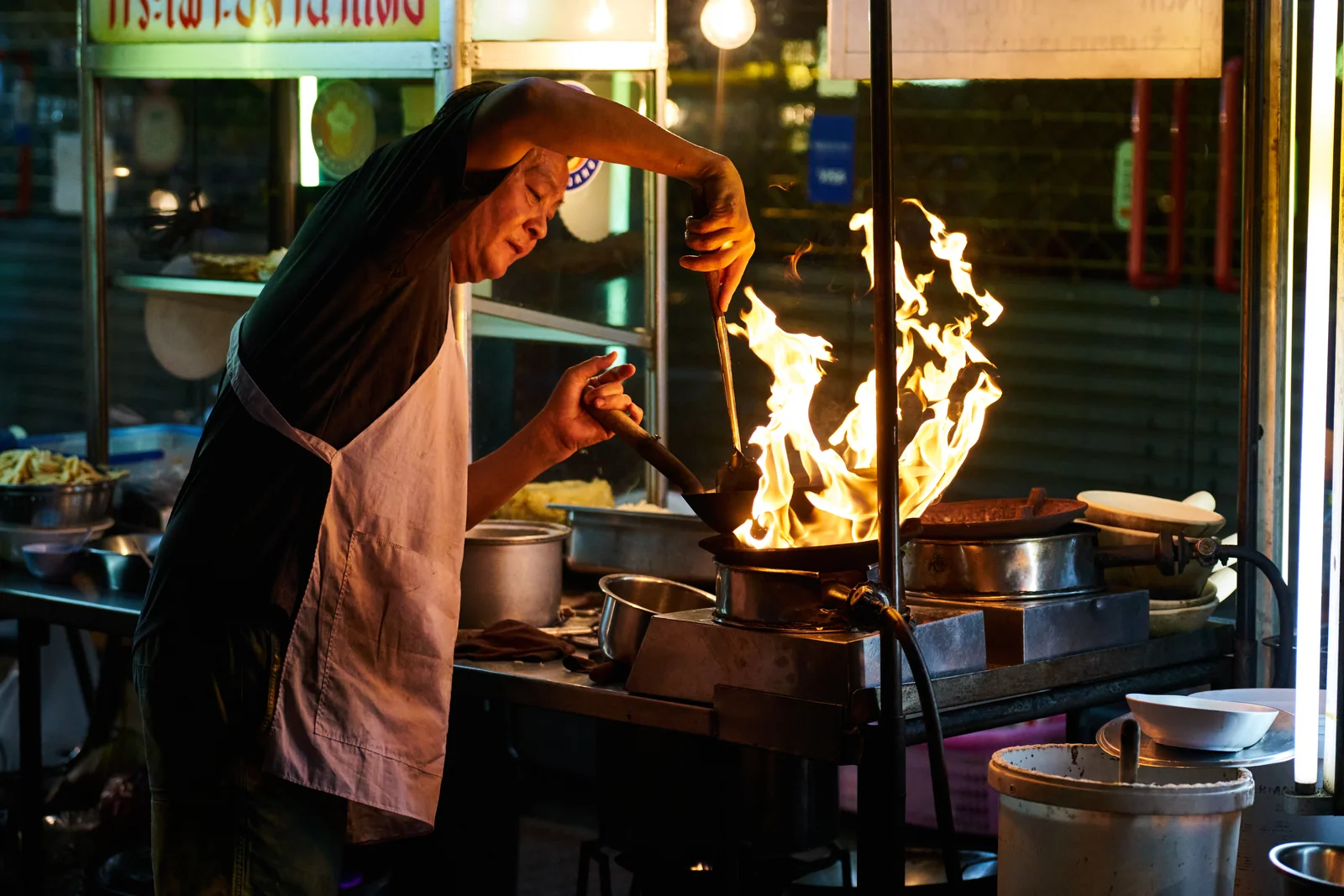
Yaowarat (เยาวราช) is the densest eating corridor in the city, and the Michelin Guide and CNN both built Bangkok street food coverage around it. The road runs through the heart of Chinatown and earns its nickname as the belly of the dragon. Come after 7pm, when the carts are fully set up and the heat has dropped, not for a midday look when half the street is shuttered.
Guay Jub Ouan Pochana (กี๊เจ๊บอ้วน) at 442 Soi Yaowarat 9 has served the same rolled rice noodle in clear peppery pork broth for over fifty years. It holds a Michelin Bib Gourmand, which means a real queue on weekend nights. A bowl runs roughly 50 to 100 baht (about $1.40 to $2.85). It works best for late eaters who arrive after 8pm and do not mind waiting twenty minutes for a seat.
Nai Ek Roll Noodles (นายเอ๊กลูกชิ้นปลา) is the other guay jub name on the street, and it is the better first stop for a newcomer. Nai Ek adds crispy pork to the same peppery broth, and the small bowls start at 20 to 30 baht (about $0.60 to $0.85). The open seating gets hot before the night cools, so the trade is a cheap famous bowl against a warm plastic stool.
Lim Lao Ngow (ลิ้มเหล่าโหงว) is for one thing only, and it has done that one thing for over eighty years. The fishball noodle here uses fishballs and egg noodles made in house, and a bowl lands around 60 to 80 baht (about $1.70 to $2.30). It is a stop on a crawl, not a full dinner, so pair it with something heavier nearby.
Pa Tong Go Savoey (ปาท่องโก๋เสวย) sells the fried dough fritter that locals dip in pandan custard, recommended by the Michelin Guide and best eaten hot off the oil. A portion runs about 20 to 40 baht (about $0.60 to $1.15). Treat it as the cheap sweet break between savory stops, and eat it on the spot rather than carrying it.
The crab fried rice stalls (ข้าวผัดปู) are where the Yaowarat bill climbs. The khao pad pu here comes loaded with sweet white crabmeat, and that pushes a plate to roughly 120 to 250 baht (about $3.40 to $7.15) depending on the night’s crab. It is the one richer plate to build a cheap crawl around, with the honest caveat that the price swings with the catch.
If you want the stalls without the navigation, a guided Chinatown food walk with a local guide runs the Soi Phadungdao and Charoen Krung loop in about three hours. For the full neighborhood, our Yaowarat and Chinatown guide maps the temples and entrances around the food.
Detailed entity data and the Michelin stall picks behind this section come from the Michelin Guide Thailand street food feature and from veteran food writer Mark Wiens at Migrationology.
The single best safety filter on Yaowarat is the line. A stall with ten Thais waiting turns its ingredients over fast, so the broth and the meat are fresh. An empty stall with food sitting under a lamp is the one to walk past, no matter how good the sign looks.
The Old City and its Michelin outlier
Cross west to the Old City around Phra Nakhon and the budget changes. This is where Raan Jay Fai (ร้านเจ๊ไฝ) cooks, the only Michelin starred street kitchen in Bangkok, run by a woman in ski goggles over a charcoal wok. The prices read like a restaurant, not a street stall:
- Charcoal crab omelette, the signature: reported at 1,500 baht (about $43)
- Most other dishes: 800 to 1,000 baht (about $23 to $29)
That is twenty to fifty times a normal street plate, which makes the why behind your visit the real question.
Be honest with yourself about why you are going. Jay Fai is a one time splurge and a long wait or an advance booking, not a casual dinner. If the queue and the bill do not bother you, the charcoal crab omelette is the order. If they do, the boat noodle alley below feeds you for the cost of the tip you would leave here.
A few blocks away, Kor Panich (ก.พานิช) is the benchmark for mango sticky rice in the city. A portion runs about 80 to 120 baht (about $2.30 to $3.40). The catch is the season. Mango sticky rice is only worth seeking out from roughly March to June, when the fruit is ripe, and the quality drops with off season mango. Time it right or skip it.
Victory Monument and the boat noodle alley
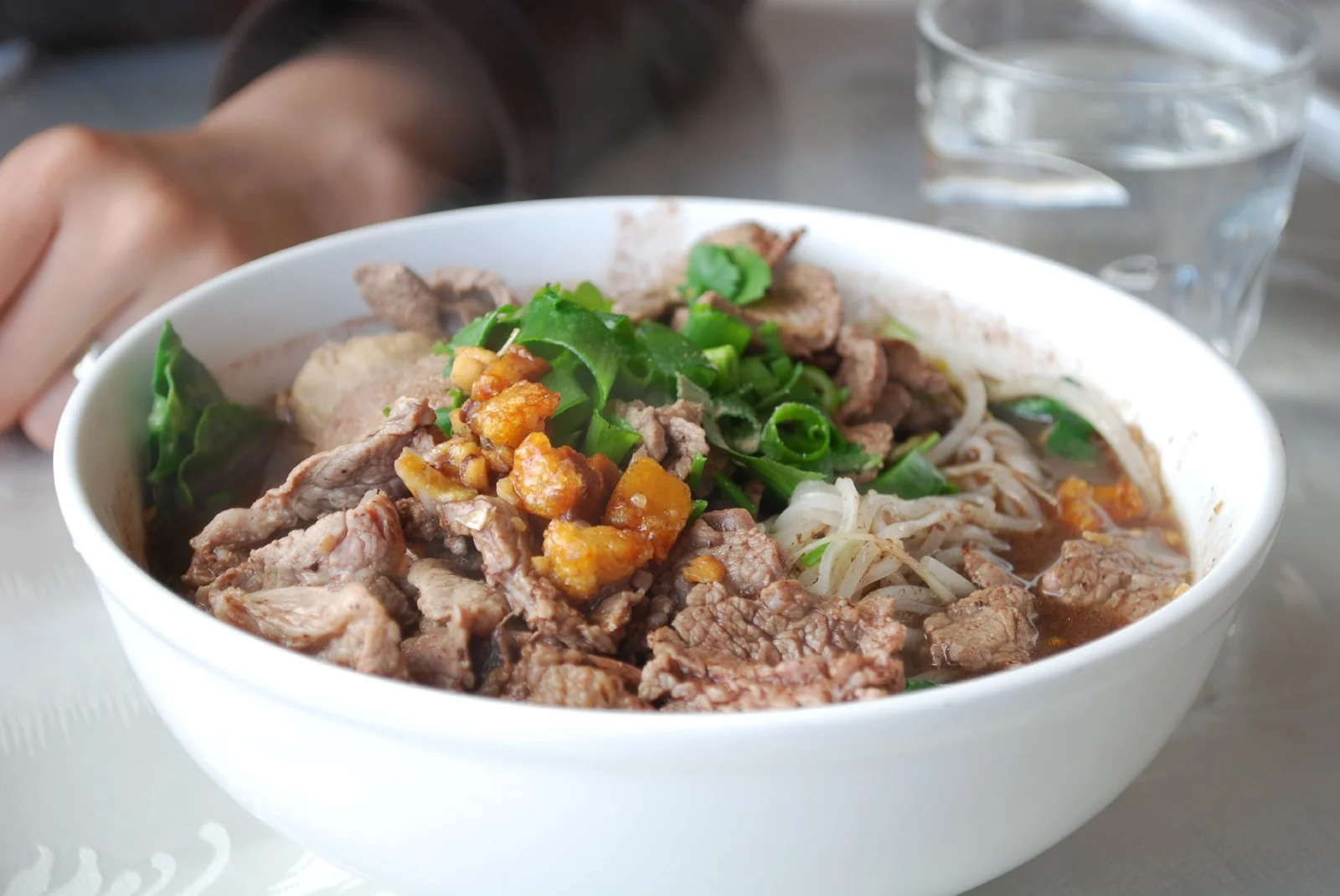
North of the center, the canal alley near Victory Monument is the home of guay teow reua (ก๋วยเตี๋ยวเรือ), the boat noodle. The bowls are deliberately tiny, served in a dark intense beef or pork broth, and you are meant to order three or four in a row. Each bowl runs only 13 to 30 baht (about $0.40 to $0.85).
The math is the catch. Tiny bowls feel cheap until you have eaten six, and the alley is cramped at peak. Still, no other Bangkok experience lets you taste this much for this little, and the stack of empty bowls at the end is half the fun. Go hungry, count your bowls, and budget more than the per bowl price suggests.
Ban Tat Thong, the strip priced for students
Ban Tat Thong (บรรทัดทอง) near Chulalongkorn University has become the loudest new food strip in the city. It is a long run of stalls and shophouse kitchens covering grilled skewers, noodles, and Thai Chinese desserts, with most plates between 45 and 80 baht (about $1.30 to $2.30). The crowd is students and young Bangkok, not tour groups.
Time it carefully. Most stalls open only in the late afternoon, and the peak energy runs from 7pm to 10pm, which is also when the lines are longest. Arrive around 6pm and you beat the worst of the wait while the kitchens are fully running. This is the strip to walk end to end rather than planning a single stall.
A quiet local move is to split the evening across two neighborhoods. Start with one or two bowls in the Victory Monument boat noodle alley around 6pm, take the BTS three stops, and finish on Ban Tat Thong by 7:30pm before the student crowd peaks. You eat at both at their best hour and never wait in a long line.
Ari and Sam Yan for a calmer crawl
Not every good night needs the crush of Chinatown. Soi Ari (ซอยอารีย์) in the Phaya Thai district has grown into a relaxed food neighborhood where stalls sit among coffee shops. A som tam or noodle plate runs 50 to 90 baht (about $1.40 to $2.55), and skewers of moo ping are pocket change at a few baht each. It is more spread out than Yaowarat, so it rewards a plan over aimless wandering.
Sam Yan (สามย่าน), also near Chulalongkorn, is the weeknight answer for a fast cheap dinner among students. Khao man gai and pad krapow plates land at 45 to 60 baht (about $1.30 to $1.70). Redevelopment has thinned some of the classic stalls here, so the scene shifts year to year, but the value stays.
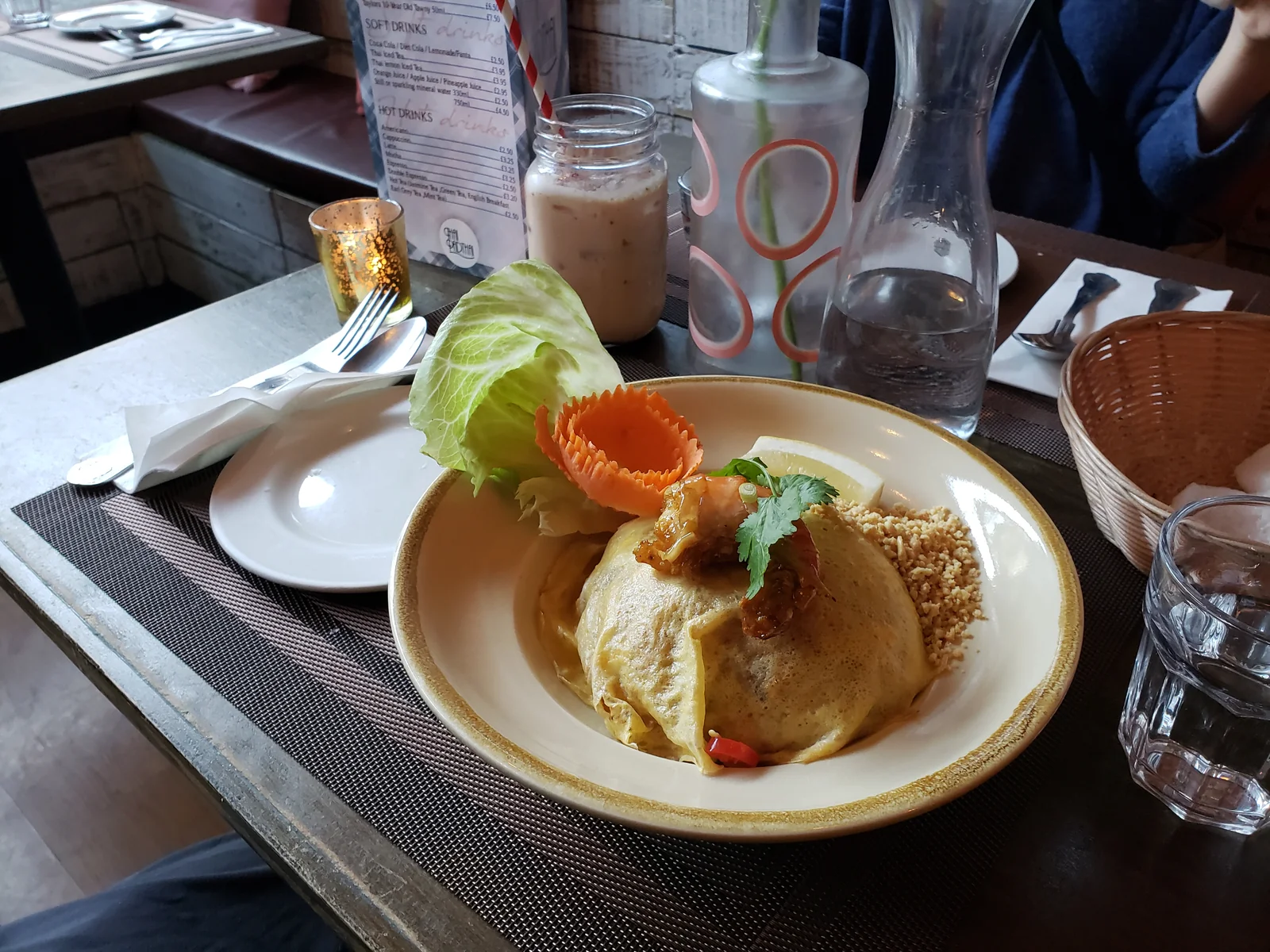
For travelers based mid Sukhumvit, the stalls around Soi 38 and Soi 5 (สุขุมวิท) put a pad thai or grilled meat within a BTS stop. The trade is price. Plates here run 80 to 150 baht (about $2.30 to $4.30), close to double the local neighborhoods, because you are paying the tourist zone premium for the convenience.
What it costs and the right hour to go
Bangkok street food is genuinely cheap if you eat where locals eat. The whole spread runs from a 13 baht boat noodle to a 1,500 baht Jay Fai omelette, a fifty times gap inside one city. Here is the honest range to budget against:
- Boat noodle bowl, order three or four: 13 to 30 baht each (about $0.40 to $0.85)
- Typical local noodle or rice plate: 45 to 80 baht (about $1.30 to $2.30)
- Tourist zone Sukhumvit plate: 120 to 150 baht (about $3.40 to $4.30)
- Crab fried rice in Chinatown: 120 to 250 baht (about $3.40 to $7.15)
- Jay Fai crab omelette, the outlier: 1,500 baht (about $43)
The hour matters as much as the block. Late afternoon into evening is the main window, and Yaowarat in particular is a night scene that barely runs at lunch. In the hot months from March to May, avoid the covered sections from 11am to 2pm, when the heat climbs and slow stalls feel less fresh. Eat early or eat late, and let the middle of the day be for markets and shade.
Is Bangkok street food safe to eat
Yes, with judgment. The reputation for making travelers sick is overstated. Food cooked fresh to order at a busy stall is generally safe, because high turnover means nothing sits around long enough to spoil. The Bangkok eating problem is almost never the wok.
The real risks sit at the edges. Undercooked shellfish from a slow stall, cut fruit that has baked in the sun for hours, tap water, and ice you cannot confirm is commercial cube ice. Stick to bottled or sealed drinks, choose the stall with the line, and watch your dish hit the heat in front of you. Do that and the worst you will face is a full stomach.
Where to stay for a trip built around food
If the trip is really about eating, base yourself within a short ride of the action rather than out by the malls. Three SHA certified picks put you near the best crawls, from the Chinatown edge to the Sam Yan and Ban Tat Thong strips to mid Sukhumvit.
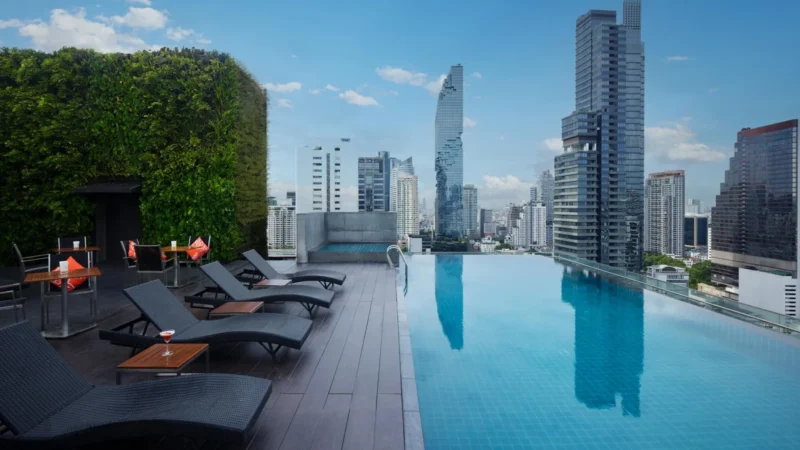

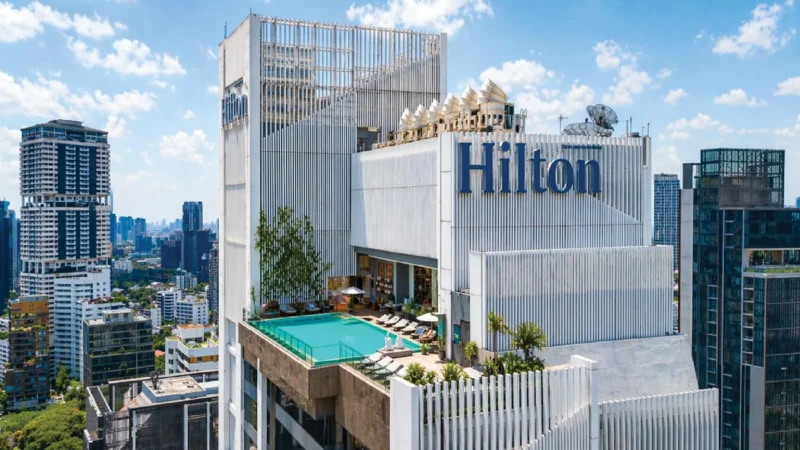
Amara sits closest to the MRT line that drops you near Yaowarat, while SO/ Bangkok puts Sam Yan and Ban Tat Thong within reach and Hilton Sukhumvit lands you a BTS stop from the Soi 38 stalls. See live rates and check availability at Amara Bangkok if a Chinatown base is the priority. For the full shortlist, read our best SHA hotels in Bangkok roundup.
Building a wider trip around the food? Pair this with our best things to do in Bangkok, slot the crawls into a 3 day Bangkok plan, and if you are continuing north, our getting to Chiang Mai guide covers the next leg. For the national picture, see our roundup of the best things to do in Thailand.