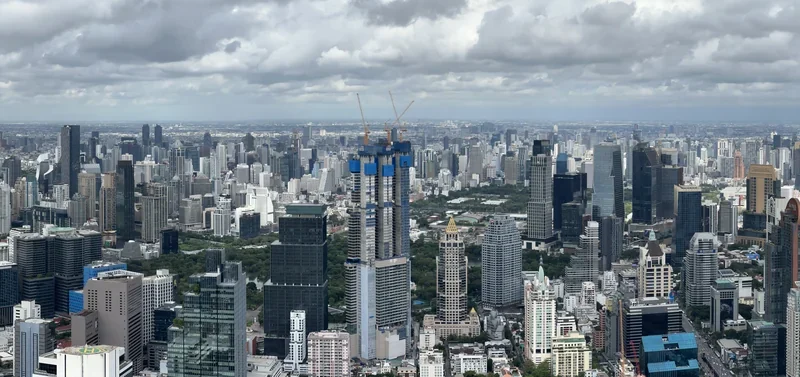
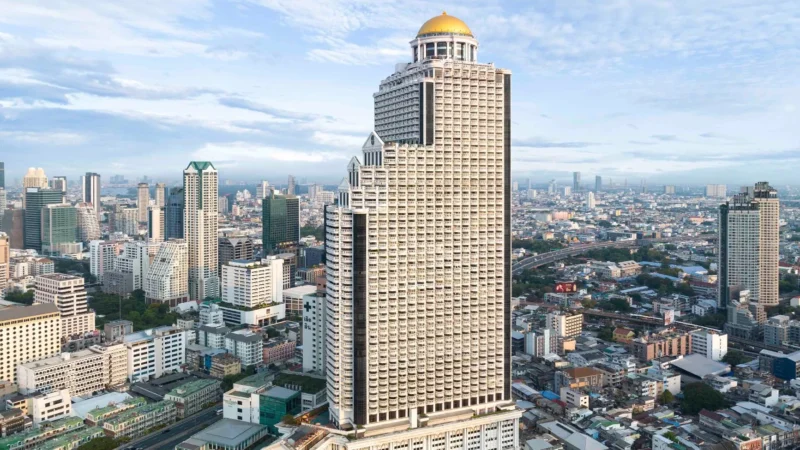
Most of the hotels travelers rank above Rosewood Bangkok sell the same thing, the Chao Phraya river sliding past the window. Rosewood does not have that. It sits inland on Ploenchit Road, a tower of 30 stories whose two leaning halves were shaped to echo the wai, the Thai greeting made with the palms pressed together. The bet the property makes is that for a trip built around the city, the river is the wrong thing to optimize for, and a direct walkway to the BTS is worth more than a barge dock.
That bet lands for some travelers and misses badly for others. Rosewood Bangkok opened in March 2019, designed by the New York firm Kohn Pedersen Fox, and it reads as a vertical Bangkok hotel in every sense. The pool is on a high floor, the Chinese restaurant is on the 19th, the bar is on the 30th, and the rooms look out over the Skytrain line rather than down at a river. If you want a contemplative riverside stay, this review will likely talk you out of it. If you want the best connected luxury address in central Bangkok, read on.
Rosewood Bangkok quick facts and figures
Property: Rosewood Bangkok (โรสวูด กรุงเทพฯ), 1041/38 Ploenchit Road, Lumpini, Pathum Wan, Bangkok 10330. Central business district, opposite Central Embassy, near Lumpini Park.
Opened: 31 March 2019. Architect Kohn Pedersen Fox. Two connected diagonal towers, 30 stories, the form inspired by the wai greeting.
Footprint: Around 159 rooms and suites across roughly 15 categories, including 34 suites and studios plus three signature Houses with private pools.
Owner: Rosewood Hotels and Resorts.
Recognition: Listed on the Michelin Guide for hotels. Guest sentiment runs strongly positive across recent stays.
Entry rate (paid): From approximately USD 320 to 350 per night for an entry room. Suites from roughly USD 600 to 800. Signature suites and Houses cross USD 2,000 per night.
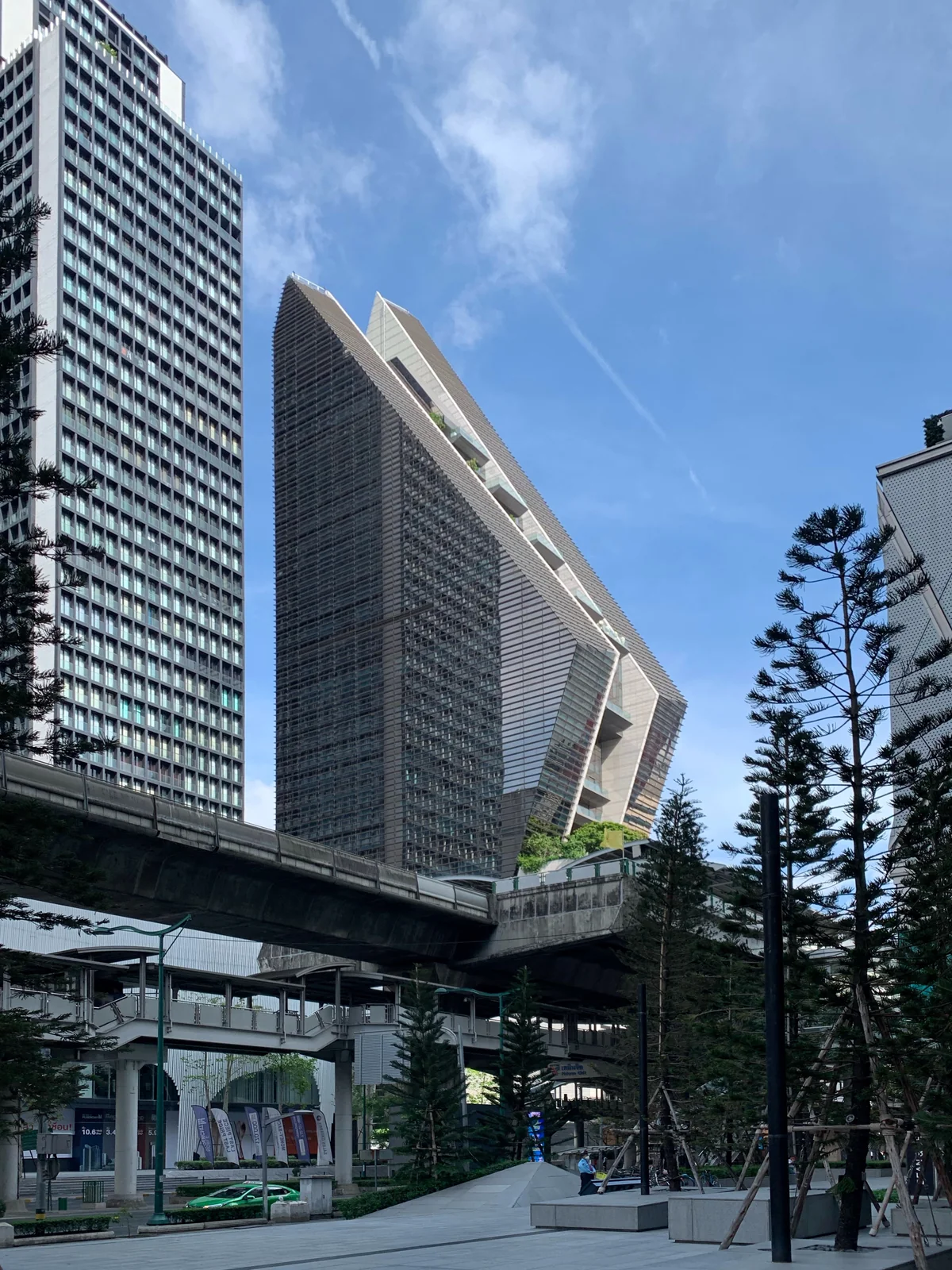 Photographer: Chainwit.. Source: Wikimedia Commons. License: CC BY-SA 4.0.
What it is and why the wai tower matters
Rosewood Bangkok is two buildings pretending to be one. KPF designed a pair of diagonal towers that lean toward each other and meet at a central atrium, and the silhouette was drawn to echo the wai. The floorplates shrink as the tower rises, which carves terraces and odd occupiable corners into the upper floors. A water feature runs down the interior, cascading from around the 7th floor to the 17th, a nod to Bangkok’s history as a water city. A firsthand Japanese stay report at Run BKK described the angular exterior as more aesthetic than practical, which is a fair read. The shape is the brand statement, not a functional gain.
The location is the substance behind the statement. Rosewood sits on Ploenchit Road in an enclave of embassies, new residential towers, and luxury retail, with Central Embassy across the way and Lumpini Park a short walk south. The property connects to the Phloen Chit BTS Skytrain station by a walkway, which in a city where afternoon traffic can turn a trip of two kilometers into 40 minutes is a genuine asset. This is a hotel built for people who plan to move around Bangkok by train and on foot, not by hotel car to a river pier.
That positioning is the whole argument. The Chao Phraya hotels sell the river as the destination. Rosewood sells the city as the destination and itself as the base camp. If your Bangkok is shopping, dining, gallery visits, and short BTS rides, this is one of the strongest addresses in town. If your Bangkok is sunset on the water, read the Peninsula Bangkok review instead.
The Ploenchit location and the BTS connection
What you give up by leaving the river, you get back in mobility. Phloen Chit station is the second stop east of Siam, which puts the shopping spine of central Bangkok within a few minutes by train. Central Embassy and Central Chidlom are walkable. Lumpini Park, the green lung of the city, is a short stroll for a morning run before the heat builds. For business travelers the embassy and office district is on the doorstep, which is part of why the German luxury site Journey D.Luxe frames the property as working for both business and leisure stays.
The friction is the reverse of the riverside hotels. There is no on-site barge, no Chao Phraya sunset, and no resort hush. Ploenchit is a working downtown corridor, and the view from most rooms is towers and the Skytrain line, not water and temples. Some travelers find that energizing. Others find it relentless. The honest read is that Rosewood trades the postcard for the practical, and you should know which one you are booking for before you commit.
Rooms and suites, from the Premier to the Houses
Entry rooms run from roughly 42 to 54 square meters depending on the category and which source you trust, with the Premier King landing around 50 square meters with glass to the ceiling over the BTS line and the surrounding high rises. The design language is restrained and residential rather than flashy, with FRETTE linens, Dyson amenities, and rosewood detailing that several reviewers single out. The firsthand Japanese stay report flagged one practical gap at the entry tier. There is no proper work desk in the Premier King, which matters if you are here on business.
The suite and House product is where the property earns its ultra luxury framing. There are 34 suites and studios, and three signature Houses, each with its own private pool. The top of the range is the Bannakarn House penthouse at around 291 square meters. A firsthand Manor Suite review at Secret Life of Fatbacks called the upper tier residential and discreet ultra-luxury, which captures the posture well. The suites do not shout. They feel like a private apartment in the embassy district.
The honest framing on the entry rooms. They are comfortable and well finished in materials, but some guests mention hard finish details, doors and drawers that did not close cleanly, that read below the price point. If you are booking the entry tier expecting the construction quality of a brand new ultra luxury build, calibrate. If you are booking a suite or a House, that note falls away and the product is genuinely strong.
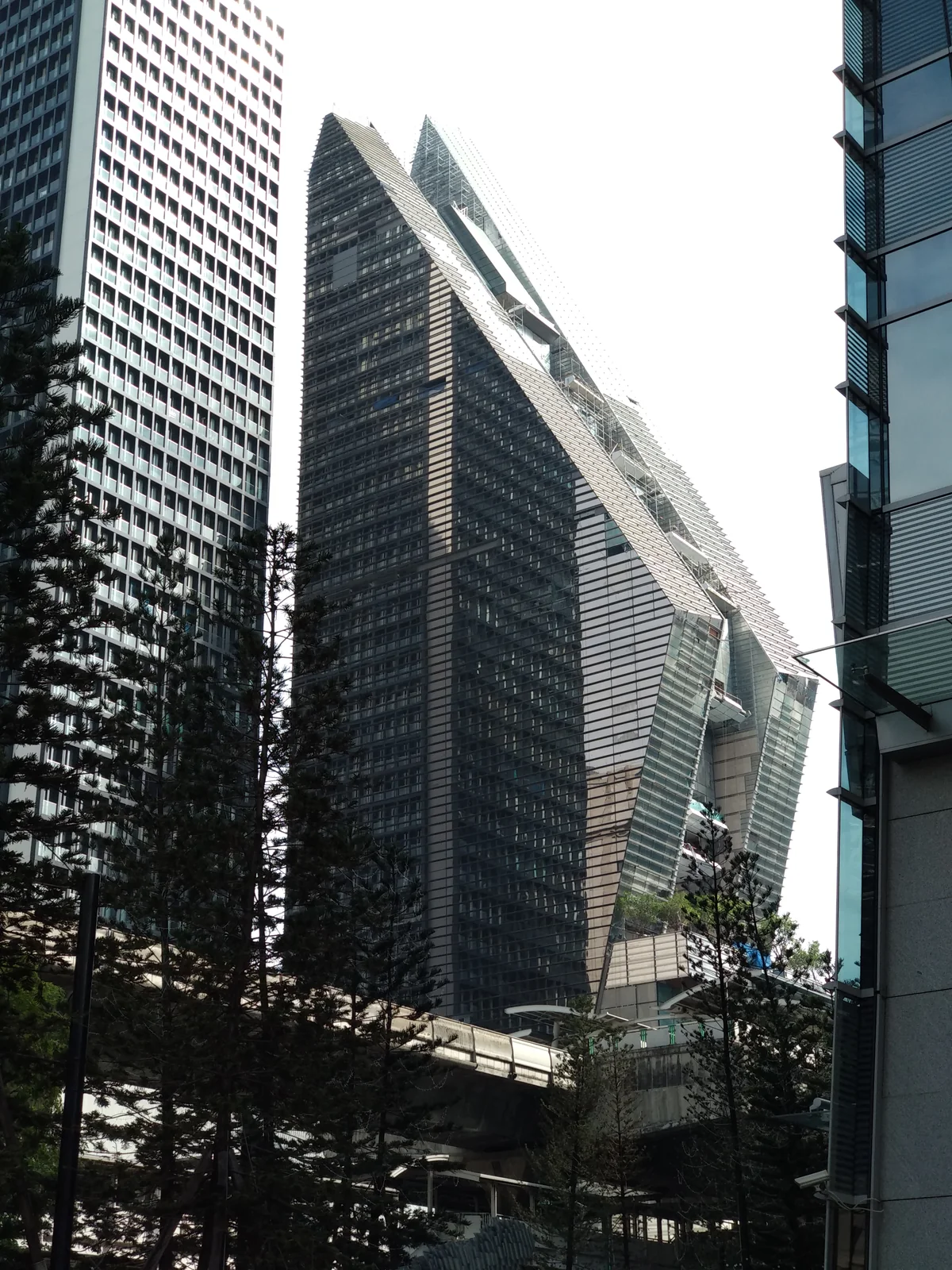 Photographer: Pieceofmetalwork. Source: Wikimedia Commons. License: CC BY-SA 4.0.
What guests come away saying about the stay
Recent guests land on a consistent picture. The location, the service, and the design draw the most praise, and the pool and the breakfast pricing draw the most friction. Reviewers name breakfast and the pool view as highlights, then turn around and flag the same pool for its size and shade. The pattern across English, German, and Japanese coverage is the same hotel seen through different priorities.
Service is the steadiest thread. The firsthand Japanese account said staff service was warmer than expected, the Manor Suite reviewer described the service as discreet and residential, and returning guests back both reads. The Italian-language coverage adds a useful detail, with restaurant directors approaching tables to ask for feedback, the kind of attentiveness that signals a property running its service program seriously rather than coasting on the brand name.
The friction is just as consistent. The same Japanese reviewer who praised the service felt the breakfast pricing was hard to justify and suggested eating off the property, and guests repeatedly note the pool size and the shade. None of this is a dealbreaker on its own. Taken together it is the texture of a vertical city hotel rather than a resort, and recent stays reflect that honestly.
Lakorn, Nan Bei, Lennon’s, and the dining stack
The dining lineup runs four venues, and they are spread vertically through the tower. Lakorn is the all day European brasserie with a Thai twist, the room that stays open when the others are dark, and the default for breakfast and a reliable lunch or dinner. G&O is the poolside cafe with a lighter, farm to table lean for a casual daytime meal.
Nan Bei is the serious dining draw. The name means South and North in Mandarin, and the menu runs both, Peking duck, noodles, and dumplings from the north, seafood from the south, served on the 19th floor with a skyline view. It is the venue most worth booking ahead.
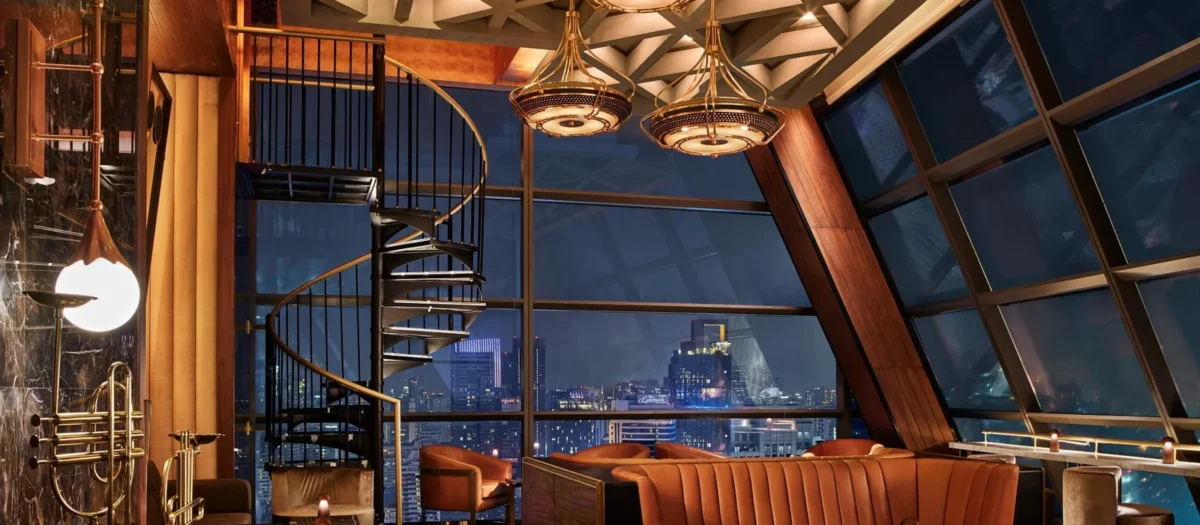
Lennon’s sits on the 30th and highest floor, and it has become one of the most talked about bars in Bangkok. The concept is a speakeasy built around the idea of a home recording studio, and the room holds what is reported as the largest vinyl collection in Asia, around 6,000 records. The cocktail program leans on music references and Thai flavors, and the coverage at DrinkCollectiv walked through the music-led bar concept in detail. For a city without a river view, Lennon’s turns the height of the tower into the experience the riverside hotels get from the water. It is busy and it is not a quiet nightcap spot, but it is a destination in its own right, and you are already in the building.
The honest framing on dining. Breakfast quality is well regarded, but the a la carte pricing runs steep, with the American breakfast reported around 1,280 baht (about $36) and the buffet around 890 baht (about $25). Guests who want a long, leisurely breakfast on the property every morning will feel that. Guests who plan to graze at the cafes and markets around Ploenchit, and use the BTS to reach them, will not. For a wider sense of where to eat in the area, the Sukhothai Bangkok review covers another strong dining base in the same central Bangkok cluster.
Sense spa and the compact pool
The spa is Sense, A Rosewood Spa, and it occupies an entire floor, the sixth. There are five treatment rooms, two of them set up for couples, plus a hair and nail salon, and the menu blends traditional Thai wellness practices with modern treatments. It is a well built urban spa rather than a sprawling resort wellness complex, which fits the vertical format of the hotel. Note that this property’s spa is Sense, not Asaya, the Rosewood wellness brand that runs at other properties in the group.
The pool is the clearest compromise in the building. It is an outdoor pool on an upper floor, reported between 20 and 25 meters across sources, with skyline framing and private cabanas. The catch is real. Guests note that the pool is almost entirely shaded by the building for much of the day and carries only about a dozen loungers. For a trip built around sun and swimming that is a meaningful limit. For a city stay where the pool is a cool down after a day on the BTS, it does the job. Read the Capella Bangkok review if a full riverside pool deck is closer to what you want.
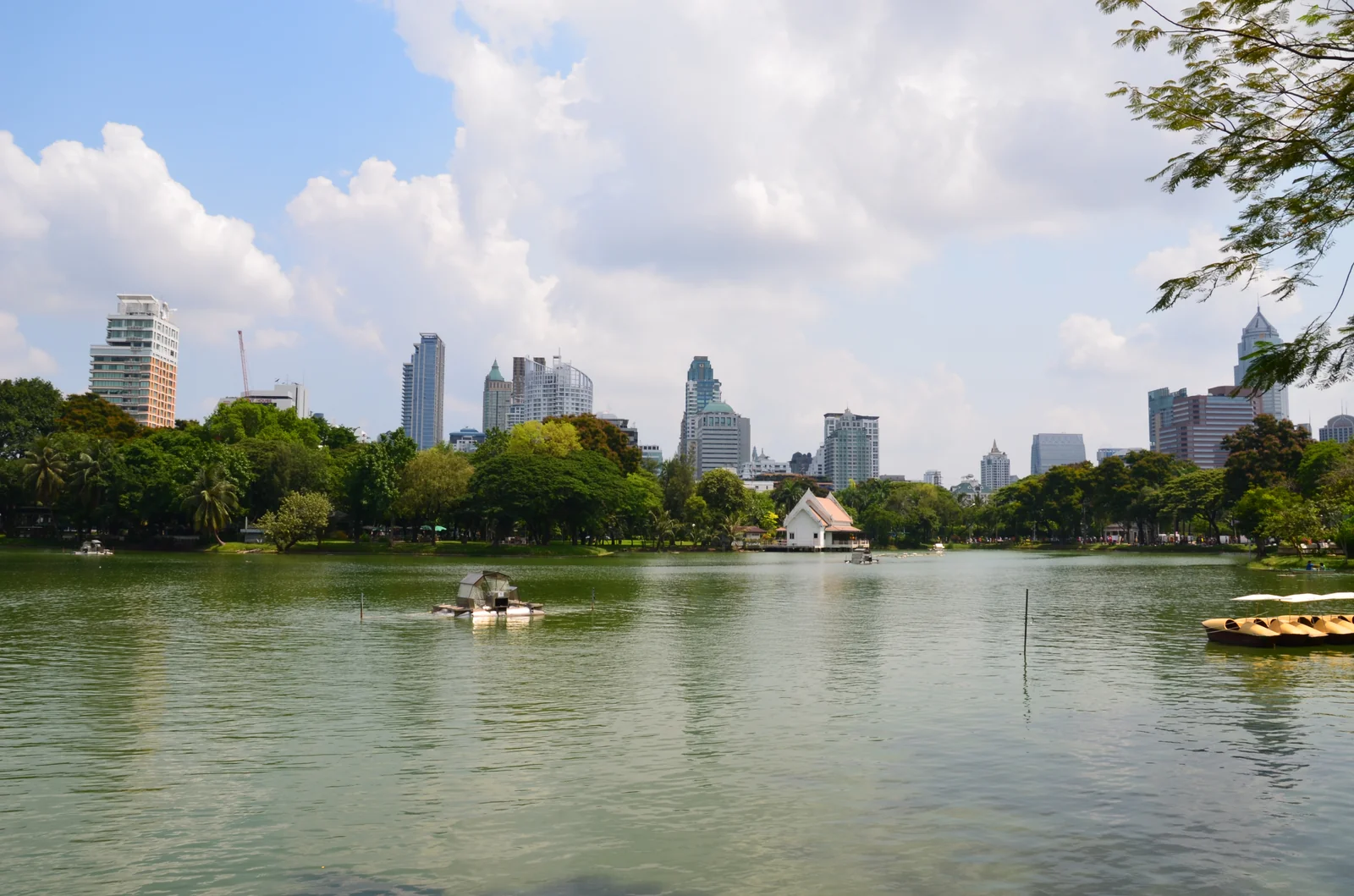 Photographer: Jarcje. Source: Wikimedia Commons. License: CC BY-SA 3.0.
Rosewood Bangkok vs the Chao Phraya riverside set
The real decision for most travelers booking at this price is Rosewood against the riverside icons. The river hotels and the Ploenchit tower are answering different questions, and the choice comes down to which Bangkok you are after.
The river versus the city. The Mandarin Oriental Bangkok, the Peninsula Bangkok, and the Four Seasons Bangkok at Chao Phraya all sell the Chao Phraya, the barge transfers, and the sunset on the water. Rosewood sells the BTS, the embassy district, and the city at your feet. If the river is the memory you want, book one of the three. If mobility and central access matter more, Rosewood wins on that axis cleanly.
The non riverside peers. Among the city hotels, the Banyan Tree Bangkok in Sathorn is the closest comparison, a rooftop and city luxury property that also skips the river. Banyan Tree leans on its rooftop and its Sathorn business location. Rosewood leans on the Ploenchit retail enclave and the BTS connection. Both are strong city bases. The pick comes down to which neighborhood you want to walk out into each morning.
Local read. Ploenchit is the retail and embassy spine of central Bangkok, not a quiet enclave. Step out of Rosewood and you are between Central Embassy, Central Chidlom, and the Phloen Chit BTS gate, with Lumpini Park a short walk south for the only real green nearby. The trade is constant city energy in exchange for a train at the door. Mornings are the window for a quiet park run before the heat and the crowds build.
Who it suits and who should skip it
Rosewood Bangkok works best for the traveler who puts the city first. The right trip is built around shopping the Ploenchit and Siam corridor, eating across the city, drinking at the best rooftop bars, and moving by BTS to skip the traffic. For that traveler this is one of the best placed luxury hotels in Bangkok. The suite and House product is a genuine ultra luxury draw, the service is consistently praised, and Lennon’s and Nan Bei are reasons to be in the building. Book it for that, and the location does most of the work. You can check live rates for a city-led stay directly.
It is a less natural fit for the traveler who pictures a riverside Bangkok. If you want the Chao Phraya outside the window, a long pool deck soaked in sun, and a resort hush in the middle of the city, the river hotels deliver that and Rosewood does not. The compact shaded pool, the steep breakfast pricing, and the occasional hard finish lapse at the entry tier are the trade for the vertical city format. Know which Bangkok you are booking, and the decision is straightforward.
Where to stay near Rosewood Bangkok
For the booking link to Rosewood Bangkok itself, the card below pulls live “from” pricing and availability through the affiliate program. Check live availability and rates at Rosewood Bangkok to see the current entry rate for your dates.
 SHA EXTRA PLUS
★ 9.2
SHA EXTRA PLUS
★ 9.2
Rosewood Bangkok
Rosewood Bangkok is the vertical luxury pick. Thirty stories of all-suite design above Ploenchit BTS, with the entrance connected to the station via a covered walkway. That alone makes it the easiest five-star in Bangkok for first-time visitors who don't want to think about transport. Land at Suvarnabhumi, take the Airport Rail Link to Phaya Thai, switch to the BTS Sukhumvit line, and the hotel doors open without you crossing a single street.
Rooms start at 50 sqm with floor-to-ceiling windows facing either the Chao Phraya river bend (north-facing) or the Sukhumvit skyline (east-facing). North-facing rooms are the ones to ask for at check-in. The two-story bar Lennon's takes up floors 31 and 32, with a rooftop terrace that's one of the most photographed sunset spots in Bangkok. It does fill up after 8 PM on weekends, so book a table when you arrive.
Nan Bei is the in-house Cantonese restaurant from chef Andrew Wong. The pool is on level 30 with a city view that stretches to the river. Spa Botanica covers two floors with hammam, ice bath, and traditional Thai massage rooms. Rosewood is the design-forward five-star for travelers who prefer city quiet to riverside calm, and the only Bangkok hotel where you can leave the room at 7 PM and be drinking on a 32nd-floor terrace by 7:05.
For the broader central Bangkok and riverside luxury set, the Peninsula Bangkok review and the Mandarin Oriental Bangkok review cover the river alternative, and the Sukhothai Bangkok review covers the garden-in-the-city option a short distance south. For the full field, see our best SHA hotels in Bangkok roundup, and to place a stay inside a full trip, our 3 days in Bangkok itinerary.
Honest take. Rosewood Bangkok is the best decision on Ploenchit for a luxury stay built around the city, and that is the entire pitch. The KPF wai tower is a real landmark, the BTS connection is a genuine daily asset, and Lennon’s and Nan Bei are reasons to book on their own. The catch is the format. The pool is compact and shaded, the entry rooms can read a notch below the price in hard finishes, and the breakfast pricing runs steep. If you want the Chao Phraya and a resort pool deck, the riverside icons beat this. If you want the city at your feet and a train at the door, Rosewood is the pick.
Frequently asked questions about Rosewood Bangkok
Where is Rosewood Bangkok and is it on the river?
How much does a room at Rosewood Bangkok cost?
What are the restaurants and bars at Rosewood Bangkok?
How big is the pool at Rosewood Bangkok?
Is Rosewood Bangkok good for families?
See live rates and check current availability at Rosewood Bangkok. Live pricing reflects what you will pay for your dates.