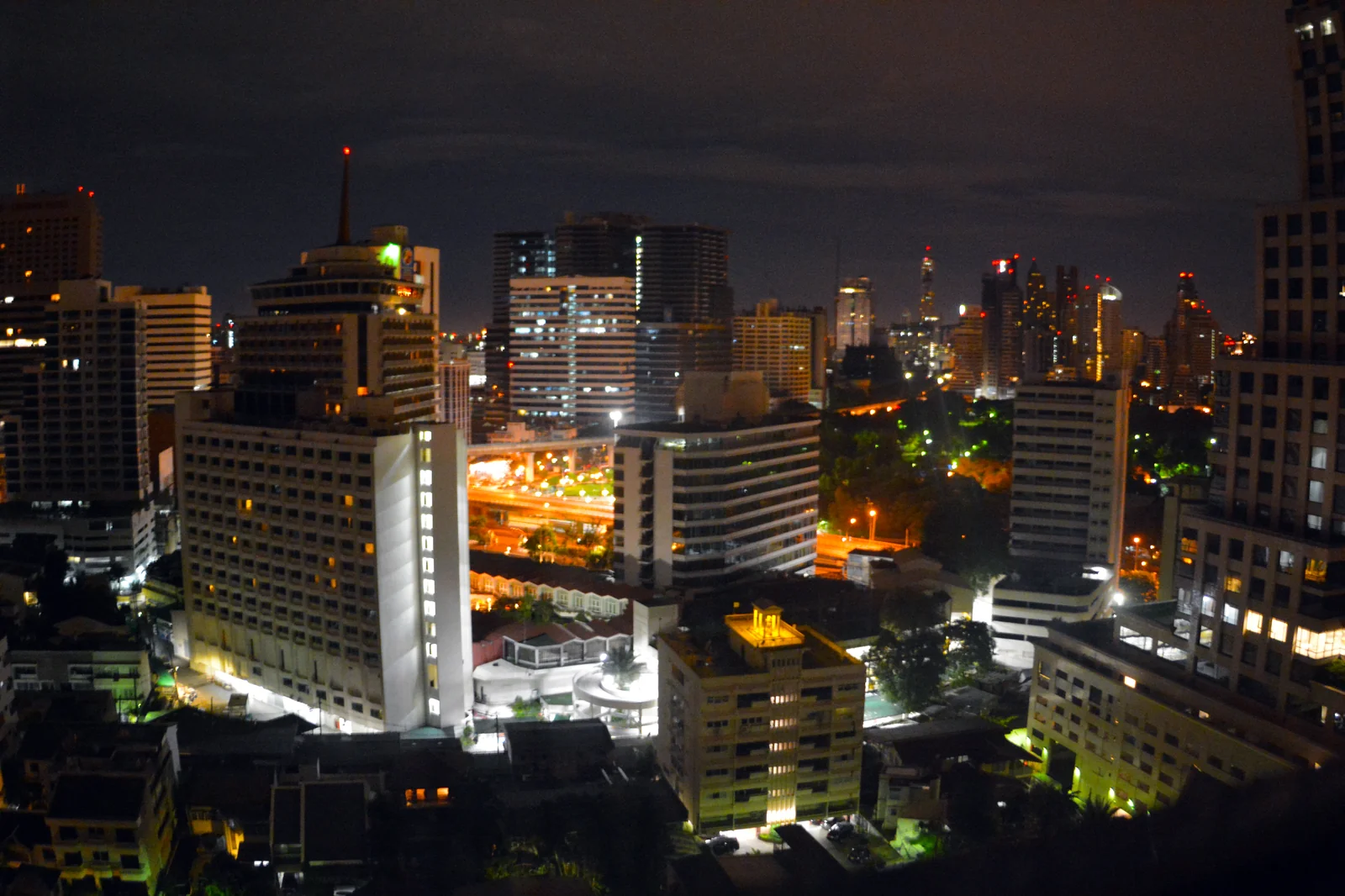
Bangkok’s five-star hotels mostly fight for the river. The Sukhothai Bangkok (โรงแรมสุโขทัย กรุงเทพ) has never joined that fight. Since 1991, this South Sathorn property has held a different category, an enclave built around a garden in the middle of the financial district. The architecture borrows from the ancient Sukhothai Kingdom, and the quiet comes from 224 rooms arranged around lotus ponds and koi pools rather than a lobby atrium. At around $232 a night for a Superior Room, you are paying for that quiet as much as anything else.
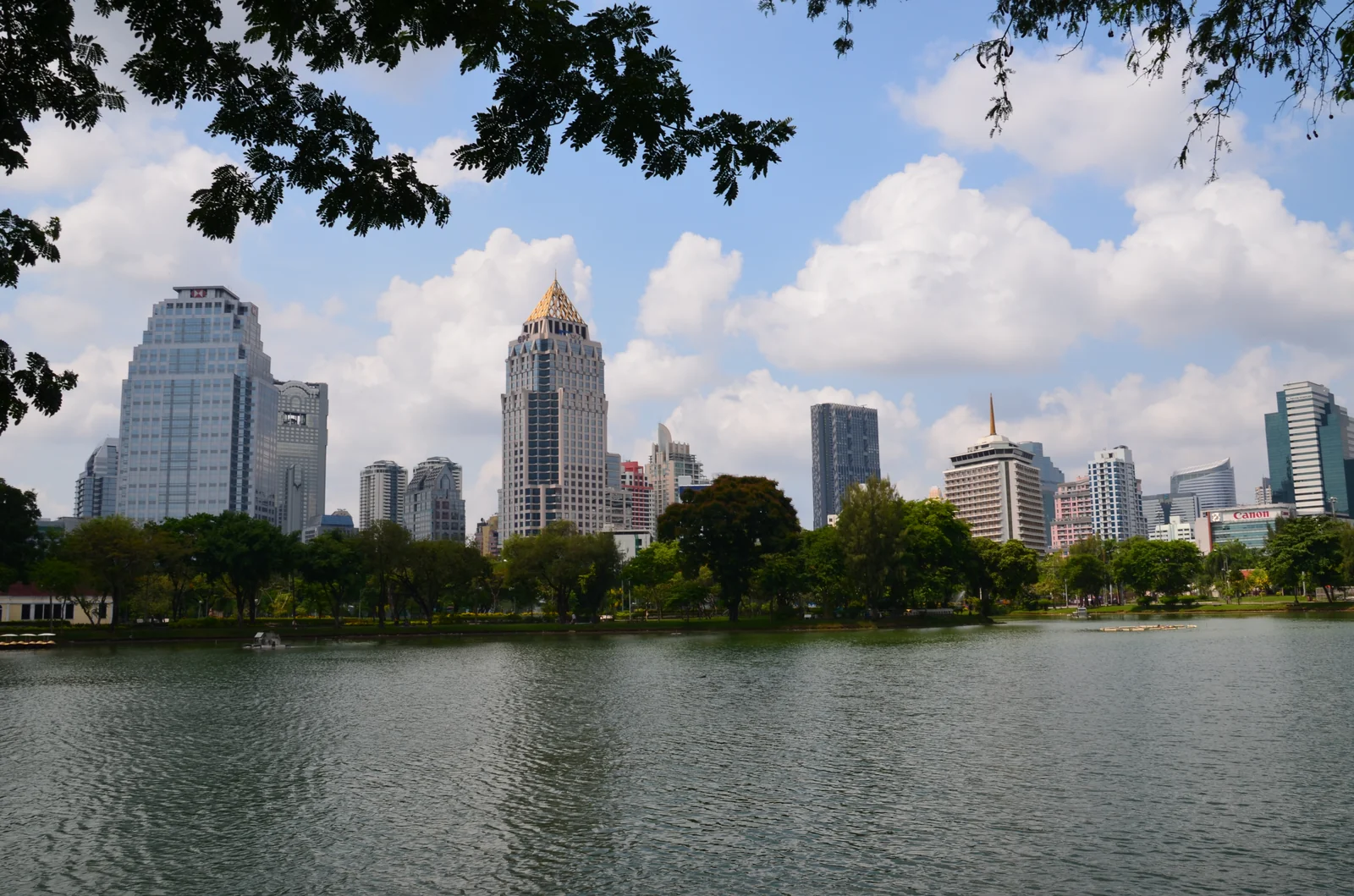 Photographer: Jarcje. Source: Wikimedia Commons. License: CC BY-SA 3.0.
Room types, sizes, and what to book
The Sukhothai Bangkok runs 224 rooms and suites across 8 categories. The base Superior Room starts at roughly $232 a night. The Deluxe Room and Premier Deluxe Room sit above it, and six suite categories climb from there.
Edward Tuttle designed every interior with the same vocabulary as the architecture. Muted earth tones, high ceilings, teak detailing, and oversized bathrooms. The Superior Room gives you about 48 sqm. The step up to a Deluxe Room adds a garden outlook in many configurations.
Two caveats apply. The room count of 224 sits across a large footprint, so the property never feels crowded. And rooms facing the inner courtyards run notably quieter than rooms on the road side. If the quiet is the reason you are booking, specify a room facing the garden when you check availability.
When booking, specify a garden-facing room in the notes or call the reservations desk directly. The room selector on the hotel site does not always surface which configurations face inward. A short call removes the ambiguity. On a high floor, the Superior Room category with a garden outlook still delivers most of the enclave effect at the base rate.
The suite categories worth knowing:
- Junior Suite: separate sitting area, garden or pool outlook, approx. 68 sqm
- Sukhothai Suite: two room layout, 90+ sqm, private terrace
- Garden Suite: direct access to the garden, ground floor
- Three-Bedroom Suite and Presidential Suite: available for extended stays and diplomatic visits
Three restaurants at The Sukhothai and what each one delivers
 Photographer: Don Ramey Logan. Source: Wikimedia Commons. License: CC BY-SA 4.0.
Three restaurants anchor the dining program. Each has a distinct register and a long track record in Bangkok’s restaurant market.
Celadon is the headline. Thai fine dining in a pavilion that sits at the edge of the lotus pond. The cooking references the royal court tradition rather than street food, and the room earns its reputation as one of the better Thai dining experiences anchored in a Bangkok hotel. Lunch and dinner run daily. If you book one meal here, make it dinner on a weeknight when the garden is lit and the room runs at a quieter pace. Returning diners say the evening setting is the more complete experience, and the food writers at Timeout Bangkok have put Celadon on the city’s best Thai dining lists.
La Scala has operated at The Sukhothai for decades and holds a loyal local following. The menu is classical Italian. House-made pasta, a serious wine cellar, and a kitchen that has found no reason to chase trends. Dinner only. Reserve ahead on weekends.
The Colonnade handles international dining all day from 6am to 11pm. The Sunday brunch has become a Bangkok institution in its own right, drawing as many neighborhood regulars as hotel guests. Reviewers at Condé Nast Traveller have long rated the property among the city’s quieter luxury addresses. If you are staying midweek, The Colonnade is where breakfast happens without ceremony.
The Lobby Lounge covers afternoon tea and cocktails. It is not a rooftop bar. There is no rooftop bar. That is a deliberate choice on the part of a property that does not trade on spectacle.
Spa Botanica, the outdoor garden, and what the treatment list covers
Spa Botanica runs from 8 treatment rooms and includes an outdoor Jacuzzi garden and rain shower stations. The program leans toward Thai botanical traditions. Herbal compresses, bespoke oil blends, and body treatments using locally sourced ingredients.
Eight treatment rooms is a meaningful number. It keeps the spa at a scale where appointments stay quiet and staffing ratios stay high. Larger hotel spas in Bangkok often feel like wellness factories at peak hours. This one does not have that problem by design, though the trade is a shorter treatment menu than the big riverside spas offer.
The outdoor Jacuzzi garden is separate from the main pool area, which means spa guests are not sharing space with pool guests. For travelers who treat the spa as the main event rather than an extra, that separation matters.
Book treatments on arrival if you can. The Colonnade brunch crowd does not necessarily translate into spa bookings, but weekend afternoons do fill. Weekday morning slots are the easiest to secure.
The 25m pool, the koi ponds, and the garden layout explained
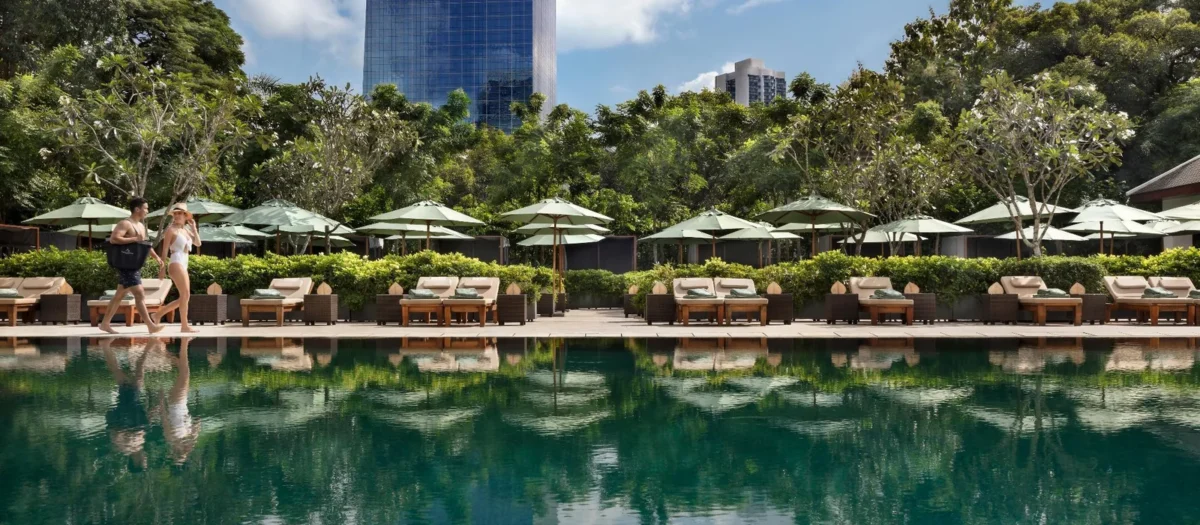
The outdoor pool runs 25 meters and sits in the garden at the center of the property. Koi ponds and lotus pools ring the pathways between the guest wings. The garden is not a decoration. It is the organizing logic of the hotel.
In practice this means two things. Walking between your room and the restaurant takes you through outdoor courtyards. In Bangkok’s cooler months from November to February, that is pleasant. In April and May, it asks for some tolerance for heat. The property is not connected by air-conditioned corridors the way a tower hotel is.
The garden also absorbs noise. South Sathorn Road is a major arterial road and carries heavy traffic at peak hours. From inside the garden or from a room facing it, you will not hear that traffic. Reviewers at several independent publications have noted the same effect, so it is not marketing copy.
The pool runs 25 meters in a straight length, which works for lap swimming rather than just lounging. Pool deck chairs fill on weekend afternoons. Weekday mornings are quiet. The tennis court sits next to the garden and is available for guest use.
South Sathorn address and the BTS walk reality for guests
The address is 13/3 South Sathorn Road, Tungmahamek, Sathorn, Bangkok. This is the financial district, and that fact shapes everything about who this hotel works for.
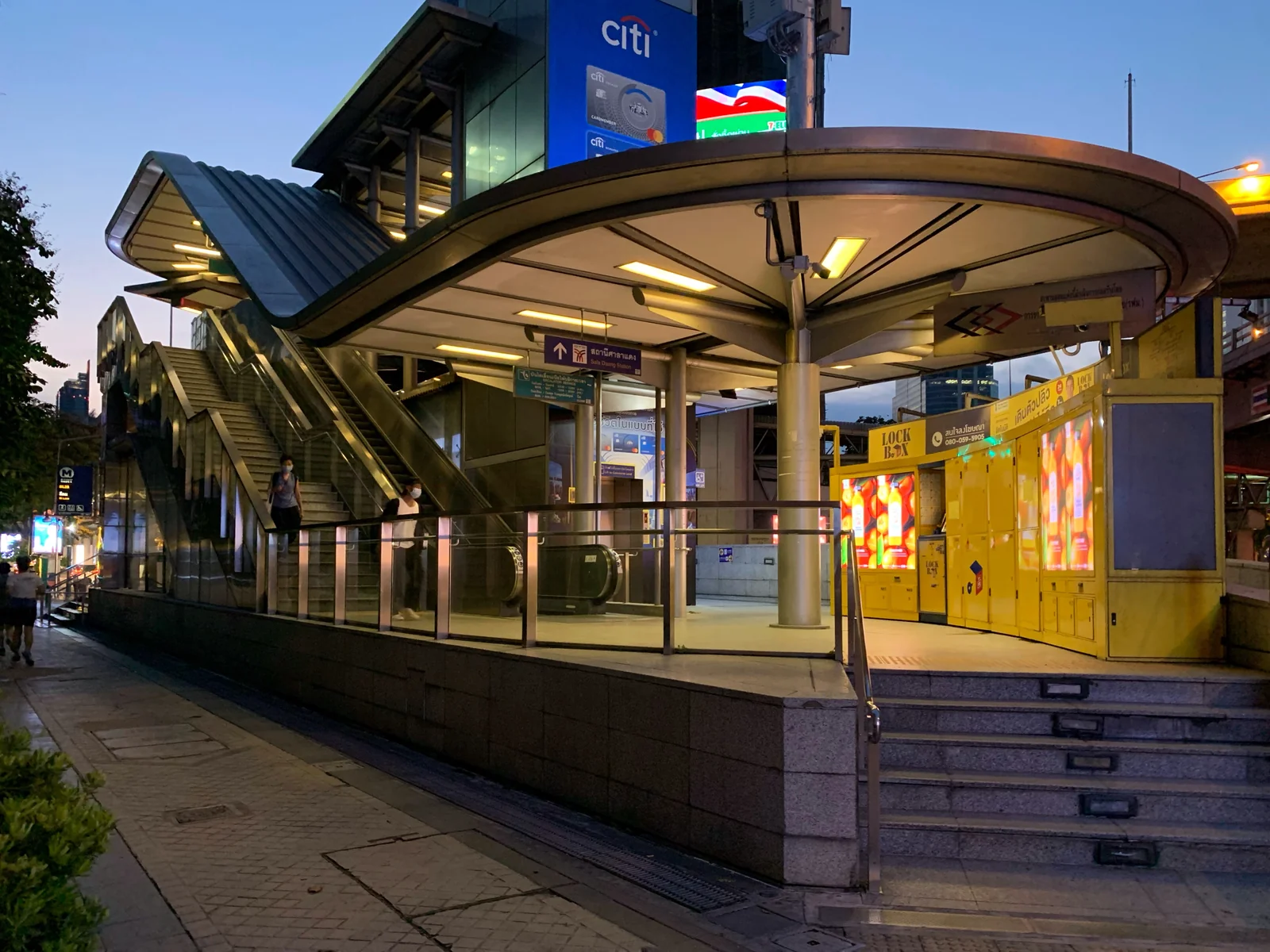
Sala Daeng Station on the Silom Line is about 8 minutes on foot via South Sathorn Road. Chong Nonsi Station is about 10 minutes in the other direction. Si Lom MRT Station on the Blue Line is also within walking range at roughly 8 minutes. All three are usable. None of them is at the hotel’s front door.
Airport transfer costs by Grab:
- Suvarnabhumi Airport (BKK): about $12 to $17 with expressway tolls, 35 to 60 minutes depending on traffic
- Don Mueang Airport (DMK): about $15 to $20, 45 to 75 minutes
The hotel does not run an airport shuttle. Grab from the lobby is the standard option.
The walk to BTS is fine at night and in the cooler months. In the midday heat of March through May, or with luggage, Grab from the lobby is the correct call. This is not an unusual constraint for Sathorn. The whole district operates this way.
What Sathorn gives you: proximity to the Silom financial corridor, quick access to Lumphini Park, and a short ride to the restaurant clusters on Sukhumvit Soi 11 or the Old Town temples. What it does not give you: a river view or the immediate BTS connectivity of Siam or Asok.
The 8-minute walk to Sala Daeng BTS is fine on a cool evening and genuinely unpleasant at noon in March or April, when pavement temperatures in Sathorn regularly hit 38°C. Grab from the lobby runs THB 80 to 120 (~$2 to $3.50) to Sala Daeng or Chong Nonsi and takes 5 minutes. For morning meetings in the Silom corridor, the walk is practical. For afternoon runs with luggage or in peak heat, the Grab is the correct call and costs less than two bottles of water at the hotel.
Who this hotel works for and who should look elsewhere
The Sukhothai Bangkok works for travelers who have already done Bangkok and know what they want from it. If this is your fourth or fifth visit and you have stayed at the large riverside properties before, the trade of river view for garden quiet is a genuinely different experience that holds up on its own terms.
It works for business travelers based in the Sathorn-Silom corridor. The address is more useful than Charoen Krung or Sukhumvit for anyone whose meetings sit in the financial district. The Colonnade handles early breakfasts efficiently. The quiet rooms support actual sleep.
It works for couples who want to eat well without leaving the property. Celadon and La Scala together cover several nights of serious dining. The spa is a real amenity, not a checkbox.
It is the wrong hotel for first-visit travelers who want to be in the middle of everything. The energy that makes Silom and Sukhumvit interesting at night is not at The Sukhothai’s door. It is a short Grab ride away, which is a different thing.
It is also wrong for travelers whose primary Bangkok draw is the Chao Phraya river and the temples of the Old Town. A riverside hotel shortens that travel considerably. The architecture here is inspired by the Sukhothai Kingdom period, but this is not a temple tour hotel.
One limitation deserves direct mention. The property has no rooftop bar, no infinity pool over a skyline, and no Instagram architecture in the lobby. If spectacle is part of what you are buying, this hotel does not sell it. The visual language here is restrained and horizontal rather than vertical and dramatic.
The pricing tier sits alongside the Mandarin Oriental and Capella Bangkok rather than below them. At $232 a night for a Superior Room, you are in the top bracket of Bangkok five-star hotels. The value case is not about price. It is about whether the garden enclave model is the right match for your trip. Guests who have already answered that question come back. Travelers who need spectacle to justify the rate are better served elsewhere from the start.
Where to stay at The Sukhothai Bangkok
 SHA PLUS
★ 9.0
SHA PLUS
★ 9.0
The Sukhothai Bangkok
The Sukhothai is Bangkok's resort-feel hotel inside the city. Six low-rise buildings spread across 6 acres of garden in the Sathorn business district, with reflecting pools, lotus ponds, and a 25-meter lap pool that almost never feels crowded. The grounds are the largest of any central Bangkok luxury property and stay surprisingly quiet despite the Sathorn traffic on the perimeter.
Edward Tuttle designed the original buildings in 1991 around the historical Sukhothai aesthetic, and the renovation in the 2010s preserved that. Celadon is one of Bangkok's most respected Thai fine-dining restaurants, with chef Nopporn running a tasting menu that swaps quarterly. Rooms are quieter than at any vertical hotel in the city. Single-story corridors mean no hallway traffic noise; garden orientation means most rooms look out at trees, not at another tower.
The trade-off is BTS access. Lumphini MRT is the closest station at 8 minutes' walk. Sala Daeng BTS is 15 minutes through the Lumpini Park west gate, a pleasant walk in the morning, less so in midday heat. Book this hotel if your idea of luxury is silence over flash. The riverside hotels deliver flash. The Sukhothai delivers the rare thing, a Bangkok hotel where you forget you're in Bangkok.
 Photographer: Chainwit.. Source: Wikimedia Commons. License: CC BY-SA 4.0.
Frequently asked questions
Is The Sukhothai Bangkok SHA certified?
How far is The Sukhothai Bangkok from BTS Skytrain?
What is the starting room price at The Sukhothai Bangkok?
How does The Sukhothai Bangkok compare to the Mandarin Oriental Bangkok?
Does The Sukhothai Bangkok have a pool?
Is the Celadon restaurant at The Sukhothai Bangkok worth it for non-guests?
Comparing the city’s top addresses? See our best SHA hotels in Bangkok roundup, our review of Rosewood Bangkok, and our review of Peninsula Bangkok. To place a stay inside a full trip, see our 3 days in Bangkok itinerary.
title: The Sukhothai Bangkok Review: Heritage Garden, Real Value
description: Our review of The Sukhothai Bangkok: room categories, Spa Botanica, Celadon dining, South Sathorn location, and who this hotel actually suits.
focus_keyword: sukhothai bangkok review