The single thing most travelers misjudge about Thai entry is the gap between the visa exemption and an actual visa. They are not the same document, and the difference decides how long you can stay and whether you queue at the desk or at a kiosk. Travelers who filed their TDAC at the gate in Doha or Heathrow walk straight to the officer, hand over a passport, get a stamp, and leave. Travelers who did not file are pulled aside, sent to a kiosk, and lose forty minutes before they ever smell the humidity outside.
That gap is the new shape of Thai immigration. Most of the rules that mattered ten years ago still matter. The paperwork has moved online, the digital nomad got their own visa, and the 2025 reforms left the rulebook looking different from the one most travel blogs still publish.
This guide is what we believe is currently true on the ground in June 2026, checked against the US State Department, the UK Foreign Office, the Royal Thai Ministry of Foreign Affairs, and the official Thai e-Visa portal. Thai visa rules have changed more in the last 18 months than in the previous 18 years, so verify any fee or stay duration with your nearest Royal Thai Embassy in the week before you fly.
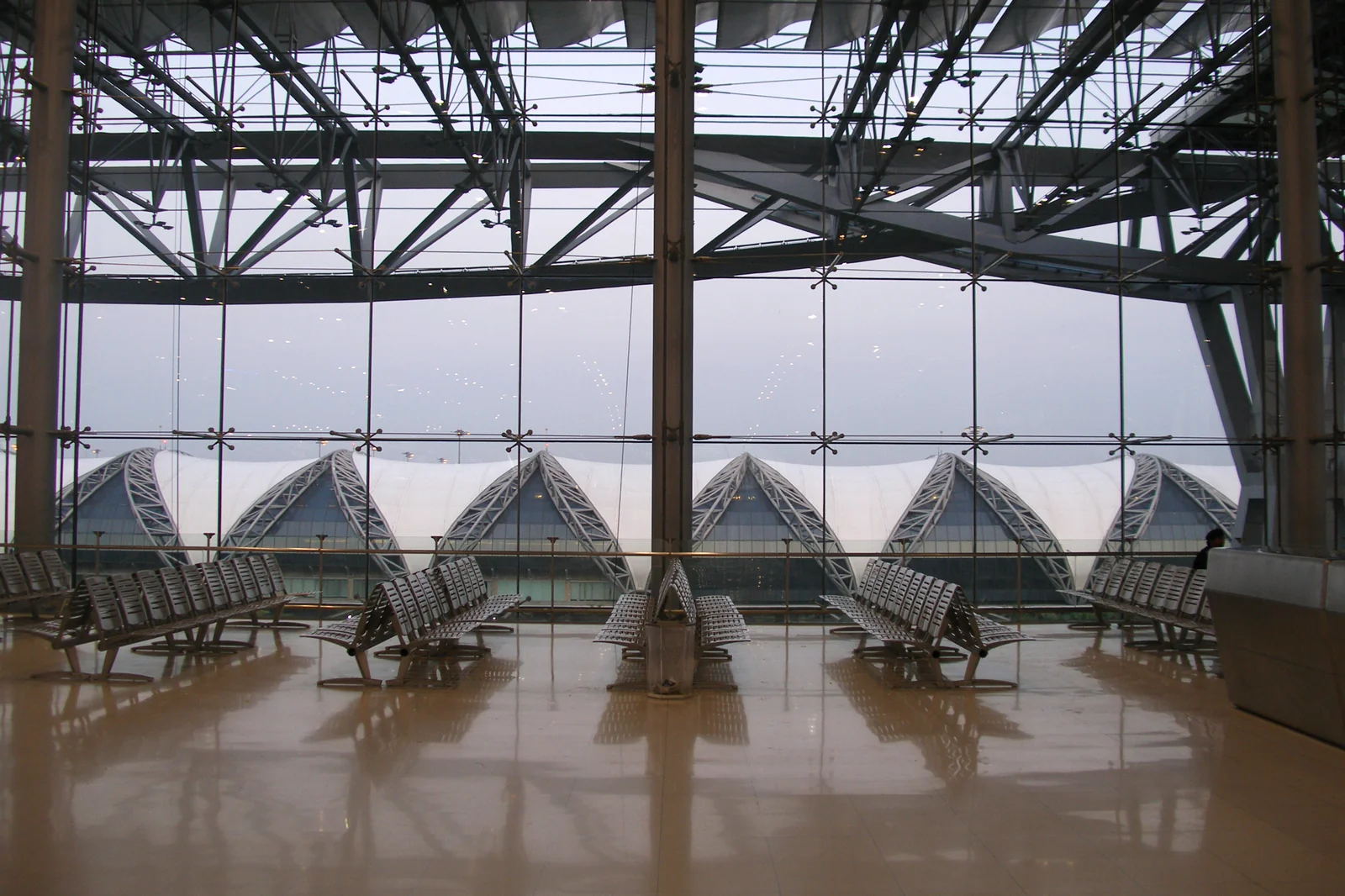 Photographer: Vyacheslav Argenberg. Source: Wikimedia Commons. License: CC BY 4.0.
The 60-second answer, by trip length
Most readers want to know one thing before anything else. Which document do you need for the trip you have planned. Here is the short version, by stay duration, for passport holders from the US, UK, EU, Australia, Canada, Japan, New Zealand, Singapore, and most ASEAN states (verified against US State Department guidance, July 2025, and UK Foreign Office, current).
- Under 60 days, tourism. Visa exemption, no advance application. File the free TDAC online within 72 hours of arrival. Bring a passport valid 6+ months.
- 60 to 90 days, tourism. Enter on visa exemption, then extend once at any Thai immigration office for 1,900 THB (~$54 USD). 30 extra days. Done.
- Up to 60 days but you want certainty. Apply for a Tourist Visa through the e-Visa portal before you fly. ~$40 USD, 3 to 10 working days, valid for 6 months from issue.
- 3 to 6 months, working remotely from Thailand. The Destination Thailand Visa is what you want. 180 days per entry, with multiple entries allowed, 10,000 THB (~$280 USD) fee. Requires 500,000 THB (~$14,000 USD) in proof of funds.
- 6 months to 5 years, settled long-stay. Same DTV if you keep leaving and entering again, or a Non-Immigrant visa (B for work, ED for study, O-A for retirement) processed through a Royal Thai Embassy.
Everything below is the detail behind those five answers, plus the rules for nationalities that fall outside the standard exemption list.
The 60-day exemption is the lever most travelers underuse. You enter visa-free for 60 days, then extend once at any immigration office for 1,900 THB (~$54 USD) to reach 90 days total. That is a single trip to one counter, not a visa run. Budget half a day and bring two passport photos.
TDAC, the one document everyone now needs
The Thailand Digital Arrival Card replaced the old paper TM6 form on 1 May 2025. It is not a visa. It is not an electronic travel authorization. It is the modern version of the slip of paper an immigration officer used to staple into your passport. Every foreign national entering Thailand must complete it, including travelers who enter visa free and existing visa holders.
The portal is tdac.immigration.go.th. The form is free. You can file it up to 72 hours before arrival, and the system issues a QR code that the immigration officer scans at the desk. We file ours at the boarding gate of the last connecting flight. That window is short enough to mean the form is genuinely accurate (current accommodation, current flight) and long enough that wifi or a stable mobile connection is usually available.
Children and infants need their own TDAC. Cruise passengers entering at a sea port need it. Land borders with Laos, Cambodia, and Malaysia accept the same QR code. If you arrive without the TDAC, immigration will direct you to a kiosk at the airport to file it on the spot, which costs nothing but adds 15 to 45 minutes to your queue time.
Visa exemption, 60 days for most Western passports
Citizens of around 190 countries can enter Thailand without applying for a visa in advance. The stay length on the exemption stamp depends on the passport. The standard tier is 60 days for tourism, business, or urgent work. That covers US, UK, EU and EFTA states, GCC states, Australia, Canada, China, Hong Kong, India, Israel, Japan, New Zealand, Russia, Taiwan, and most of ASEAN (US Department of State and UK Foreign Office, verified June 2026).
A small group of passports gets longer. Argentina, Brazil, Chile, South Korea, and Peru receive 90 days under bilateral agreements. A few smaller countries get 30 days or 14 days. Cambodia was reduced from 60 days to 7 days in June 2025 after border tensions.
The exemption is generous but not unlimited. Immigration officers can refuse entry if your travel pattern looks like residency in all but name, meaning repeated exemption entries with no other visa in between. If you intend to spend most of the year in Thailand, the DTV or a Non-Immigrant visa is the right structure, not a string of exemption stamps. We have seen travelers turned away at Bangkok land borders after their fourth visa free entry in 12 months.
Three reminders before you walk to the desk. Your passport needs at least 6 months of validity remaining beyond your arrival date and one blank page. You will be asked to show a confirmed onward ticket departing Thailand within the 60 day window. And you may be asked to show proof of funds, typically 20,000 THB (~$560 USD) per person or $1,190 per family.
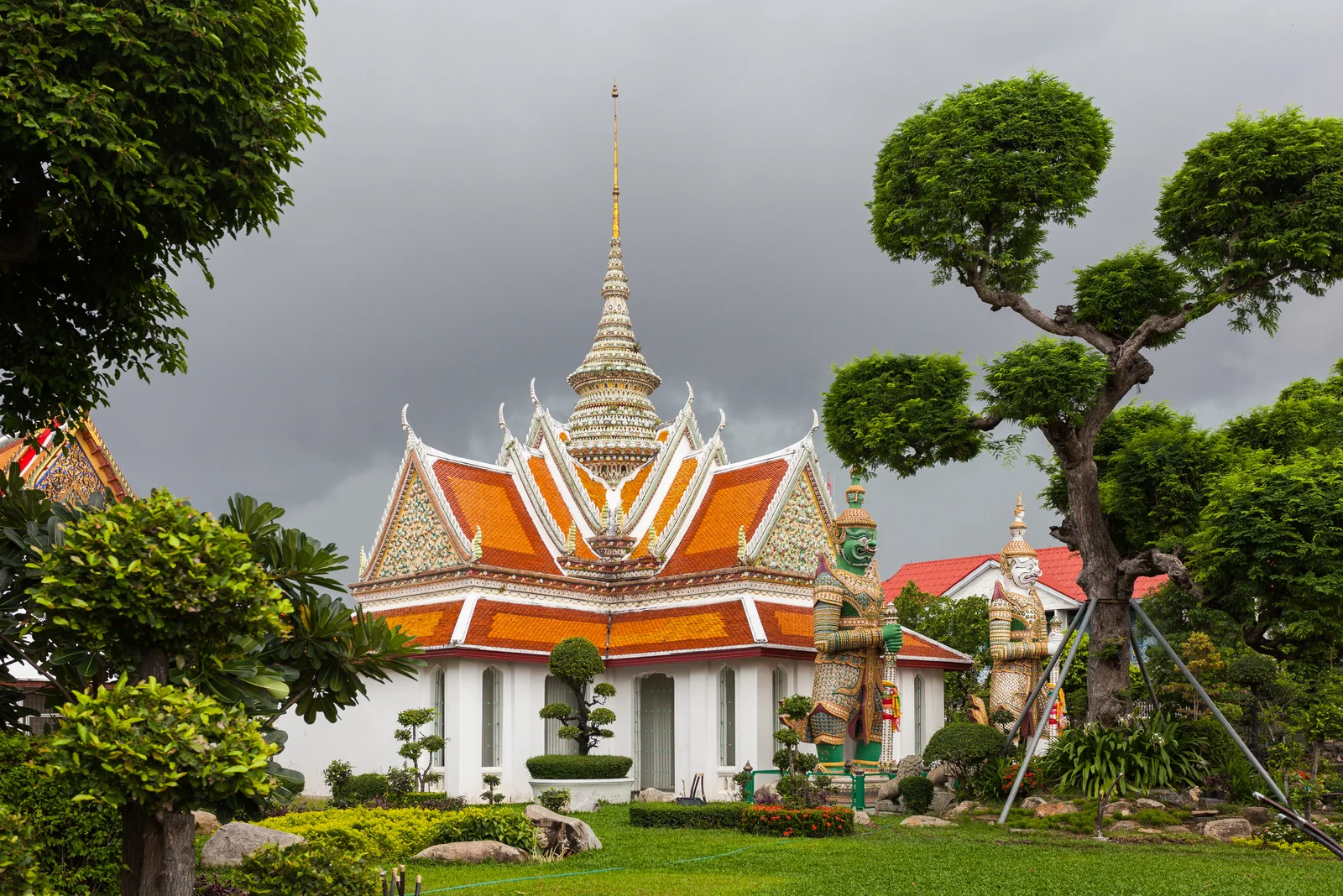 Photographer: Diego Delso. Source: Wikimedia Commons. License: CC BY-SA 3.0.
Tourist Visa and the new e-Visa portal
If you want certainty in writing before you board the plane, apply for a Tourist Visa through Thailand’s e-Visa portal. Thailand fully adopted e-Visa for tourist applications from 1 January 2025, which means no more couriering your passport to the embassy and no more queueing at a consulate.
The Tourist Visa for a single entry gives you a 60 day stay (same as exemption) but extends an extra layer of approval before you fly. Useful if you have a passport that doesn’t get exemption, or if your itinerary has caused immigration questions in the past. The application fee is around $40 USD, depending on the issuing embassy. Processing takes 3 to 10 working days. The visa itself is valid for 6 months from the date of issue, so you have a generous window to fly.
For a longer stay approved in advance, the Tourist Visa for multiple entries (METV) gives you 60 days per entry, valid for 6 months, with unlimited entries during that window. The fee is around $200 USD, and you apply at a Royal Thai Embassy in your country of residence, not through the e-Visa portal. METV is the right tool if you plan to circle between Thailand and the surrounding region (Vietnam, Cambodia, Bali, KL) over a five or six month window.
Documents you will need for the e-Visa Tourist Visa. Scanned passport biopage, recent photograph, confirmed flight booking in and out of Thailand, accommodation confirmation for at least your first booking, proof of funds (typically a recent bank statement showing $595 equivalent), and the application fee paid online.
Visa on Arrival, the 15 day stopgap
Visa on Arrival is the short, expensive option for passport holders whose country doesn’t get exemption. About 40 nationalities qualify, including China, India, Saudi Arabia, Russia, Taiwan, Nepal, Mexico, and Georgia. The stay is up to 15 days. The fee is 2,000 THB (~$56 USD) for standard processing or 2,200 THB (~$62 USD) for express. It is available at 48 immigration checkpoints across Thailand including Suvarnabhumi, Don Mueang, Phuket, and Chiang Mai airports plus the major land borders.
Documents the immigration officer will ask for. Passport with 30+ days of validity beyond your stay. One photo at passport size. Confirmed onward ticket within 15 days. Proof of accommodation. Proof of funds at $298 cash per person or $595 per family, uploaded online or shown in cash. If you don’t have the cash equivalent, you can be refused at the gate.
Do the currency math before you reach for Visa on Arrival. At 2,000 THB (~$56 USD) for 15 days, it costs about the same as the Tourist Visa at ~$40 USD, which buys 60 days. If you can wait 3 to 10 working days for the e-Visa, the longer stay is the better value almost every time.
Practically, VOA is worth using only when your trip is short and exemption isn’t available. If you need more than 15 days in Thailand and your passport doesn’t get visa free entry, apply for a Tourist Visa through the e-Visa portal before you fly. The fee is similar and the stay is four times as long.
Destination Thailand Visa for nomads and long stays
The DTV launched in 2024 and is the biggest Thai visa reform in a generation. It is built for the traveler who wants to live in Thailand for 3 to 6 months at a time, leave for a short break, and come back. The framework runs 5 years and lets you enter many times, so there is no restarting the application loop on each trip.
The shape of it (verified via ExpatDen and the Royal Thai Embassy network, June 2026):
- Stay per entry: 180 days, extendable once at immigration for another 180 days inside Thailand.
- Validity: 5 years, with many entries allowed. You exit and enter again to reset the clock.
- Base fee: 10,000 THB (~$280 USD), though embassies set their own rates. Canberra charges ~$600 AUD.
- Financial proof: 500,000 THB (~$14,000 USD) maintained throughout your stay. Bank statements going back 6 months.
- Minimum age: 20.
- Processing: 3 to 7 business days.
Three eligibility lanes accept applicants. Workcation covers digital nomads, freelancers, and remote employees of non-Thai companies. You provide proof of remote work (employment letter, freelance portfolio, contracts). Thai Soft Power covers travelers coming to Thailand for cultural pursuits or treatment. The accepted activities include Muay Thai training at a registered camp, Thai culinary study, traditional medicine, Thai language school, sports training, and extended medical care. You provide a letter from the camp, school, or hospital. Dependent covers spouses and children under 20 of a primary DTV holder, with documentation of the relationship.
What the DTV does not do. It does not let you work for a Thai employer (that is the Non-Immigrant Visa B with a work permit). It does not grant residency or a path to citizenship. And the $14,869 financial requirement is a real barrier. For travelers earning a high USD or EUR salary remotely, it is straightforward. For backpackers stretching a budget, it is not.
Apply through the official e-Visa portal at thaievisa.go.th or at a Royal Thai Embassy or Consulate-General in your country of residence. Approval is at the embassy’s discretion.
The DTV reshaped the nomad map inside Thailand. Application volumes have run heaviest in Bangkok, Chiang Mai, and Phuket since launch, and the long-stay crowd clusters where coworking and visa-agent support already exist. If you plan to base yourself for 180 days, pick the city before the visa. Chiang Mai stretches the $14,869 proof of funds furthest on monthly costs.
Business, education, retirement, and family visa categories
Five Non-Immigrant categories cover the situations exemption and DTV don’t. All require application at a Royal Thai Embassy or Consulate-General before you arrive in Thailand.
- Non-Immigrant B (Business). For employment in Thailand or short business meetings. One entry at 90 days or many entries across 1 year. ~$80 to $200 USD. Pair with a work permit issued by the Ministry of Labour for actual employment.
- Non-Immigrant ED (Education). For students enrolled at Thai schools, universities, or language programs (commonly Thai language at registered schools). Up to 1 year, renewable while enrollment continues.
- Non-Immigrant O (Family). Spouses, parents, and children of Thai citizens or of Non-Immigrant B holders. 90 days initial, extendable to 1 year inside Thailand.
- Non-Immigrant O-A (Retirement). For applicants aged 50+. Financial proof of 800,000 THB (~$22,400 USD) in a Thai bank account for 2 months prior, or monthly income of 65,000 THB (~$1,820 USD), or a combination. Annual renewal at immigration, address reports required every 90 days.
- SMART Visa. For highly skilled workers, executives, and entrepreneurs in targeted industries (digital, biotech, robotics). Up to 4 years. Requires endorsement from a designated Thai agency.
The retirement visa is the one most often misunderstood. The $23,790 has to sit in a Thai bank account, not a foreign one, and the funds need to land 2 months before application. Income-only applicants need a notarized letter from their country’s embassy confirming the $1,933 monthly equivalent.
Extending your stay and the cost of overstay
If you entered on the 60 day visa exemption and decide you want to stay longer, the cleanest path is a 30 day extension at any Thai immigration office. The fee is 1,900 THB (~$54 USD). You bring your passport, two photos at passport size, a copy of the TM30 (your accommodation’s address registration, which your hotel handles for you), and proof of address. The process takes between 90 minutes and a half day depending on the office. Bangkok’s Chaeng Wattana immigration office is the busiest. Pattaya’s Jomtien office is the most efficient.
Bangkok travelers can also handle the extension at Chamchuri Square in the city center, which is faster than Chaeng Wattana but accepts fewer applicants on the same day. Take a number early.
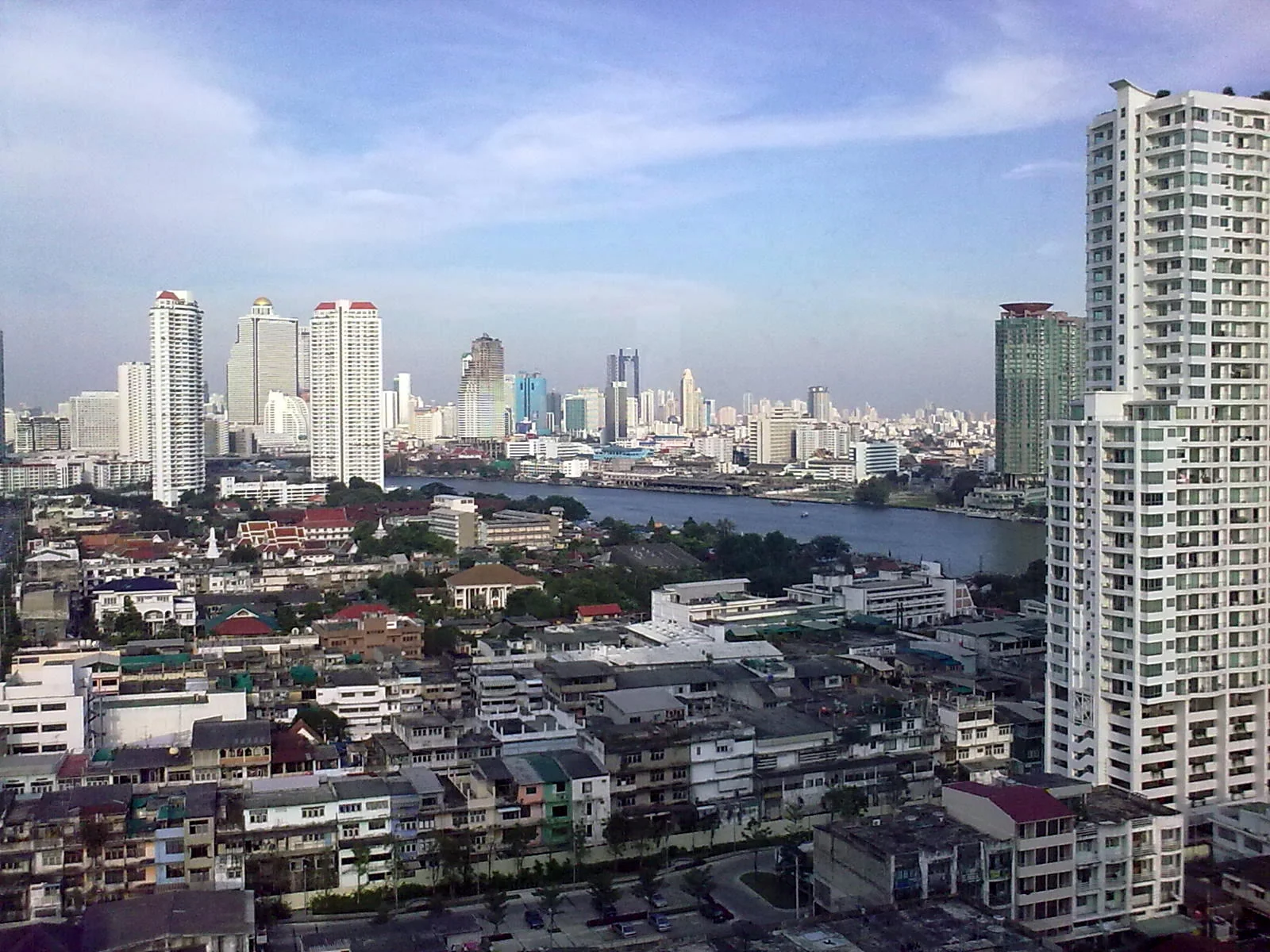 Photographer: Piyatad. Source: Wikimedia Commons. License: CC BY-SA 3.0.
If you overstay, the math is hard. Each day costs $15 in fines, capped at 20,000 THB (~$560 USD) for short overstays. Stay longer than that and the legal consequences expand. Overstays of more than 90 days trigger a ban of 1 year on entering again. Overstays of more than 1 year trigger a ban of 3 years. Overstays of more than 3 years trigger a ban of 5 years. An overstay of 5 years can mean a ban of 10 years (UK Foreign Office and US State Department, current as of June 2026). Long overstays can also result in detention pending deportation.
The visa run loophole that worked in 2012 (cross to Cambodia, return, get a new stamp) is largely closed. Immigration officers track entry patterns and can refuse entry on the basis of repeated tourist entries they read as abuse. If you need more time in Thailand than your exemption allows, apply for a Tourist Visa or the DTV before you fly.
What changed in 2024 to 2026
Three structural reforms reshaped Thai immigration in the last 18 months, and travel blogs older than the middle of 2025 are now wrong on at least one major point.
July 2024, the DTV launched. Thailand had no digital nomad visa before this. The DTV pulled travelers working remotely from Thailand out of the tourist visa loop and gave them a structure that runs 5 years. Application volumes have run high since launch, especially in Bangkok, Chiang Mai, and Phuket.
January 2025, e-Visa fully adopted. Tourist Visa applications moved online at thaievisa.go.th for almost all nationalities. Paper applications at embassies are now the exception, not the default.
May 2025, TDAC replaced the paper TM6. The old white slip that you filled in on the plane is gone. Every foreign arrival now files the digital arrival card online. The portal handles 200,000+ daily registrations during peak season.
One ongoing review to watch. In May 2026, the Thai cabinet announced a review of the expanded 60 day visa exemption list of approximately 90 countries that took effect under earlier reforms. As of our June 2026 verification, US State Department, UK Foreign Office, and Australian DFAT all still document 60 days of exemption for their citizens, but the situation is fluid. If you are flying in late 2026 or beyond, confirm your nationality’s current exemption status with your nearest Royal Thai Embassy 1 to 2 weeks before travel. The thaievisa.go.th portal also publishes updates.
Where to stay once your visa is sorted
Once the entry document is handled, the next decision is where you sleep on night one. Our hotel coverage focuses on properties carrying the SHA hygiene certification from the Tourism Authority of Thailand, which we treat as the baseline rather than a feature. A few starting points across the country.
 SHA Extra Plus
★ 9.1
SHA Extra Plus
★ 9.1
Mandarin Oriental Bangkok
 SHA Extra Plus
★ 9.2
SHA Extra Plus
★ 9.2
Four Seasons Resort Chiang Mai
 SHA Plus
★ 9.1
SHA Plus
★ 9.1
InterContinental Phuket Resort By IHG
For deeper city-by-city coverage, see our Bangkok hotel roundup, Phuket hotel roundup, Chiang Mai hotel roundup, Koh Samui hotel roundup, and Krabi hotel roundup. For itinerary planning once you’ve arrived, our 3 Days in Bangkok and 3 Days in Phuket guides cover the first-trip essentials.
The TM30 trips up long-stay travelers more than any visa rule. A hotel files it for you within 24 hours of check-in without being asked. A private rental does not, and a missing TM30 can stall a later extension at the immigration counter. If you book an apartment or stay with a friend, confirm in writing that the address has been registered.
One last housekeeping note. Thailand requires hotels and guesthouses to file a TM30 form reporting your accommodation address within 24 hours of your check-in. Reputable hotels handle this for you automatically. If you are staying in a private rental (Airbnb, friend’s apartment, a lease of several months), the homeowner is legally responsible for filing the TM30, and missing it can complicate any future visa extension. Ask before you book.
Travel insurance is the other document, separate from any visa, worth handling before you fly. A solid policy covers Thailand from around $1.20 USD per day, including medical evacuation, which matters more than the policy fine print until the moment it doesn’t. For inbound flights, compare fares across major carriers before locking your dates.