The flight from Suvarnabhumi to Phuket landed at 09:40. The four-year-old next to us slept through the bag-belt wait, woke up at the rental-stroller stand, and watched her parents argue about which exit went to the Grab pickup. That was July 2024. We have run the same arrival five more times since. This is the guide we wished we had on flight number one.
Thailand is one of the easier first-time long-haul trips with kids. The hotels are good, the food is friendly to small mouths, the hospitals are excellent, and most cab drivers will help you fold a stroller. The trade-off is monsoon, the choice of region matters more than people admit, and the elephant-tourism question has to be answered before you book anything.
This guide answers the parent who is choosing between two cities for night one, not the parent who has already booked everything.
The 60-second answer to Thailand by kid age
Kid’s age sets the trip more than any other variable. We have shipped this matrix to four families this year and it has held up.
- Under 3. Pick one place. Hua Hin or Koh Samui. Beach resort with a kids pool and a real kitchen. Skip Bangkok beyond a one-night arrival. Stick to bottled water and hotel restaurants.
- 3 to 6. Two-base trip. Bangkok 2 nights for SEA Life and Lumpini Park boats, then a beach (Hua Hin, Phuket Kata, or Koh Samui Bophut) for 5 to 7 nights. Splash Jungle waterpark is the headline at Mai Khao.
- 7 to 11. Three-base classic. Bangkok 3 nights, Chiang Mai 3 nights for the ethical elephant park plus a Thai cooking class, then Phuket or Krabi 5 nights for the beach. Sleeper train one leg if the kid is up for it.
- Teen. Bangkok plus the islands. Add a muay thai gym session, a Khao San Road dinner, and an overnight Koh Phi Phi sleepover if they can swim confidently.
If you can only pick one and you want minimum friction, the answer is Hua Hin in November or December. Three-hour drive from Bangkok, calm Gulf water, two waterparks within a 15-minute taxi, and the night markets close by 22:00 so bedtime is not a fight.
The age 3 cutoff is real. Under 3s are jet lag chaos on a 12 hour flight and they will not remember anything. We are not saying do not go. We are saying pick one base and stay there.
Where to base your family trip
Six regions cover 95 percent of family trips. Pick by what your child will actually do, not by Instagram.
Phuket (Karon, Kata, Bang Tao, Mai Khao)
Age sweet spot 4 to 12. The pull is the airport (HKT lands 90 minutes from anywhere on the island), Splash Jungle waterpark at Mai Khao, the Phuket FantaSea cultural show, and calm beaches on the west coast outside monsoon. Patong is the noisy nightlife stretch and not for families. Stay Kata for restaurants within walking distance. Stay Karon for the longest beach with the gentlest slope. Stay Mai Khao if the resort itself is the trip.
Krabi (Ao Nang, Klong Muang, Tubkaek)
Age sweet spot 6 to 12. Quieter than Phuket, with the 4-Island longtail boat tour as the headline day. Tiger Cave temple is a serious 1,200-step hike and not for under 7s. Klong Muang and Tubkaek are the family resort stretches. Ao Nang is more backpacker.
Koh Samui (Bophut, Choeng Mon, Maenam)
Age sweet spot 4 to 12. Smaller scale than Phuket, calmer water on the north coast, and Walking Street in Fisherman’s Village on a Friday night is the easiest cultural outing we know. Bophut and Choeng Mon for families. Avoid Chaweng’s south end for the late night noise.
Hua Hin
Age sweet spot 0 to 12. The royal weekend town three hours south of Bangkok by car or four hours by train. Vana Nava waterpark inside the Holiday Inn resort is the inclusive headline. Cicada Market on Friday and Saturday nights is calm enough for toddlers. Beach pace, no nightlife pressure, easy taxi access to Bangkok if something goes wrong.

Chiang Mai
Age sweet spot 6 to 12. The cultural anchor of the trip. Elephant Nature Park is the ethical option (sanctuary, no riding, no shows). Thai cooking class is a half-day that older kids enjoy. Doi Suthep temple is a short cable funicular ride. The November to February cool dry season is comfortable. March to May burning season is rough on small lungs and we do not bring kids then.
Bangkok (3 to 4 nights max with kids)
Age sweet spot 5 to 12. Treat Bangkok as the arrival and the departure plus 1 to 2 days for the headline kid spots. SEA Life Bangkok at Siam Paragon, Safari World, Dream World, and Kidzania at Siam Discovery cover most under 12 wishlists. The BTS Skytrain has lifts at almost every station now, which makes the city stroller friendly in a way it was not five years ago.
Getting around Thailand with the kids in tow
Movement is where family trips break. Plan the legs deliberately.

Bangkok BTS and MRT
Single fares run THB 17 to 44 ($0.50 to $1.30). Almost every station now has a lift, although it is sometimes at the far end of the platform. Avoid the 07:30 to 09:00 and 17:30 to 19:30 windows with a stroller. Trains are full and you will spend the ride holding a folded stroller upright. Off peak the BTS beats every other Bangkok transit option for a family.
Domestic flights
Bangkok to Phuket, Krabi, Chiang Mai, and Koh Samui all sit at 1 hour 25 minutes to 1 hour 35 minutes of block time. Carriers split into two fare tiers. Use compare current Bangkok to Phuket fares to see live pricing on either tier.
- Budget tier: $35 to $75 one way booked 2 weeks out, bag and meal extra.
- Full-service tier: $110 to $180 with bag and meal in the fare.
- Stroller policy: gate-side at no charge, almost all carriers.
- Car seats: not standard. Most airlines gate-check a child seat free.
Sleeper train Bangkok to Chiang Mai
Trains 9, 13, and 14 run the overnight route. Lower berths book first because they are wider and have a window. Kids 6 and up love this trip. Under 4s will be a long night for everyone. Two cabin tiers, plus the booking layer:
- Second class air-conditioned sleeper: $30 to $45 USD per berth.
- First class private cabin (2 berths): $55 to $75 USD per berth.
- Book through the official State Railway portal or via compare overnight train and bus options.
Ferries on the Andaman and the Gulf
Bangkok to Koh Samui via overnight bus and ferry is grim with kids. Fly to Surat Thani or Samui Airport instead. Inside the regions, three short hops work well for ages 4 and up. Each carries a mandatory life jacket. Sea state is choppy from May to October on the Andaman side.
- Phuket to Phi Phi: 90 minutes.
- Krabi to Koh Lanta: 1 to 2 hours.
- Samui to Koh Phangan: 30 minutes.
Tuk-tuks, songthaews, and Grab
Tuk-tuks are not for infants. Above age 6 they are a fun 10 minute experience and we let our kids ride one each trip. Songthaews (open back truck taxis in Chiang Mai and the islands) have no seatbelts and we use them with confident walkers, not strollers. For day to day movement with small kids in Bangkok, Chiang Mai, and Phuket Town, Grab is the closest to a Western taxi. You can request a car seat in the app, though availability is limited and you may need to bring your own.
The “mai pet” (not spicy) phrase will be the most useful Thai you teach the kids. Most kitchens can flex pad thai and fried rice to zero spice. Mention nut allergies in Thai if relevant. “Phae thua” means allergic to peanuts.
Hospitals and the medical safety net for traveling families
This is the section that calms first time Asia parents. Thailand’s private hospitals are among the best in Southeast Asia, with English speaking pediatric departments and travel insurance billing built in.
- Bumrungrad International (Bangkok). JCI accredited since 2002. 47 specialty centers, 580 beds. Treats 1.1 million patients a year, more than half a million from 190 countries. Pediatric ER 24 hours. Sukhumvit Soi 3.
- Samitivej Sukhumvit (Bangkok). Strong Children’s Hospital wing. Closer to most family hotels on the Sukhumvit line. Good for routine issues and 24-hour pediatric ER.
- Bangkok Hospital network. Branches in Bangkok, Phuket, Pattaya, Hua Hin, and Chiang Mai. JCI accredited at most branches. The Phuket and Pattaya branches handle travel injuries every day.
- Phuket International Hospital. Patong area branch with English speaking ER. The default for west coast Phuket emergencies.
- Chiang Mai Ram Hospital. The pediatric capable option in the north. International desk, English consults.
The CDC recommends Hepatitis A and Typhoid vaccinations for most travelers. Routine childhood vaccinations should be up to date. Japanese Encephalitis is recommended for long rural stays. Yellow fever is not required unless arriving from a yellow fever country. Carry a small kit with paracetamol, antihistamine, electrolyte sachets, and a thermometer. Pharmacies in tourist towns stock most of this but the names are unfamiliar and you will not want to figure it out at 02:00.
Travel insurance with international medical coverage is non negotiable for a family trip. We carry it on every trip and have used it twice.
Food and water rules that actually work
The food question is the one that gets oversold both ways. Thailand is not Delhi belly difficult and it is not entirely safe either. The rules:
- Bottled water for drinking and for brushing teeth. Hotel rooms always provide it.
- Cooked, hot, and fresh. Ice in major hotels and chain cafes is fine (filtered). Roadside ice from a vendor with a cooler is not.
- Hotel restaurants are universally safe. Mid tier Thai restaurants in tourist cities are fine. Street food is fine for kids 6 and up and for parents with a strong stomach. Avoid for under 4s.
- Pad thai, fried rice, chicken satay, and mango sticky rice are universal kid hits. Tom yum and red curry are usually too spicy unless ordered “mai pet”.
- Fruit is cheap and excellent. Stick to fruit you peel yourself (mango, banana, pineapple, rambutan) for street bought.
What to pack that is hard to find locally in Thailand
Bangkok has everything. Beach towns have most things. Chiang Mai has the basics. What you actually want from home:
- Reef safe sunscreen, SPF 50, full body for a week per child. The marked up resort store will charge $25 for a 100ml bottle of generic.
- A rash guard and water shoes. Tourist shops sell both but the sizing is unreliable.
- Stroller rain cover for monsoon season trips.
- A USB C wall plug with two ports. Hotel outlets are universal Type A/B/C.
- A small flashlight or a phone clip light. Pavements outside Bangkok are uneven and most beach towns dim down hard at 21:30.
- Any prescription medication with original packaging plus a doctor’s note for stimulants and controlled substances.
When to go to Thailand with kids in tow
November to February is the family window. Cool dry season, 25 to 30°C, low humidity, the lowest rain risk on both coasts. December and early January are the school holiday peak and prices reflect that. November and the first half of December are the sweet spot for both weather and price.
March to May is hot season. Temperatures hit 35 to 40°C in central Thailand and Bangkok. Hard with infants. Workable with older kids if the trip is beach focused. The water is at its calmest in April on the Andaman side, which is a real argument for a beach only trip.
June to October is monsoon. The Andaman coast (Phuket, Krabi) gets the worst of it, with the heaviest rain in August and September. The Gulf coast (Koh Samui, Koh Phangan, Koh Tao) actually has its driest stretch June to August, which is the most underrated window in family Thailand. Hua Hin and Chiang Mai are workable in low monsoon with regular afternoon showers.
Two festivals to plan around. Songkran (April 13 to 15) is the nationwide water throwing new year. Fun for confident kids 6 and up. Chaotic with toddlers. Nobody waits to see if you have a baby in the stroller before they soak it. Loy Krathong in November is the floating lantern festival, calm, beautiful, and family friendly. Chiang Mai’s Yi Peng sky lantern release happens on the same weekend.
Plan around school break weeks at the destination too, not just at home. Singapore and Hong Kong school holidays push Phuket and Samui hotel rates 30 to 50 percent above normal mid-week pricing for the same week.
Where to stay with kids across Thailand
Five SHA certified properties we trust for families across the regions that matter. All carry kid amenable pool layouts, kitchens or kid menu in room service, and 24-hour reception for the late flight arrivals.
 SHA CERTIFIED
★ 9.1
SHA CERTIFIED
★ 9.1
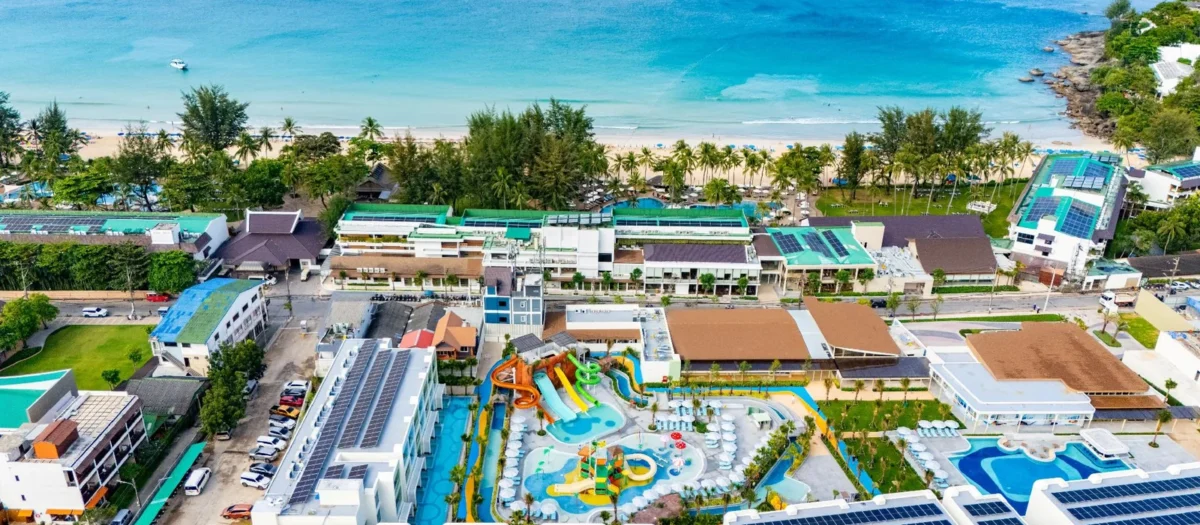
Holiday Inn Resort Vana Nava Hua Hin
Vana Nava waterpark is inside the resort grounds and free for hotel guests. If you're travelling with kids who'd burn out on quiet beach days, this answers the problem in one booking. Rooms are functional rather than luxurious, the property runs as a family machine. Adults-only seekers should book elsewhere.
 SHA PLUS
★ 8.7
SHA PLUS
★ 8.7
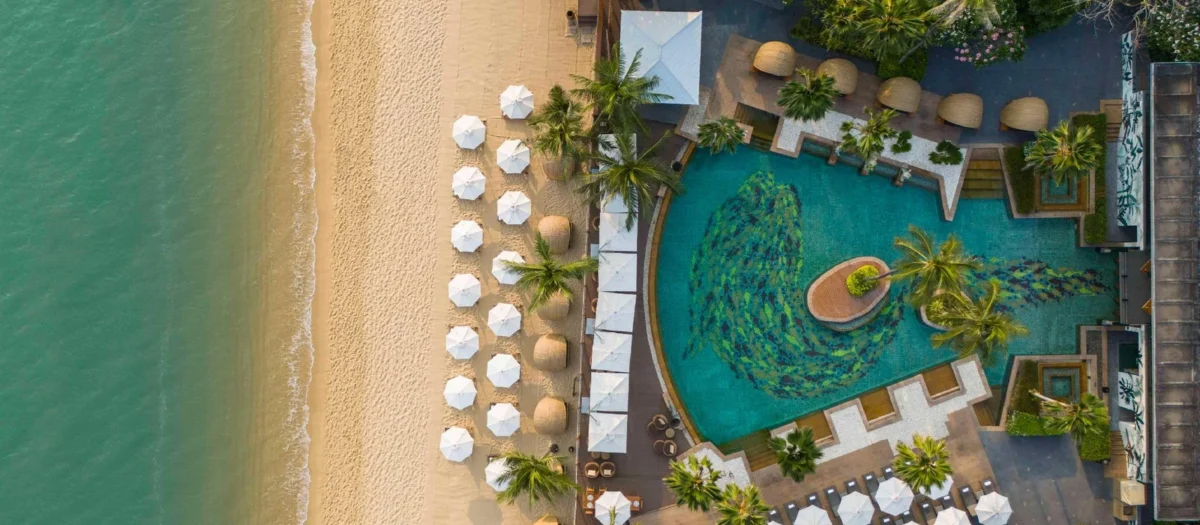
Anantara Bophut Koh Samui Resort
Anantara Bophut sits on the eastern stretch of Bophut Beach, 7 minutes from Samui Airport, and 12 minutes' walk along the beach to Fisherman's Village. The 106-villa resort is one of the most established Bophut properties, with Lanna-style architecture and a low-rise layout that preserves the beachfront feel. The low-rise layout puts every villa within 90 seconds of the beach, which is rare for a 106-villa property.
Rates start around $155 per night for a deluxe pool-access room and run to $520 for a beachfront pool villa. The villas are stand-alone Lanna structures with private terraces; the higher tiers add 4-meter private plunge pools. The 35-meter beachfront pool runs adjacent to the sand with a swim-up bar and a sundeck that opens directly onto the bay. The on-site Spice Spoons restaurant runs a Thai cooking class twice weekly.
The trade-off is the older sections of the property: ask for the renovated wings at booking. Otherwise the resort delivers the standard Anantara service profile (high-touch, butler at suite tier, in-room dining 24 hours). Book Anantara Bophut if you want a beachfront Bophut stay with Anantara service. Skip if you want a smaller boutique experience or pool-villa-only resort like Conrad.
 SHA EXTRA PLUS
★ 8.6
SHA EXTRA PLUS
★ 8.6
Katathani Phuket Beach Resort
Katathani sits on Kata Noi beach, the smaller and quieter of the two Kata beaches on Phuket's west coast. The resort is one of the few that has the entire beach essentially to itself, which means private sunbed access, no walk-up vendors, and one of the calmest swimming bays in Phuket. The protected bay shape blocks most monsoon swell, which means swimming is reliable from October through April.
The property splits across the Bhuri Wing (smaller, low-rise, original 1990s buildings) and the more recent Thani Wing (larger rooms, infinity pool decks, sea views from the higher floors). Most travelers want a Thani Wing room with a sea view. Rates start around $150 per night for a garden-view standard and run to $450 for a one-bedroom suite. Six pools, four restaurants on-site, and a kids' club that runs across two age bands. Service is friendly and unpretentious; this isn't a five-star service operation, but it's a four-star executed at the upper edge of its tier.
Beach access for non-guests is technically possible but rarely happens, so the beach feels like an extension of the property. Book Katathani for a Phuket beach holiday with kids or a quiet couples' stay. Skip if you came for Patong nightlife.
 SHA EXTRA PLUS
★ 9.2
SHA EXTRA PLUS
★ 9.2
Four Seasons Resort Chiang Mai
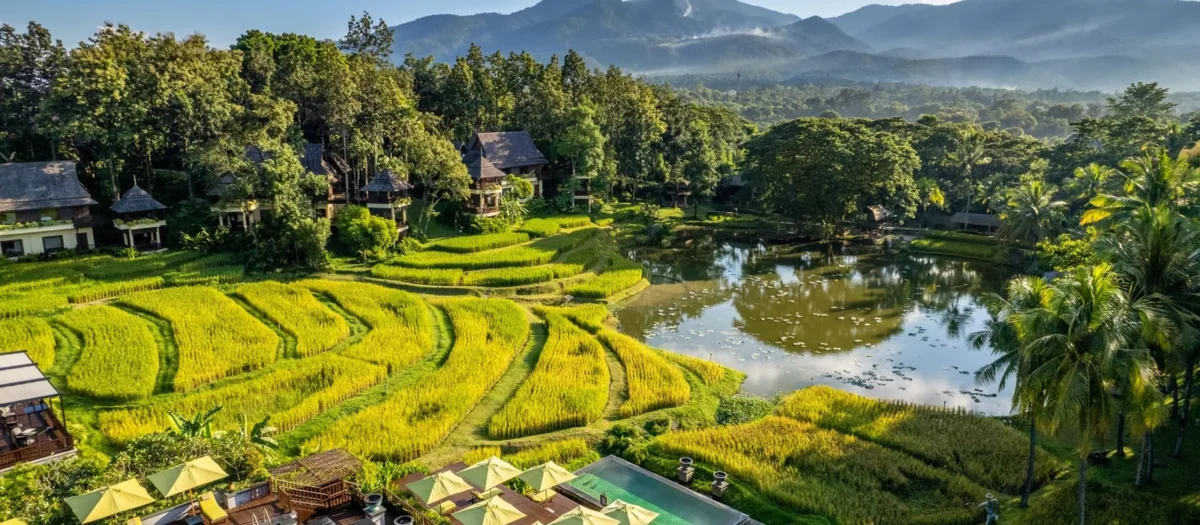
Four Seasons Chiang Mai is the most ambitious resort in northern Thailand. The property sits in the Mae Rim valley, 40 minutes from Chiang Mai's Old City, with 99 villas built around working rice paddies that the resort actively cultivates with two resident buffaloes. The rice farming is genuine, not staged, and rotates through the same monsoon cycle as the surrounding farms.
The villas range from one-bedroom Pavilions at around $650 per night to multi-bedroom Pool Villas above $2,500. All accommodations are stand-alone Lanna-style structures with private terraces; the higher tiers add private pools. The resort runs morning farming activities (you can plant rice during the May-June planting season and harvest in October), elephant sanctuary visits (with the affiliated Elephant Parade House), and a Thai cooking school led by chef Ranadda.
The trade-off is location. Chiang Mai Old City is 40 minutes by car each way, which means most guests treat the resort itself as the destination rather than as a base. The shuttle into town runs three times daily; outside those windows, you're booking taxis. Service is famously high-touch (you'll have a butler assigned at check-in), and the spa is one of the few in Thailand that uses ingredients grown on the property. Book Four Seasons Chiang Mai if you want a destination resort experience. Skip if you came to walk the Old City.
 SHA PLUS
★ 9.0
SHA PLUS
★ 9.0
Avani+ Riverside Bangkok Hotel
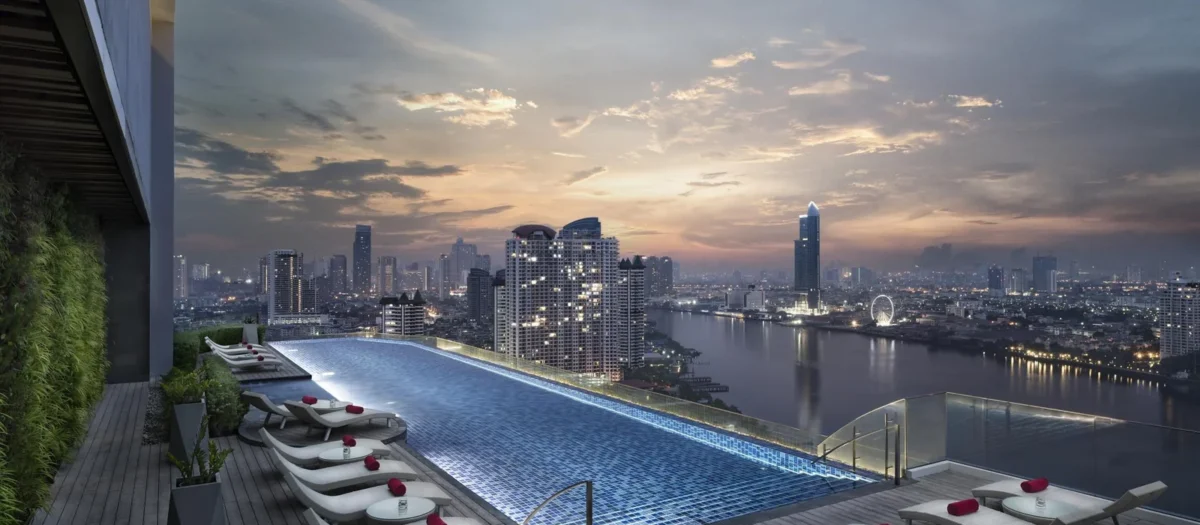
Avani+ Riverside is the value play on the Chao Phraya. The hotel sits on the Thonburi side of the river, opposite Mandarin Oriental and Four Seasons, which means the view from your room is of the historic riverside skyline, not of an industrial bank. For travelers who want the iconic river view at a working budget, this is the only honest answer in central Bangkok.
The rooftop pool is on the 26th floor with a 270-degree view of the river and the Old Town spires. Rates start around $129 per night for a standard river-view room, which puts it at one-third to one-quarter of Mandarin Oriental's nightly. The trade-off is location. Krung Thonburi BTS is 10 minutes' walk on the Thonburi side, and the hotel runs a free shuttle to BTS Saphan Taksin and Sathorn pier roughly every 30 minutes from 7 AM to 11 PM. Late-night arrivals require a taxi because the shuttle stops running before midnight.
Service is honest four-star. Efficient at check-in, clean rooms, decent breakfast spread, no pretense of being a luxury operation. The in-house Italian restaurant Attico is solid but not destination-worthy. Book Avani+ if you want the river view at a working budget. Don't book it if you expect butler service, in-room dining at 2 AM, or a concierge who can pull strings.

The ethical elephant question every parent has to answer
If you have any plan to see an elephant in Thailand with your kids, the answer is a sanctuary that does not allow riding, painting, or shows. The benchmark is Elephant Nature Park outside Chiang Mai, founded by Lek Chailert in 1995, with a half day or full day program that feeds and walks (not rides) the resident herd. Boon Lott’s Elephant Sanctuary in Sukhothai is the other gold standard but harder to reach for a 5 day trip.
Riding camps still exist and still take family bookings. The shorthand is the photo. If there is a wooden bench strapped to the elephant’s back, it is not a sanctuary. If a guide is poking the elephant with a hook (an ankus), it is not a sanctuary. The trip teaches kids more by going to the right place than by skipping the experience.
Practicalities for booking the family trip
The booking sequence we run for every family trip. Start 8 to 12 weeks out for November to February. 4 to 6 weeks out for the rest of the year.
- Long-haul flights. Bangkok is the natural entry point from Europe and the US west coast. Most carriers route here. Use compare LAX to Bangkok options or compare London to Bangkok options for fare history before locking dates.
- Domestic legs. Bangkok to the islands is faster by plane. Bangkok to Phuket flights, Bangkok to Chiang Mai, and Bangkok to Koh Samui all clock around 90 minutes.
- Trains and ferries. The sleeper train and inter-island ferries route through one booking layer. Bangkok to Chiang Mai overnight and Krabi to Koh Lanta ferry are the two most asked-about.
- Airport transfer. Pre-book the Suvarnabhumi arrival pickup rather than queueing at 23:00 with two tired kids. Reserve a private family transfer.
- Travel insurance. Non negotiable for international family travel. Get a family quote before booking flights.
Frequently asked questions from family travelers
Is Thailand safe for kids?
What age is too young for Thailand?
Do we need vaccinations before going?
How long should we go for?
Will Thai kitchens cook for kids?
How much spending money for a family of four?
Is the tap water safe for brushing teeth?
SHA Thailand only writes about properties with active Thailand SHA hygiene certification or a verifiable equivalent. We pay for our own stays, family included, and run a methodology of multi platform review synthesis across at least three languages. See our review methodology for the full process.