The single call that makes or breaks a family trip to Thailand is the one you make before you book anything. One base or two, and which two. Get that right and the heat, the ferries, and the long transfers stay manageable. Get it wrong and a dream trip turns into a thousand small frictions, most of them in transit with a tired child.
A child of six steps off a Phuket flight at Mai Khao terminal, sees the longtail boats outside the window, and announces a new life plan involving daily coconuts. That moment is the heart of why families fly here. This guide is best for you if you are still comparing two cities for night one. Skip it if you have already booked and only need a packing list. We wrote it for the planning stage, when the base decision is still open. We lead with the trade offs and the reality at each age, then move to where to base and how to move between bases.
What follows is current as of June 2026 and reflects the SHA hotel registry, current US CDC travel guidance for Thailand, and the family grade hospital network in Bangkok, Phuket, and Chiang Mai. Verify any specific vaccine recommendation with your pediatrician at least 4 to 6 weeks before you fly.
 Photographer: Nina R from Africa. Source: Wikimedia Commons. License: CC BY 2.0.
The 60-second answer, by your kid’s age
Thailand works for every age, but the trip looks completely different depending on which year of school your child is in. Here is what we have seen work, and what we have seen wear families down.
- Babies (0 to 2). Doable. A single base trip is best. Pick one calm beach resort in Hua Hin, Khao Lak, or Krabi’s Klong Muang stretch. Stay 7 to 10 nights. Skip island hopping. Heat and humidity are the main strain on infants, so target November to February. Carrier beats stroller everywhere outside of malls and airports.
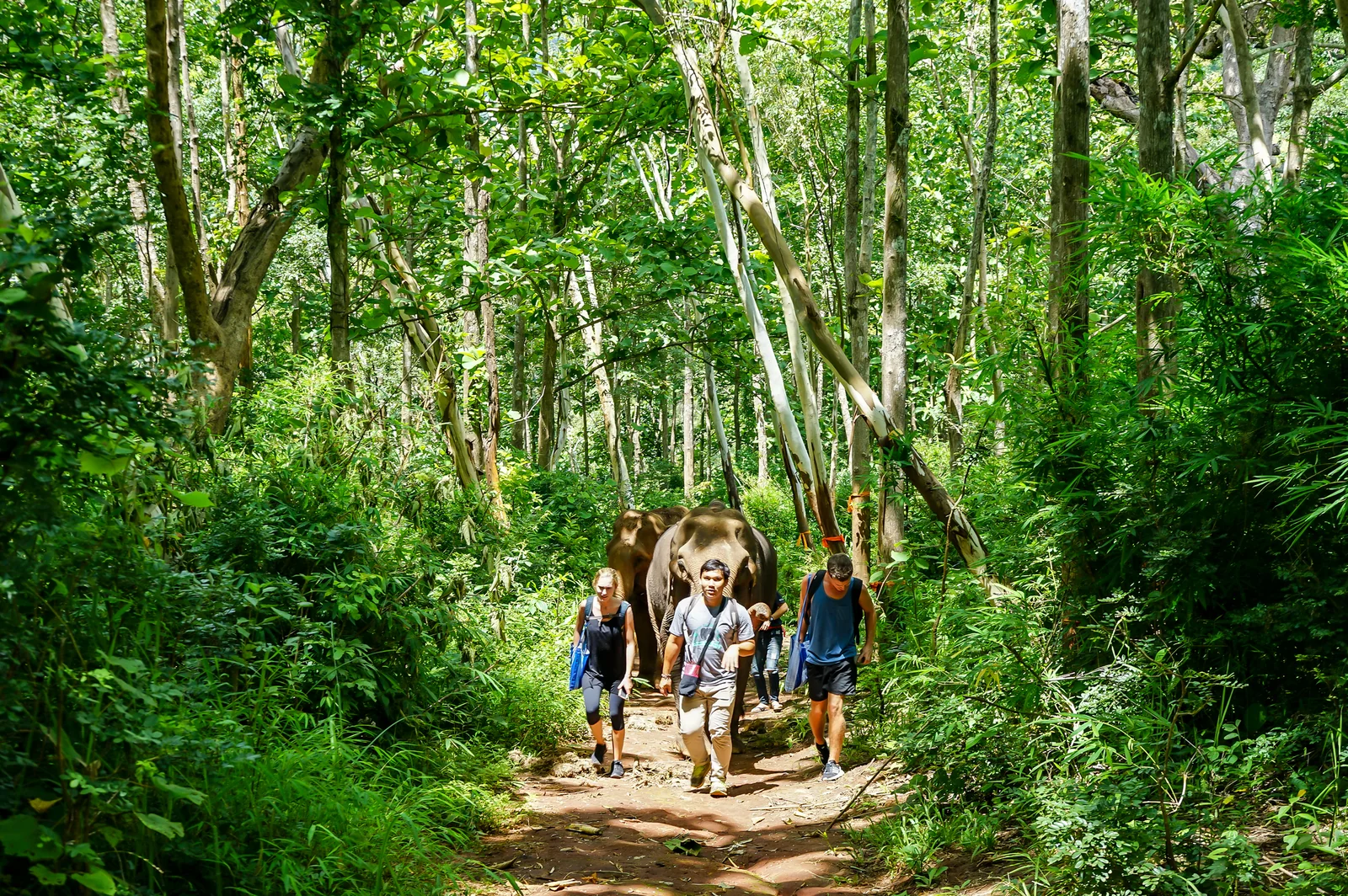
- Toddlers (3 to 6). The sweet spot for a single island family resort. Phuket’s Bang Tao or Mai Khao stretch, Koh Samui’s Bophut, or Hua Hin. Add one or two activities (Splash Jungle, an elephant sanctuary day visit, a beach cooking class). Keep flights to one domestic hop.
- School age kids (7 to 11). The strongest age for Thailand. They remember everything, they eat almost any cuisine if asked nicely, and they handle a sleeper train ride to Chiang Mai as the highlight of the trip. Build a 10 to 14 day route. Bangkok 3 nights, Chiang Mai 4 nights, beach 4 to 5 nights.
- Teenagers. Wider menu, less hand holding. Diving Koh Tao, rock climbing Railay, Muay Thai class in Chiang Mai, night markets, food tours. Phuket Old Town and Bangkok’s Sukhumvit also land well at this age.
Everything below is the detail behind these four answers.
Where to base, by trip length and kid age
Most family trips to Thailand are 10 to 14 days. The decision parents agonize over is whether to pick one base or two, and which two. The honest answer depends on how old your kids are and how much travel time you can absorb.
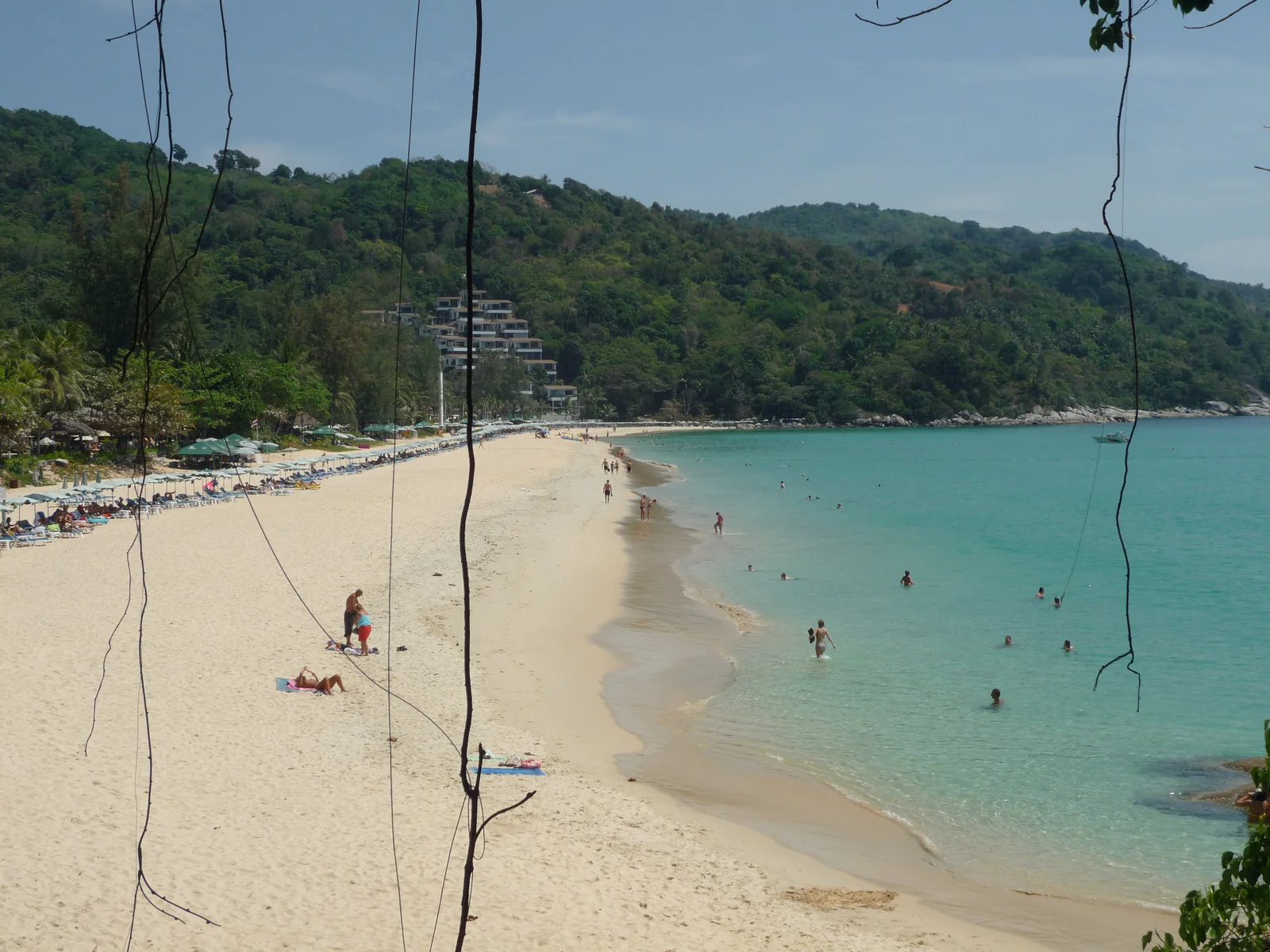
Single base trip, 7 to 10 nights. Babies, toddlers, or families with limited travel tolerance. Pick one of Hua Hin, Krabi’s Klong Muang, Phuket’s Mai Khao or Bang Tao, or Koh Samui’s Bophut. Each has direct flights from Bangkok (Hua Hin via car or van transfer from Bangkok). Each has a cluster of family resorts with kids clubs, multiple pools, and beach access without crossing a road.
Two-base trip, 10 to 14 nights. School age kids, families who want both a city and a beach. The classic split is Bangkok 3 nights plus a beach. Phuket and Koh Samui both work. For a quieter beach base, Krabi’s Ao Nang stretch is the most family friendly.
Three base trip, 14 to 18 nights. Older kids and teenagers, families who want north and south. Bangkok 3 nights plus Chiang Mai 4 nights plus beach 6 to 7 nights. The sleeper train Bangkok to Chiang Mai (No. 9 or No. 13) is itself a trip highlight at this age, even though most parents fly the return leg. Add a Loy Krathong evening if your dates align.
What to avoid. A three base trip with a toddler eats most days in transit. Adding Koh Phangan or Koh Tao to a young child itinerary is also a stretch. They are 2-hour ferries on top of flights, and the islands themselves are oriented toward backpackers and divers rather than families.
On uneven sidewalks across most Thai towns, a stroller becomes a liability fast. For kids under 3, a soft carrier handles temples, markets, and Old Town lanes that a stroller simply cannot. Returning families consistently say the stroller stayed at the hotel after day two.
Getting around Thailand on a family trip with kids
Most trips built around flights and a resort involve four transport touch points. Airport transfer in, BTS or taxi for any city day, domestic flight or train to the next base, and ferries if an island is in the plan. Each one has a specific answer for families.
Airport transfers. Hotel-arranged private transfers are worth the markup with kids under 6. The driver waits at arrivals with a name sign, the vehicle has a car seat if you requested one in advance, and you skip the taxi queue. Suvarnabhumi to central Bangkok is $8 to $18 by metered taxi (~$7-17 USD) plus tolls, or $36 to $54 by hotel transfer (~$34-51 USD).
Bangkok BTS Skytrain and MRT. The cleanest public transit in Southeast Asia, and the easiest with a stroller. Most BTS stations now have lifts (Siam, Asok, Phrom Phong, Saphan Taksin all do). Single rides 17 to 44 THB ($0.50-1.25 USD). The Rabbit Card prepay system saves 2 to 3 baht per ride and skips the queue at the ticket machine. Kids under 90cm ride free.
Domestic flights. Bangkok to Phuket, Koh Samui, Chiang Mai, or Krabi takes 1 to 1.5 hours. AirAsia, Thai Lion, and Nok run cheap fares. Bangkok Airways and Thai Airways run full service. Most carriers allow strollers at the gate. Booster seats and child harnesses are not standard, so bring your own if your child needs one. Compare domestic Thai fares before locking dates, since prices swing 30 to 40% between weeks.
Sleeper trains. The Bangkok to Chiang Mai overnight (Train 9 leaves Krung Thep Aphiwat 18:10, arrives Chiang Mai around 07:15) is a milestone trip for school age kids. Book lower berths first, which fold down to a flat sleep area. First-class private cabins run around $54 per berth ($50 USD). Second-class air conditioned upper around 800 THB ($22 USD). The dining car runs while the train is moving and serves passable Thai food. Check current availability and seat type 4 to 6 weeks ahead, since lower berths sell out first.
Ferries. Inter-island ferries (Phuket to Phi Phi, Krabi to Phi Phi, Surat Thani to Koh Samui) run 1.5 to 3 hours. Life jackets are required and provided. Boat crews are professional and used to families. Sea conditions are roughest May to October on the Andaman coast and December to February on the Gulf side. We have written full route guides for the busiest crossings (see Phuket to Phi Phi and Surat Thani to Koh Samui).
Tuk-tuks, songthaews, and Grab cars. Tuk-tuks are a one time experience for kids 6 and up, not a daily ride. Songthaews (open back red trucks, especially in Chiang Mai) have no seatbelts, which is fine with older kids and a real consideration with toddlers. Grab is the closest thing to a Western taxi app. Request a car seat in the app where available.
 Photographer: ADwarf. Source: Wikimedia Commons. License: Public domain.
The hospital safety net you may not need but should know
Thailand’s private hospital network is one of the strongest in Asia. International medical tourists fly here for treatment, which means the same facilities are available to you when your kid develops a fever at 2am.
The four flagship private hospitals worth knowing by name:
- Bumrungrad International Hospital, Bangkok. JCI-accredited since 2002, 47 specialty centers, 1.1 million patients per year. English-speaking pediatricians on site. Walk-in ER 24/7. Sukhumvit 3, near Nana BTS.
- Bangkok Hospital network. Multiple branches including BKK headquarters, Pattaya, Phuket, Chiang Mai. JCI-accredited. Pediatric ER strong at all locations. The Phuket branch is the default pediatric resource for the Andaman coast.
- Samitivej Sukhumvit Hospital, Bangkok. Children’s hospital wing, well regarded for ear infections and rotavirus dehydration cases that happen on family trips. Sukhumvit 49.
- Phuket International Hospital. Patong and Phuket Town. English-speaking ER. Closer than Bangkok Hospital Phuket for travelers staying on the west coast.
What to bring. Your insurance card, passport copies, the kid’s vaccination record (paper or photo on your phone), and a credit card. Private hospitals bill you, and you submit to your insurer. Costs are dramatically lower than equivalent care in the US or UK.
- Outpatient consultation: $25 to $60 USD
- ER visit with bloodwork and IV fluids: $150 to $400 USD before insurance
- Hospitalization per night (private room): $200 to $500 USD
Vaccinations to discuss with your pediatrician before you fly. Hepatitis A and Typhoid are commonly recommended by US CDC for Thailand travel. Routine childhood immunizations (MMR, DTaP, polio, varicella) should be current. A rabies shot before travel is worth considering for long stays or for kids who pet street animals. Yellow fever is not required unless arriving from a country where it is present.
Families who have used these hospitals report the billing flow is the surprise, not the care. You pay the private hospital up front, then claim it back from your insurer afterward, so a working credit card with headroom matters as much as the policy itself.
Travel insurance is the line item parents are most tempted to skip and most likely to need. Family policies start around $3 USD per day for a family of four with medical evacuation included, which is the cover that matters more than the policy fine print until the moment it matters most.
Food, water, and the questions every parent asks
Thai food is what most kids tell their friends about back home. The standard kid menu (pad thai, fried rice, chicken satay, mango sticky rice, watermelon shake) is available in every restaurant in every town and is genuinely fresh. Mild spice is a simple ask. Tell the server “mai pet” (not spicy) and the kitchen adjusts. Mango sticky rice in particular wins over the most cautious eater.
The water rule is simple. Bottled water for drinking and brushing teeth. Ice in hotel restaurants, malls, mid tier Thai restaurants, and chain cafes is from filtered water and is fine. Ice in roadside vendor stalls is a maybe. The pragmatic line we use, ice from a place that has a refrigerator and a register is fine, ice from a place that has neither is skipped.
Street food, by kid age. Under 4 is skip territory. Immune systems are still developing at that age, and a single bad meal can mean dehydration. For 4 to 7, it is judgment call territory. Lean toward Bangkok and Chiang Mai food courts at malls (Terminal 21, Siam Paragon, Maya Lifestyle Center). Those are essentially the best Thai street food vendors moved under air conditioning. From 8 and up, your kid can eat at a Yaowarat street stall without trouble, as long as the food is hot and the line is moving.
Allergies. Thai kitchens use shrimp paste, fish sauce, peanut, and egg constantly. Severe shellfish or peanut allergies need careful translation. Carry a printed Thai-language allergy card from allergytranslation.com and bring epinephrine pens in original packaging with a doctor’s letter.
What to pack that is actually hard to find here
Bangkok has malls (EmQuartier, Siam Paragon, Terminal 21) that stock most Western brands. Outside Bangkok, the supply chain is thinner. Pack these from home.
- Sunscreen rated SPF 50+ for kids. Local sunscreen tends to be SPF 30 and contains skin whitening agents. Bring 2 to 3 tubes per kid for a two week trip.
- Mosquito repellent with picaridin or 20-30% DEET. Available locally but harder to find a kids formulation outside Bangkok. Patches and clip on diffusers work for under-2s.
- Children’s pain reliever and rehydration salts. Children’s Tylenol and Pedialyte equivalents are stocked at Boots and Watsons in cities, but the dosing chart on the bottle assumes English literacy. Bring what your kid is used to.
- Goggles, swim diapers, and reef safe sunscreen for the beach. Goggles and swim diapers cost 3 to 4 times the home price at hotel shops.
- Carrier for under-3s. Sidewalks across Thailand are uneven, broken, or absent. A carrier handles temples, markets, and Old Town strolls. A stroller stays at the hotel and the airport.
- Light layers for the aggressive air conditioning everywhere. Restaurants, malls, taxis, trains, and BTS cars run aggressively cold. A long sleeve cotton layer for each kid prevents the chill from cold shops that triggers the first sniffle.
Diapers, formula, baby food, baby clothes, and prescription medication (carry your doctor’s letter) are widely available in 7-Eleven, Boots, Big C, and Tops Market.
Pack two or three tubes of SPF 50+ kids sunscreen per child for a 2-week trip, plus goggles and swim diapers from home. Hotel shops charge 3 to 4 times the home price for these, and local sunscreen often tops out at SPF 30 with skin whitening agents most parents would rather skip.
When to go, by season and festival overlay
Best months for a family trip are November through February. Cool dry weather (25 to 30 Celsius), low humidity, low rain risk, and the cleanest air across the country. March through May is hot season, with temperatures up to 40 Celsius and the Chiang Mai crop burning smog that turns the north grey in late February to mid-April. June through October is monsoon season, which actually looks different on the two coasts.
The Andaman coast (Phuket, Krabi, Phi Phi, Lanta) sees the worst rain May through October. The Gulf side (Koh Samui, Koh Phangan, Koh Tao, Hua Hin) is opposite, with the wetter months running roughly October to December. Crossing the Gulf to Samui in late October is a real consideration.
Two festivals to plan around. Songkran (April 13-15) is the Thai New Year water festival, where Bangkok, Chiang Mai, and Phuket effectively become water fight zones for three days. Older kids love it, toddlers are easily overwhelmed, and travel between cities those three days is hard. Loy Krathong (full moon in November, dates vary year to year) is the floating lantern festival, vivid for any age and especially photographable in Sukhothai and Chiang Mai (where it pairs with Yi Peng sky lanterns).
If your dates land in late October, weigh the Gulf carefully. Families crossing to Koh Samui that month often hit the wettest stretch on that coast, while the Andaman side is drying out. When the calendar is fixed, let the coast follow the month rather than the other way around.
Avoid late March to mid-April in Chiang Mai due to the crop burning smog season, which is unhealthy for kids with asthma. Substitute Chiang Rai or skip the north entirely those weeks and add beach time.
The elephant question, answered honestly for kids
Your kid will ask about elephants on day one. The trade is real and the answer is unambiguous. SHA Thailand recommends ethical elephant sanctuaries that do not offer riding, do not breed in captivity, and do not perform shows. Elephant Nature Park outside Chiang Mai has run the longest of any in the country. Boon Lott’s Elephant Sanctuary in Sukhothai is smaller and more remote. Both rescue former logging and tourist elephants and let visitors feed and walk alongside them without riding.
Welfare groups document that riding camps put real strain on the animals. The chair saddle is widely reported to damage an elephant’s spine, and the training process is documented by sanctuaries to involve restraint and force. For most children, feeding and bathing a calm rescued elephant in a sanctuary is the more memorable day anyway, and it avoids the welfare question entirely.
If your trip skips Chiang Mai entirely, the Phuket Elephant Sanctuary (in the north of the island near Khao Phra Thaeo) operates on the same ethical model and runs half day visits. Find an ethical elephant sanctuary day near your base before you go, since the better ones cap daily visitor numbers and fill weeks ahead.
Where to stay across the country
The SHA hotel registry leans toward properties that work with families, which is fortunate because the SHA hygiene certification correlates with the practical things parents notice. Stocked pool towels, clean kids menus, working air conditioning in every room, and staff who know which pediatrician to call. A few starting points across the country.
 SHA Extra Plus
★ 8.9
SHA Extra Plus
★ 8.9
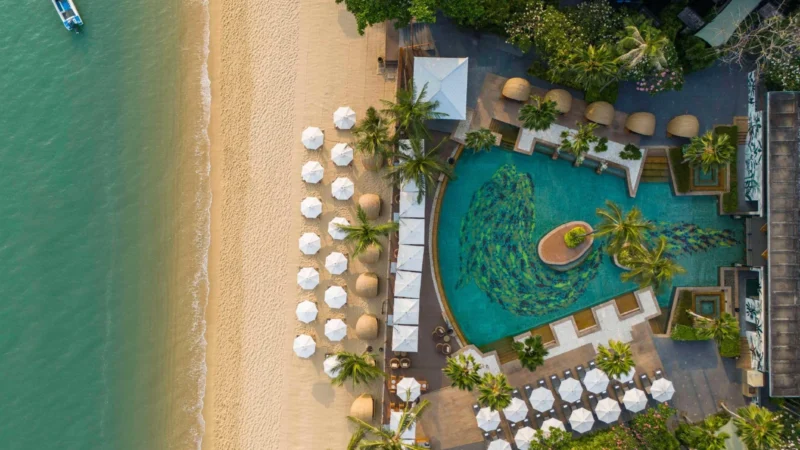
Centara Ao Nang Beach Resort & Spa Krabi
 SHA Plus
★ 8.7
SHA Plus
★ 8.7
Anantara Bophut Koh Samui Resort
 SHA Certified
★ 9.1
SHA Certified
★ 9.1
Holiday Inn Resort Vana Nava Hua Hin
 Photographer: Nawit science. Source: Wikimedia Commons. License: CC BY-SA 4.0.
For family hotel coverage by destination, see our roundups for Bangkok, Phuket, Koh Samui, Krabi, and Chiang Mai. For full multi day itineraries with kids in mind, our 3 Days in Bangkok and 3 Days in Phuket guides flag the family friendly stops within each day.
Before you book anything, make sure your Thai entry document is sorted (60-day visa exemption applies to most Western passports, but the new TDAC arrival card is required for everyone). For inbound family flights, compare fares across the major Asia-Thailand carriers before locking the dates, since prices swing 30 to 40% across November-to-February peak weeks.