Six hours in the air separates Tokyo from Bangkok, and the choice that shapes the whole trip happens before takeoff. Full service on JAL or ANA, or the long haul low cost gamble on ZipAir. The route is the busiest long haul lane between Japan and Thailand, anchored by JAL and ANA on full service rotations and disrupted by ZipAir at the long haul LCC tier. The Tokyo to Bangkok flight averages 6 hours 10 minutes on the westbound leg and up to 7 hours eastbound.
This guide tests the route on three angles. The Haneda versus Narita origin choice that defines most Tokyo bookings. The ZipAir disruption that broke the JAL and ANA pricing floor in 2020. The Bangkok arrival workflow for Japanese passport holders on the 30 day visa exemption.
Tokyo to Bangkok at a glance
- Flight time: 6 hours 10 minutes westbound, up to 7 hours eastbound
- Distance: 4,610 km (2,865 miles) southwest of Tokyo
- Time zone: Tokyo is 2 hours ahead of Bangkok year round
- Tokyo origin airports: Haneda (HND) for premium and short distance city access, Narita (NRT) for LCC and long haul connections
- Cheapest LCC one way: from $121 USD on the Tokyo to HND finds, ZipAir base from $250
- ANA Economy one way: $300 to $550 base
- JAL Economy one way: $400 to $650 base
- Business class one way: $1,800 to $3,500
- Bangkok destination: Suvarnabhumi (BKK) only, no Don Mueang service from Tokyo direct
- Visa: Japanese passport holders get 30 day Thai visa exemption on arrival
Four operators on the route and the ZipAir long haul LCC disruption
Four main carriers run the Tokyo to Bangkok flight route on direct service. JAL and ANA anchor the full service tier with daily rotations from both Tokyo airports. Thai Airways covers the Star Alliance side at Economy-matched pricing. ZipAir, launched in 2020, broke the pricing floor on the route.
All Nippon Airways (ANA), the full service leader
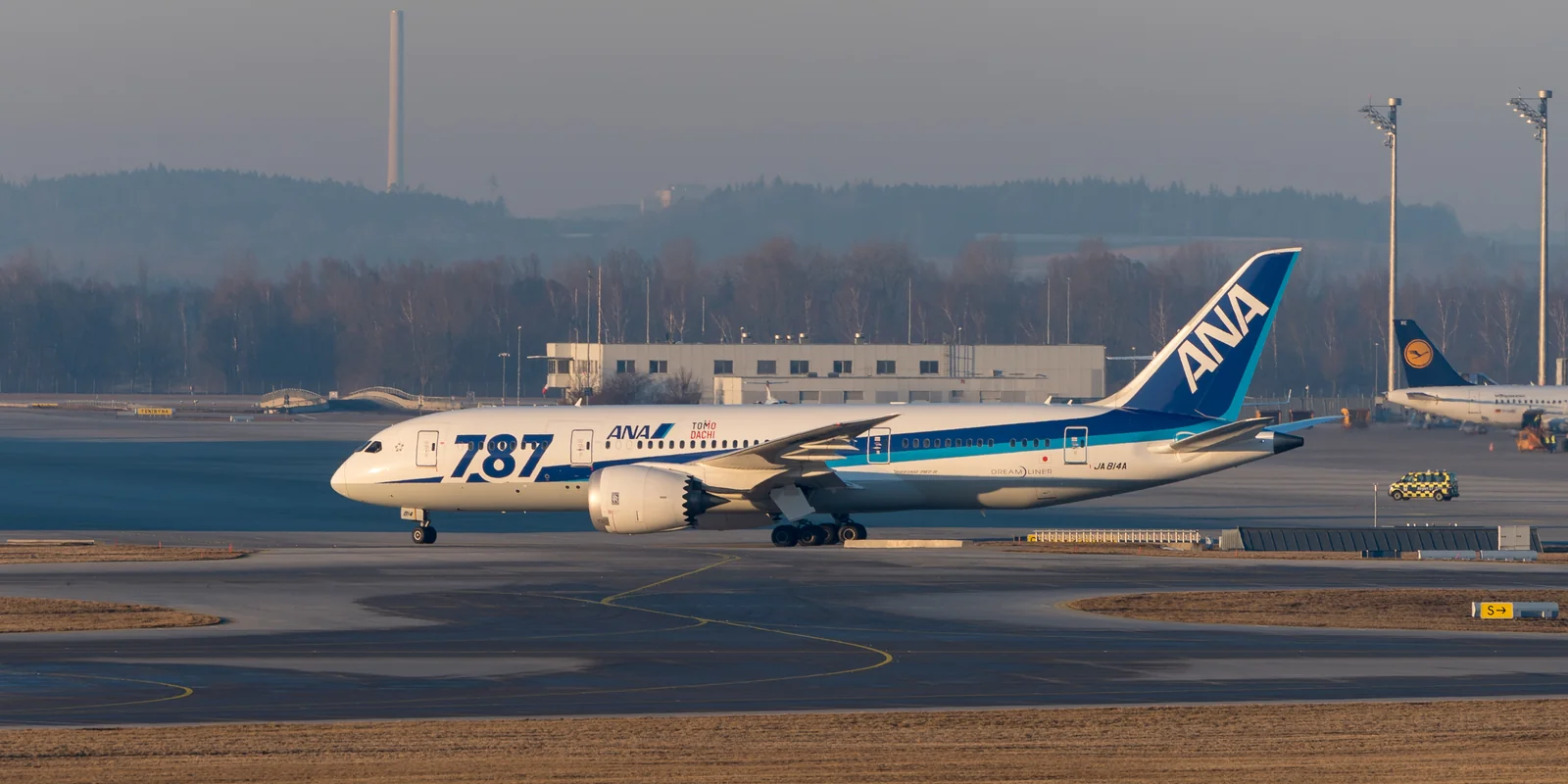
ANA runs daily rotations from both HND and NRT to BKK Suvarnabhumi using Boeing 787 and 777 widebody equipment. The carrier sits at the route’s quality benchmark for both Economy and Business class.
- Economy base one way: $300 to $550 mid-season
- Premium Economy: $550 to $900
- Business class: $1,800 to $3,500
- Aircraft: Boeing 787-8 Dreamliner on most rotations, 777 at peak
- Best for: ANA Mileage Club status carriers, Star Alliance Gold travelers, business class redemptions
 Photographer: Julian Herzog. Source: Wikimedia Commons. License: CC BY 4.0.
Japan Airlines (JAL), the Oneworld alternative
JAL runs daily rotations from both HND and NRT to BKK Suvarnabhumi on similar Boeing 787 and 767 equipment. Economy pricing sits slightly above ANA at $400 to $650 base fare. The reason to choose JAL over ANA usually comes down to JAL Mileage Bank or Oneworld status accrual.
Thai Airways, the Bangkok-side full service option
Thai Airways operates from both Tokyo airports to BKK using Airbus A350 and Boeing 777 equipment. Cheapest Economy base fare tested at JPY 99,440 on the Thai Airways direct page, roughly $300 to $500 USD one way. The carrier covers Star Alliance status continuity in the reverse direction from ANA.
ZipAir, the long haul LCC that broke the floor
ZipAir launched in 2020 as a JAL-owned long haul LCC subsidiary. The carrier flies Boeing 787 from NRT to BKK on direct service with a fare structure that strips the JAL Economy bundle into individual line items.
- Base Standard fare: $250 to $350 one way
- ZIP Full-Flat upgrade: $400 to $600 one way (lie-flat seat)
- Checked bag: $30 to $50 added at booking
- Meal: not included, available for purchase
- Net all-in Standard with bag: $300 to $420 one way
For travelers who would otherwise book Economy on JAL or ANA, ZipAir saves $100 to $200 with similar 787 ride quality. The trade is no Asia Miles or KrisFlyer status accrual. For travelers without loyalty programs, ZipAir is the rational choice.
Haneda or Narita, the Tokyo airport choice that defines most bookings
The route’s first decision is the Tokyo airport choice, which has more impact on most travelers than the carrier choice. The two airports sit at opposite ends of the metropolitan area with materially different ground transport realities.
Haneda (HND) sits 14 km south of central Tokyo. The Tokyo Monorail runs Hamamatsucho to HND in 25 minutes for about $5. The Keikyu Line covers a similar route. A Shibuya or Roppongi hotel reaches HND door to door in 40 to 60 minutes.
Narita (NRT) sits 60 km northeast of central Tokyo. The Narita Express train runs Tokyo Station to NRT in 60 to 75 minutes for about $22. Travelers staying in Chiba or eastern Tokyo benefit from the shorter Narita access. Most LCC service operates from NRT, including ZipAir.
For travelers staying in central Tokyo without an LCC budget requirement, HND saves 60 to 90 minutes of ground time. For ZipAir bookings or travelers in eastern Tokyo, NRT is the obvious choice.
Bangkok arrival on landing for Japanese passport holders
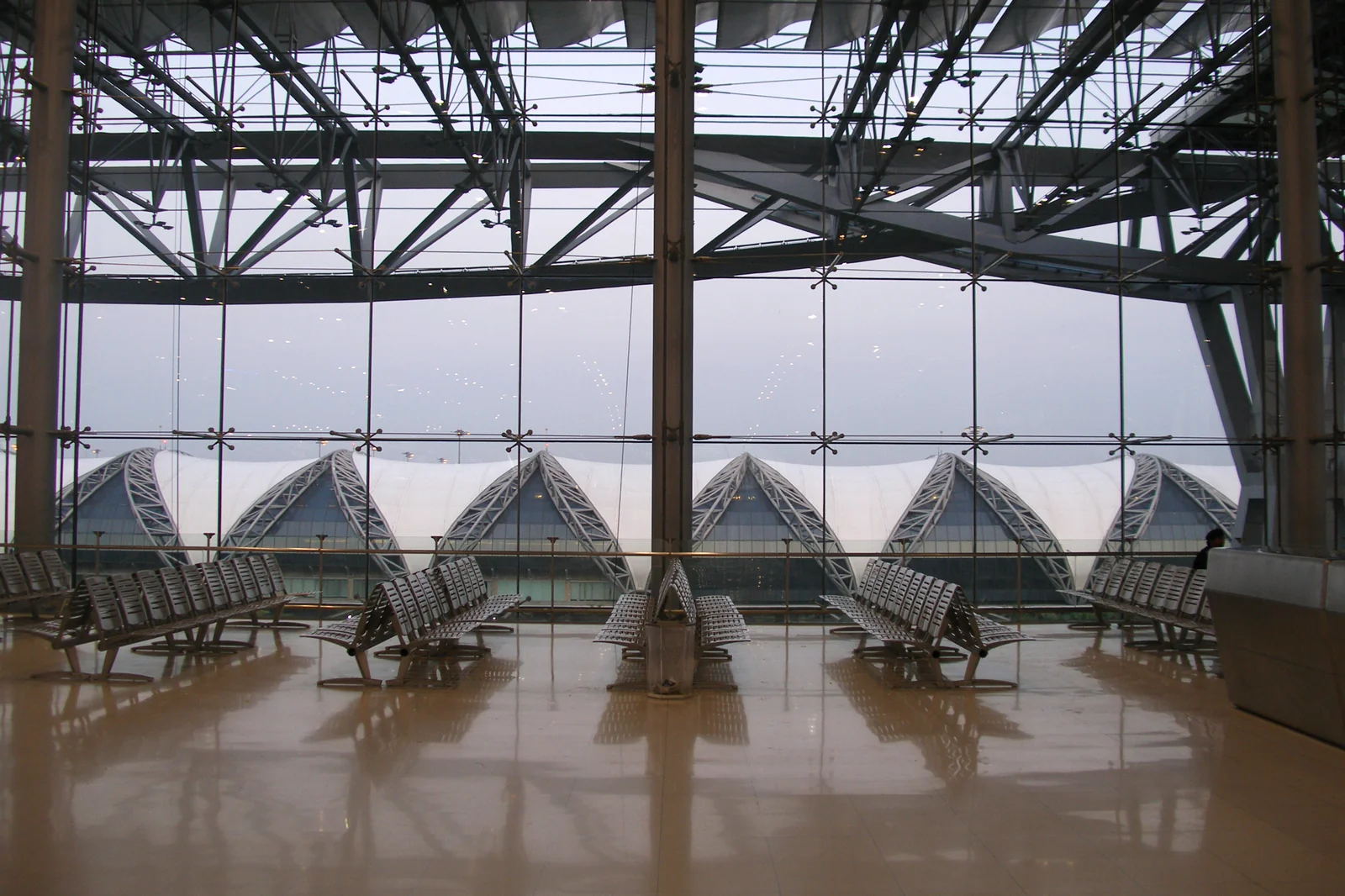
BKK Suvarnabhumi is the destination for every direct operator on the Tokyo route. There is no Don Mueang option. Japanese passport holders get a 30 day Thai visa exemption on arrival with proof of onward travel.
 Photographer: Vyacheslav Argenberg. Source: Wikimedia Commons. License: CC BY 4.0.
The arrival workflow:
- Deplane to immigration: 5 to 10 minutes through Suvarnabhumi corridors
- Immigration queue: 20 to 40 minutes at peak. Faster with Premier Lane access for status passengers
- Baggage claim: 10 to 15 minutes after queue
- Customs: walk-through, random checks rare
- Total wheels down to outside arrivals: 35 to 60 minutes door to door
From the arrivals hall the Airport Rail Link runs to Phaya Thai in 30 minutes for THB 45. Taxis to Sukhumvit run THB 350 to 500 including expressway tolls and the airport surcharge. Pre-book the airport transfer if the flight lands after 22:00, the long haul fatigue plus late night taxi pricing makes the pre-book worth the small premium.
Best booking window for Tokyo to Bangkok
The route prices on lead time and the Japanese travel calendar, which differs from the Bangkok-side calendars on other Asia gateways. Off-peak base fares hold at the low end from January through March outside Chinese New Year and from late September through mid-November.
Golden Week (late April to early May) adds 60 to 100 percent across every operator on the lane. Obon week (mid-August) adds 40 to 70 percent. Japanese New Year (late December to early January) adds 80 to 120 percent and books out 120 days ahead. Songkran in Bangkok adds 30 to 50 percent on the inbound demand.
The cheapest fares from the major comparison sites surface the same inventory through GDS partners. The ZipAir fares often appear only on the carrier direct site or through select aggregator listings, not on every fare comparison search. For the Tokyo to Bangkok lane, check current schedules and fares as the starting point. Coming from elsewhere in the region? Compare flights between Hong Kong and Bangkok, or onward Bangkok flights to Koh Samui if the islands are next.
 Photographer: Jarcje. Source: Wikimedia Commons. License: CC BY-SA 3.0.
Frequently asked questions about flying Tokyo to Bangkok
How long is the flight from Tokyo to Bangkok?
Should I fly from Haneda or Narita?
Should I fly ANA, JAL, Thai Airways, or ZipAir?
How much does the Tokyo to Bangkok flight cost?
Do I need a visa to enter Thailand from Japan?
Is ZipAir worth the savings against ANA or JAL?
How do I get from Suvarnabhumi to central Bangkok?
Where to stay in Bangkok after the flight
Three SHA-certified picks across the most booked Bangkok zones to anchor the first night after a long haul arrival. For the full list, see where to stay in Bangkok, and our 3 days in Bangkok itinerary for the first stretch of the trip.
For domestic and international Thailand flight strategy, BKK vs DMK airport choice, the Koh Samui monopoly, and season pricing windows, see our complete Thailand flight guide.