Most itineraries hand you both cities and treat the choice as obvious. It is not. Bangkok and Chiang Mai ask for different travel modes, draw different travelers, and reward you for completely different reasons. A week in Bangkok built around Michelin street food and rooftop bars is a different trip from a week in Chiang Mai built around temple walks at 07:00 and hill tribe market visits. Treat them as interchangeable and you shortchange both.
Travelers who do both cities back to back tend to report the same thing. The two halves feel like separate countries. Bangkok runs hot, humid, and loud at every hour. Chiang Mai sits cooler in the hills, slower, and quiet by midnight. The version of each city that shows up on a feed looks nothing like the one a planner actually moves through, so what follows is the practical version, the one you have to book around.
The comparison runs 10 dimensions. Each one lands on a clear call. Every call maps to a traveler type, so you can find the one that fits. Start with the quick verdict if you are short on time. Come back to the detail sections when you are ready to book.
 Photographer: Slyronit. Source: Wikimedia Commons. License: CC BY-SA 4.0.
Quick verdict for every traveler type
Here is the short version for each traveler profile.
- First-time Thailand visitor: Bangkok first. The Grand Palace, Wat Pho, Chatuchak Market, and the Chao Phraya River are the Thailand that lives in everyone’s mental image. See it before the smaller scale version in Chiang Mai.
- Temple focus: Chiang Mai. More than 300 temples sit within the Old City moat. Many open at 06:30 before organized tours arrive. Bangkok’s temples are larger but always crowded.
- Food as the main event: Both, but different. Bangkok for variety and Michelin-level execution. Chiang Mai for northern Thai dishes that many travelers rate above the Bangkok versions.
- Nightlife: Bangkok with no close second. Thonglor rooftops, RCA clubs, Soi 11 bars, and Yaowarat street eating run until 02:00 or later. Chiang Mai is largely finished by midnight.
- Budget travel: Chiang Mai. The mid-range hotel gap runs THB 800 to 1,500 ($23 to $43) per night in Chiang Mai’s favor at the same quality level. Street food costs about the same in both cities.
- Family travel with young children: Bangkok for school-holiday infrastructure like malls, theme parks, and hospitals. Chiang Mai for the Elephant Nature Park and a slower pace once children are older.
- Nature and trekking: Chiang Mai. Doi Inthanon National Park, the Mae Rim valley, and hill tribe village treks all sit within 2 hours of the city. Bangkok has no equivalent.
- Digital nomad or long stay: Chiang Mai. The cost of living runs lower, coworking spaces are plentiful in the Nimman area, and the pace allows focused work. Many long-stay travelers find Bangkok’s stimulation wears thin after 3 to 4 weeks.
Bangkok humidity versus Chiang Mai’s cool season
Bangkok runs hot and humid year-round. The cool season from November to February brings 28 to 33 degrees Celsius with lower humidity than the wet months. In practice the heat feels closer to 35 to 40 degrees once you factor the humidity in from February onward. Travelers who walk Yaowarat at midday in February consistently describe being soaked through within 20 minutes.
Chiang Mai’s cool season runs October through February. Night temperatures drop to 12 to 15 degrees Celsius in December and January. Daytime highs reach 28 to 30 degrees in January. Guests who arrive at a Mae Rim valley hotel in December often mention needing a jacket at breakfast. That does not happen in Bangkok.
Chiang Mai’s haze season runs from late February through April. Farmers in the surrounding provinces clear fields after the harvest, and in poor years the air quality index climbs into the high hundreds, in the range flagged as hazardous. Travelers who visit during a bad March stretch report uncomfortable outdoor conditions without an N95 mask. Check the air quality forecast before booking a March or April Chiang Mai trip.
Rainy season from May through October brings afternoon thunderstorms to both cities. Bangkok floods briefly in its lowest streets during heavy rain. Chiang Mai floods more in the Ping River area in September and October when heavy northern rains hit. The rain is usually short and intense, clearing within 2 hours.
The call: Chiang Mai wins on climate from October to February. Bangkok is the stronger option from March to May, since the haze season works against Chiang Mai. Both run equally hot and stormy from June to September.
Bangkok luxury has a floor, Chiang Mai stays cheap
The street food floor sits about even in both cities. Here is the breakdown for a few staples.
- Pad thai from a cart, Bangkok: THB 60 to 80 ($1.70 to $2.30).
- Pad thai from a cart, Chiang Mai: THB 50 to 70 ($1.40 to $2).
- Khao soi, the northern curry noodle soup, Old City shopfront: THB 60 ($1.70).
The mid-range hotel gap is where the difference matters. The same quality level costs noticeably more in Bangkok.
- 4 star hotel, central Bangkok (Sukhumvit or Silom), high season: THB 2,500 to 4,500 ($72 to $130) per night.
- 4 star hotel, Chiang Mai: THB 1,200 to 2,500 ($35 to $72) per night.
- The gap over a stay of 7 nights: $260 to $400, a real chunk of a trip budget.
Chiang Mai’s red songthaews, the shared pickup trucks, run fixed routes in and around the Old City for THB 30 ($0.85) per person. Hail one heading your direction and climb in. For the whole vehicle to yourself, agree a fixed price upfront, and THB 100 to 150 ($3 to $4.30) covers most Old City to Nimman runs. The car apps work here too and often beat a negotiated fare.
Transport within the city costs less in Chiang Mai. The numbers that matter are below.
- Chiang Mai songthaew anywhere around the Old City: THB 30 ($0.85) per person.
- Chiang Mai car app across town: THB 80 to 150 ($2.30 to $4.30).
- Bangkok BTS trip by distance: THB 44 to 62 ($1.30 to $1.80).
- Bangkok car app, Sukhumvit to the Grand Palace: THB 120 to 200 ($3.40 to $5.70) by traffic.
The call: Chiang Mai comes in meaningfully cheaper at every level above street food. Budget travelers save THB 500 to 1,000 ($14 to $29) per day. The saving shows up most in accommodation.
Bangkok complexity versus Chiang Mai’s northern kitchen
Bangkok ranks among the world’s great food cities, and that holds without qualification. The city carries 30 Michelin-starred restaurants as of 2026, a night market system that turns out restaurant quality food at street prices, and regional Thai cuisines under one roof at markets like Or Tor Kor and Chatuchak. The range runs from Jay Fai’s crab omelette at THB 1,200 ($34) to a bag of mango sticky rice at a BTS exit for THB 40 ($1.15).
Chiang Mai’s northern kitchen offers something Bangkok cannot copy. Khao soi, the coconut curry noodle soup with crisp noodles on top, exists in Bangkok’s northern Thai restaurants, but travelers consistently rate the Chiang Mai version as richer and better calibrated. The shophouses near Charoen Prathet Road in Chiang Mai come up again and again for it. Sai ua, the Chiang Mai pork sausage with lemongrass and kaffir lime, draws the same loyalty.
Chiang Mai’s Sunday Walking Street on Wualai Road runs every Sunday from 16:00 to 23:00. The food section packs mango sticky rice, grilled corn, and ginger tea into one 200 meter stretch that regulars rank among the best street eating of the whole trip.
The call: Bangkok for the full range of Thai and international food at every price point. Chiang Mai for northern Thai dishes that taste better at the source than anywhere else. If food is the main reason for the trip, weigh doing both cities rather than choosing.
Grand Palace scale versus Old City density
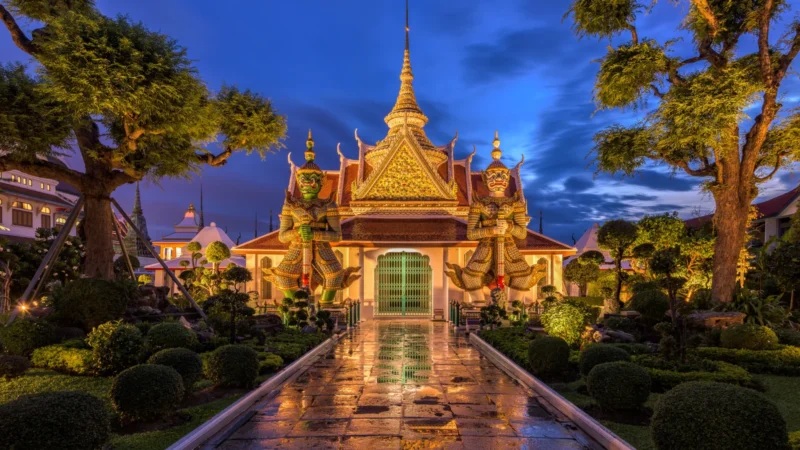
Bangkok’s temple centerpiece is the Grand Palace complex, which holds Wat Phra Kaew, the Temple of the Emerald Buddha, with Wat Pho and its reclining Buddha next door and Wat Arun, the Temple of Dawn, across the river. These are not subtle sites. The Grand Palace covers 218,400 square meters. Wat Pho’s reclining Buddha runs 46 meters long. Wat Arun’s central prang stands 79 meters tall. The scale is deliberate and it works.
Bangkok’s Grand Palace opens at 08:30. Arrive by 08:15 and you enter with a manageable crowd. By 10:00 the queue at the main gate can stretch 30 to 45 minutes. Tour buses arrive from 09:30 onward and fill the inner courtyard. The Emerald Buddha chamber has a capacity limit, so an early arrival lets you stand inside as long as you like, while after 10:00 you are moved through in groups.
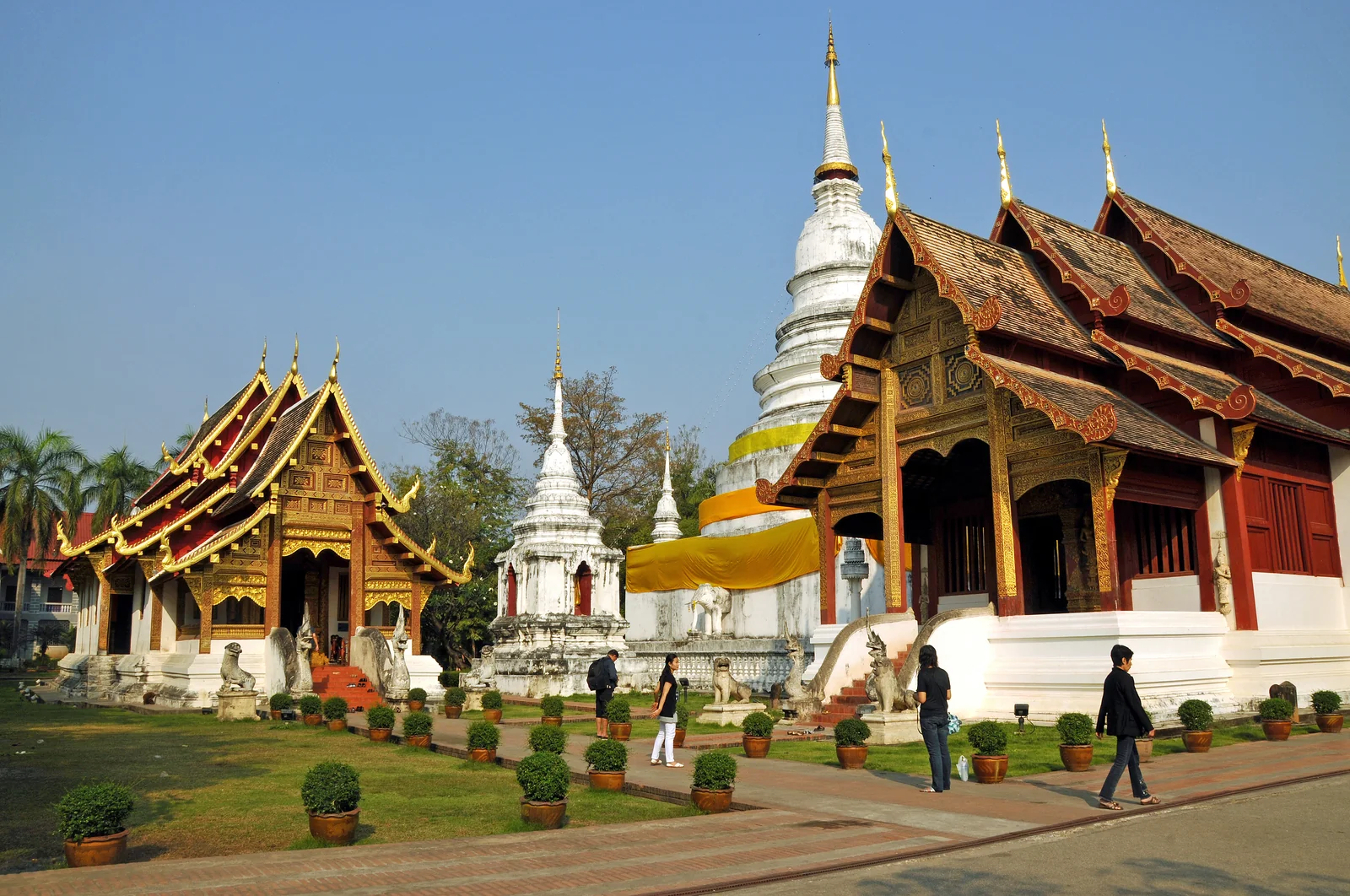
Chiang Mai’s Old City moat holds more than 300 temples in a square zone of roughly 2 kilometers. The three most visited are Wat Chedi Luang, Wat Phra Singh, and Wat Chiang Man. Wat Chedi Luang is a 15th century chedi partly toppled in a 1545 earthquake. Wat Phra Singh houses the Phra Singh Buddha, one of the most revered images in northern Thailand. Wat Chiang Man is the oldest temple in the city, founded in 1296. Travelers who walk all three on a cool December morning starting at 06:30 routinely report sharing each temple with no more than 10 other visitors. At the Grand Palace on the same trip, the same travelers describe a 25 minute queue and crowds at every turn.
The quality of the Chiang Mai temple experience is not about temple size. It comes down to access and atmosphere. At 07:00 on a cool December morning a monk chant carries from inside a Chiang Mai temple as you cross the courtyard alone. That is not the Bangkok experience.
The call: Bangkok for scale and prestige. Chiang Mai for access and atmosphere. Temple photography is stronger in Chiang Mai at dawn. Temple scale is only available in Bangkok.
 Photographer: User:Diliff. Source: Wikimedia Commons. License: CC BY-SA 3.0.
 Photographer: Dennis G. Jarvis. Source: Wikimedia Commons. License: CC BY-SA 2.0.
Bangkok wins, but Chiang Mai has the walking streets
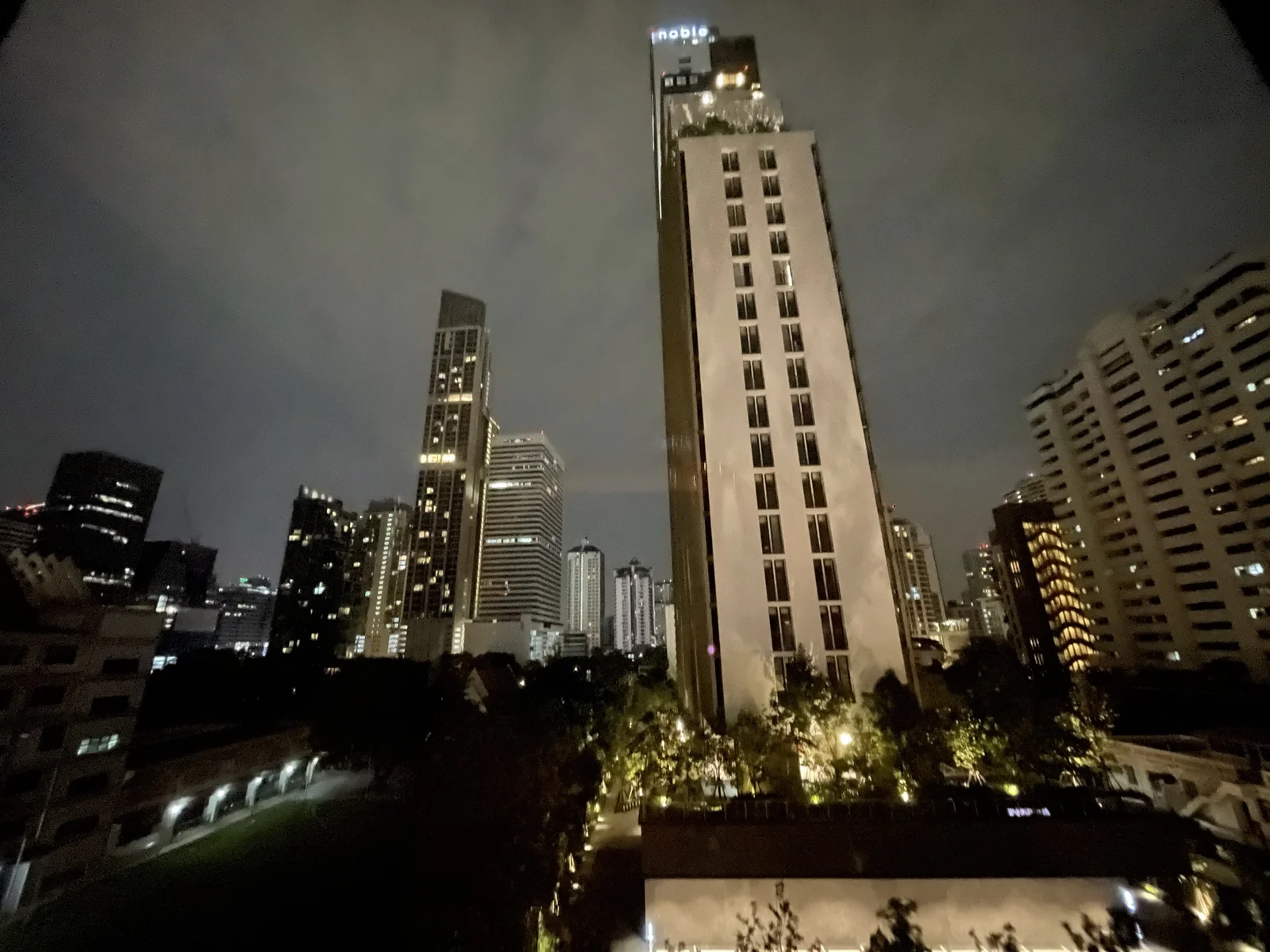
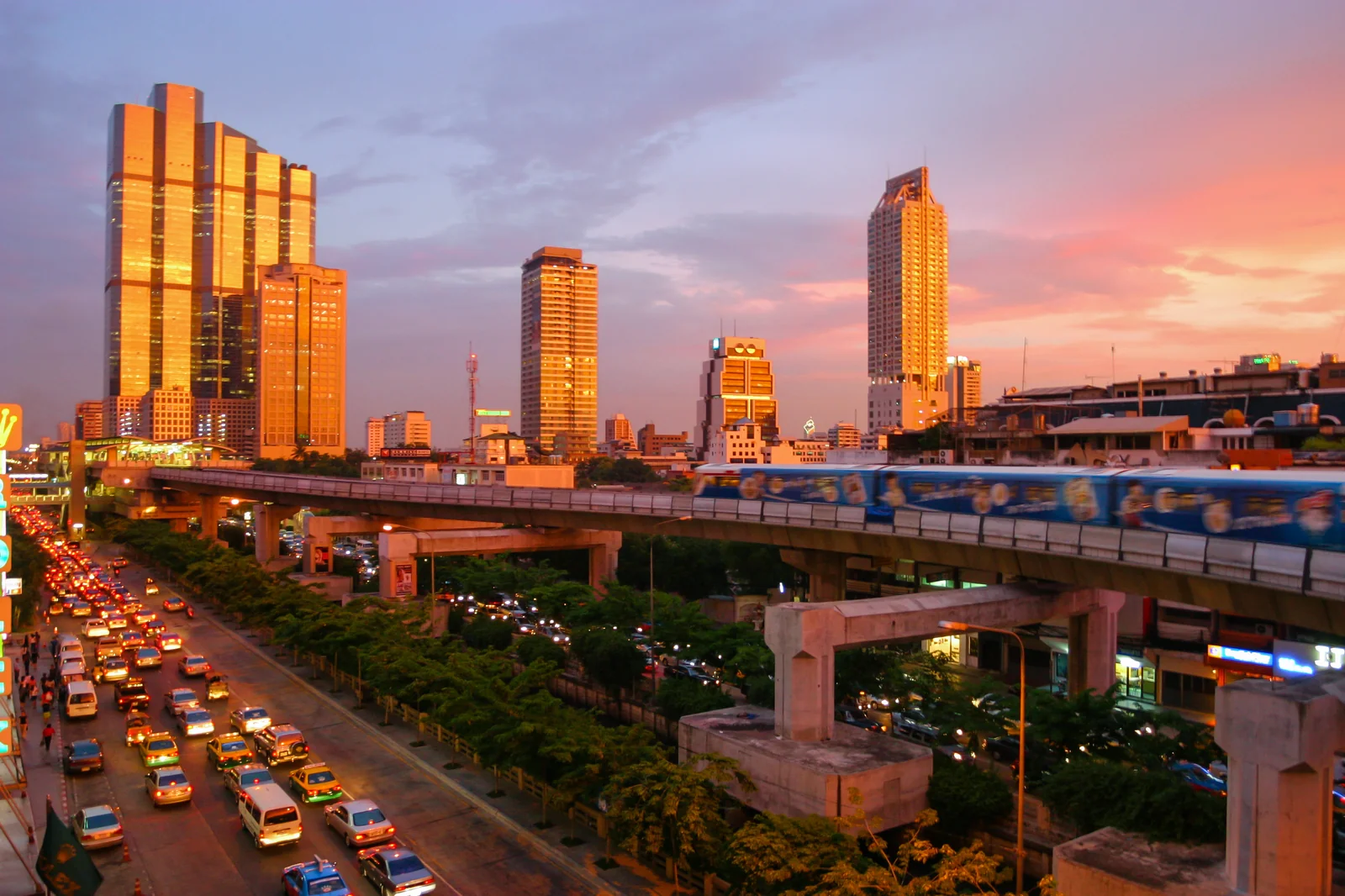
Bangkok’s nightlife runs at a scale most cities do not match. Thonglor, on Sukhumvit Soi 55, holds a strip of rooftop bars, wine bars, and DJ venues that fill from 21:00 to 02:00 Thursday through Saturday. RCA, on Royal City Avenue, is the club district, with large venues holding 500 to 1,500 people. Soi 11 Sukhumvit is the backpacker to mid-range corridor, with every format from dive bars to craft beer pubs.
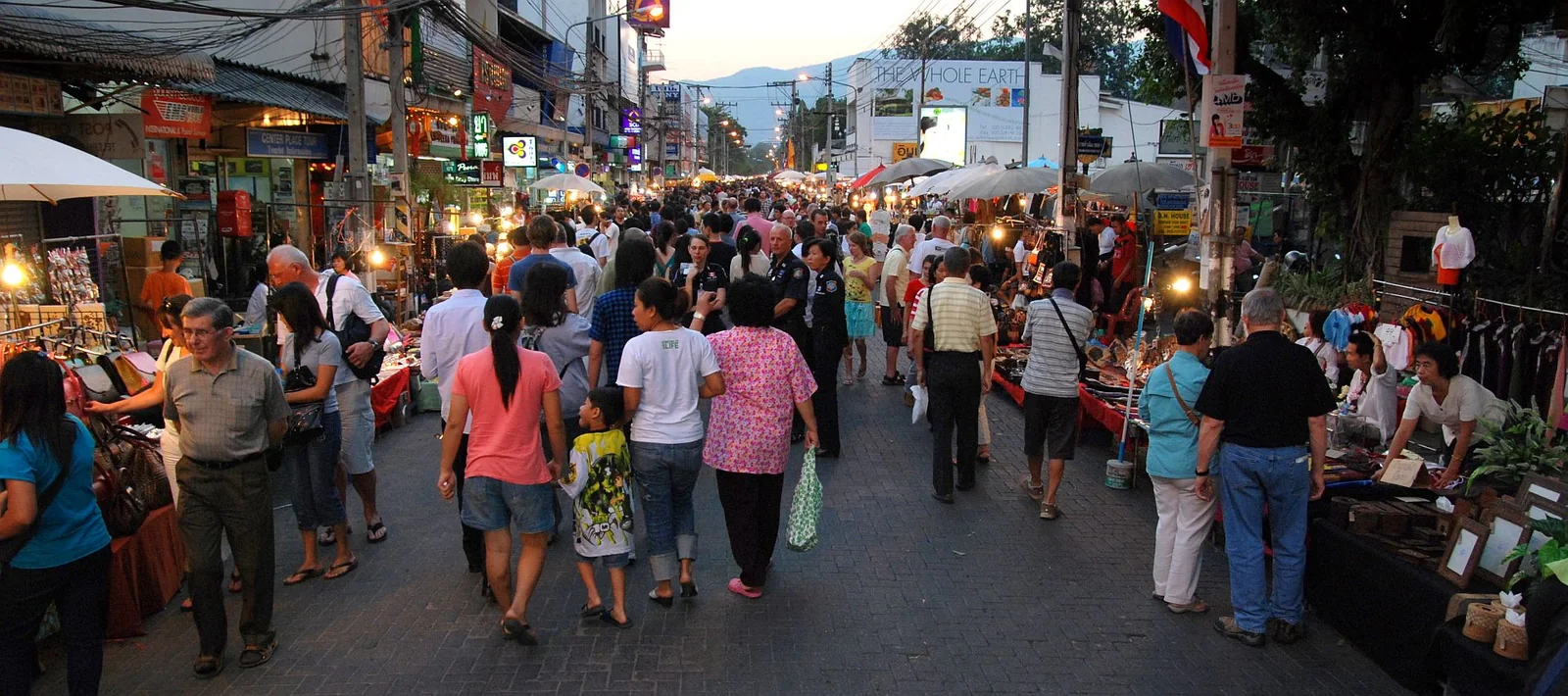
Chiang Mai’s nightlife is quieter by design. Nimman Road carries the highest concentration of bars, with wine bars, live music venues, and rooftop options around the Nimman 1 plaza and the surrounding sois. Most close between 23:00 and midnight. The Sunday Walking Street is the biggest single event, running until 22:30. The Night Bazaar on Chang Khlan Road runs every night and leans more toward tourists, with bars and live music in the main hall.
Travelers describe a Nimman rooftop on a February weeknight as a relaxed scene, about 40 people and good live music until 23:30. The same travelers contrast it with a Thonglor Friday in Bangkok that puts 400 people in view at 23:00 with the city skyline behind them. Both are good. They are not the same thing.
The call: Bangkok for anyone whose nightlife is a main trip purpose. Chiang Mai for atmospheric evening dining and the walking streets. They do not compare as nightlife destinations.
Hotel picks for Bangkok and Chiang Mai
Bangkok and Chiang Mai have completely different hotel geographies. In Bangkok, being near a BTS station is the factor that matters most. In Chiang Mai, being near the Old City moat is the equivalent for travelers who came for the culture, while Mae Rim valley properties work better for a nature trip.
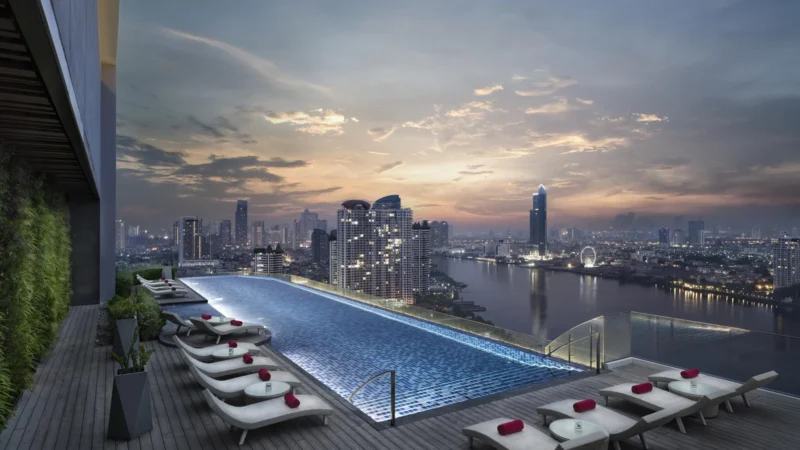
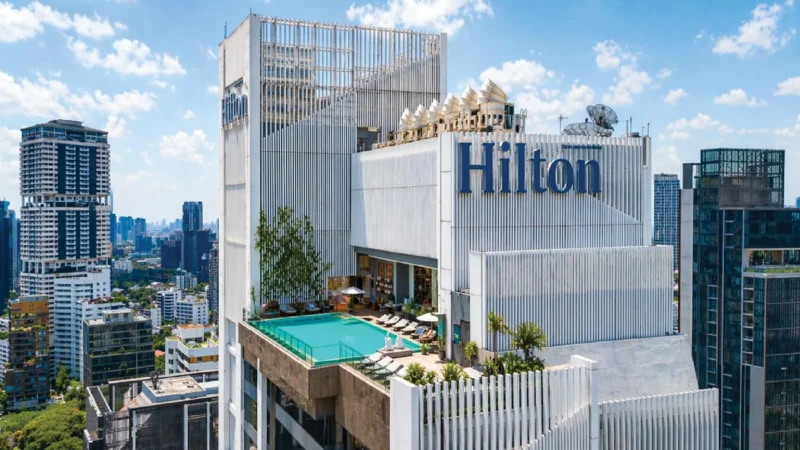
Bangkok: The Shangri-La sits on the Chao Phraya with a boat pier that links to the BTS at Saphan Taksin in about 3 minutes. The Avani Riverside sits further south on the river, quieter and newer. The Hilton Sukhumvit lands in the heart of the BTS corridor for the easiest transit.
 SHA Plus
★ 9.0
SHA Plus
★ 9.0
Avani+ Riverside Bangkok Hotel
 SHA Certified
★ 8.7
SHA Certified
★ 8.7
Hilton Sukhumvit Bangkok
Chiang Mai: Raya Heritage in the Mae Rim valley is the best positioned property for the northern Thailand experience. U Nimman sits directly on Nimman Road for the walking street and cafe scene. Kokotel Nimman is the budget-smart pick in the same corridor.
 SHA Extra Plus
★ 8.8
SHA Extra Plus
★ 8.8
Kokotel Chiang Mai Nimman
 SHA Certified
★ 9.2
SHA Certified
★ 9.2
U Nimman Chiang Mai Hotel
 Photographer: Takeaway. Source: Wikimedia Commons. License: CC BY-SA 4.0.
For more on planning across both cities, see 3 days in Bangkok, 3 days in Chiang Mai, the Bangkok hotels guide, the Chiang Mai hotels guide, and the overnight train guide.
Frequently asked questions
Should I visit Bangkok or Chiang Mai first?
How do I get from Bangkok to Chiang Mai?
Is Chiang Mai safe?
Can I visit both Bangkok and Chiang Mai in one week?
Which city is better for vegetarian or vegan travelers?
Getting there shapes the call too. Arriving from overseas, our Hong Kong flights guide handles the gateway leg. Pairing either city with a beach, our Koh Samui flights guide maps the fastest island hop.