The crossing from Koh Tao to Koh Samui is the longest stretch of open water in the Gulf island chain, roughly 45 km past Koh Phangan with no land to shelter behind once you clear Tao. That is why the boat you pick and the hour you sail matter more on this leg than on any sheltered bay route. The Lomprayah catamaran holds its 1 hour 30 minute schedule across chop that slows the 2 hour Songserm boat. In the monsoon months the same swell the catamaran shrugs off is what gets the slower afternoon sailings cancelled.
This guide tests the direct versus Phangan-stop routing decision, the Lomprayah versus Songserm operator choice, and the Nathon arrival reality for travelers connecting to a Samui airport flight on the same day. Take the fast catamaran if you have a flight or a fixed plan. Take the cheaper slow ferry if your schedule is loose and you do not mind an extra half hour on the water.
Koh Tao to Koh Samui at a glance
- Lomprayah direct catamaran: 1 hour 30 minutes
- Lomprayah via Phangan: 2 hours total including the 20-minute stop at Thong Sala
- Songserm slower ferry: 2 hours direct, 2 hours 30 minutes via Phangan
- Lomprayah fare: $30 to $40 one way foot-passenger
- Songserm fare: $18 to $25 one way
- Daily Lomprayah sailings: 2 from Mae Haad Pier
- First sailing: 07:00 from Mae Haad Pier
- Last sailing: 09:30 from Mae Haad Pier
- Origin pier: Mae Haad Pier on the west coast of Koh Tao
- Destination pier: Nathon Pier on Koh Samui (most sailings)
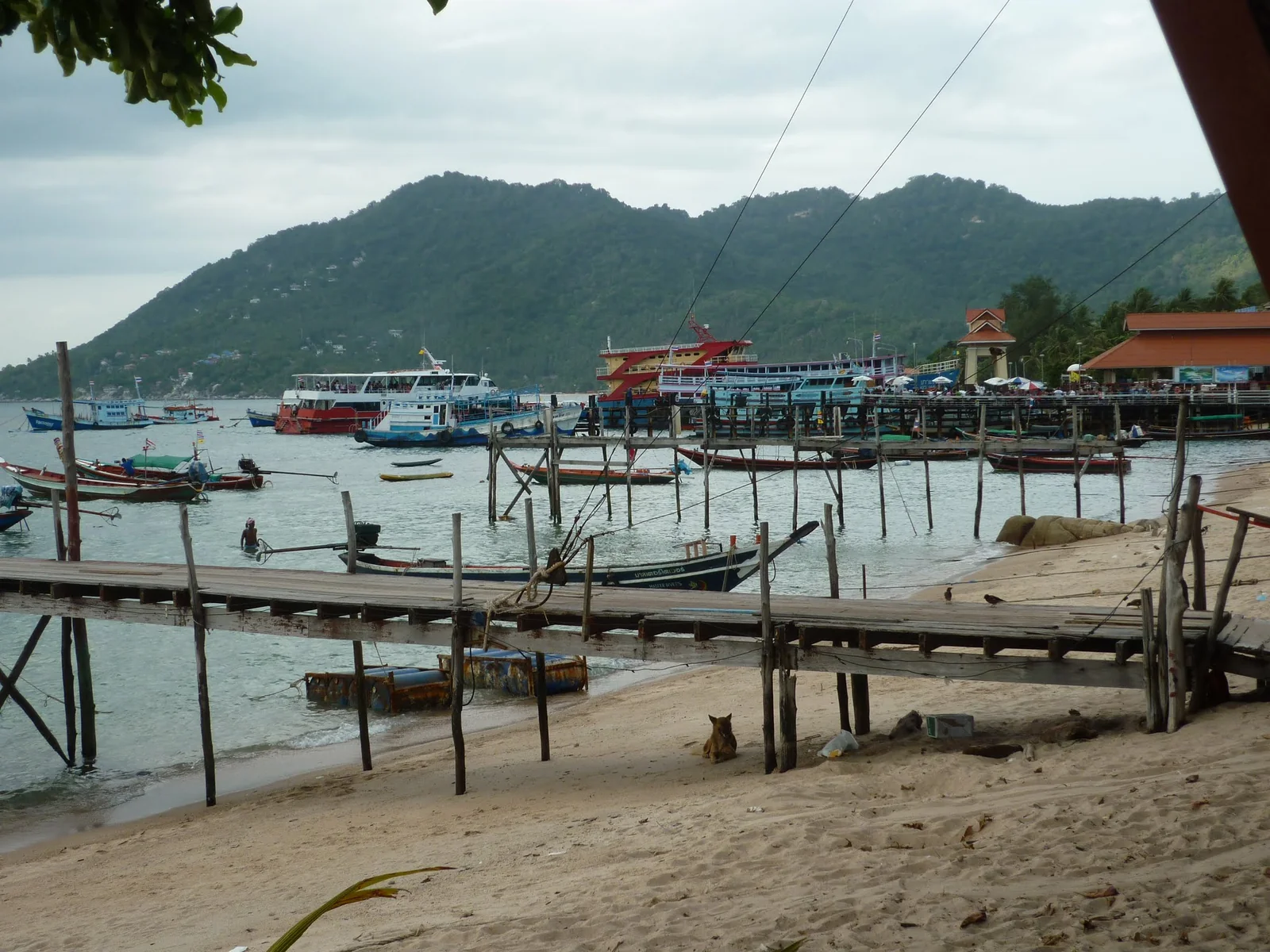 Photographer: Dirk Enthoven. Source: Wikimedia Commons. License: CC BY 3.0.
Two operators on the route and what each one buys you
Two main operators run direct service on the Koh Tao to Koh Samui route. The decision sits between time and cost. Comfort is roughly equal at the seat level. Both run modern hulls with an air-conditioned main cabin and an open upper deck, so the difference travelers actually feel is the schedule and the fare, not the seat.
This is a Gulf of Thailand crossing in the Chumphon archipelago, not a sheltered bay hop. The boats cover roughly 45 km of open water from Mae Haad, and the Lomprayah catamaran format is the reason the fast tier exists. A wave-piercing catamaran holds speed across small chop where a single-hull boat slows down. That is the real spec gap between the two operators. On a calm morning both are fine. When the swell builds, the catamaran keeps its timetable and the slower ferry does not.
Lomprayah High Speed Catamaran, the 1h30 option
Lomprayah runs 2 daily sailings from Mae Haad Pier at 07:00 and 09:30. The catamarans cover the direct crossing in 1 hour 30 minutes. Foot-passenger fare runs $30 to $40 one way. The boats are AC interior with open upper deck. Some sailings stop at Thong Sala Phangan en route, adding 20 minutes.
The upper deck is the seat to take if the morning is clear. It gets you out of the cold cabin air and gives you the view of Koh Phangan sliding past on the approach. Travelers prone to motion sickness do the opposite and sit low and central in the main cabin, where the hull motion is least felt. The catamaran format helps here too. Twin hulls roll less than a single hull on the same swell, which is why Lomprayah keeps the steadier reputation among returning travelers on this leg.
- Direct crossing: 1h 30m
- Via Phangan stop: 2h total
- Fare one way: $30 to $40
- Daily sailings: 2
- Best for: travelers with same-day onward connection or who want maximum Samui time
Songserm, the cheaper slower option
Songserm runs 2 daily sailings on a 2 hour direct crossing. The boats are older than Lomprayah but reliable. For travelers without a tight schedule, Songserm offers the cheapest tier on the route.
The trade-off is straightforward. You pay less and you sit on the water longer. On a flat morning that extra half hour costs nothing but time. In rougher conditions the slower hull is the one that feels the swell more, so the cheaper ticket is the harder ride on a bad-sea day. For divers and backpackers moving south on a loose schedule, that is usually an acceptable trade. For anyone with a flight to catch, it is not.
- Foot-passenger fare: $18 to $25 one way
- Savings against Lomprayah: $12 to $15 per ticket
- Crossing time penalty: 30 minutes extra against the catamaran
Direct or via Phangan, the routing decision
Lomprayah operates the route in two configurations depending on the sailing. Some sailings go direct Mae Haad to Nathon. Others stop at Thong Sala Pier on Phangan for 15 to 20 minutes before continuing to Samui. The fare is identical for both routes.
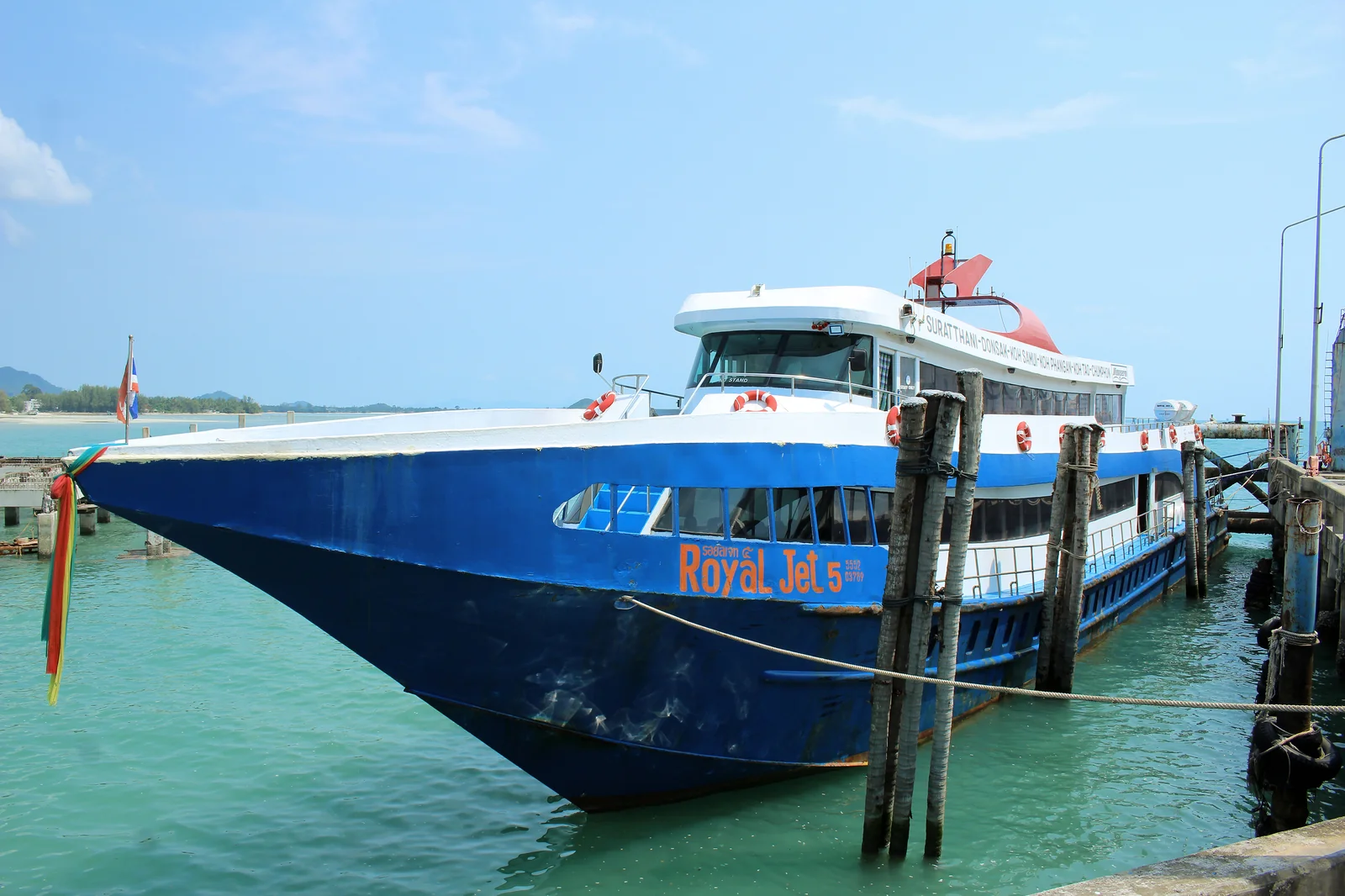 Photographer: Per Meistrup. Source: Wikimedia Commons. License: CC BY-SA 4.0.
The Koh Tao, Koh Phangan, Koh Samui chain is the most-traveled island sequence in the lower Gulf, and the same boats serve all three stops. That is why the combined-ticket chain exists. A traveler can buy one through ticket that links the Tao boat to a Phangan stopover and then on to Samui, all on the same operator, rather than booking three legs separately. The onward Phangan to Samui leg is the same boat continuing south. The Phangan stop on this sailing is the same pier that serves the full-moon party crowd, so expect more foot traffic boarding at Thong Sala in the days around a party date.
The Phangan stop matters for travelers who want to see Phangan briefly without staying overnight. The 20-minute stop allows a quick coffee or a glimpse of Thong Sala village before reboarding. For travelers heading straight to Samui, the direct sailing saves 20 to 30 minutes and avoids the disembark-reboard process.
Confirm the routing on the ticket before booking. The 07:00 morning Lomprayah typically runs direct. The 09:30 sailing typically stops at Phangan.
Nathon Pier on arrival and the Samui taxi math
Nathon Pier sits on the west coast of Koh Samui at the main commercial town. Songthaews and taxis wait at the pier for ferry arrivals. The pier hall is small and the walk from the boat to the road is short, so a foot passenger with one bag clears it in a few minutes. There is no metered taxi system on Samui. The fare is fixed by negotiation at the rank, which is why the numbers below are ranges rather than meter readings. Settle the price before the bags go in the back.
Here is the transfer math from Nathon to the zones travelers ask about most.
- To Chaweng: 30 minutes by taxi$0 600 to 800 ($18 to $24)
- To Bophut (Fisherman’s Village): 25 minutes by taxi$0 500 to 700 ($15 to $21)
- To Lamai: 35 minutes by taxi$0 600 to 800 ($18 to $24)
- To Samui Airport (USM): 40 minutes by taxi$0 700 to 900 ($21 to $27)
- To Taling Ngam (west coast resorts): 15 minutes by taxi$0 300 to 500 ($9 to $15)
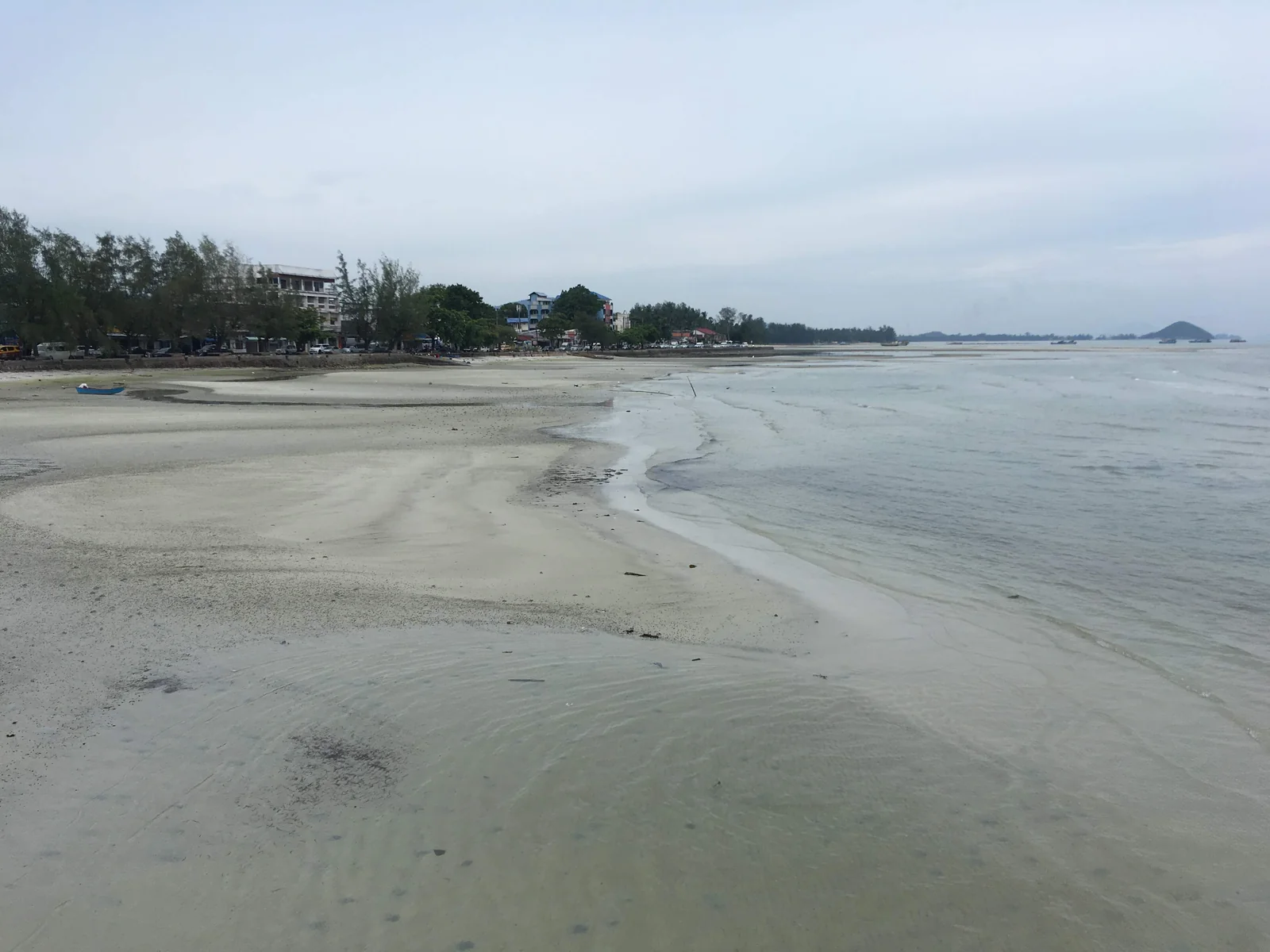 Photographer: Christophe95. Source: Wikimedia Commons. License: CC BY-SA 4.0.
Chaweng and Lamai sit on the east coast, so they carry the longest transfer and the highest fare. Bophut and the north coast are closer to the airport and a shorter ride. Taling Ngam on the southwest coast is the nearest cluster of resorts to Nathon and the cheapest hop, which is worth knowing if your first night is flexible. Sharing a songthaew with other arrivals from the same boat cuts the per-person cost further on the busier zones.
For travelers connecting to a USM flight on Bangkok Airways the same day, the morning 07:00 Lomprayah catamaran arrives Nathon by 08:30. With 40 minutes to USM the traveler is checked in by 10:00. Workable for any USM flight after 11:30.
Best booking window and the monsoon morning rule
The route prices on lead time and season. High season (December to April) sees the 07:00 morning Lomprayah sell out 2 to 3 days ahead. Songserm holds inventory longer because the slower crossing has thinner demand.
Tickets are easy to buy at the Mae Haad pier offices on the morning of travel in low season, but in high season that is a gamble on the fast boat. Booking online a few days out locks the sailing and the seat tier and saves the scramble at the counter. The through ticket that chains Tao to Phangan to Samui is the cleaner buy if your plans already include a Phangan stop, since it holds your place on the onward leg.
Gulf monsoon (October to December) brings rough afternoon seas. This is an open-Gulf leg with no land to shelter behind once you clear Koh Tao, so the sea state on the day matters more here than on a sheltered bay route. Both morning sailings (07:00 and 09:30) cancel less than 5 percent of the time. Songserm’s later afternoon sailing cancels 10 to 20 percent in November storms. The pattern is consistent. Seas are calmest at first light and build through the afternoon, which is the single best argument for taking the earliest boat you can in the rough months.
If you are prone to seasickness, the November to December window is the leg to take medication for. Take it 30 to 60 minutes before boarding rather than after the motion starts, sit low and central, and keep your eyes on the horizon rather than on a phone. The morning catamaran is the steadiest combination available on this route.
For divers ending a Koh Tao course on Friday or Saturday, the Saturday morning Lomprayah is the most-booked sailing. Book 5 days ahead in dive high season (March to May, September to October). Check current Lomprayah and Songserm schedules for the Koh Tao to Samui crossing. If Phangan is on your route, see the ferry between Koh Samui and Koh Phangan and the ferry between Koh Phangan and Koh Samui.
Frequently asked questions about Koh Tao to Koh Samui
How long does the Koh Tao to Koh Samui ferry take?
How much does the Koh Tao to Koh Samui ferry cost?
Should I take the direct sailing or via Phangan?
Which Koh Samui pier does the Tao ferry arrive at?
Can I make a same-day Samui airport flight?
Should I take Lomprayah or Songserm?
What time does the last ferry leave Koh Tao for Samui?
Where to stay on Koh Samui after the ferry
Three SHA-certified picks across Chaweng, Bophut, and Lamai to anchor the first night. For the full list, see where to stay in Koh Tao and across the island chain. Our 3 days in Koh Samui itinerary then maps the beaches and the town.
For all 27 Thailand ferry routes plus operator reliability, seasonal cancellation patterns, and booking strategy, see our complete Thailand ferry guide.