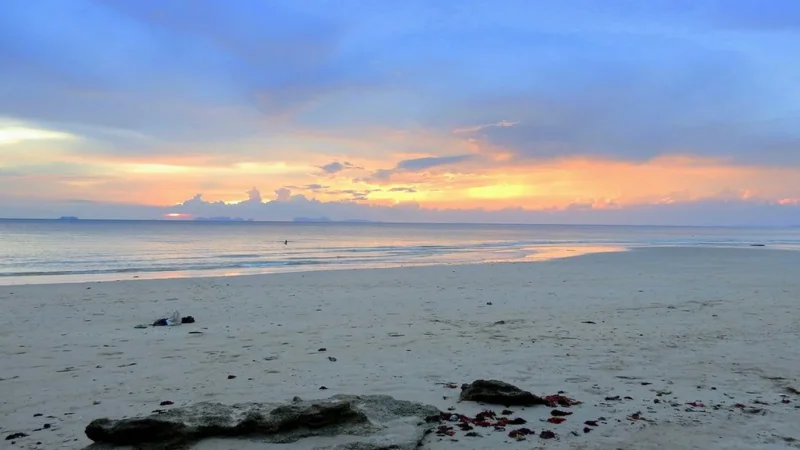
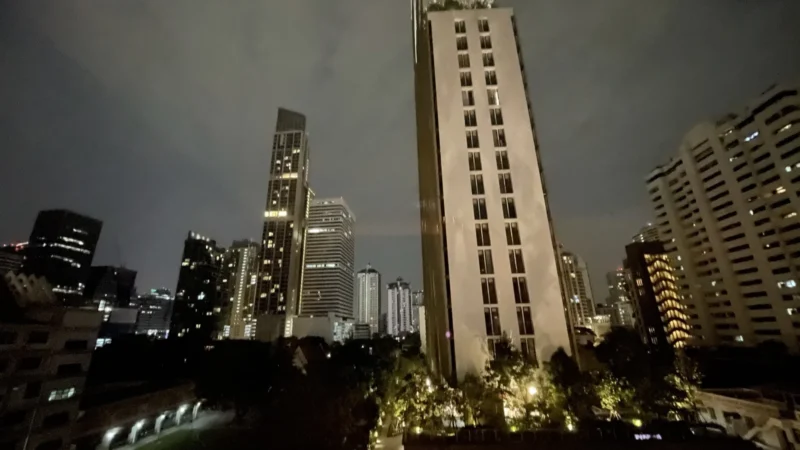
The 6:30am domestic terminal at Don Mueang fills up before the day boats reach Phi Phi Don. AirAsia and Thai Lion check-in queues run forty deep by the time the Bangkok arrivals from London and Frankfurt are still cycling through immigration at Suvarnabhumi a forty-minute taxi south. Two cities. Two airports. One country that punishes shallow planning. We met couples on the BKK-CNX 9:15am hop who had landed at midnight, slept in a transit hotel, and lost a full day of Bangkok before the trip had really begun. The 10-day Thailand trip lives or dies on how you sequence the first 48 hours.
Ten days reads short until you draw the map. Bangkok sits central. Chiang Mai is a 70-minute flight north into the highlands. Phuket and Krabi are 90 minutes south into the Andaman. Koh Samui is on the opposite Gulf coast. Three regions fit. Four does not. The pattern that consistently lands a clean trip puts three nights in Bangkok, three nights in Chiang Mai, and the back four nights on a southern beach. The other arrangements work only when you accept a real tradeoff. We will name those tradeoffs honestly below. For a broader route across the country, see our full Thailand itinerary.
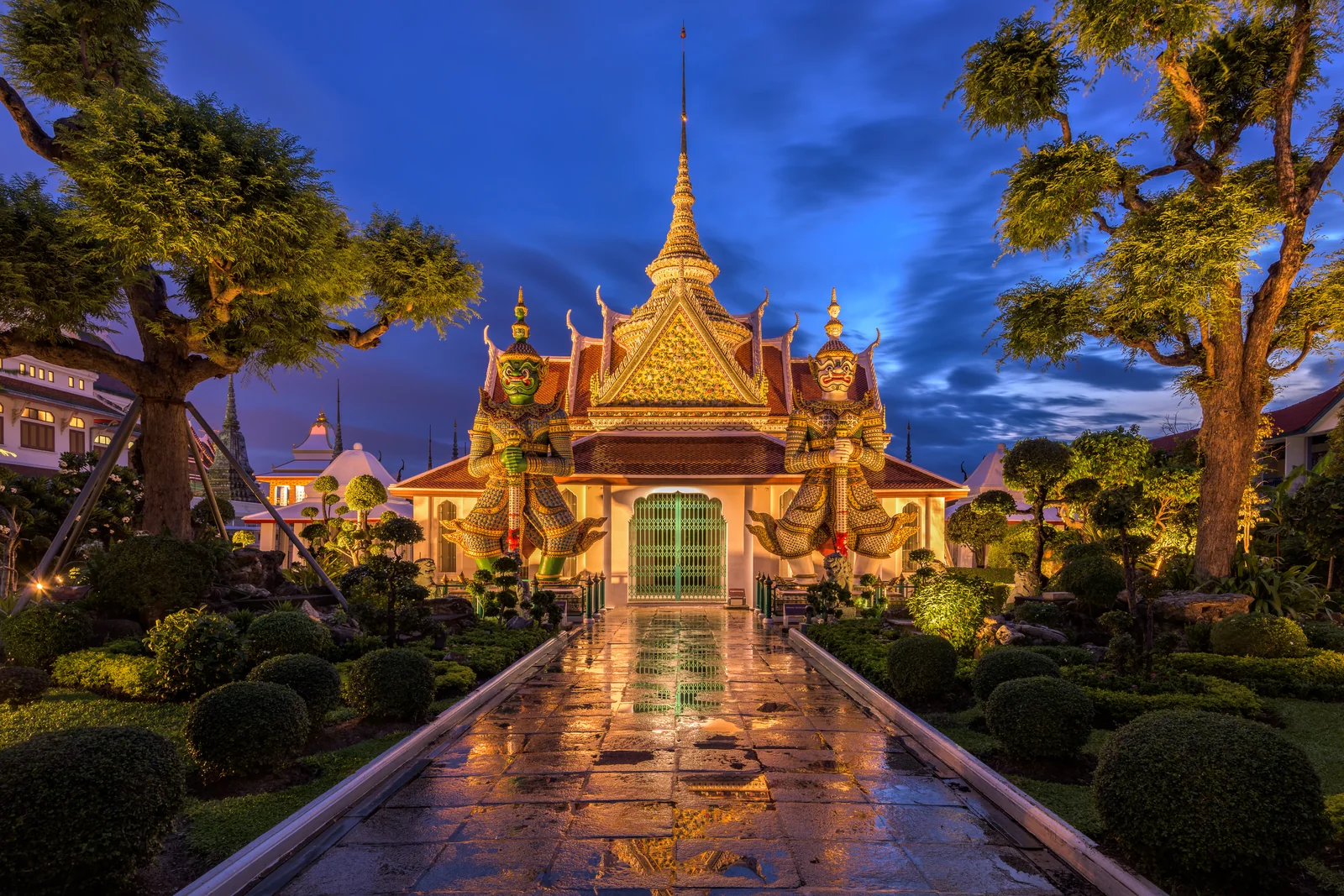 Photographer: BerryJ. Source: Wikimedia Commons. License: CC BY-SA 4.0.
Why 10 days splits three ways in Thailand
The trip-length grid that operators like Lonely Planet, Audley Travel, and Intrepid publish does not equally weight every option. It collapses for one reason. Internal transit eats fixed time. Every additional region adds a half-day to a full day of moving. A 10-day trip with three regions leaves you 8.5 to 9 days of actual destination time once you net out the BKK to CNX morning flight and the CNX to south afternoon flight. A 10-day trip with four regions leaves you 7 days at most, and one of those days happens with a backpack on at an airport.
The shape we recommend follows the verified pattern from the three major operators we cross-checked.
- Nights 1 to 3 in Bangkok. Land Saturday, recover and orient Sunday, full Bangkok day Monday.
- Nights 4 to 6 in Chiang Mai. Fly BKK to CNX Tuesday morning. Three full Chiang Mai days for temples, the cooking class, and a Doi Suthep sunrise.
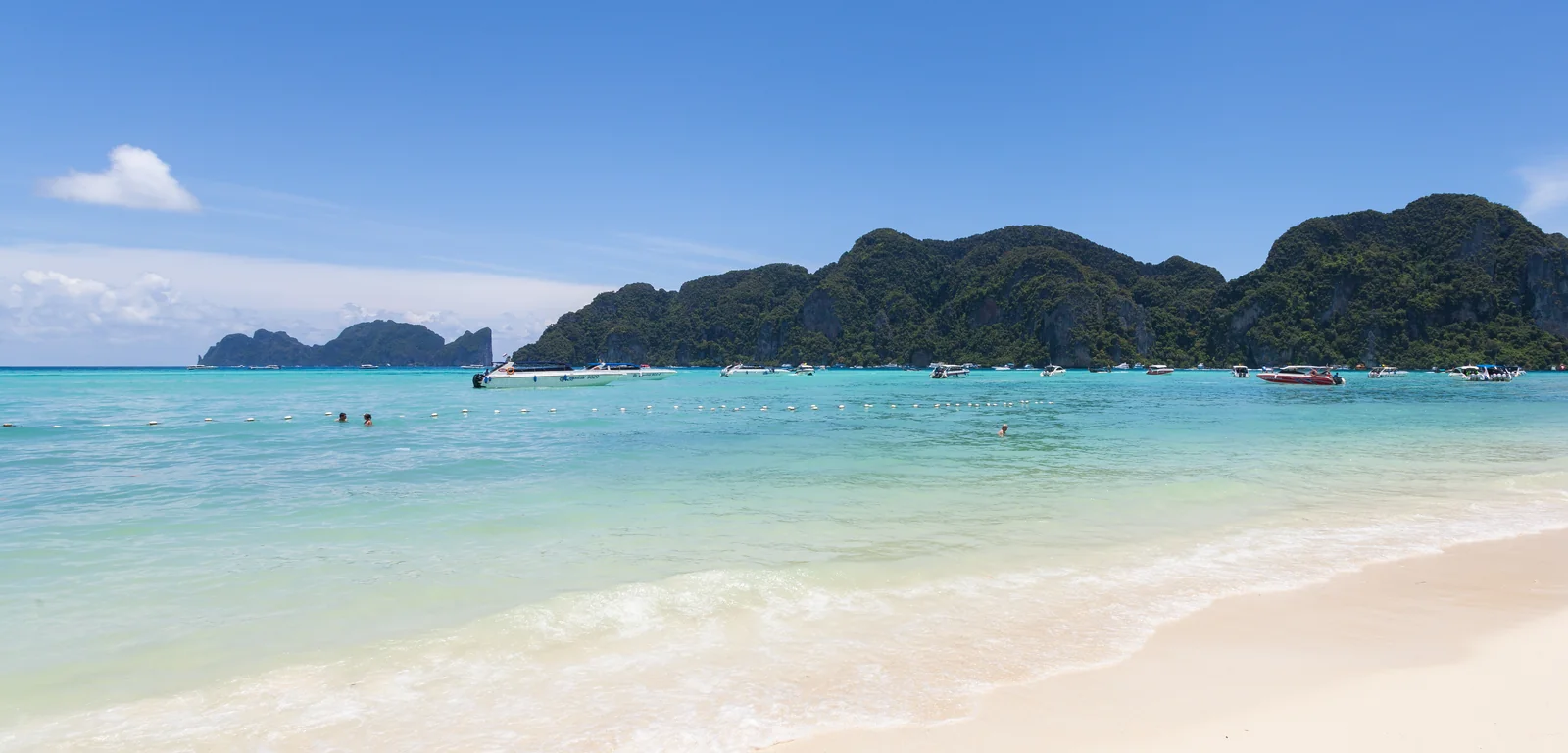
- Nights 7 to 10 in Krabi or Phuket. Fly CNX direct to KBV or HKT Friday late morning. Four nights for the Andaman beach window plus one Phi Phi or Hong Islands day trip.
The variants that work share one rule. They never try to add Koh Samui on the Gulf coast as a fourth region. Samui is a 90-minute flight from Bangkok or a 6-hour flight-plus-ferry from Phuket. Travelers regularly report families on the Surat Thani night ferry burning 13 hours on a misrouted Phuket to Samui transfer they had bought as a “two beach” upgrade. They reached the resort at 2am. The first beach morning was a write-off. If Samui is the goal, drop the third region entirely and split the trip between Bangkok and Samui, or between Chiang Mai and Samui.
Days 1 to 3 in Bangkok as the landing pad
The Bangkok leg sets the tone. Land at Suvarnabhumi (BKK), not Don Mueang, for the international arrival. The international terminal sits 32 kilometers east of the river. Pre-book a private transfer for $25 instead of fighting the metered taxi queue at door 4, which runs a 25-minute wait at peak arrival windows. Sunday is recovery day. Monday is the full Bangkok day with the Grand Palace, Wat Pho, and a Chao Phraya river ferry.
The first 72 hours of Bangkok run on a single rule. Base on the river or on the Sukhumvit BTS line. Anything else costs you a Bolt every time you leave the hotel. The base location decision is the trip’s biggest hidden cost lever. Bolt cost from a Khao San area hotel to the Grand Palace runs about the following.
- Khao San area hotel to Grand Palace: $4 by Bolt
- Sathorn riverside hotel to Grand Palace: $2 via cross-river ferry
- Sukhumvit Soi 11 hotel to Grand Palace: $7 by Bolt
The Sathorn line saves more than $10 per day across a 3-night Bangkok stay.
The skeleton day-by-day.
- Day 1, arrival Saturday. Land, transfer, hotel pool reset, light dinner at a riverside restaurant within walking distance. Do not push a temple visit on jet-lag day one.
- Day 2, Sunday orientation. Chao Phraya morning ferry north to Wat Arun and Wat Pho. Lunch at Tha Tien market by the pier. Afternoon Old Town walk through Tha Phra Chan. Evening at a Sukhumvit rooftop or Chinatown food walk depending on energy.
- Day 3, Monday full day. 8:30am Grand Palace skip-the-line entry. Lunch on Maharaj Pier. Afternoon at a Chatuchak (Saturday-Sunday only, so adjust if not a weekend) or the JJ Green night market. Evening sunset Chao Phraya dinner cruise from Asiatique Pier.
Two scam patterns to know before the Grand Palace day. The tuk-tuk driver who says the palace is closed for a Buddhist ceremony and offers a “free” gem-store loop is the most-reported Bangkok scam every year. The Grand Palace opens 08:30 to 15:30 every day except for the King’s birthday observances. Walk past the offer. The fixed-fare taxi that quotes $20 from the palace back to your hotel is the second pattern. Insist on the meter or open Bolt.
The Chao Phraya Tourist Boat (orange flag) is the practical river spine for the Old Town day. A one-day pass runs $4 per person and covers Sathorn Pier (Saphan Taksin BTS) to Phra Athit Pier (Khao San). Standard public boats run THB 16 to 33 ($0.50 to $1) per ride but skip the major tourist piers. We chose the orange-flag pass once, the standard public boat twice, and the cross-river ferry (THB 5, $0.15) eight times. The cross-river is the highest-frequency option and reaches Wat Arun from the Tha Tien pier.
Days 4 to 6 in Chiang Mai for the slower pace
The Tuesday BKK to CNX flight cuts the Bangkok stay clean. The morning slots cluster between 7am and 11am.
- AirAsia / Thai Lion (LCC): $45 to $75 one-way
- Bangkok Airways (full service): $90 to $130 one-way
Block 4 hours from hotel to Chiang Mai hotel including the airport transit on both ends. We flew the 8:30am Thai Lion from DMK and reached the Chiang Mai Old City by 11:45am, leaving the full afternoon for an Old City walk before the cooking class.
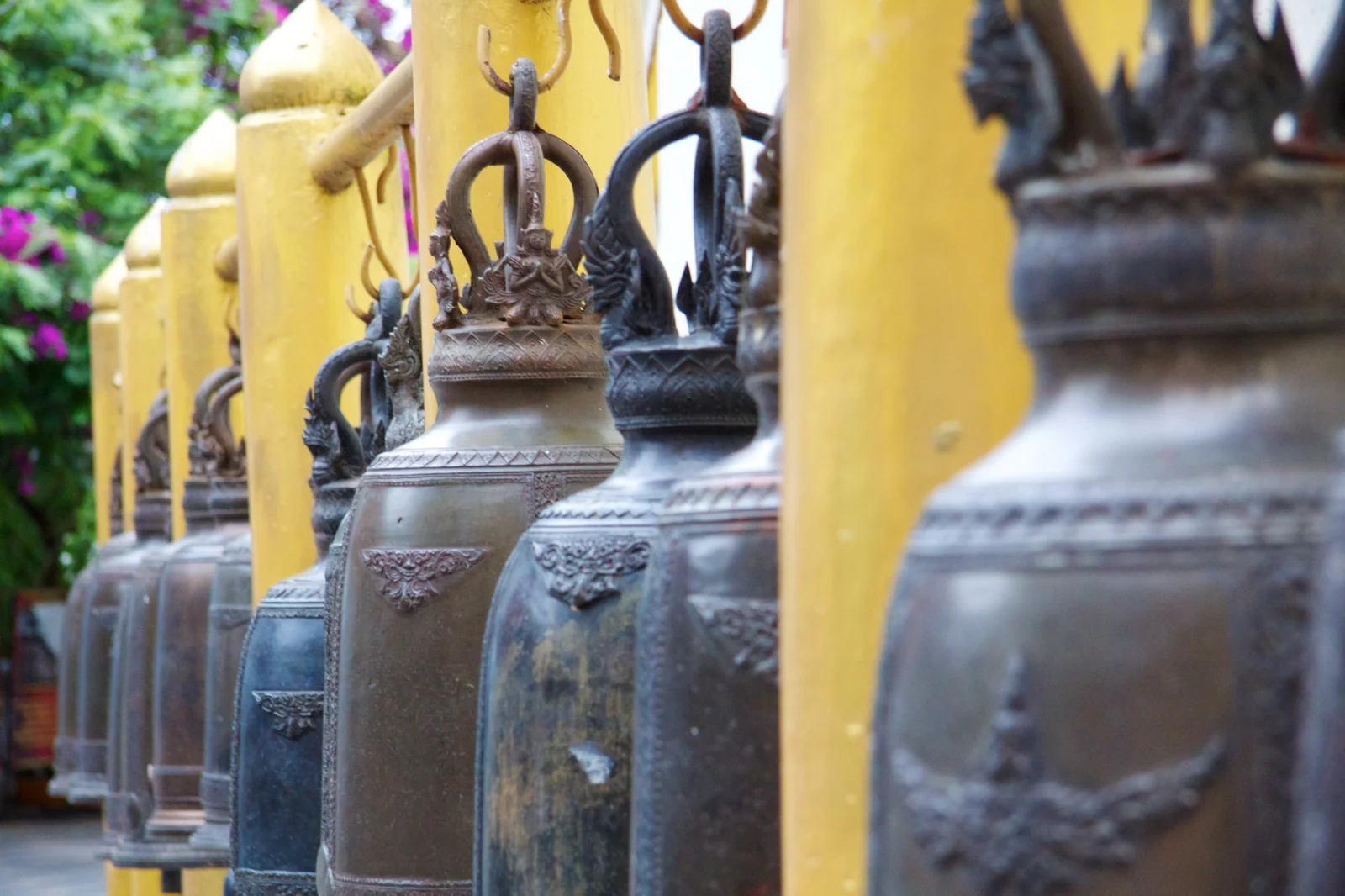 Photographer: cesar.ruiz. Source: Wikimedia Commons. License: CC BY-SA 3.0.
The Chiang Mai shape favors the slower trips and the cultural stops. Two anchors carry the leg. The Doi Suthep sunrise climb and a half-day cooking class. The rest of the time fills with the Old City wat walk, a Sticky Waterfall or Mae Sa Valley day, and the Sunday Walking Street if your itinerary lines up with a Sunday night in Chiang Mai.
- Day 4, Tuesday arrival. 8:30am BKK to CNX flight. Hotel check-in by noon. Afternoon Old City walk through Tha Phae Gate, Wat Chedi Luang, Wat Phra Singh. Evening cooking class at Thai Farm Cooking School or Asia Scenic. Class window 5pm to 9pm, $35 to $45 per person, includes hotel pickup.
- Day 5, Wednesday Doi Suthep day. 4:45am hotel pickup for the 5:45am Wat Phra That Doi Suthep sunrise climb. The 309-step Naga staircase opens to a 1,073-meter temple with a clean panoramic over Chiang Mai. Back to the hotel by 9am. Afternoon at the Bo Sang umbrella-making village or the Mae Sa Valley for a single elephant sanctuary visit. Important: Elephant Nature Park is the only consistently World Animal Protection-validated camp in the valley. Decline any “elephant ride” operator.
- Day 6, Thursday slow day. Morning at the San Kamphaeng Hot Springs or the Sticky Waterfall (Bua Tong) depending on which is closer to your base. Afternoon massage at Lila Thai Massage (run by the Women’s Massage Center for ex-prisoner rehabilitation, $9 per hour Thai oil). Evening at the Saturday Night Bazaar on Wualai Road or the Sunday Walking Street if the Thursday slot drifted by a day.
Cost benchmarks for the 3 nights in Chiang Mai run lower than Bangkok across every line item.
- Mid-range hotels: $50 to $90 per night
- Thai street meals: $1.50 to $4 per plate
- Bolt across the Old City: $1 to $2 per ride
We tracked our 3-night Chiang Mai spend at $310 per person including the cooking class, the Doi Suthep half-day tour, the Sticky Waterfall taxi, and dinners. The same 3 nights in Bangkok ran $475 per person on a comparable itinerary.
Smog window. February to early April runs the Chiang Mai burning season with PM2.5 readings often above 150 and occasionally above 300. The Doi Suthep mountain view collapses on bad days. If your 10-day trip falls inside that window and you need the long mountain view as the leg anchor, swap Chiang Mai for Chiang Rai (lower smog drift in most years) or compress to 2 Chiang Mai nights and add the night to the south leg.
Days 7 to 10 on the Andaman south leg
The Friday CNX to KBV or HKT flight is the trip’s second strategic move. The Friday morning slots run 60 to 75 minute flights and land you at the southern beach in time for the afternoon swim. Krabi runs fewer daily frequencies than Phuket, so the booking window opens earlier.
- CNX to HKT (Phuket) on AirAsia or Thai Lion: $60 to $110
- CNX to KBV (Krabi) on AirAsia or Thai Lion: $55 to $100
- Pre-booked airport transfer at either airport: $20 to $30 fixed
- Metered taxi at either airport: $40 to $55
 Photographer: Diego Delso. Source: Wikimedia Commons. License: CC BY-SA 3.0.
The choice between Krabi and Phuket reshapes the leg. The honest version below.
Krabi for the quieter Andaman. Smaller airport, faster transfers, the Ao Nang or Tubkaak strip as the base, and Railay or Hong Islands as the marquee day trip. Krabi is 15 percent cheaper across the board than Phuket. The downside is a thinner nightlife, fewer restaurant options, and a 90-minute longtail to reach the Phi Phi Islands instead of the speedboat sub-hour from Phuket. Cost line items run as follows.
- Mid-range hotels: $80 to $180 per night
- Dinners: $7 to $15 per person
- Longtail boat charters: $25 to $40 per hour
Phuket for the variety. Bigger airport with direct international links if your departure city is not Bangkok. Three distinct base clusters cover Patong for nightlife, Kata or Karon for family, and Bang Tao for resort calm. The restaurant scene runs deep from Old Town to Surin. Hotels run $80 to $250 mid-range. The downside is Patong Beach Road traffic that can add 30 minutes to a 5-kilometer transfer in high season. The Big Buddha and Promthep Cape sights draw cruise crowds on Tuesday and Thursday afternoons.
- Day 7, Friday arrival south. 11am CNX to KBV or HKT flight. Hotel by 2pm. Afternoon swim. Light dinner at a beachfront restaurant. Do not push a long day trip on arrival day.
- Day 8, Saturday marquee day trip. Phi Phi Islands speedboat from Ao Nang Pier (Krabi) or Chalong Pier (Phuket). 07:30 to 08:30 departure, return 15:30. Bring motion-sickness tablets. The afternoon Phi Phi to Krabi or Phuket leg runs 1.0 to 1.5 meter chop in May to October. travel insurance covers the monsoon cancellation case.
- Day 9, Sunday slower beach. Pick a quieter sand band. Railay West if Krabi (longtail from Ao Nang, 15-minute crossing, $5). Freedom Beach or Karon if Phuket (Bolt, 15 to 20 minutes from Patong). Afternoon Thai massage. Evening at the Phuket Old Town if Phuket, Ao Nang Walking Street if Krabi.
- Day 10, Monday departure. Late morning swim. Hotel checkout. Airport transfer 2.5 hours before the BKK or international flight. The KBV to BKK and HKT to BKK morning slots run $40 to $90 on AirAsia and Thai Lion.
Lock the south leg flight first, then book Bangkok. The CNX to HKT and CNX to KBV slots run fewer daily frequencies than the inverse legs and sell out 3 to 4 weeks ahead in the December to January peak. The Bangkok side has flight density every 90 minutes and can be slotted in last. Booking Bangkok first and discovering the south leg is sold out forces a backtrack through Bangkok that costs you a full day.
What to watch for on a three-region trip
The pattern that breaks 10-day Thailand plans repeats. We caught all four versions on previous trips. Each one has a fix that costs nothing if you do it before you book.
Arrival-day jet-lag. The Bangkok arrival on Saturday lands you in immigration at midnight after a 12-hour flight. The temptation to push a Day 1 morning activity is real. Resist it. The first night in Bangkok is the recovery night, not the orientation day. A late breakfast and a hotel pool reset wins back the Monday energy you would otherwise burn.
Monsoon season on the Andaman. May through October pushes the Phi Phi day trip and Hong Islands speedboat to a coin-flip with rough seas. Operators cancel about 1 day in 8 in July to September. The Gulf side (Koh Samui, Koh Phangan, Koh Tao) reverses that pattern with the worst weather in November to early January. If your trip falls in the monsoon window for the Andaman, swap to the Gulf or compress the south leg to 2 nights and add the night to Chiang Mai or Bangkok.
Songkran transit dates. April 13 to 15 is the Thai New Year water festival. Internal flights run full, taxi availability collapses, and the cities all run waterfights that close most museums and temples. We saw a group lose a full Bangkok day to a flooded Sukhumvit Soi 11 in 2025. If your dates overlap, plan to stay in one place for those 3 days, not transit.
Sunday Walking Street single-day window. The Chiang Mai Sunday Walking Street runs Sundays only on Ratchadamnoen Road from 16:00 to 22:00. The Saturday Night Bazaar on Wualai is the substitute if your leg covers a Saturday but no Sunday. Both are worth a 2-hour evening visit. Neither carries the trip alone.
Where to stay across the three regions
One hotel per region, three total. We pick the base that matches the region’s strongest day pattern. The luxury picks anchor the leg. The mid-range picks beat the average TripAdvisor top-10 by a measurable margin on either location or service per dollar.
 SHA Certified
★ 9.4
SHA Certified
★ 9.4
Rayavadee Krabi
 SHA Extra Plus
★ 9.1
SHA Extra Plus
★ 9.1
Mandarin Oriental Bangkok
 SHA Extra Plus
★ 9.2
SHA Extra Plus
★ 9.2
Four Seasons Resort Chiang Mai
 SHA Plus
★ 9.0
SHA Plus
★ 9.0
The Sukhothai Bangkok
 SHA Plus
★ 9.1
SHA Plus
★ 9.1
InterContinental Phuket Resort By IHG
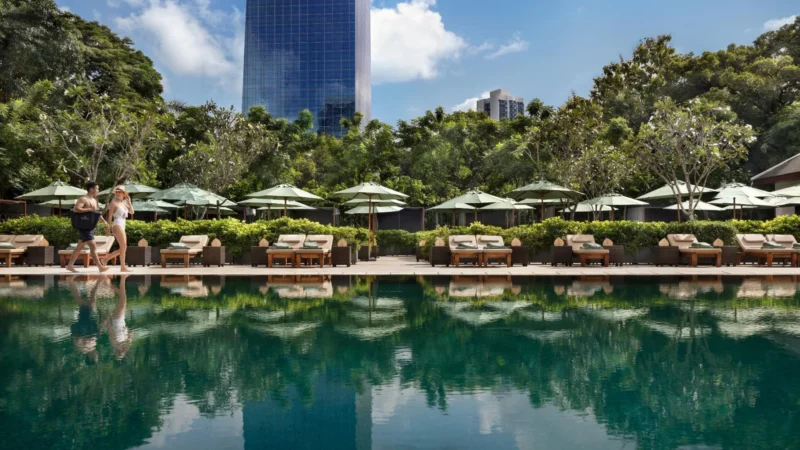
Bangkok bases that work. Mandarin Oriental on the Chao Phraya for the river anchor with the Old Town inside a 12-minute hotel-shuttle boat. Sukhothai Bangkok in Sathorn for the BTS-walkable variant with a Lumpini Park backdrop. Both put you inside 25 minutes of the Grand Palace and 8 minutes of a BTS station.
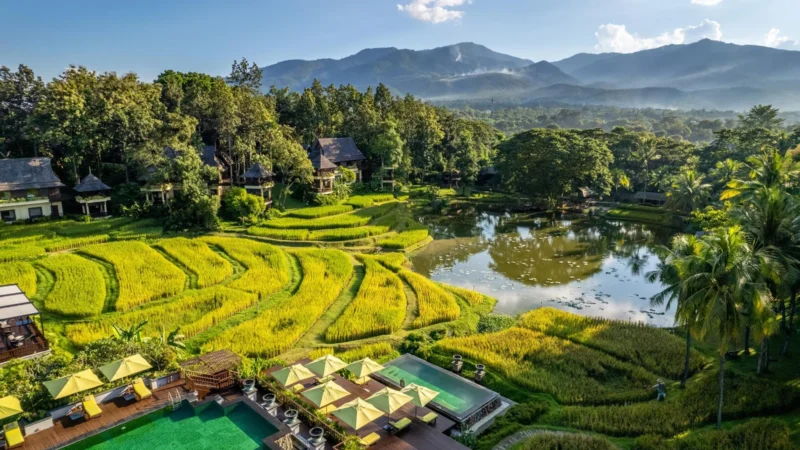
Chiang Mai bases that work. Raya Heritage on the Ping River for the riverside-village setting with a 10-minute songthaew to the Old City. Four Seasons Chiang Mai in Mae Rim for the rice-paddy retreat 30 minutes north of the Old City (works better as a 4-night Chiang Mai-only base, marginal for a 3-night leg). The Tha Phae Gate cluster is the practical alternative if you want walking-distance access to every wat.
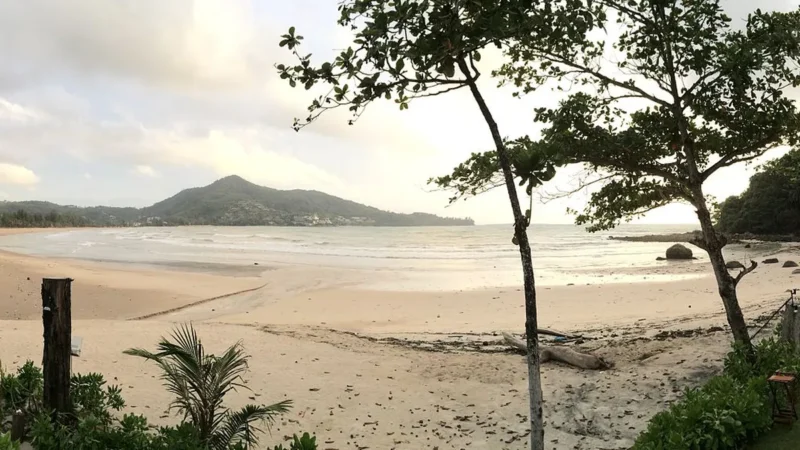
South bases that work. Rayavadee on Phra Nang Cape for the highest-end Krabi cape with no road access (longtail in only). The Tubkaak Boutique Resort for the quieter Tubkaek Beach 30 minutes from Ao Nang. InterContinental Phuket Resort at Kamala Beach for the SHA Plus mid-range anchor between Patong and Surin. The Phi Phi day trip works from both Krabi and Phuket.
Practicalities to lock before you go
The 10-day trip needs about 6 paid bookings on the calendar before you leave home. Lock these now to avoid the price creep and the sold-out cancellation chain.
- Two internal flights. BKK to CNX (Tuesday Day 4) and CNX to KBV or HKT (Friday Day 7). Search both legs together via the flight comparison tool. The CNX-to-south leg sells out faster.
- Three hotel anchors. Bangkok 3 nights, Chiang Mai 3 nights, south 4 nights. Compare Bangkok riverside availability first if peak December to January.
- One marquee day trip. The Phi Phi or Hong Islands speedboat from the south leg. Buy ahead. Walk-up tickets at the pier sell at a 20 percent markup over online operator rates.
- One transfer per region. Bangkok arrival, Chiang Mai arrival (CNX taxi runs $8 fixed, airport transfer through your hotel runs $12 to $18), Krabi or Phuket arrival.
- Travel insurance. travel insurance from $2 per day covers the monsoon ferry cancellation case alongside the standard medical evacuation. Worth it on a 10-day trip that crosses three regions.
- eSIM or local SIM. Airalo eSIM for 10 days runs $12 and activates on landing. The on-airport AIS or True local SIM costs $15 for a 30-day plan but takes 20 minutes at the kiosk.
The visa side is simple for most Western passports in 2026. Visa-exempt entry runs 60 days under the 2024 reform, processed at the immigration desk. The TM6 arrival card filed online before arrival saves the paper-form queue. Citizens of countries not on the visa-exempt list use the e-Visa portal. See our Thailand visa guide for the country-by-country detail. We close the loop on the trip back where we started. The 6:30am Don Mueang domestic terminal is just as busy on the way out. The three-region split is now lived rather than read about. The next Thailand trip is already drafted in your head before the international gate closes.