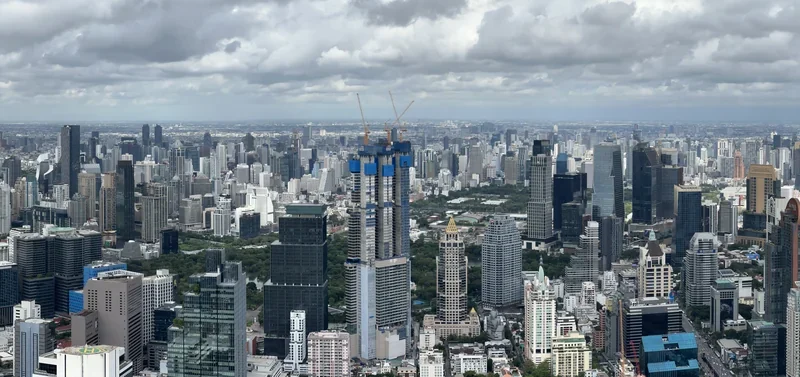
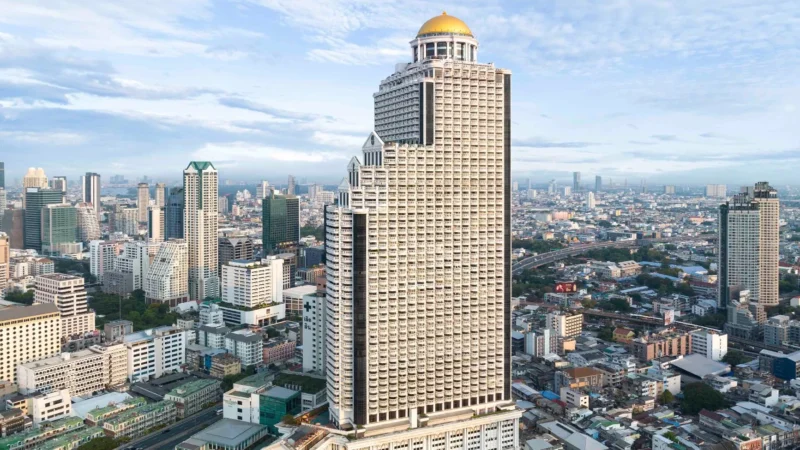
Every rooftop bar in Bangkok traces back to one elevator, and it’s in this lobby. Vertigo and Moon Bar opened on the 61st floor of Banyan Tree Bangkok in the late 1990s as the city’s first rooftop restaurant and bar, described by trade press as the first such terrace anywhere in Asia. The whole sky cocktail culture Bangkok now sells itself on started here. That is the case for this hotel, and it’s also the trap. If you want the sky and the suite, it fits naturally. If you want the river, you’ll feel the friction fast. People book it expecting the polish of the river icons and arrive to find the pitch is heritage and altitude, not the newest finishes in town.
Here’s the honest shape of it. Banyan Tree sits inland on Sathorn, facing Lumphini Park instead of the Chao Phraya. The entry room is already a suite. The rooftop is the elder statesman of the whole circuit. What it isn’t is Forbes 5-Star. Peninsula, Capella, and Mandarin Oriental hold the three Bangkok 5-Star ratings for 2025, and Banyan Tree carries the Forbes “Recommended” tier below them. Book it for the sky bar, the all suite footprint, and a transit on two lines, and the choice carries you. Book it expecting riverside light through a teak shutter at 7 AM, and the friction shows up fast.
Banyan Tree Bangkok quick facts and figures
Property: Banyan Tree Bangkok, 21/100 South Sathorn Road, Thung Maha Mek, Sathon, Bangkok 10120. Sathorn district, inland from the Chao Phraya.
Opened: 1996 as Westin Banyan Tree. Rebranded Banyan Tree Bangkok in 2002. The 25th anniversary from the Banyan Tree era was celebrated in 2022.
Owner: Banyan Group (formerly Banyan Tree Holdings), Singapore-headquartered, founded 1994.
Footprint: 61 floors. Roughly 327 rooms, all-suite from 48 to 56 square meters at the entry tier.
Awards: Forbes Travel Guide “Recommended” 2025, not 5-Star. On the 2025 Thailand MICHELIN Key list.
Guest score: around 9.0 across recent verified reviews, holding in the high 8 to low 9 range.
Entry rate (live): from approximately $210 (THB 7,400) a night at time of publish. Seasonal range USD 170 to 430 for the Horizon entry tier.
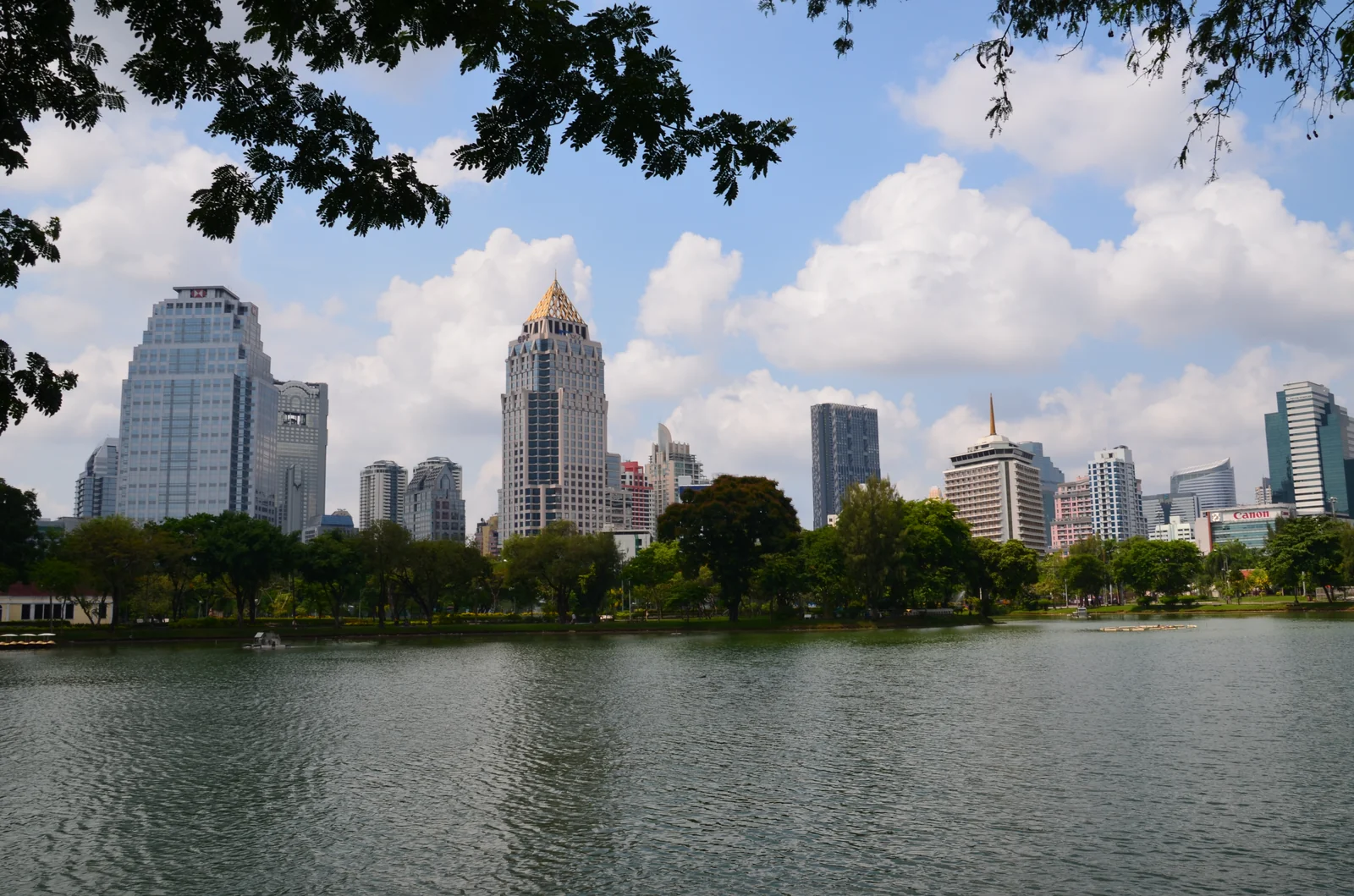 Photographer: Jarcje. Source: Wikimedia Commons. License: CC BY-SA 3.0.
The sky over river bet that defines this hotel
Banyan Tree opened in 1996 as the Westin Banyan Tree, on a Sathorn plot facing Lumphini Park rather than the Chao Phraya. The Banyan Tree brand took over in 2002 and the tower has been the city flagship since. Vertigo and Moon Bar on the 61st floor became Bangkok’s first rooftop restaurant and bar, which means the entire rooftop cocktail scene this city is now identified with started in this building.
The Sathorn address is the second half of the proposition. BTS Sala Daeng is about ten minutes on foot down Sathorn Road. MRT Lumphini is about ten minutes the other way. A free hotel shuttle to Sala Daeng, by tuk tuk, runs every twenty minutes, which is what most guests use through the hottest months when the walk crosses from possible to unpleasant. Lumphini Park is across the road for morning runs, and the snake farm Queen Saovabha Institute is twenty minutes away on foot. None of that exists at the same range from the riverside hotels.
The read on Sathorn from recent guests is consistent. Business travelers who want both lines and don’t care about the river prefer it here. Rooftop tourists who want to be one elevator from Vertigo prefer it here. First-time Bangkok visitors who came for the river view in every photo of the city sometimes find the inland position a tax. Read the Sukhumvit Bangkok neighborhood guide if you want a sense of the walkable alternative on the east side.
Suites from 48 to 56 square meters at entry
The Banyan Tree’s entry tier is already a suite. The Horizon Room starts at about 48 square meters. The Oasis Retreat moves into the low 60s. Serenity Club floors begin on the 53rd and stack the better view layer, with a 19th-floor Club Lounge for breakfast, evening canapes, and drinks before dinner. The Banyan Suite at 118 square meters and the Presidential Suite above it are the flagship tiers.
A Japanese reviewer’s September 2023 stay in a Horizon Twin of 48 square meters gives the cleanest read on the entry tier as it stands. The room photographs well. The view from a key on a mid floor toward Sathorn and Lumphini is panoramic urban. The closet runs short for long dresses, and the building shows its age in a few finishes. Another Japanese account flagged the signature scents that change daily through the property as the sensory cue most guests notice before any single room detail.
The honest counterpoint, surfaced across Japanese, German, and English coverage, is that the design language is now more than two decades into the Banyan Tree era. The last refresh across the whole property, dates to the late 2000s, with rolling suite updates since. If your reference for new is the recently opened Capella or Four Seasons at Chao Phraya, Banyan Tree’s interior reads as classic rather than current, and some guests prefer that while others find it dated. The Capella Bangkok review and the Four Seasons Bangkok at Chao Phraya review walk through the aesthetics if that comparison matters to you.
Vertigo and Moon Bar on the 61st floor
The 61st floor carries the brand identity. Vertigo serves modern Thai with French influences at dinner from 18:00 to 22:30 daily. Moon Bar runs from 17:00 to 01:00 with the signature Vertigo Sunset cocktail timed to the sunset window. Dress code is smart casual and enforced at the door. No shorts, no tank tops, no sandals. An entry fee of 80 baht (about $2) at the door is returned as a drink voucher inside.
The read on Vertigo is split, and worth knowing before you go up. The view is undisputed, and most reviewers, including the German rooftop coverage and the rooftop guide aggregator listings, place it among the top three Bangkok rooftop venues regardless of which year’s list you reference. The ratio of food to price draws more mixed feedback. The German-language Urlaub in Bangkok rooftop write up noted a chicken burger at 1,750 baht and prawns at 1,790 baht. Some diners felt those ran rich for the kitchen at that price. A fresh salad landed at 550 baht and spare ribs at 1,250 baht. The pattern across these reviews is simple. Go for the view and a cocktail, and calibrate the dinner expectation accordingly.
Weather is the other variable. Bangkok’s rainy season runs May through October, and Vertigo and Moon Bar close on weather risk. One Japanese reviewer’s visit reported the upper Moon Bar deck closed on the night. Reservations are advised through the year, and it’s worth confirming the rooftop is open before you walk up. The best rooftop bars in Bangkok piece tracks the broader circuit if Vertigo is shut the night you arrive.
Saffron, Bai Yun, and the vertical dining stack
Few Bangkok hotels stack three serious dining venues this high. Saffron sits on the 52nd floor. Bai Yun is on the 59th. Vertigo crowns the line on the 61st. That proposition of dining across three high floors is close to unique in the Forbes-tier Bangkok cluster.
Saffron Thai on the 52nd is the Banyan Group’s Thai signature concept, brought into the Bangkok tower. The menu plays Thai street food influences against the city’s highest outdoor sky garden seating. The terrace is the seat to book. Saffron Cruise on the Chao Phraya operates under the same brand but as a separate dining experience. The hub link from the best restaurants in Bangkok piece points here.
Bai Yun on the 59th is the Cantonese fine dining and dim sum room. The chef’s signatures recur across specialist coverage and Bangkok publications. Baked crab with ginger and spring onions. Sauteed prawn with orange sauce. Fried sea bass in sweet and sour. The dim sum lunch is the meal to book if you want the room at its busiest, with Bangkok locals at the next table.
Tahei is the Japanese venue. It runs two floors with teppanyaki counter seating and about 100 sake selections. Romsai serves the international Sunday brunch buffet and the garden courtyard breakfast layer. The Lobby Lounge runs high tea and the all day cafe layer. The Banyan Tree Club Lounge on the 19th gives Serenity Club and guests in suites the breakfast plus evening food and drink layer that the riverside 5-Star hotels do not all run.
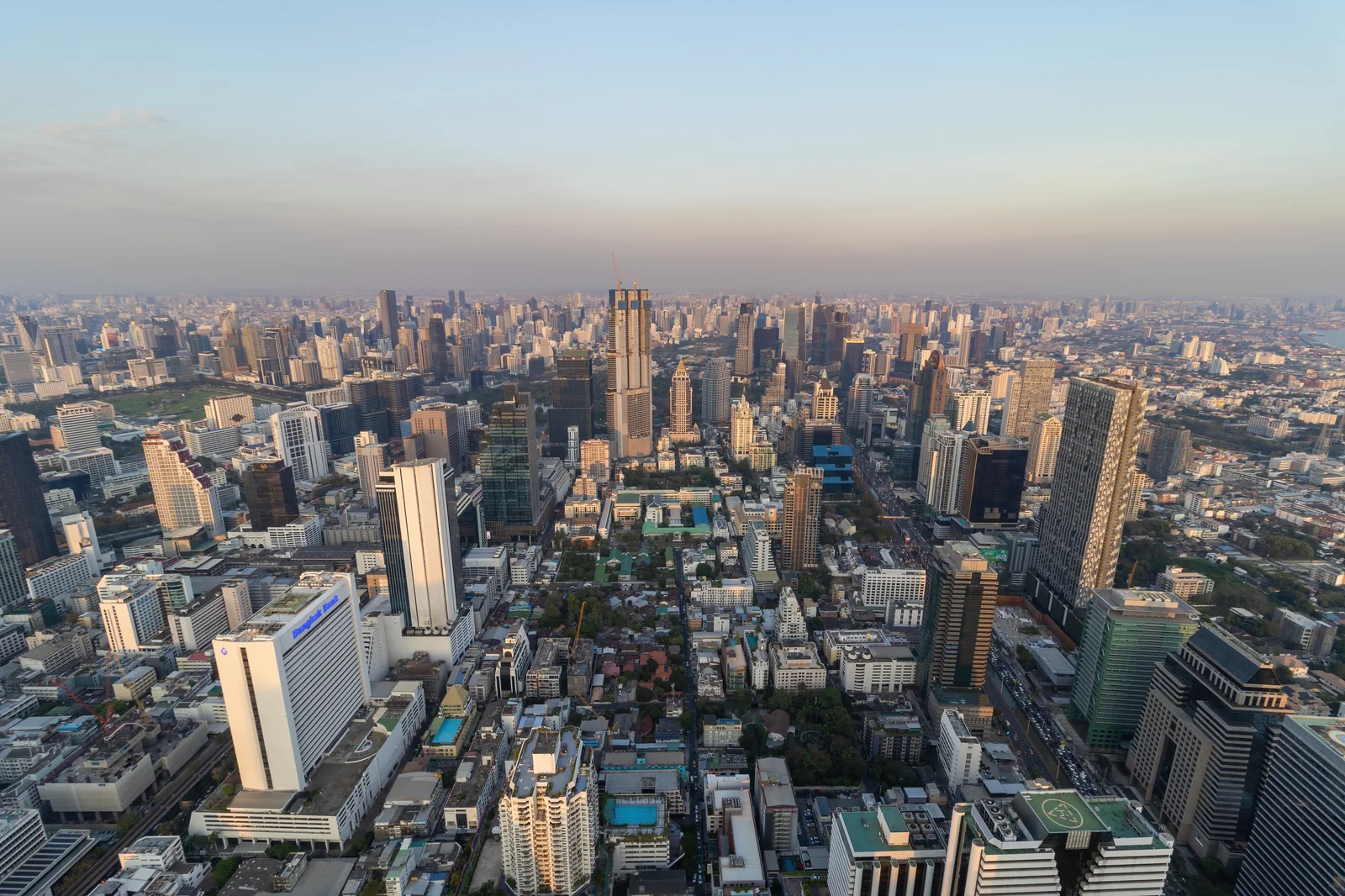 Photographer: iMahesh. Source: Wikimedia Commons. License: CC BY-SA 4.0.
The spa and the pool on the 21st floor
Banyan Tree Spa Bangkok occupies the 21st floor and stretches across 1,101 square meters of treatment space, three floors in total, with 16 treatment suites. The lineage is the Banyan Tree Spa Academy in Phuket. The Wat Pho (วัดโพธิ์) tradition is not the school here. Banyan Tree runs its own academy. The philosophy is described by specialist coverage as high touch and low on equipment, leaning on herbs and aromatic oils rather than protocols led by equipment.
The signature treatment names are stable across years of coverage. The Royal Banyan and Rejuvenation package layers the Banyan Massage with an oatmeal and kaffir lime body scrub. The Thai Rattanakosin at 150 minutes runs Thai oil massage with a traditional Thai perfume blend. The Rainmist is the property’s hydro mist experience and the one most reviewers reference as the signature booking. Treatments rotate seasonally, so book direct if a specific protocol matters to you, since the listings elsewhere are not always current. The specialist site Destination Deluxe walked through the spa layout in detail.
The outdoor pool sits on the same 21st floor as the spa, roughly 25 by 4 meters, with a juice bar, towels and sunscreen, and a neck and shoulder massage layer between 13:00 and 16:00. Hours run 06:00 to 20:00. The structural difference against the riverside luxury cluster is the view. Peninsula’s three tier pool looks at the Chao Phraya. Capella’s plunge pools sit on the river. Banyan Tree’s pool looks across Sathorn rooftops and Lumphini Park. It reads as mid tower urban, not riverside intimate, and which of those you want is the whole decision. Read the Peninsula Bangkok review if the riverside pool angle is the lead tradeoff for you.
Sathorn, Sala Daeng, and Lumphini Park on foot
The walking distances are the practical edge of the Banyan Tree proposition. BTS Sala Daeng on the Silom Line sits about 10 minutes down Sathorn Road on foot. MRT Lumphini on the Blue Line is about 10 minutes the other way. The Sala Daeng plus MRT pair is one of the cleanest interchange positions in central Bangkok. The Silom Line reaches Saphan Taksin BTS and the river, Siam for shopping, and onward to Phaya Thai for the airport rail link. The Blue Line reaches Sukhumvit for Asoke, Hua Lamphong for the old town, and Chatuchak for the weekend market. See the BTS Bangkok guide for the full route layout.
The free hotel shuttle by tuk tuk to BTS Sala Daeng runs every 20 minutes. That shuttle is the detail most guests cite, because the walk of about 10 minutes from the lobby across Sathorn Road to the station runs through the city’s heat and humidity peak. Even guests who normally walk everywhere take the shuttle in the May to October rainy season. Lumphini Park is directly across the road, which puts a green lung of 142 acres for morning runs and Tai Chi within five minutes of the lobby.
The honest limitation on the Sathorn position is the same one that applies to The Sukhothai Bangkok. You give up the Chao Phraya frontage. No teak shuttle boats. No sunset pier. No riverside breakfast terrace. The Banyan Tree’s answer is altitude. Vertigo on the 61st reads as a different kind of Bangkok luxury than a riverside teak pavilion. Both work. Neither is universal.
What you actually pay at Banyan Tree by tier
Rates move with season, demand, and how far ahead you book. The ranges below are drawn from nightly figures recently reported by guests across two language families, plus a German source’s 2023 quote of EUR 150 entry rooms and suites above EUR 250.
- Horizon Room (entry, 48 sqm): from approximately THB 6,000 to 9,000 a night (USD 170 to 260) low season. THB 11,000 to 15,000 (USD 320 to 430) high season.
- Oasis Retreat and Serenity Club Suite (53F and above): from approximately THB 12,000 to 20,000 a night (USD 350 to 570). The Club tier adds the 19th-floor Club Lounge food and drink layer.
- Banyan Suite (118 sqm) and Presidential Suite (flagship): from approximately THB 40,000 and up a night (USD 1,150 and up). Verify on the live link for the actual night. This is the one suite category where public rate ranges are too wide for a single number to mean much.
On direct versus the live link, the gap at the entry rate is usually small once tax and service charge are added. The listed rate at the link below is usually the floor you’ll see for any given night. Check live availability and rates at Banyan Tree Bangkok. To compare the Horizon entry tier against a Serenity Club suite on the actual night, see live rates and compare options here.
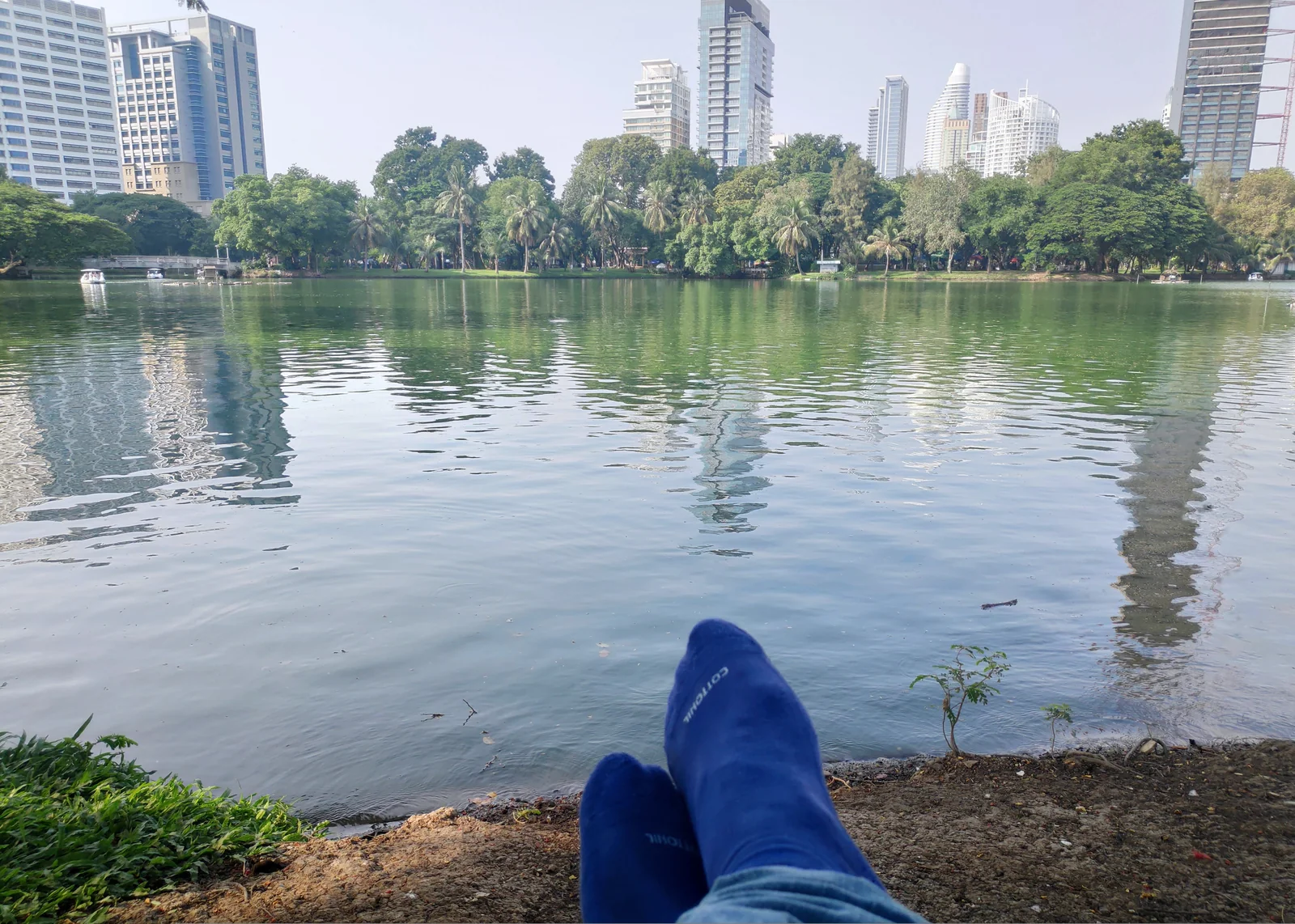 Photographer: The Presenter. Source: Wikimedia Commons. License: CC BY-SA 4.0.
Banyan Tree vs Sukhothai vs Peninsula vs Capella vs Mandarin Oriental
The Bangkok luxury decision splits along three axes. River versus sky. Heritage versus currency. Forbes 5-Star versus Forbes Recommended.
River versus sky. Peninsula, Capella, Four Seasons at Chao Phraya, and Mandarin Oriental are riverside. Banyan Tree and Lebua go vertical and inland. If the river is the asset you book Bangkok for, Banyan Tree is the wrong pick. The Mandarin Oriental Bangkok review covers the heritage and river side of the decision. If the rooftop scene is what gets you to Bangkok, Banyan Tree is the elder statesman of the circuit.
Heritage versus currency. Capella opened in 2020 and Four Seasons at Chao Phraya opened the same year. Both are the design forward newcomers. Mandarin Oriental traces its lineage to 1876. Peninsula opened in 1998. Banyan Tree opened in 1996. If you want the room to read as current, the Capella all suite layout is the most contemporary on the river. Banyan Tree’s teak and low light interior reads as classic by intent, not by neglect, though the dated finishes are real and most reviewers acknowledge them.
The Sathorn-inland decision. The other Sathorn luxury hotel is The Sukhothai Bangkok. Sukhothai is the horizontal Sathorn option, a low rise garden urban resort, Forbes 4-Star, with no sky bar. Banyan Tree is the vertical Sathorn option, a tower of 61 floors with the original Bangkok rooftop. Same district, opposite shape. Read the Sukhothai Bangkok review if the inland, garden urban frame is what you want instead.
Forbes 5-Star versus Forbes Recommended. Peninsula, Capella, and Mandarin Oriental are the Bangkok Forbes 5-Star trio for 2025. Banyan Tree is Forbes Recommended. The gap is real and worth saying clearly. The Banyan Tree pitch trades a half a tier of polish for the rooftop, the suite size, and the 1996 Bangkok-defining heritage.
Who Banyan Tree Bangkok suits, and who it doesn’t
Banyan Tree works if the rooftop scene and an all suite footprint with transit on two lines matter more to you than river frontage. The 61st-floor Vertigo and Moon Bar is the venue every Bangkok rooftop bar descends from, and the elevator to it is in this lobby. The generous entry tier and the Sala Daeng plus Lumphini transit pair are real advantages the riverside icons can’t match at this position. For a business traveler or a returning visitor who already knows the river and wants the sky instead, this is a natural fit.
It suits you less well if you came to Bangkok for the river. You give up the Chao Phraya frontage and the teak shuttle ritual entirely. The hotel is Forbes Recommended rather than Forbes 5-Star, and the late-1990s interior vocabulary that some guests find timeless reads as dated to others. If your trip hinges on a riverside pool or the newest finishes in town, the riverside luxury cluster sits half a tier higher on polish, and you’ll feel the gap. Banyan Tree’s answer is heritage and altitude, not currency, and that’s a defensible call for a meaningful slice of travelers.
Where to stay near Banyan Tree Bangkok
For the booking link to the property itself, the card below pulls live “from” pricing and availability through our booking partner.
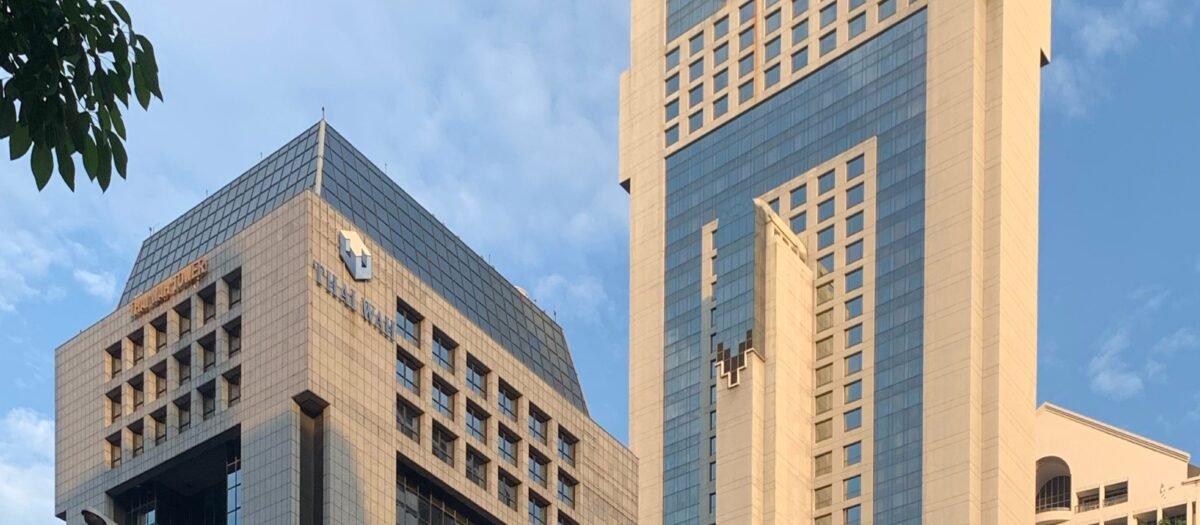 SHA EXTRA PLUS
★ 9.0
SHA EXTRA PLUS
★ 9.0
Banyan Tree Bangkok
Sathorn tower with one of Bangkok original sky bars on the 61st floor. 327 keys, Vertigo + Moon Bar rooftop circuit, Banyan Tree Spa pavilion, MRT Lumphini walking distance.
See also our reviews of Athenee Hotel Bangkok and Waldorf Astoria Bangkok.
Frequently asked questions about Banyan Tree Bangkok
Is Banyan Tree Bangkok on the river?
How do I get to BTS or MRT from Banyan Tree Bangkok?
Is Vertigo or Moon Bar open every night?
How does Banyan Tree Bangkok compare to Peninsula for a Bangkok luxury stay?
What is the best room category to book at Banyan Tree Bangkok?
Does Banyan Tree Bangkok have a Club Lounge?
Our take. Banyan Tree Bangkok works if the rooftop scene and an all suite footprint with transit on two lines matter more than river frontage. The 61st-floor Vertigo and Moon Bar is the venue every Bangkok rooftop bar descends from, and the elevator to it is in this lobby. The trade is real. The hotel is Forbes Recommended, not Forbes 5-Star. The interiors carry late-1990s vocabulary that some readers love and others find dated. The riverside luxury icons across the city (Peninsula, Capella, Four Seasons, Mandarin Oriental) sit half a tier higher on polish. Banyan Tree’s answer is heritage and altitude rather than currency, and that’s a defensible choice for a meaningful slice of travelers.
See live rates and check availability at Banyan Tree Bangkok. Live partner pricing reflects what you’ll pay tonight.
Still weighing the city’s top addresses? Compare the field in our best SHA hotels in Bangkok roundup. For the riverside contrast, read our review of Rosewood Bangkok. To place a stay inside a full trip, see our 3 days in Bangkok itinerary.