The first longtail of the morning rounds the headland at Ao Nang at 8am and the limestone wall behind Railay turns the color of rusted bronze for fifteen minutes before the sun finds it. Local boatmen call this hour pak chao, the mouth of the day. By the time the boats start ferrying climbers across the bay, the resort crews at Tubkaek are already raking the sand and the fishermen at Nopparat Thara are setting their longtails back to the high tide line. Krabi meets you on the water before it meets you on the road.
This province is not one beach. It is a fractured limestone coastline of peninsulas, hidden coves, and offshore islands that sit at every point of the compass from Ao Nang. The Railay peninsula juts west into the Andaman and pulls the postcard crowd. The mainland strip at Ao Nang runs the longtail economy and the dinner scene. North of the airport the quiet beaches at Klong Muang and Tubkaek pull back to the resort rhythm and the sunset. The islands offshore belong to the national park and the speedboat operators and pay attention to no one.
What follows are the ten beaches we send travelers to when they ask which side of Krabi to base on. None of them are secrets. A few are crowded and worth it. A few are quiet for the reasons that quiet always means in Thailand, and we say so.
Railay West Beach, the postcard everyone arrives looking for
 BEACH
BEACH
Railay West Beach (หาดไร่เลย์ตะวันตก)
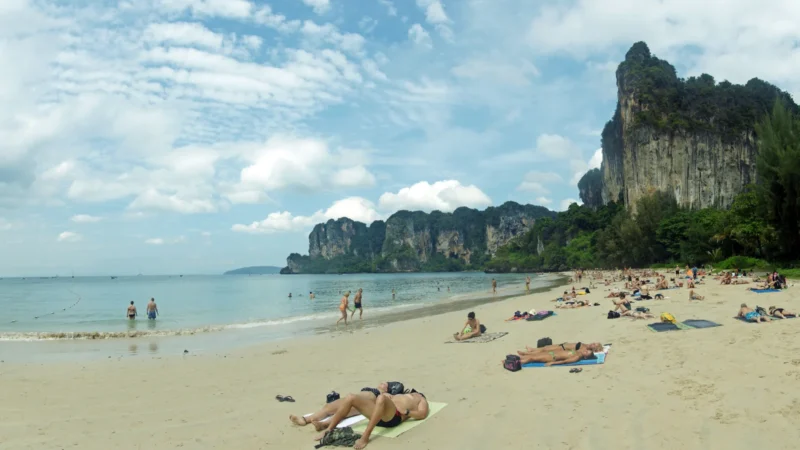
A 700-meter west-facing strip on the Railay peninsula, walled at both ends by vertical limestone cliffs that turn the color of bronze in the last hour of light. The swim shelf is shallow for the first 30 meters with a sharp drop after that, the sand is white and fine, and the only access is by longtail from Ao Nang Beach (about $5 one way per person, runs once 8 passengers board, last boat back around 6pm in high season). The beach is technically part of a peninsula not an island; the cliffs cut off road access from the mainland behind. The northern third holds the resorts, the central section is the strip everyone photographs, and the southern point ends at a beach restaurant that has run sunset coffee since the 1980s.
Railay West is the strip every postcard and screensaver of Thailand was shot on. The cost of that is real. Midday on the central section runs 600 to 1,000 people across the resort loungers and the day-trippers in from Ao Nang. The sand temperature passes 50C around 1pm. The only shade is the rope line of longtails pulled up at the south end. The version of this beach worth the trip is the 4pm-onward window when the day-tripper boats start leaving and the cliff color turns. Stay in Railay overnight and the morning before 9am belongs to the climbers and a handful of joggers, which is the second window worth the trip.
If you have one day on Railay and want both the postcard and the empty sand, the order matters. Land at 7:30am on a private longtail (about $65 for the boat from Ao Nang), walk to Phra Nang first, swim, and circle back to Railay West for late breakfast and a sunset stay. Lonely Planet’s Railay guide still has the cleanest accounting of the longtail timings and the cliff-path walking routes.
Booking the empty version. The single move that changes a Railay day is a private longtail booked the night before through the Ao Nang boat captains’ cooperative office on the promenade. About $65 for the boat lands you on the sand at 7:30am, two hours before the shared day-tripper boats start running, and lets you reverse the standard route to beat the crowd at both Railay West and Phra Nang.
Phra Nang Cave Beach, the princess shrine and the most photographed cove
 BEACH
BEACH
Phra Nang Cave Beach (หาดถ้ำพระนาง)
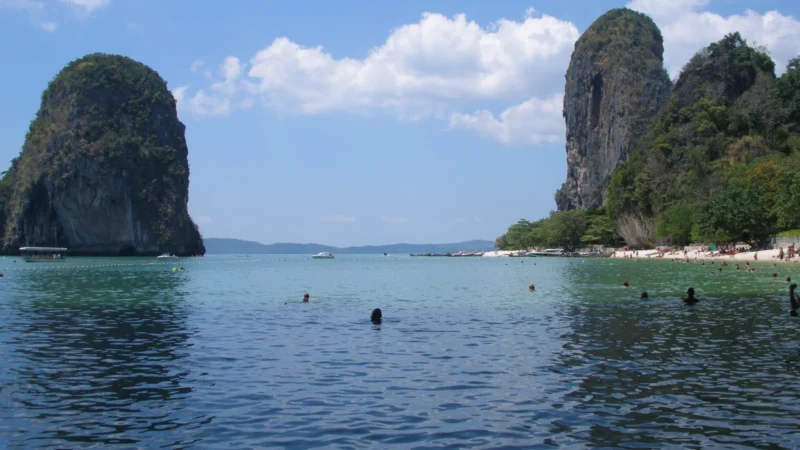
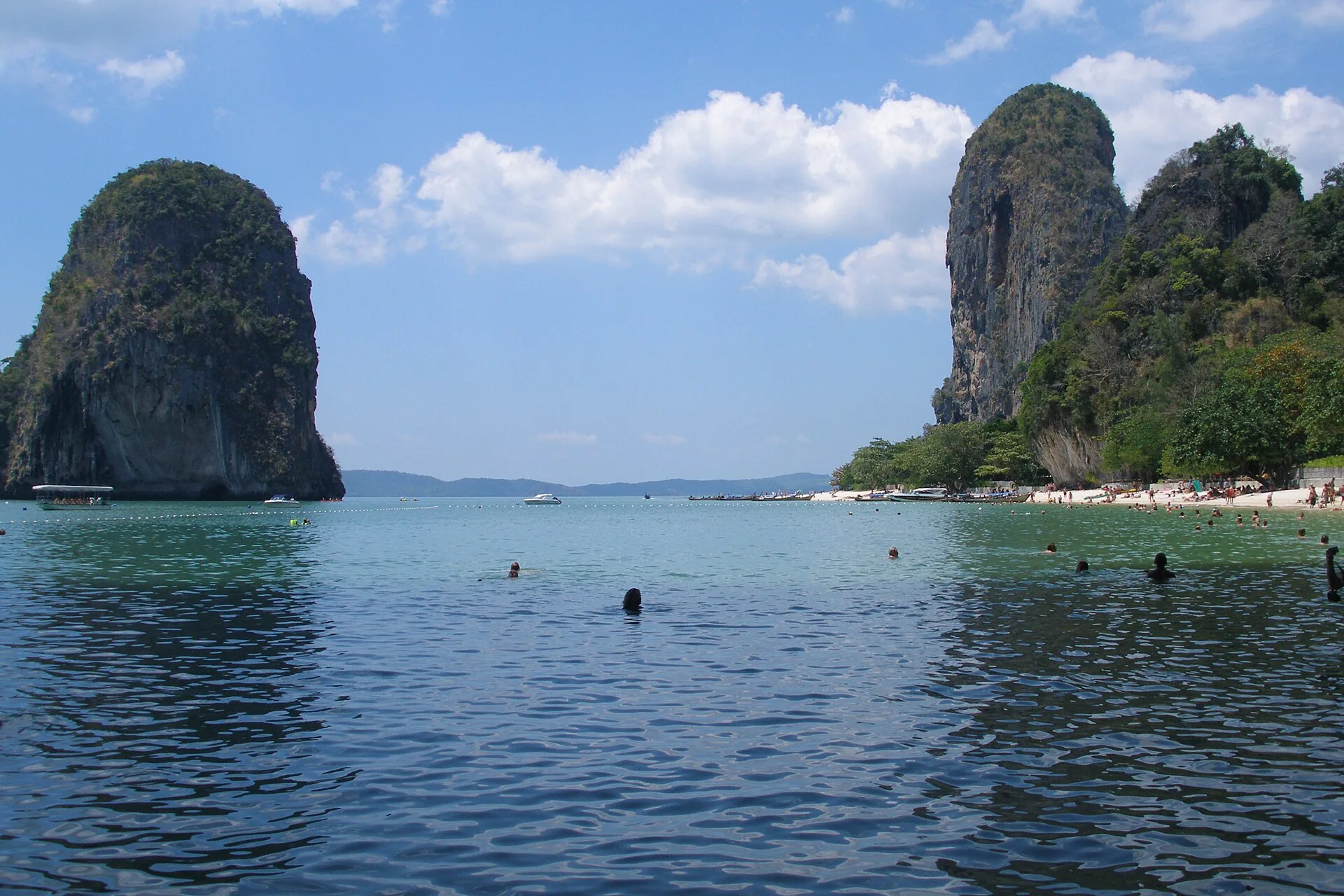
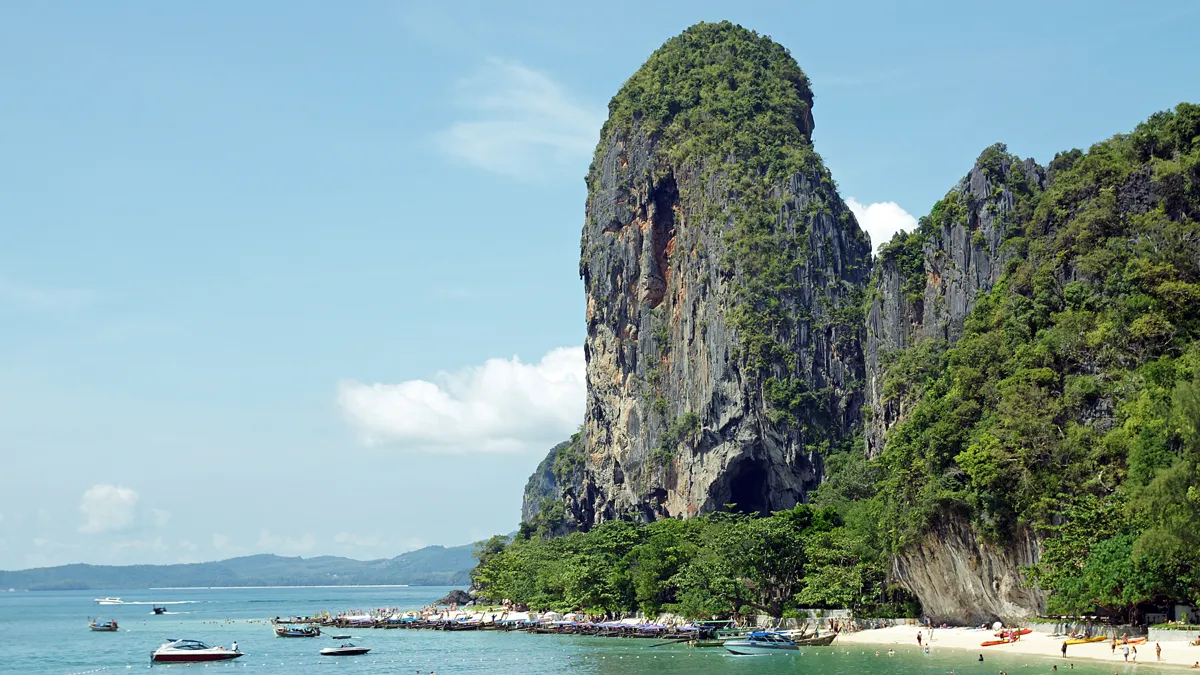
A 300-meter cove at the southern tip of the Railay peninsula, a 10-minute walk south of Railay East through the resort path. The headland holds Tham Phra Nang Nok, a sea cave maintained as a fertility shrine to a local princess with wooden lingam offerings stacked at the entrance by Krabi fishermen for generations. The snorkel reef on the south end runs about 40 meters out and supports parrotfish, butterflyfish, and the occasional small reef shark in the deeper section. The crowd density passes 1,200 people between 11am and 2pm in high season; before 10am the cove belongs to about 60 early-start travelers and a few longtail captains preparing the next run.
Phra Nang is the single most photographed beach in Krabi, and the picture you have in your head was taken before 10am or after 4pm. The princess shrine context is part of the visit, not a sidebar. The wooden lingam offerings are not a tourist curio. They are a working fertility shrine that local boatmen still maintain. Reading the small Thai-and-English plaque before you take the photograph is the minimum respect this site asks. The food and drink stand at the cliff base charges resort-island prices for fruit and water, so bring your own bottle. The shade strip at the back of the cove fills by 10:30am and the sand-level seating opens again after 3pm.
The honest plan for a Phra Nang visit is to combine it with Railay West in the same morning. Land at 7:30am at Railay, walk straight to Phra Nang, swim and shoot for an hour, and walk back to Railay West for late breakfast at the south-end restaurant. The reverse order, leaving Phra Nang for the afternoon, lands in the midday crowd and the cliff shadow that kills the photographs.
Railay East Beach, the climbers’ base on the mangrove side
 BEACH
BEACH
Railay East Beach (หาดไร่เลย์ตะวันออก)
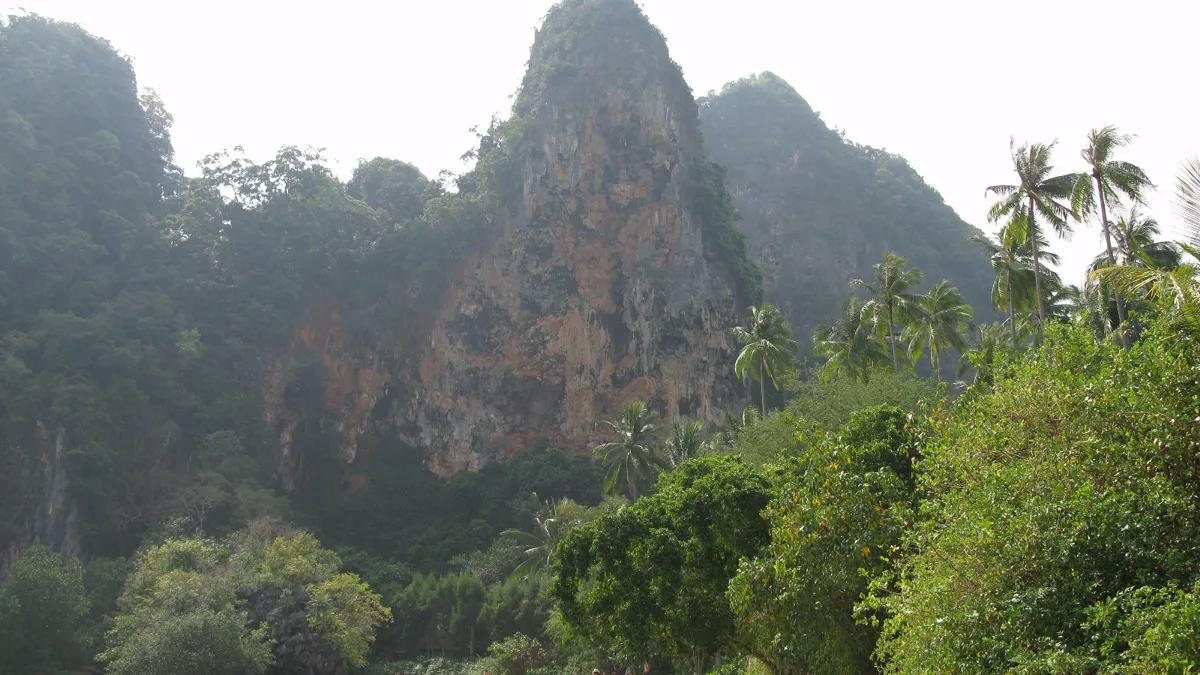
A 500-meter east-facing strip on the Railay peninsula, separated from Railay West by a 200-meter saddle of resorts and a covered shopping path. Not a swim beach; the tidal range exposes ankle-deep silt and small mangrove patches at low tide, and the smell rises in the afternoon heat. The value here is the cheaper accommodation (fan rooms from about $35 versus $180 for a Railay West resort), the climbing access to the Thaiwand Wall and Diamond Cave routes, and the longtail pier where most arrivals from Ao Nang land. Evening bars on the strip stay open until midnight in high season and the back path is the route to Railay West for sunset.
Railay East is where the climbing crowd actually sleeps. The split between East and West is not subtle. West is the postcard, East is the dormitory. A budget Krabi week on the peninsula stays on Railay East and walks the eight minutes across the saddle to swim at Railay West and Phra Nang. The trade is real sand and water quality for sleep and dinner cost. The wall climbing operators on the east strip charge about $30 for a half-day guided beginner session with shared gear, which is among the cheapest legitimate climbs in southern Thailand.
Ao Nang Beach, the working longtail jetty with the dinner strip
 BEACH
BEACH
Ao Nang Beach (หาดอ่าวนาง)

A 1.5-kilometer mainland strip on the Andaman coast, 20 minutes by taxi from Krabi airport and the road-arrival base for almost every Krabi trip. The beach is the working longtail jetty for every Railay and Four Islands trip in the province, which means 30 to 80 boats anchored 20 meters offshore from 8am until 4pm interrupt the swim line and the visibility through the silt drops below 1 meter on busy days. The promenade behind the sand is lit, walkable, and runs past the Thai restaurants, dive shops, and 7-Elevens that make Ao Nang the practical base for the province. Sunset at the north end past the longtail rank holds up; the central section is busy until 9pm.
Ao Nang is where 80 percent of Krabi visitors sleep, and the math is honest. A walkable dinner strip, $15 taxis to the airport, $3 songthaews to Krabi Town, and a 5-minute walk to the longtail jetty for every island trip solve more travelers’ problems than any other Krabi base. The drawback is the swim. The first-time visitor who books a beachfront room expecting a Caribbean-clear lagoon out the front gets the working harbor view instead. The right Ao Nang play is to swim at Nopparat Thara a 10-minute walk west and treat the strip itself as the promenade and the restaurant base.

Nopparat Thara Beach, the long swim 10 minutes west of Ao Nang
 BEACH
BEACH
Nopparat Thara Beach (หาดนพรัตน์ธารา)
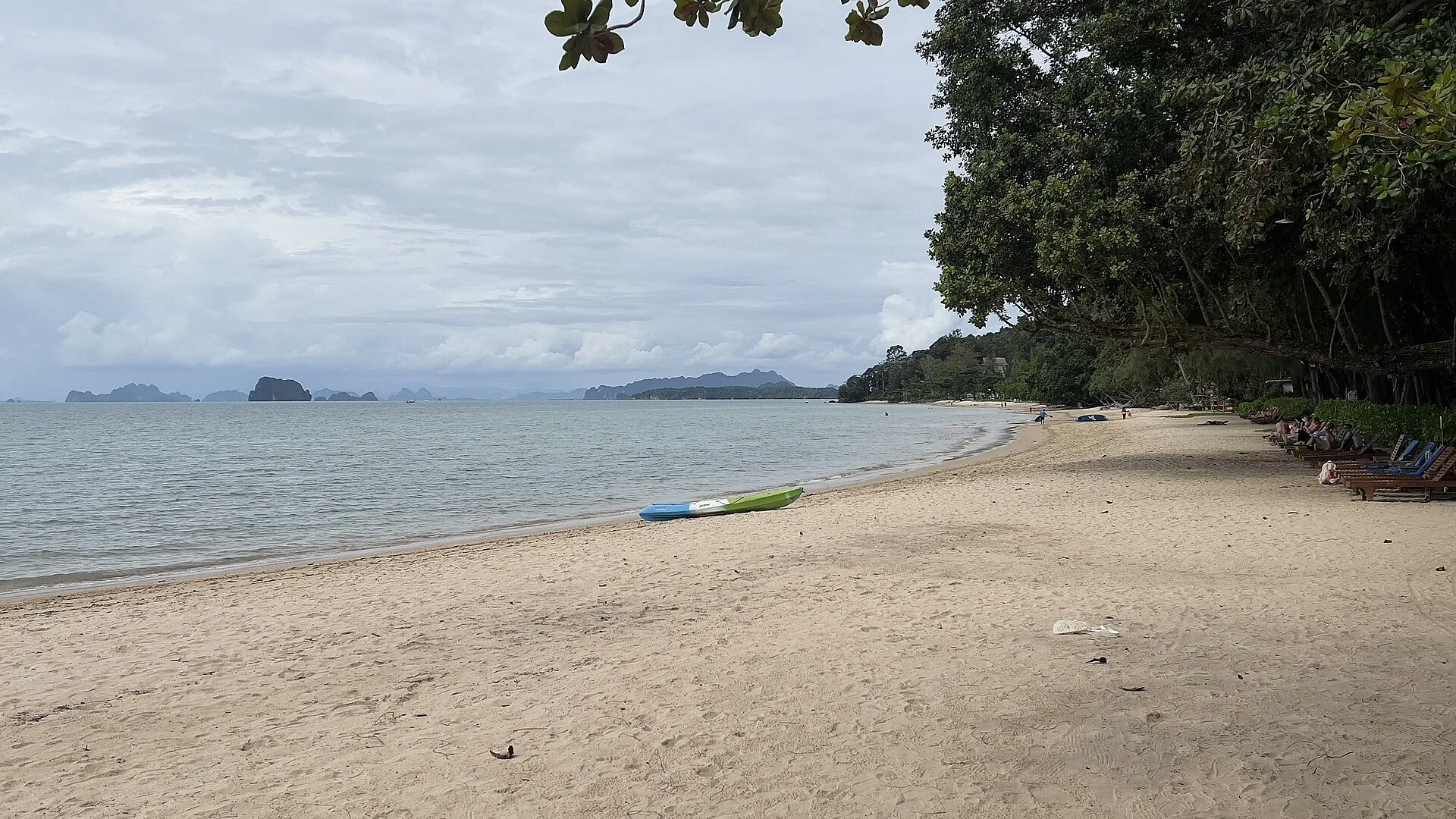
A 4-kilometer mainland strip running west from the end of Ao Nang Beach, part of Hat Nopparat Thara Mu Ko Phi Phi National Park. The eastern third joins Ao Nang at the canal mouth and is free to access; the western two-thirds sit inside the national park boundary and charge about $6 per foreigner at the small ranger station. Long stretches of casuarina pines along the back of the beach provide the only natural shade on the mainland coast. Swimming is the best on the mainland: the silt and boat traffic drop off past the canal, the gradient is gentle, and the strip runs long enough that even a busy day has 30 meters of sand between groups.
Nopparat Thara is the answer to the question every first-time Ao Nang visitor asks on day two. The walk west from the end of the Ao Nang promenade across the canal bridge takes 10 minutes. Past the bridge the longtail traffic stops, the sand widens, and the swim quality changes inside of 200 meters. Krua Thara, the long-running southern Thai seafood restaurant at the canal mouth, is one of the genuine eat-here picks on this stretch. Travelfish’s Krabi province overview has tracked the dining and accommodation drift on this stretch for two decades. The rest of the beach has no commercial development worth mentioning past the ranger station, which is the point.
Klong Muang Beach, the quiet resort strip 30 minutes north
 BEACH
BEACH
Klong Muang Beach (หาดคลองม่วง)

A 2-kilometer west-facing mainland strip on the Tab Kak peninsula, 30 minutes by taxi north of Ao Nang (about $20 one way). The swim shelf is flat for 80 meters and the gradient is gentle, which makes Klong Muang one of the calmer family-swim options in the province. The strip is bookended by Sofitel and Dusit Thani and the village outside the resort gates has 3 standalone restaurants and one small minimart. The west-facing aspect gives a clean sunset over the open Andaman, with the Hong Islands forming silhouettes 8km offshore in the last hour of light. Visibility drops in the September-October monsoon when the river outflow carries red silt.
Klong Muang is the right base for a couple or family that wants the calm water and the resort scaffolding without the longtail noise of Ao Nang. The math against Ao Nang is honest. Room rates at a similar SHA-certified property run 20 to 40 percent higher because the supply is thinner. Food options outside the gates are limited enough that most dinners happen on resort. The taxi back into Ao Nang for a Walking Street market run is $20 each way. The trade is real calm water and a working sunset, both of which Ao Nang Beach cannot deliver.
Tubkaek Beach, the sunset point with the Hong Islands silhouette
BEACH
Tubkaek Beach (หาดทับแขก)
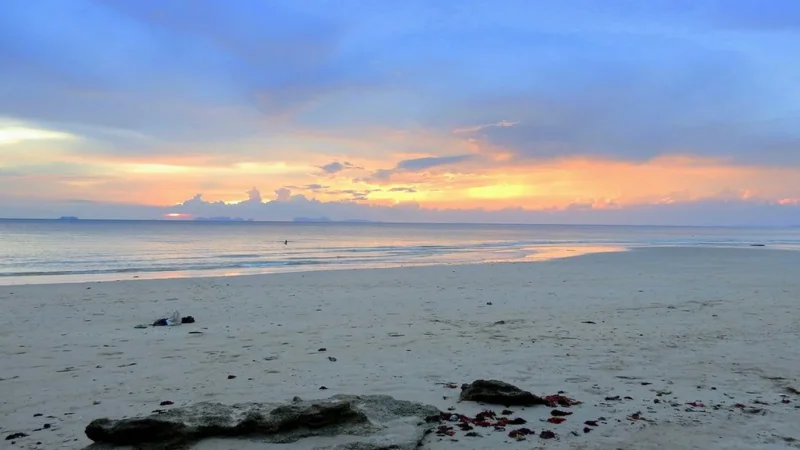
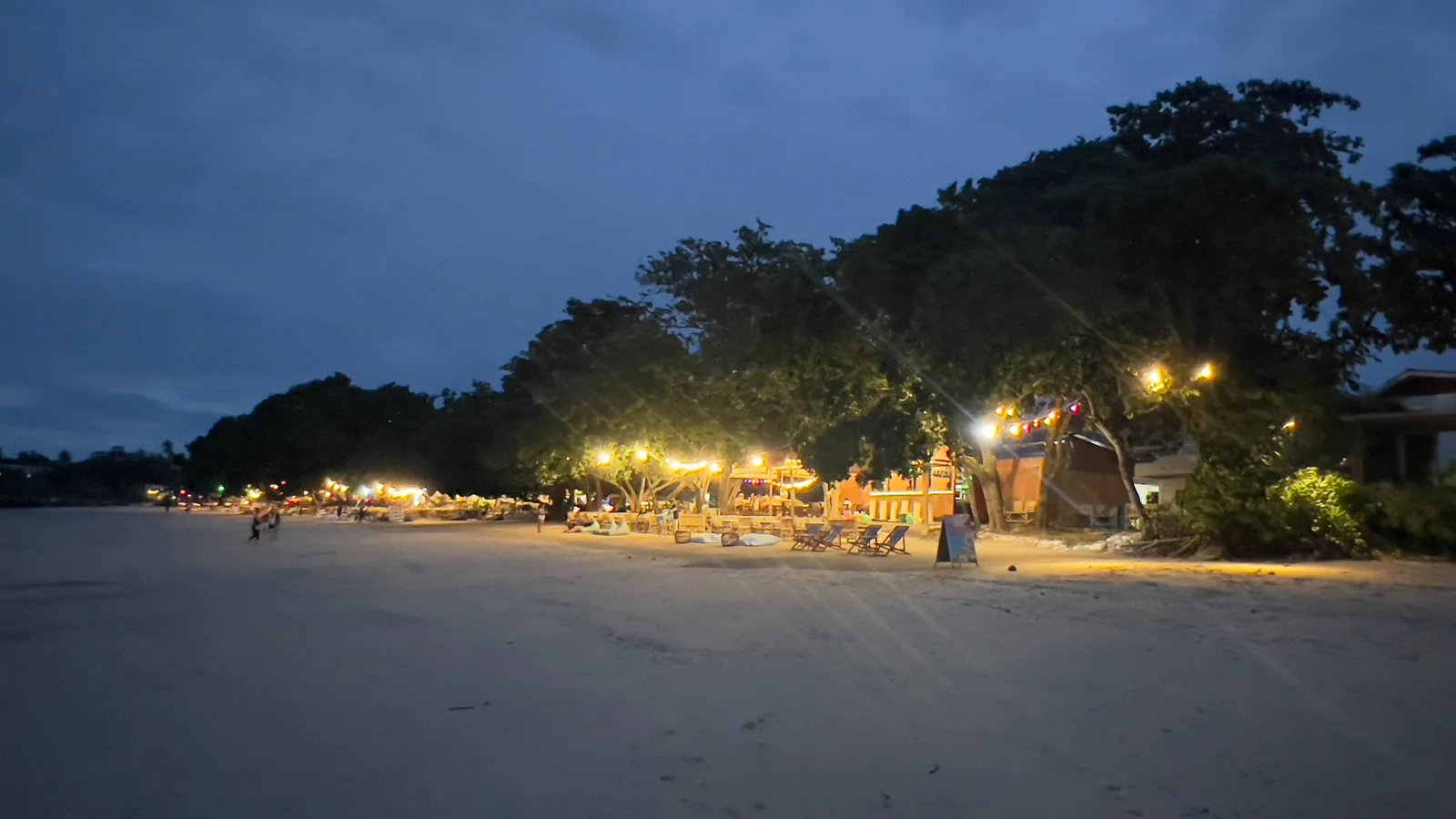
A 1.5-kilometer mainland strip at the tip of the Tab Kak peninsula, 40 minutes by taxi north of Ao Nang (about $25 one way), past Klong Muang. The most secluded mainland beach on this list; the village outside the Banyan Tree and the smaller boutique resorts has only 2 small Thai restaurants and no convenience store. The swim is tide-dependent with a 200-meter shallow walk-out at low tide so a noon arrival on a low day means a long wade before the chest-deep line. The trade is real: the cleanest sunset on this list, with the Hong Islands 8km offshore forming the calendar-shot silhouette in the last 20 minutes of light. The beach has direct longtail access to the Hong Islands kayak loop for guests of the resorts.
Tubkaek is the quiet answer for a milestone trip. The road past Klong Muang is the only access and the lack of village infrastructure outside the resort gates is both feature and cost. Most travelers who base at Tubkaek eat at the resort for dinner and swim at low tide on the walkable shelf. They chase the sunset every evening because the Hong Islands silhouette is the single best framing on the Krabi mainland. For a deep review of the Banyan Tree property at the south end of the strip, see our Banyan Tree Krabi review.
Pai Plong Beach, the hidden cove behind the cliff path
 BEACH
BEACH
Pai Plong Beach (หาดไผ่ปล้อง)
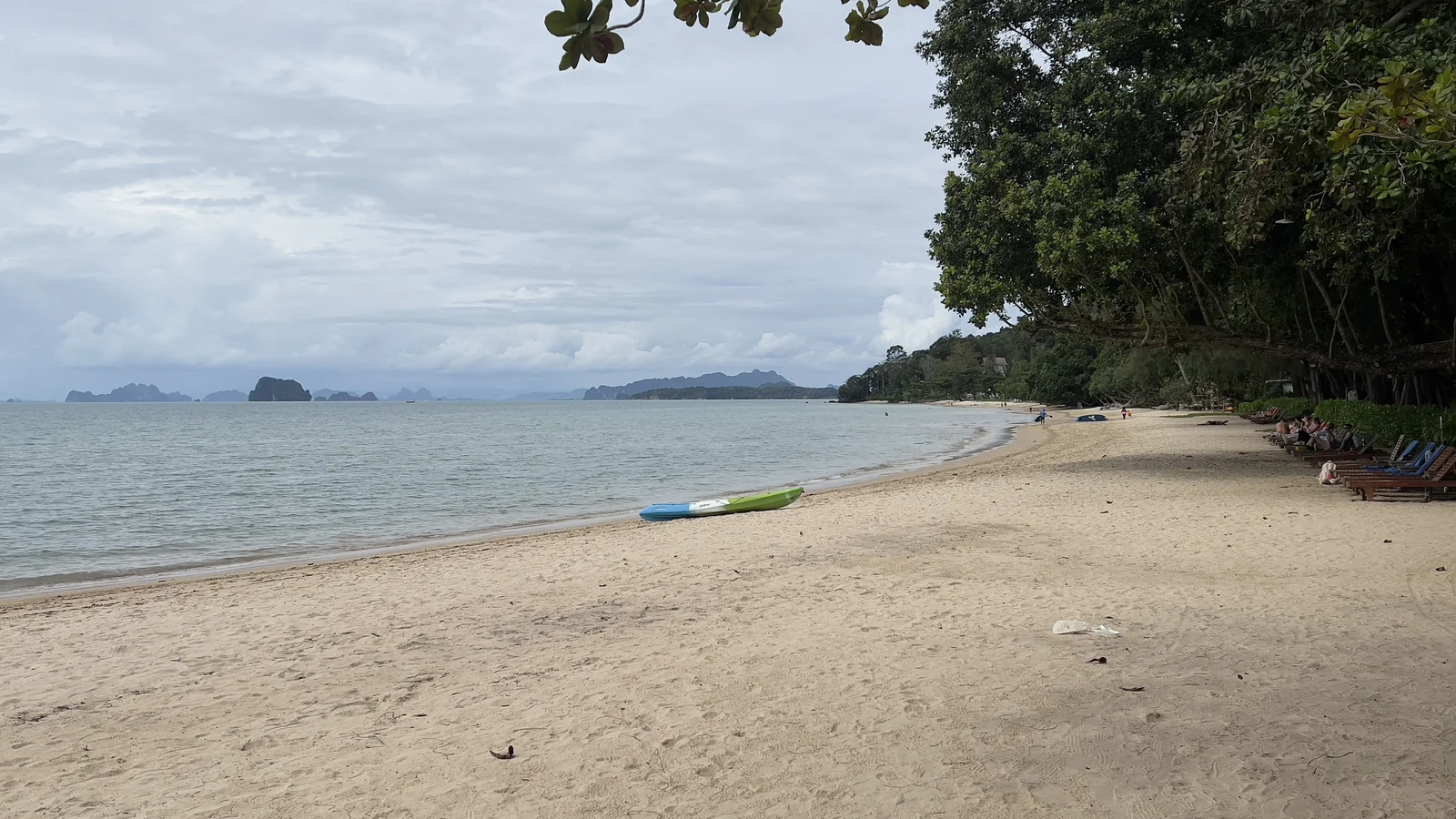
A 250-meter mainland cove tucked behind the southern headland of Ao Nang Beach, reachable only by a 15-minute cliff path with steps and roots from the south end of Ao Nang promenade or by Centara Grand Beach Resort shuttle for guests. No stroller access. The cove is dominated by the Centara property at the back, whose sun-loungers take the front sand row from 10am, but the public-access strip along the waterline is open and the swim is good. Snorkelling on the south end of the cove sees small reef fish and the occasional turtle in calm dry-season months. No public food, no drink stand, no toilets outside the resort.
Pai Plong is the half-day reward for a 15-minute walk most Ao Nang visitors never take. The cliff path is steeper than the maps suggest and the wooden steps in the middle section get slick in afternoon rain, so reef shoes or proper trainers are the right kit. A 250-meter sand strip, a swim shelf protected by the headland, and a 5-minute cliff path back to the Ao Nang dinner strip combine. The result is the best half-day swim option for travelers staying central without a resort base.
Poda Island Beach, the Four Islands swim stop
 BEACH
BEACH
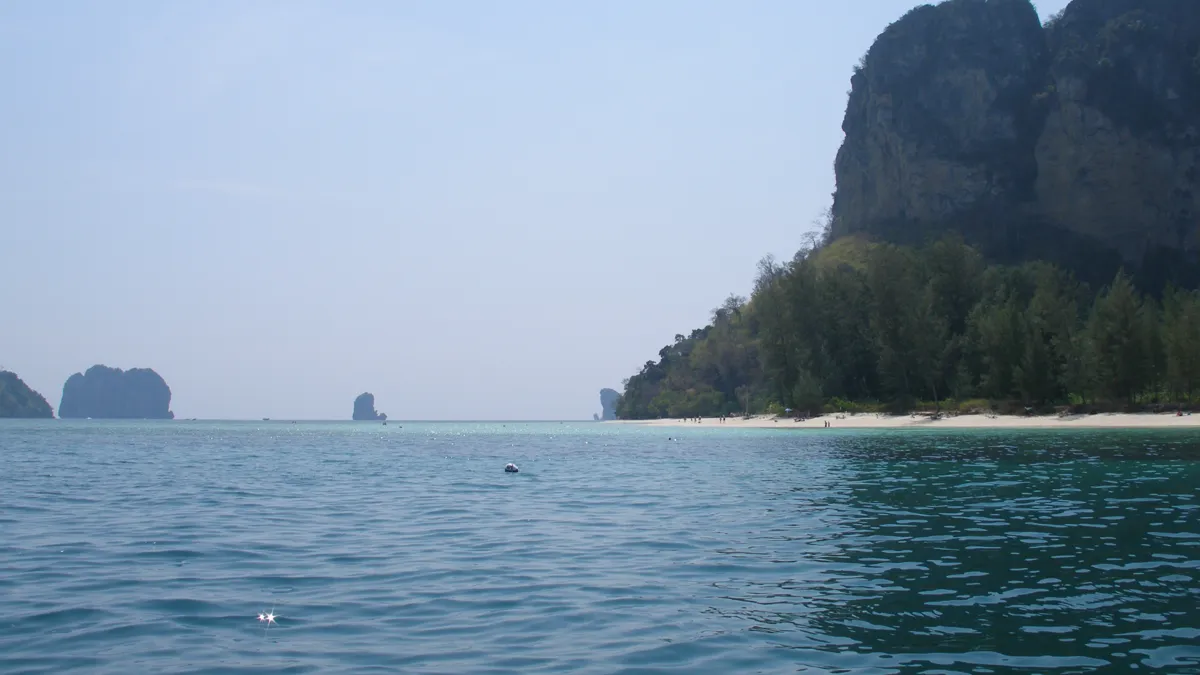
Poda Island Beach (Koh Poda) (เกาะปอดะ)
A 600-meter horseshoe sand strip on the north side of an uninhabited island 8km off Ao Nang, the third and longest swim stop on the standard Four Islands longtail tour (about $20 per adult, departs Ao Nang Beach around 9am, returns 3pm with 200 other boats heading the same route). The national park fee of about $12 per foreigner is added at the pier. Sand is white and the swim corner clears to 600 visitors between 11am and 1pm, and the only shade is the small fringe of casuarina trees behind the high-tide line so a midday Poda stop without an umbrella becomes a 90-minute sunburn rather than a swim. The reef on the south side is healthier and quieter than the north swim strip.
Poda is a stop on an itinerary not a destination, and the right way to read it is as the 90-minute swim window inside a 6-hour Four Islands day. The standard 9am Ao Nang departure lands at Poda around 11am, which puts you on the busiest swim hour of the day. The fix is a private longtail booking at about $65 to $90 for the boat that lets you reverse the route and reach Poda by 8am with one or two other boats sharing the strip. Same island, different beach.
The park fee nobody mentions. Almost every island beach in Krabi sits inside Hat Nopparat Thara Mu Ko Phi Phi National Park, so a $12 per foreigner fee stacks on top of the tour price at the pier, in cash. A family of four on a Four Islands or Phi Phi day pays close to $50 in park fees before lunch. Budget it separately. The tour operators quote the boat price, not the all-in price, and the gap surprises first-timers at the ticket window.
Bamboo Island Beach, the Phi Phi day tour strip
 BEACH
BEACH
Bamboo Island Beach (Koh Mai Phai) (เกาะไม้ไผ่)
A 700-meter empty-sand strip on an uninhabited island in the Phi Phi archipelago, reachable by speedboat from Ao Nang on the Phi Phi day-tour itinerary (about $55 per adult including national park fee and lunch, departs 8:30am and returns by 4:30pm). The island closes to overnight stays which keeps the morning before 9am genuinely empty, but the day-tour fleet of 40 boats anchors on the same strip between 11am and noon. The swim is shallow and clear, the reef on the south side supports parrotfish and small reef shark in the deeper outer section, and the sand is the finest on any of the islands in the Krabi roster. A national park fee of about $12 per foreigner stacks on the tour price.
Bamboo Island is the bonus stop most Phi Phi day tours sell as the headline. The actual swim window on a day tour itinerary is 45 minutes between roughly 11am and noon, which lands in the busiest hour of the day. A second-time Krabi visitor who already did the Four Islands and wants the best version of Bamboo has one play. Book an overnight stay on Phi Phi Don and take a separate small boat from Tonsai at 7am to land on Bamboo before the day fleet arrives. The cost difference is real, but so is the empty-sand morning.
How to fit the ten into three or four days in Krabi
The honest sort is by trip shape. A first-time three-day Krabi trip works from Ao Nang as the base. Day one is Railay West and Phra Nang on a private 7am longtail. Day two is the Four Islands tour with Poda as the headline swim. Day three is a half-day at Nopparat Thara and a sunset at Klong Muang or Tubkaek by taxi. A four-day version adds a Phi Phi day tour with Bamboo Island or a slower second day in Railay with a half-day climb on the east cliffs.
Two more rules of thumb. The high season runs November to April and the swim quality on every mainland beach in this guide holds in that window. The September-October monsoon brings the silt outflow that drops visibility at Ao Nang and Klong Muang for two months. A traveler with a milestone budget and the calmest possible water bases at Tubkaek for the trip and runs day trips out to Railay, with the Hong Islands silhouette as the evening reset every night. A traveler on a budget bases on Railay East, walks to Railay West and Phra Nang for free, and takes the local longtail to Ao Nang once for dinner.
The day-by-day pacing for which beach to spend a half-day on, which to do as a quick stop, and which to skip on a short trip sits in our things to do in Krabi guide.
Where to stay on the Krabi coast
Ao Nang holds most of the SHA Plus mid-range and family options on the mainland and walks to the longtail jetty for every island trip. Klong Muang and Tubkaek north of the airport hold the quiet-resort picks for couples on a milestone trip, with cleaner sunsets and longer transfers. Railay carries one premier property at the Phra Nang headland for travelers who want the cliff-walled peninsula address.
 SHA Certified
★ 9.4
SHA Certified
★ 9.4
Rayavadee Krabi
 SHA Extra Plus
★ 9.1
SHA Extra Plus
★ 9.1
The Tubkaak Krabi Boutique Resort
 SHA Extra Plus
★ 8.9
SHA Extra Plus
★ 8.9
Centara Ao Nang Beach Resort & Spa Krabi
For the full SHA-certified roster across Ao Nang, Klong Muang, Tubkaek, and Railay, see our Krabi hotel guide. For a deep read on the Tubkaek option at the north end, the Banyan Tree Krabi review covers the Hong Islands view and the resort tempo in detail. To fit Krabi into a longer route, see our full Thailand itinerary.
Frequently asked questions about Krabi beaches
What is the most beautiful beach in Krabi?
Is Railay Beach worth visiting?
Is Ao Nang Beach good for swimming?
How do you get from Ao Nang to Railay Beach?
What is the quietest beach in Krabi?
When is the best time to visit Krabi beaches?
Full property review: Read our Banyan Tree Krabi review, where to stay if you want Tubkaek beach as your home base.