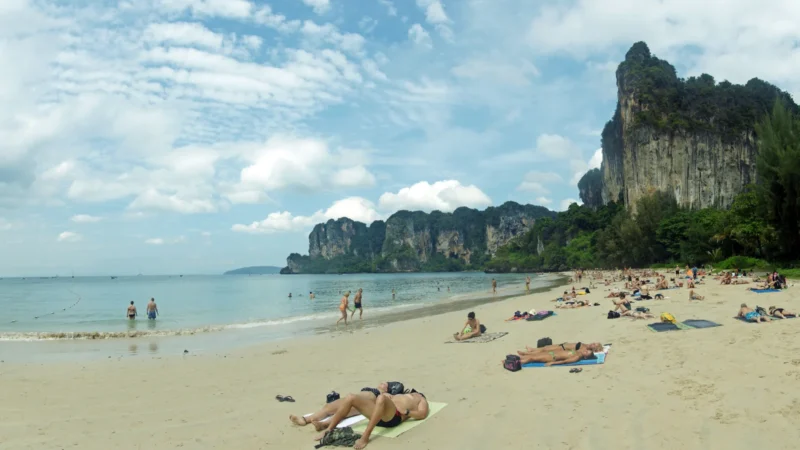
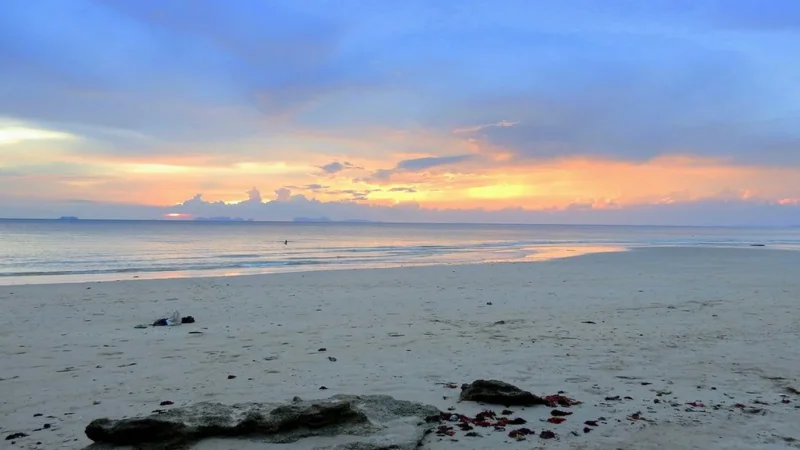
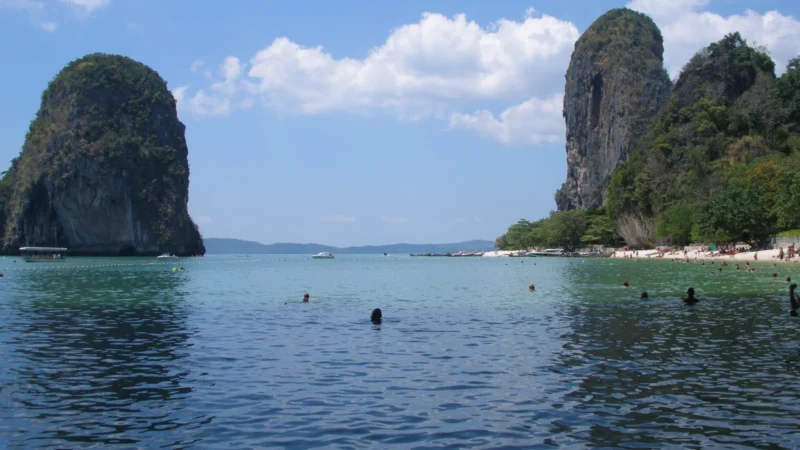
The longtail jetty at Ao Nang at first light is the quietest the beach gets. The boatmen are pulling tarps off the engines and the night fishermen are coming in. Across the bay the limestone cliffs of Phra Nang and the climbing crag at Railay are still in shadow, the karst stacks rising straight out of the water the way they do in every photo Krabi sells itself by. By eight the first tour boats will be loading at the same jetty, by nine the Four Islands flotilla will be 200 longtails strong. By midday the swim coast at Phra Nang Cave holds more boats than swimmers. The trip starts here either way. The only question is whether you start before or after the boats.
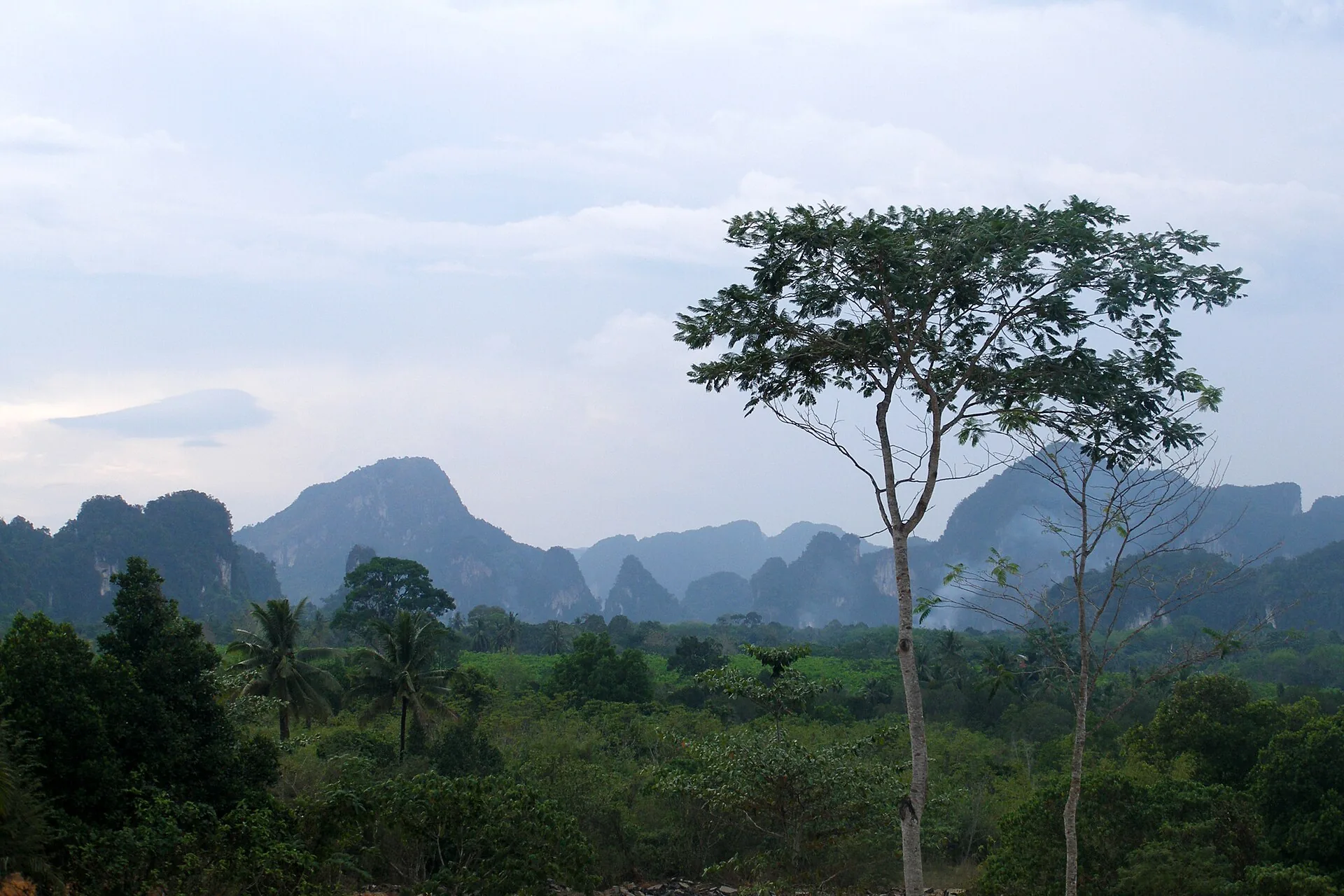
Krabi is built on its geography, and its geography is limestone. The province runs 154km of Andaman coastline. The karst formations that define Railay, Phra Nang, the Hong Islands, Khao Khanab Nam, and the climb at Tiger Cave Temple are all the same vertical limestone the sea has been cutting for several million years. The activity economy follows the rock. Most of the ten things on this list are reached by longtail or speedboat, two are a staircase climb, one is a 1.4km flat boardwalk, and one is the only night market in the province. The geography is the reason climbers from Yosemite and Ceuse fly here, and it is also the reason a midday Four Islands tour delivers less than its photographs promise.
What follows are ten ways to spend your time in Krabi that hold up across a beach week in Ao Nang, a peninsula stay on Railay, or a Bangkok-extension weekend out of Krabi Town. The headline activities (Railay climbing, the Four Islands tour, Tiger Cave Temple, the Hong Islands kayak loop, Emerald Pool) are all on the list because they are the actual best of the province. The harder reads (the Four Islands midday crush, the Tiger Cave macaques, the closed Blue Pool basin) are on the list because we would rather name the gaps than pretend they aren’t there. The order below tracks how a first-time visitor should weight them, not how the tour-desk fliers do.
Railay Beach climbing and the Phra Nang peninsula
 PLACE
PLACE
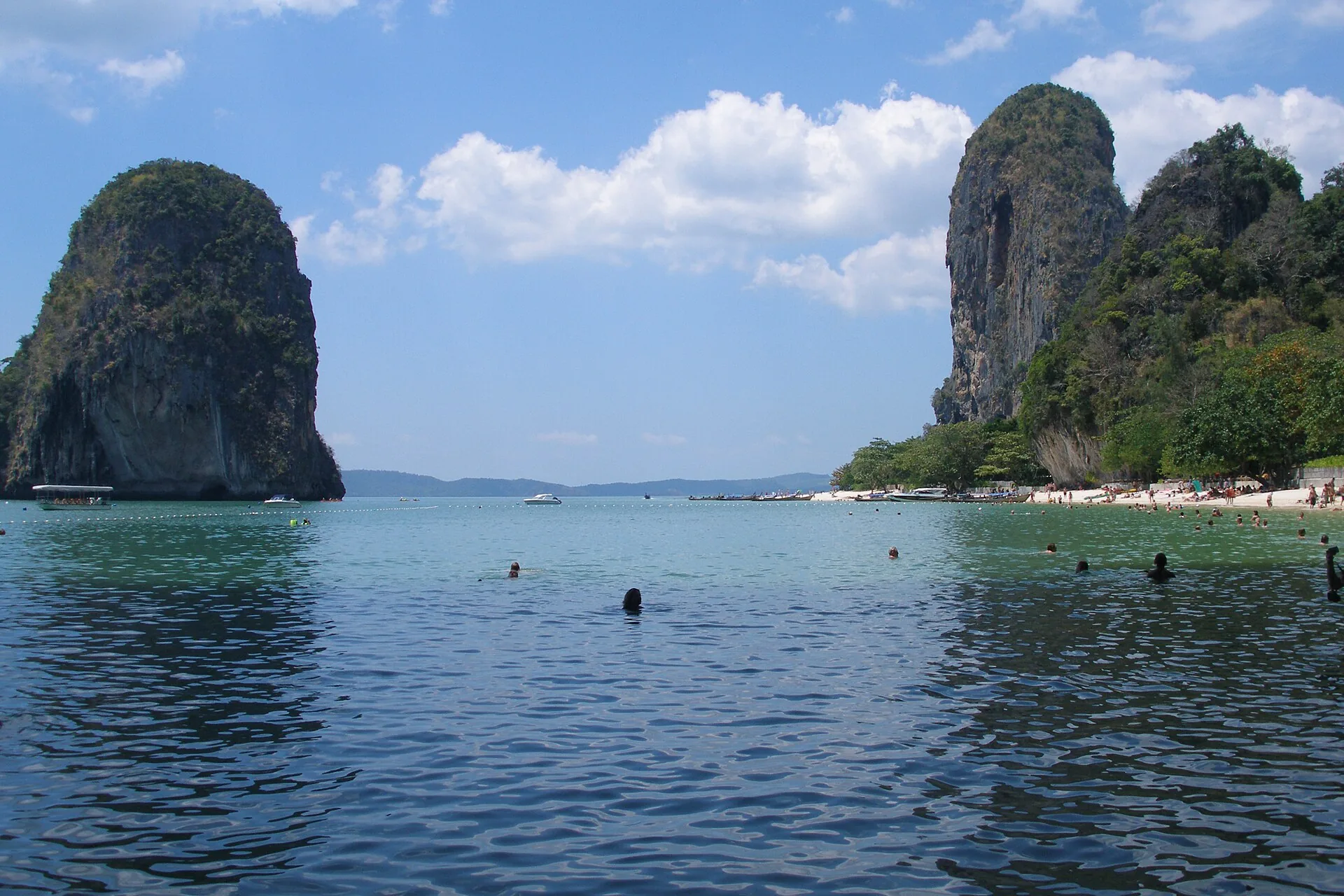
Railay Beach climbing and Phra Nang (หาดไร่เลย์และพระนาง)
A peninsula on the eastern side of the Phra Nang headland, only reachable by longtail boat from Ao Nang or Krabi Town. The four beaches sit a 10-minute walk from each other: Railay East (the longtail dock and the climbing operators), Railay West (the swim coast), Phra Nang Beach (the cave temple and the postcard cliffs), and Ton Sai (the budget climbing camp). Limestone karst walls run 30 to 200 meters above the sand and hold around 700 sport-climbing routes graded 4 to 8c. Half-day guided climbs for beginners cost about $30 with shared shoes and harness; full-day private guides around $80. No road access of any kind; everything is by boat.
Railay is technically not an island. The peninsula is cut off from the Krabi mainland by impassable limestone cliffs on the inland side, which is why everything moves by boat. The longtail from Ao Nang Beach loads when 8 passengers have paid and crosses the bay in 15 minutes. The fare is around $5 each way and the boats run from 7am until roughly 6pm. From Krabi Town pier the crossing takes 45 minutes and costs about $7 each way. The Ao Nang option is the standard choice unless you are staying in Krabi Town itself.
Climbing operators on Railay East run beginner sessions year-round. King Climbers, Real Rocks, and Hot Rock all charge in the same band: about $30 for a half-day guided session with shared shoes, harness, and helmet. A full-day private guide on routes graded to your level runs around $80. The walk-in business is real but high-season afternoons can sell out. Book a morning slot the day before. For non-climbers, the 10-minute walk through the peninsula to Phra Nang Beach gives you the postcard cliffs and the cave shrine without paying for a route. Lonely Planet’s Railay coverage has a useful primer on the longtail loading process and the climbing-shop walk-in etiquette.
The Four Islands tour from Ao Nang, honest tempo read
 FOOD
FOOD
Four Islands tour (Phra Nang, Chicken, Tup, Poda) (ทัวร์สี่เกาะ)
The standard Krabi day trip: a 6-hour longtail or speedboat loop from Ao Nang Beach to four small islands and one mainland cave beach within 12km of the coast. The named stops are Phra Nang Cave Beach (the cave temple and the swim coast on the Railay peninsula), Chicken Island (the limestone stack shaped like a chicken's head with a snorkel coast on the lee side), Tup Island (the sandbar that connects to Mor and Chicken at low tide), and Poda Island (the lunch beach with white sand and shade). Longtail tours cost about $20 per adult, speedboat tours $35-65; both include lunch on Poda and snorkel gear. National park entry fee around $13 is usually charged separately.
The honest tempo read on Four Islands is this. The standard 9am longtail departure from Ao Nang Beach puts your boat in the middle of a 200-boat flotilla heading the same way at the same time. Phra Nang Cave Beach at 10am is crowded enough that the swim coast feels more like a parking lot than a beach. The Tup Island sandbar at midday holds a hundred people walking the same 200-meter strip. Lunch on Poda is a queue. The whole loop returns to Ao Nang at 3pm tired.
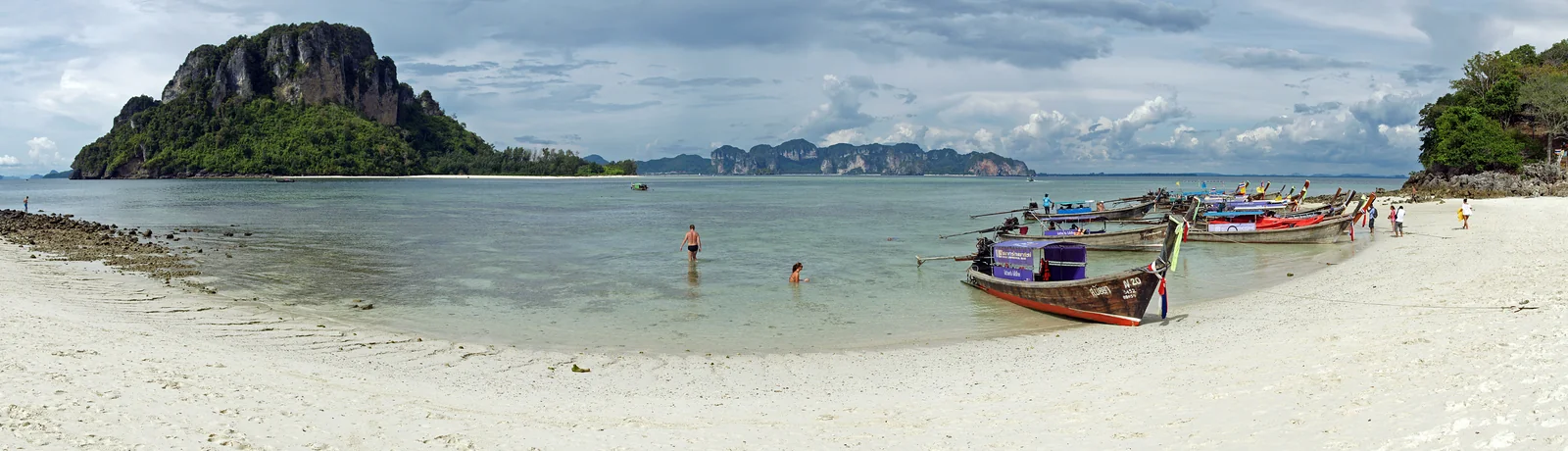
The fix is one of two things. Either book a private longtail (about $65 for the day, splittable between up to 8 people) and start at 7am, reversing the route so Phra Nang is your last stop at 1pm when the flotilla has cleared. The other option is to skip the standard tour entirely and go directly to Railay by public longtail, then walk to Phra Nang on your own time. The Hong Islands loop (next entry) is a quieter alternative for the same day-trip slot and is the better choice if your trip already includes a Railay half-day.
Beat the flotilla. The single move that changes a Krabi day trip is the start time. A private longtail booked for a 7am push, run in reverse, lands you at Phra Nang Cave Beach after 1pm when most of the 200-boat fleet has already turned for home. Confirm the early pickup with the operator the night before, because the cheaper walk-in desks on Ao Nang Beach Road default to the 9am group departure.
Tiger Cave Temple (Wat Tham Suea), 1,237 steps before breakfast
NIGHTLIFE
Tiger Cave Temple (Wat Tham Suea) (วัดถ้ำเสือ)
A working forest temple 9km northeast of Krabi Town, built around a limestone cave the legend says held the tiger that paced inside it. The compound at the base has a meditation hall, a Bodhi-tree grove, and the cave shrine. The headline attraction is the 1,237-step concrete staircase that climbs 600 meters to a summit pavilion holding a footprint of the Buddha and a 360-degree view of the Krabi River valley. The lower section of the staircase passes through a macaque colony, the middle section is the steepest, and the upper rails are partial. No entry fee. Open 24 hours; the staircase is unlit.
The 1,237-step number is not exaggerated and the steps are not even. Some risers are 12cm tall, others are 25cm. The middle 400 steps are steep enough that a hand on the rail is needed, and the rail itself is only on one side for long stretches. A 6am start before the heat builds is the only comfortable version of this climb. By 9am the upper exposed section runs over 35C in the dry season. The descent on tired knees is harder than the climb up. Plan 45 to 75 minutes one way depending on your fitness and on how many photo stops you take.
The macaques along the lower steps will lift loose snacks, small bags, water bottles held in outer pockets, and phones held loosely in one hand. Bag everything inside a closed pack, eat nothing on the staircase, and do not feed the troupe. The summit pavilion is worth the work. The view down the limestone valley toward the Andaman is one of the few from-above perspectives on the Krabi karst landscape that you do not need a boat to earn. Cover shoulders and knees if you plan to enter the cave shrine at the base. Travelfish’s Krabi Town coverage tracks current temple-visit etiquette and seasonal advice if the macaque colony moves stretches of the staircase.
Hong Islands kayak loop and the tide window
 PLACE
PLACE
Hong Islands kayak loop (หมู่เกาะห้อง)
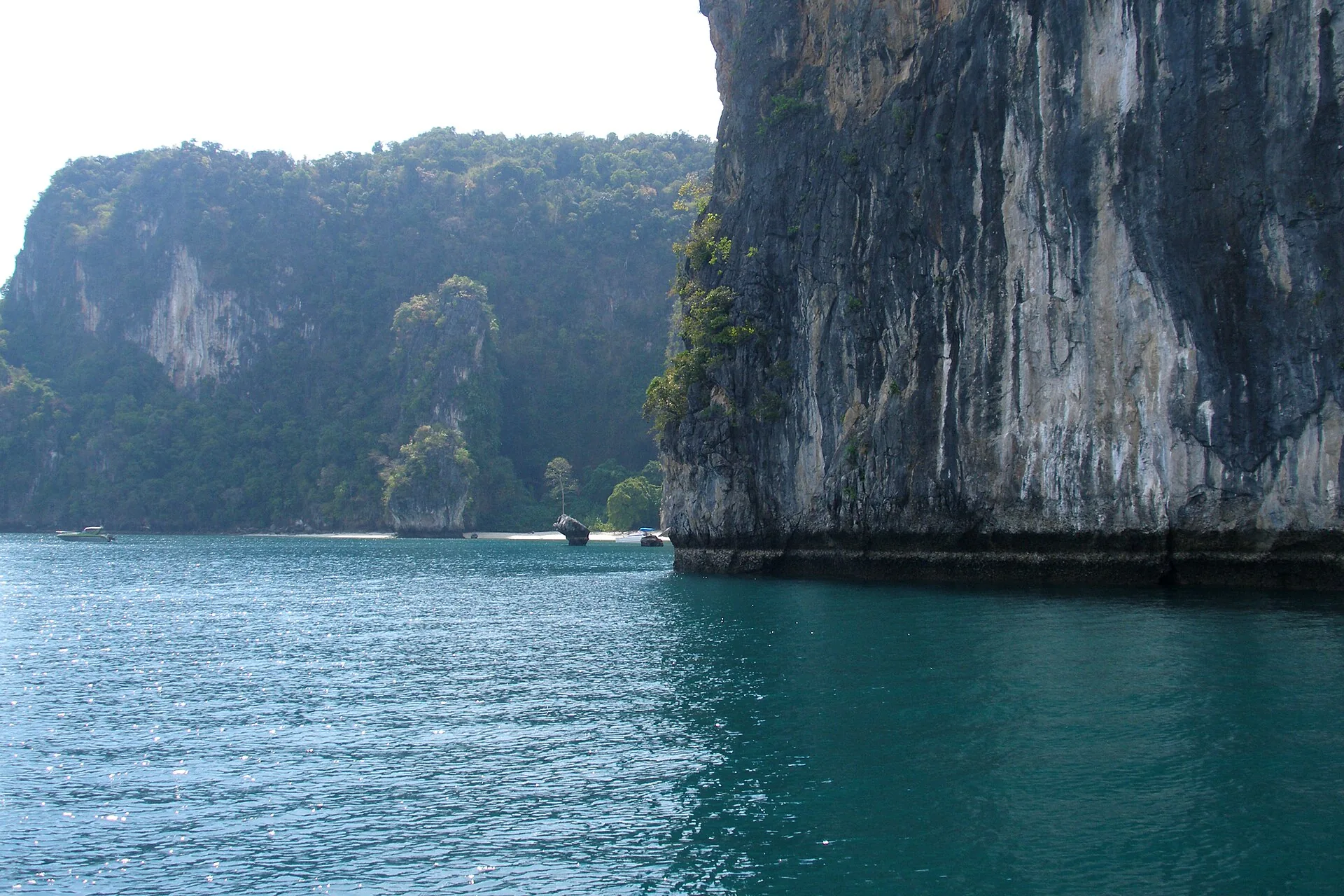
A national park island group 30 minutes by speedboat north of Ao Nang, named for the inner lagoons (hong means room in Thai) that you paddle into through narrow cliff cuts at the right tide. The standard guided tour includes round-trip speedboat transfer from Ao Nang Beach, kayak rental at the inner lagoon, a snorkel stop at Koh Daeng (Red Island), lunch on Hong Beach, and the national park entrance fee. The inner lagoon is tide-dependent: a 90-minute window either side of low tide blocks the entry cut, and the tour operators rotate the lagoon stop based on the day's tide table. Tour cost about $45 per adult; private speedboat charter around $250 for up to 8.
The Hong Islands trip is the smarter alternative to the standard Four Islands loop. The boats are fewer (around 30 a day versus 200 for Four Islands), the swim coast at Hong Beach is broader and less crowded. The inner lagoon paddle is the kind of memory the tour fliers oversell but actually delivers. Check the tide table before booking. The inner lagoon entry cut goes dry for two hours either side of low tide. A Hong booking made for a day when low tide falls at noon often returns the kayak unused.
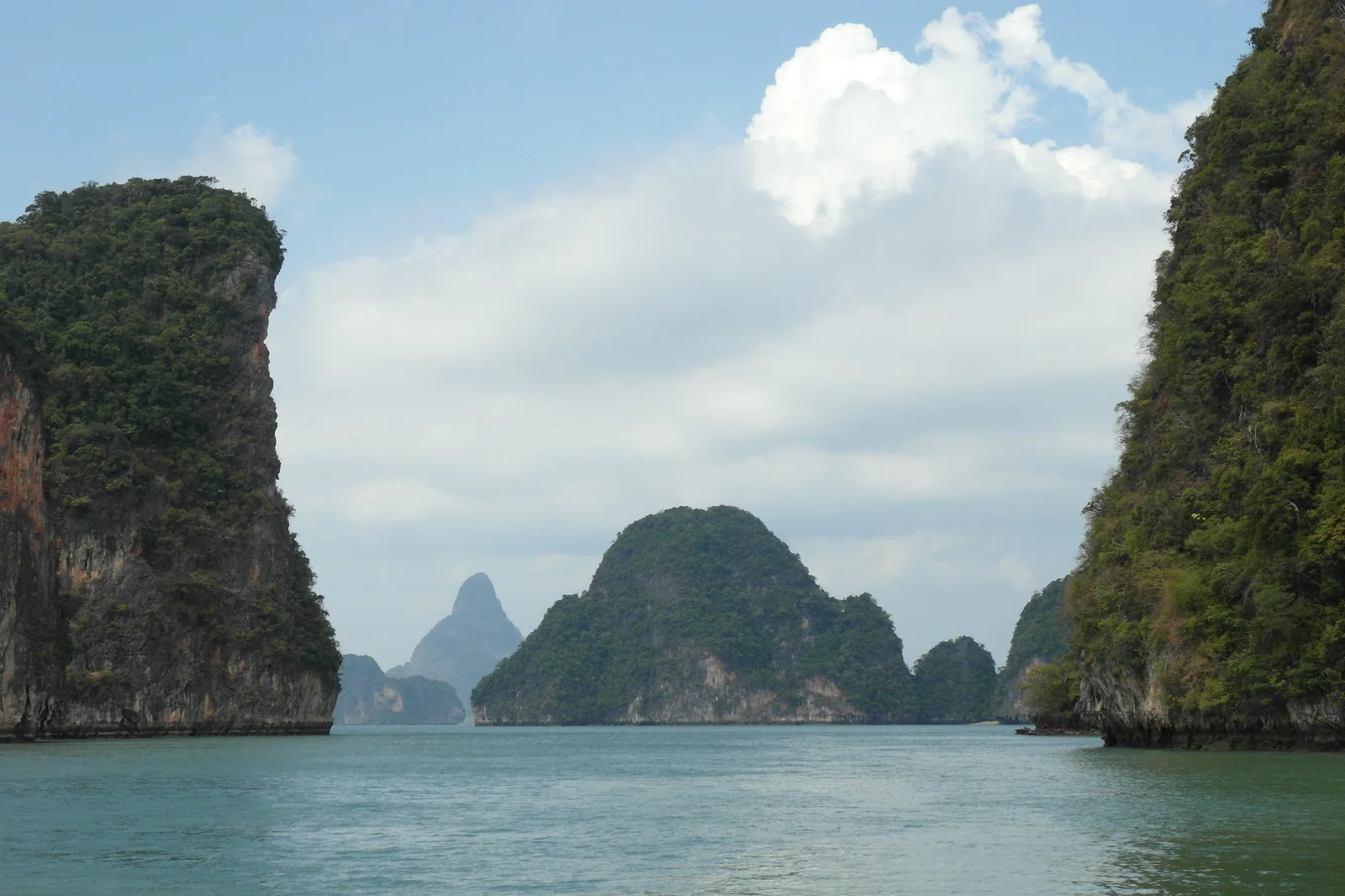
The reputable operators (Sea Kayak Krabi, John Gray’s Sea Canoe, Sea Cave Lagoon) all run the same itinerary at similar prices. The variable is the guide-to-paddler ratio and the lunch quality. A private speedboat charter (about $250 for a full day, splittable between 6-8 people) lets you swap the Hong group for an Ao Nang-to-Koh Phak Bia route that adds the Talu Cave swim-through with no other boats in sight. For the standard tour, the 8:30am pickup from Ao Nang hotels is the right slot. Later departures hit the lunch beach during peak heat.
Emerald Pool and Blue Pool, the boardwalk and the closed basin
PLACE
Emerald Pool and Blue Pool (Sa Morakot) (สระมรกต)
Two natural pools fed by mineral hot springs inside Khao Phra Bang Khram Wildlife Sanctuary, 65km east of Krabi Town in Khlong Thom district. The Emerald Pool is the headline: a clear green basin reached by a 1.4km flat boardwalk and forest path from the park entrance, swimmable in chest-deep water with a sandy bottom. The connected Blue Pool sits another 600m further on, ringed by a viewing platform; swimming is forbidden because the unstable mineral basin can collapse without warning. The hot springs (Namtok Ron) sit 12km away, a series of small cascading basins at 35-40C. Park entry around $5 per foreigner; open 8am to 5pm.
The Emerald Pool boardwalk is the easiest forest walk in Krabi: flat, shaded for most of its 1.4km length, and wide enough to pass other walkers comfortably. The pool itself is roughly 6 meters across and chest-deep in the center, with a sandy bottom and a swimmable temperature year-round. The Blue Pool is the second stop and is the one the postcards crop tight. The deep cobalt color comes from the same mineral chemistry that makes the basin unstable, which is why swimming is barred and the platform is the closest you can get.
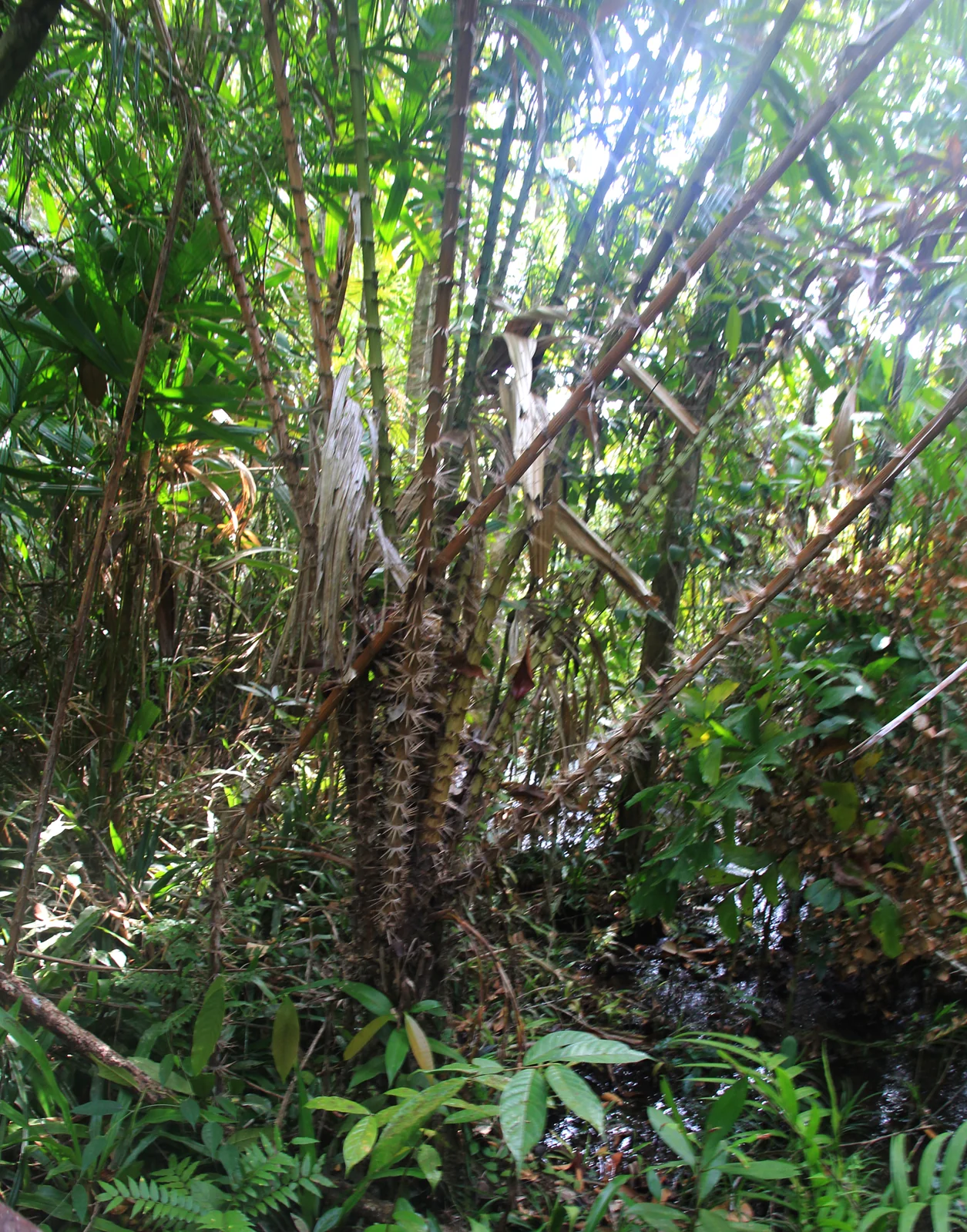
The honest read on timing. A noon arrival hits the warmest water and the deepest crowd. A 9am arrival catches the pool at 28C with maybe 20 people. The combined Emerald Pool plus Blue Pool plus hot springs day costs about $35-50 per person with a Krabi Town pickup, lunch, and the park fee included. Doing it independently by rental car or scooter cuts the cost to around $20 per person split between two travelers, but adds the 90-minute drive each way. The hot springs are the optional add-on. They are pleasant rather than essential and 12km off the main park route.
Ao Thalane mangrove kayak, the still-water alternative
 PLACE
PLACE
Ao Thalane mangrove kayak (อ่าวท่าเลน)
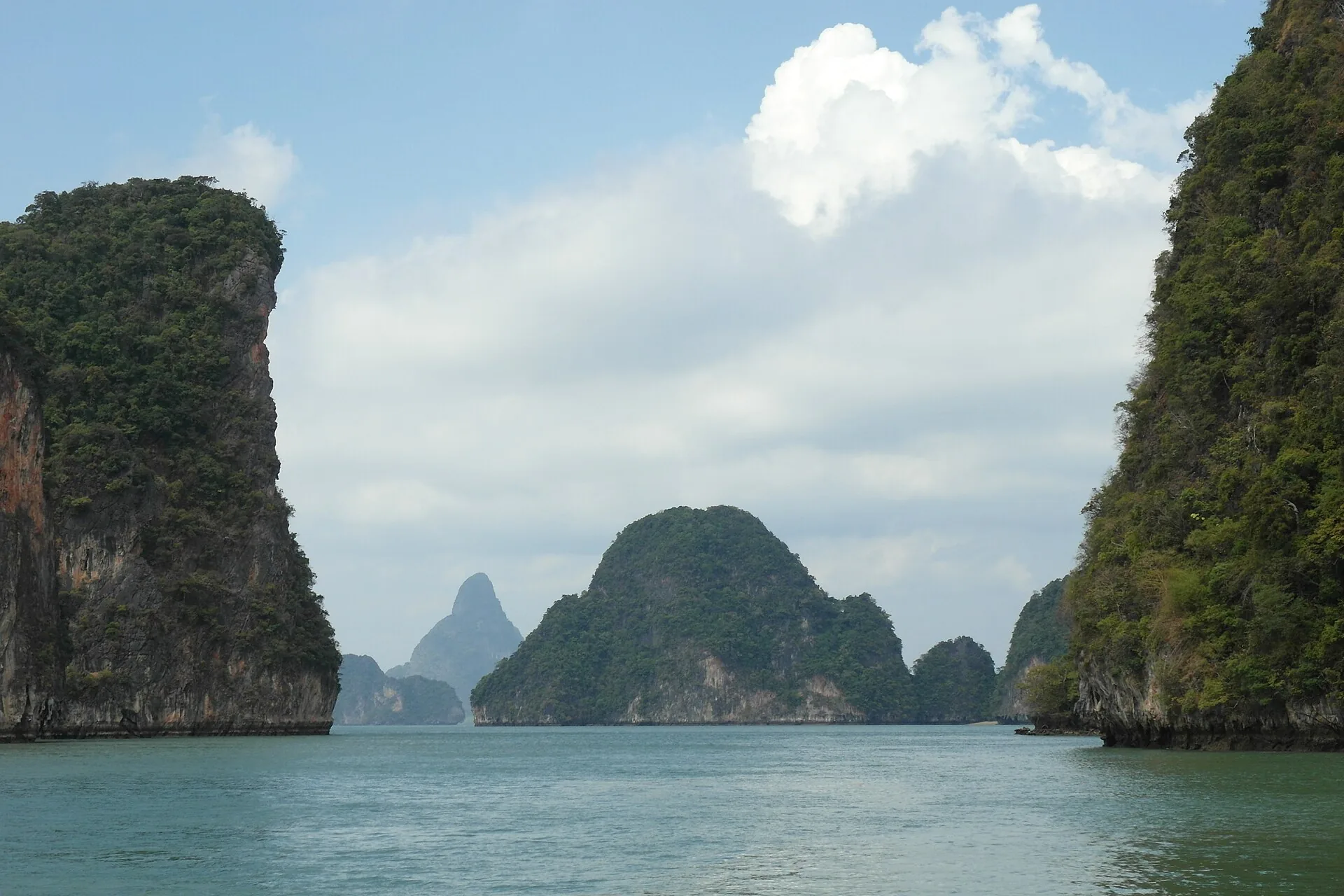
A protected mangrove bay 25km northeast of Ao Nang where the limestone karst meets a network of tidal channels and small caves. The standard 2.5-hour guided kayak with a local paddler runs about $30 per adult, includes a single open-top kayak per paddler or a tandem for couples, and follows a tide-driven loop through three named lagoons (the Lower Lagoon, the Hidden Lagoon, and the Bat Cave). The route is tide-dependent: a mid-rising tide window between two hours before high tide and one hour after gives the full access to the inner lagoons. Pick-up and drop-off included from Ao Nang and Krabi Town hotels. No swim required; the kayak is the entire activity.
Ao Thalane is the calm-water alternative for travelers who do not want a day on a tour-boat motor. The water is sheltered by mangrove and limestone on all sides, the channels are wide enough for a tandem kayak to turn comfortably. The inner lagoons are quiet enough that the kingfishers along the bank read as the loudest sound. Families with kids six and up handle the route without difficulty in a tandem. The local guides paddle the same waters daily and read the cave entrances for tide better than any printed schedule.
The tide window is the single planning factor. Book the morning slot if the day’s high tide falls between 9am and noon. Book the afternoon slot if it falls between 1pm and 4pm. A low-tide booking grounds the kayak in mangrove mud halfway through the route and skips the inner Hidden Lagoon entirely, which is the entire reason to choose Ao Thalane over the Hong Islands trip. The reputable operators (Bann Thai Sea Kayak, Krabi Eco Kayak) build the tide into their booking calendar. The cheaper walk-in operators on Ao Nang Beach Road do not always.
Krabi Town Weekend Walking Street Night Market
FOOD
Krabi Town Walking Street Night Market (ถนนคนเดินกระบี่)
A weekend pedestrian market in central Krabi Town that runs Friday, Saturday, and Sunday from 5pm to 10pm on Maharaj Soi 8 between Maharaj Road and the river. The 300-meter street holds around 100 food stalls and a smaller cluster of clothing and craft vendors at the river end; the food half is the draw. Standard plates run about $0.60 to $1.50 and the menu skews southern Thai (massaman curry, southern fried chicken, roti, fresh-squeezed sugarcane juice, mango-with-sticky-rice in season). A small open stage at the center hosts a live cover-band slot from 7pm. Cash only; the nearest ATM is two blocks east on Issara Road.
The Walking Street market is Krabi’s best low-budget dinner and the single easiest place to eat southern Thai food on this trip. The southern fried chicken (gai tod hat yai) and the massaman curry served from the dedicated stalls are the consistent picks. The roti vendor at the river end of the street runs the longest queue, but the wait is under 10 minutes. The crafts section reads as a straightforward tourist market. The food section is where the local families show up.
The logistics are the only catch for travelers staying in Ao Nang. The songthaew from Ao Nang to Krabi Town runs every 15 minutes during daylight, costs about $1.50 each way, and stops running around 7pm. A return trip after dinner requires a private taxi at around $20 or a Grab booking. A round-trip dinner runs more in transport than in food unless three or four travelers split. For travelers staying in Krabi Town itself, the market is a 10-minute walk from the river-front hotels and is the simplest dinner pick of the week.
Krabi Town vs Ao Nang for dinner. The market makes the strongest case for spending at least one or two nights in Krabi Town rather than basing the whole trip in Ao Nang. The songthaew stops running around 7pm, so an evening at the Walking Street from an Ao Nang base means a taxi or Grab home at around $20. From a river-front room in Krabi Town it is a short walk back, and the food stalls fill with local families rather than the tour crowd.
Khao Khanab Nam, the two limestone peaks in the river
NIGHTLIFE
Khao Khanab Nam (เขาขนาบน้ำ)
The twin limestone peaks that rise straight out of the Krabi River 3km west of central Krabi Town, used as the visual signature of the province on every postcard and tourism board logo. The peaks are 100 meters tall and 90 meters apart; the only access is a 15-minute longtail boat ride from Chao Fah Pier in central Krabi Town. The base of the larger peak holds a cave system with a marked staircase and a Buddha shrine; the inner chamber sits 30 meters above the river and has unlit passages past the entrance. A small viewpoint trail to the saddle between the peaks closes during monsoon season when river levels rise. Boat fare about $10 round-trip per longtail (up to 8 passengers).
Khao Khanab Nam is the right half-day pick for travelers staying in Krabi Town or for anyone who arrives at the Krabi bus station with a few hours before a transfer. The longtail captains at Chao Fah Pier negotiate trip-by-trip. A one-boat round-trip with 30 minutes at the cave runs about $10, an extended trip that also takes in the mangrove channels on the way back runs $20-25. The cave staircase is steep and uneven. The inner chamber requires a phone torch past the marked steps.
The viewpoint trail on the saddle between the two peaks is the photo angle the postcards use. It closes during September and October when the river runs high enough to flood the lower path. Ask the boat captain before you commit to the climb. The cave system itself is open year-round and is the safer pick during monsoon season. The river-mouth restaurants on the Krabi Town side (Wang Sai Seafood, Riverfront Restaurant) make the natural lunch stop on the return.
Koh Lanta day trip, the three-hour version
 FOOD
FOOD
Koh Lanta day trip from Krabi (ทริปวันเดียวเกาะลันตา)
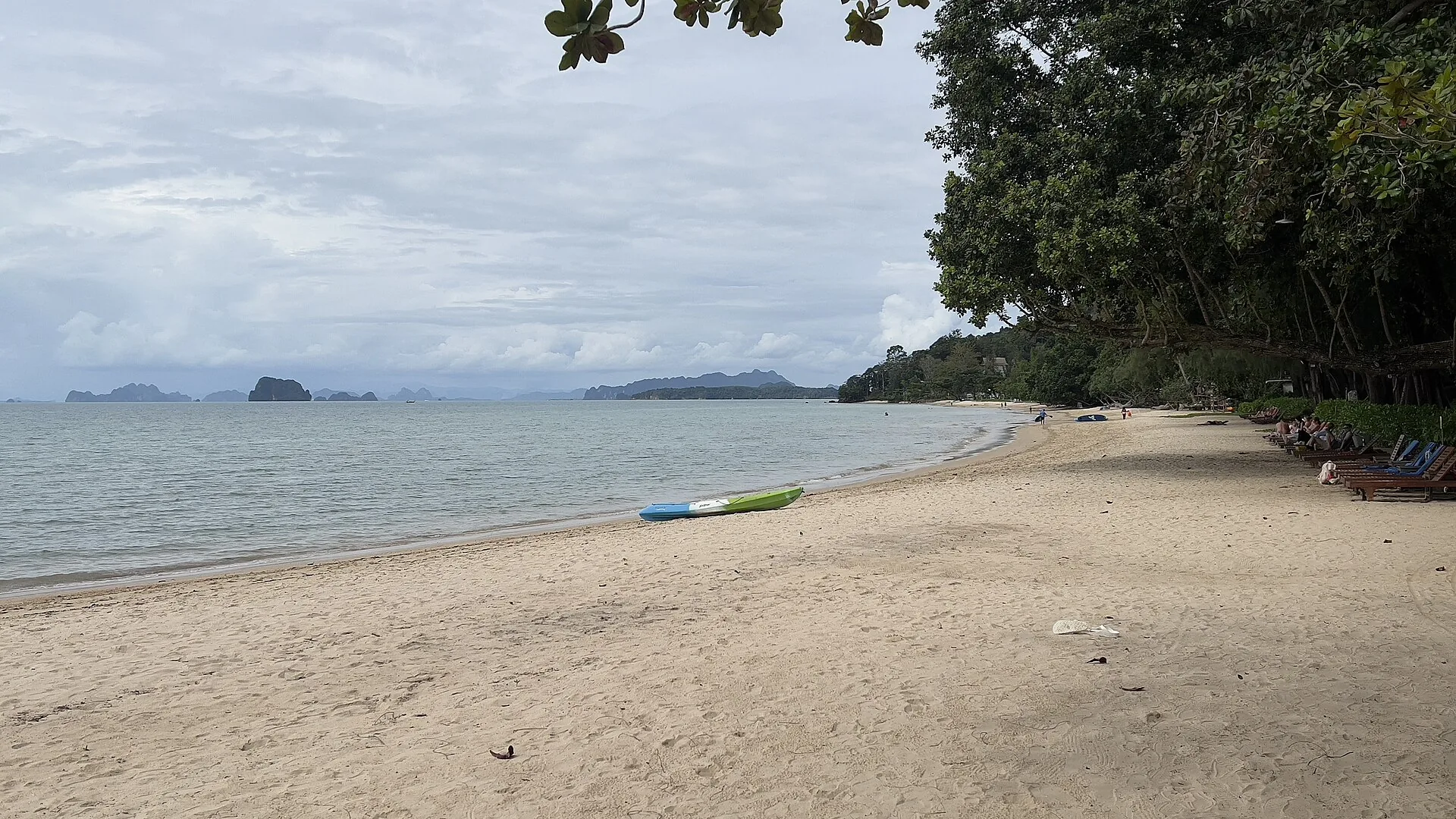
A day-trip island visit to Koh Lanta Yai, 70km south of Krabi Town and reached by minibus and car ferry from Klong Jilad Pier. The high-season ferry departs around 11am and returns around 3pm, which gives three hours on the island; same-day visitors typically stay around Saladan in the north or take a $10 songthaew to Long Beach (Phra Ae) for a swim. Low-season service runs less frequently and may be replaced by a passenger ferry only. A full-day Lanta tour from a Krabi-based operator costs about $25-50 per adult including the round-trip transfer and lunch; the cheaper version skips lunch.
The honest read on a Lanta day trip from Krabi. Three hours on the island is enough to see Saladan town, swim at one beach, and eat lunch. It is not enough to see Old Town Lanta, the south-end Mu Ko Lanta National Park, or the Khao Mai Kaew cave hike. All of those take a full day each. If the trip is the first taste of Lanta and the question is whether to come back for a longer stay, the day trip answers it. If the trip is the only Lanta exposure on the itinerary, a one or two-night stay in Saladan or at Long Beach is the better booking. Our ferry guide for the Koh Lanta crossing covers timings and the minibus-plus-boat combo.
The ferry schedule is the gating factor. High season (November to April) runs two ferries each way per day with reliable timing. Monsoon season (May to October) drops to one daily ferry and substitutes passenger-only boats when the car ferry is grounded. The Tigerline Travel and Phi Phi Cruiser passenger ferries cost about $13 each way and take 90 minutes. The car ferry is slower but holds the scooter rental for visitors who want to ride around the island on the day.
Phi Phi Islands speedboat day tour from Ao Nang
FOOD
Phi Phi Islands day tour from Ao Nang (ทัวร์เกาะพีพี)
The standard Phi Phi day trip from Ao Nang Beach: a speedboat departs around 8:30am, runs 90 minutes across the Andaman to Phi Phi Don and Phi Phi Leh, stops at Maya Bay (the Leonardo DiCaprio beach), Pileh Lagoon, Viking Cave, Loh Samah Bay, and Bamboo Island, includes lunch on Phi Phi Don, and returns by 4:30pm. The Maya Bay national park fee (around $13) is usually charged separately. Tour cost about $45-60 per adult; smaller premium boats with fewer passengers charge $90-120. The Maya Bay national park caps swim time at 60 minutes and rotates beach access by hour; many operators include only the Maya Bay viewing rather than the swim stop.
The Phi Phi day tour is the right pick for travelers who want to see Maya Bay and have no time for an overnight stay on Phi Phi Don. The catch is that 60-plus boats arrive in the same 90-minute window around 11am, and the Maya Bay swim cap means the actual time in the water is short. The quieter swim happens on the Loh Samah or Pileh Lagoon stop, which the operator may or may not include depending on the boat’s permitted route that day. Ask the operator before booking which stops are confirmed and which are weather-dependent.
For travelers with two days to spare, a one-night stay on Phi Phi Don (in Tonsai Village, not in the resorts at Long Beach) gives you the dawn and dusk hours at Maya Bay. The quieter swim coast comes without the 60-boat parking lot. The Phuket-based tours hit Phi Phi at the same midday window as the Ao Nang ones. The only meaningful difference is the departure pier. For trips that already include a Phuket leg, see our InterContinental Phuket review for a Kamala-base option that handles Phi Phi day trips from the western coast.
How to fit the ten into three or four days in Krabi
A workable three-day plan from an Ao Nang base. Day one is a half-day Railay visit by public longtail (climb if you booked it, walk if you didn’t) followed by an afternoon swim on Phra Nang Beach and a late dinner back in Ao Nang. Day two is the Hong Islands kayak loop or the private Four Islands reverse-route, whichever fits the tide. Day three starts pre-dawn at Tiger Cave Temple for the staircase before the heat, recovers with a beach afternoon, and closes with the Krabi Town Walking Street market for dinner if it’s a Friday or Saturday.
Stretch to four days and you swap one of the boat days for the Emerald Pool plus hot springs combined day tour, or add Ao Thalane as a relaxed second-morning kayak before the Tiger Cave climb on day three. Koh Lanta and Phi Phi both deserve their own day, which means a five-day Krabi trip is the honest minimum to see everything on this list without skipping a real swim or rushing the staircase climb.
Book at least a week ahead for three things. Tiger Cave Temple does not take bookings, but a hired Grab from your hotel for a 5:30am pickup needs to be booked the night before because the app shows few cars at that hour. The Hong Islands kayak operators sell out the morning slot 5-7 days ahead in high season. Maya Bay-included Phi Phi tours sell out the limited national-park slots 7-10 days ahead between December and February. The Walking Street market needs no booking. It runs every Friday, Saturday, and Sunday year-round.
Where to stay in Krabi across the three zones
Ao Nang puts you at the central tour-boat hub, walking distance to the longtail jetty for Railay and to the Four Islands and Hong Islands operators. Tubkaek and Klong Muang sit on the quieter northern coast, a 25-minute drive from the Ao Nang nightlife but on a longer cleaner beach with sunset views. Railay puts you on the peninsula itself, no road access in either direction, which is the point. The three SHA-certified hotels we recommend below sit across all three of those zones.


For the full SHA-certified roster across Ao Nang, Tubkaek, Klong Muang, Railay, and Krabi Town, see our Krabi hotel guide. The Banyan Tree Krabi review covers the Tubkaek pool-villa option in detail. For the beach-by-beach swim coast read, our best beaches in Krabi guide shows which beaches reward which kind of day. For day-by-day pacing, see our guide to 3 days in Krabi.
Frequently asked questions
What is the best time of year to visit Krabi?
How many days do I need in Krabi to see the main things?
Is Railay Beach an island?
Is the Four Islands tour from Krabi worth it?
How do you get from Krabi to Phi Phi for a day trip?
What should I wear to climb Tiger Cave Temple?
For Thailand activities by type, adventure, cultural, nature, food, wellness, and nightlife, see our complete Thailand activities guide.