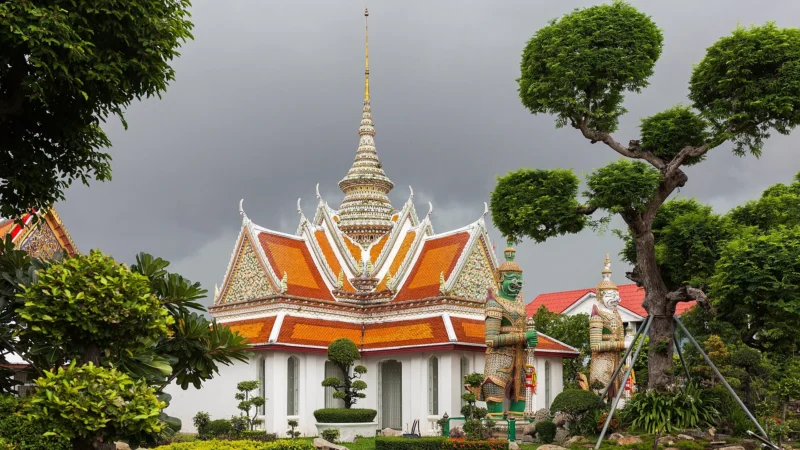
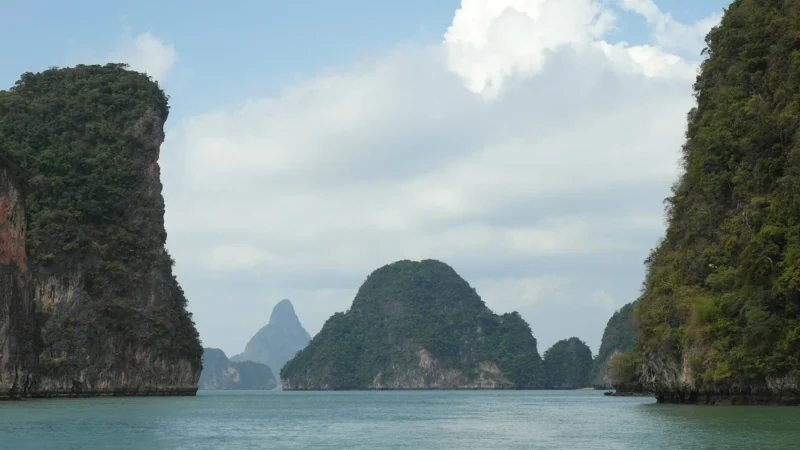
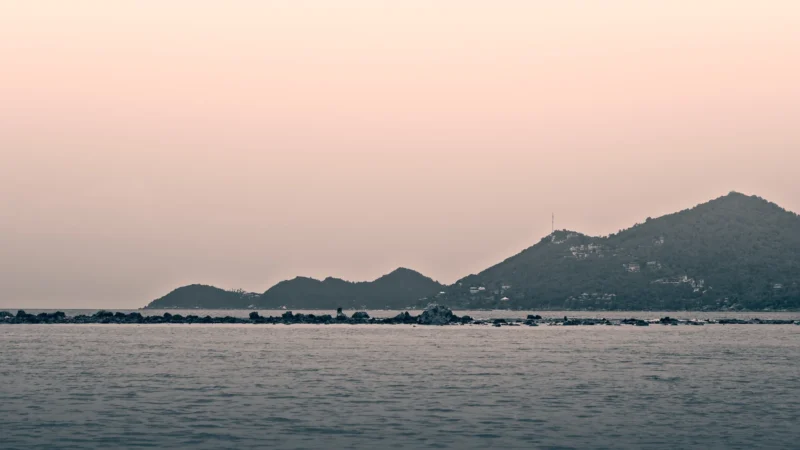
The mistake most first time visitors make in Thailand is trying to do all of it. The country quietly splits into a few very different trips, and a week is enough for one of them done well, not three rushed at once. The climber’s Thailand of limestone and longtails is not the same trip as the slow Chiang Mai of cooking smoke and temple bells, and neither is the Bangkok of rooftops and ringside muay thai. Pick the version that matches what you actually came for, and the planning gets easier from there.
This pillar covers what to do in Thailand grouped by activity type, which means adventure, cultural, nature, food, wellness, and nightlife, and then by destination city. If you are a first time visitor with a week, the city and activity matrix near the end is the fastest way to shape a plan. If you came for one thing, climbing or diving or a wellness reset, skip straight to that section. Each section links to the dedicated city guide for deeper detail on local operators and recent prices.
 Photographer: Nawit science. Source: Wikimedia Commons. License: CC BY-SA 4.0.
Things to do by city across Thailand
Six cities anchor most Thailand activity itineraries. Each has a dedicated guide on this site with operator names, current prices, and the practical notes about what tends to go wrong. Start with the city you are visiting, then come back to this pillar for cross-city planning.
City activity guides on this site
The adventure activities that define Thailand
Adventure sits at the top of the stack for a lot of international travelers. Four experiences carry a national reputation, and most adventure trips are built around one or two of them.
Rock climbing at Railay (Krabi)
Railay is the most established sport climbing destination in Southeast Asia. The peninsula holds about 700 routes graded 4 to 8c on limestone karst walls that rise 30 to 200 meters above the sand. Several established climbing schools operate on the beach and rent gear by the day.
- Guided beginner climb, half a day: $30 to $50 with shared gear.
- Private guide for a full day: $60 to $90.
Railay is reachable only by longtail boat from Ao Nang Beach, about 15 minutes and $5 (THB 170) each way. Full Railay logistics and route choice sit in the Krabi activities guide.
Book the first Railay boat of the morning if you want the cooler rock. By late morning the south-facing walls bake, and climbers who started early are usually the ones still moving on the harder routes.
Diving and snorkeling (Koh Tao, Similan, Phi Phi)
Koh Tao is one of the cheapest places in the world to earn an Open Water diving certification. The Similan Islands hold the strongest Thailand dive sites overall, but they require a two or three day liveaboard. For a day trip with a mask and fins, Phi Phi Leh from Phuket is the headline. Maya Bay reopened in 2022 with capacity limits and a one hour visit cap, so tours now arrive before 09:00 to secure the window.
- Koh Tao PADI Open Water course: $300 to $400 over four days, often with an accommodation discount built in.
- Similan liveaboard, two to three days: $400 to $900 per person.
- Phi Phi Leh day trip from Phuket: $40 to $90 in a group, or $200 and up on a private speedboat.
Ethical elephant sanctuaries (Chiang Mai)
Elephant Nature Park, the flagship founded by Lek Chailert, and Boon Lott’s Elephant Sanctuary are the two best documented operators in northern Thailand that offer no rides and no performances. A visit for the full day costs $80 to $150 including transport and lunch. Welfare groups recommend choosing operators that do not advertise elephant rides or elephant painting shows, and checking them against World Animal Protection’s annual guidance before you book.
Hiking and waterfalls (Khao Sok, Khao Yai, Doi Inthanon)
Khao Sok National Park is Thailand’s rainforest centerpiece. The two day, one night package with a floating raft house on Cheow Lan Lake runs $80 to $200 per person, including transport from Khao Lak or Phuket. Khao Yai is the closest major national park to Bangkok, about 2.5 hours away, close enough for a day trip. Doi Inthanon, the highest peak, sits 90 minutes from Chiang Mai.
The cultural stack of temples, classes, and massage
Cultural activities define the slower Thailand itinerary, the one built around mornings rather than adrenaline. Three categories carry most of it.
Temple tours per city
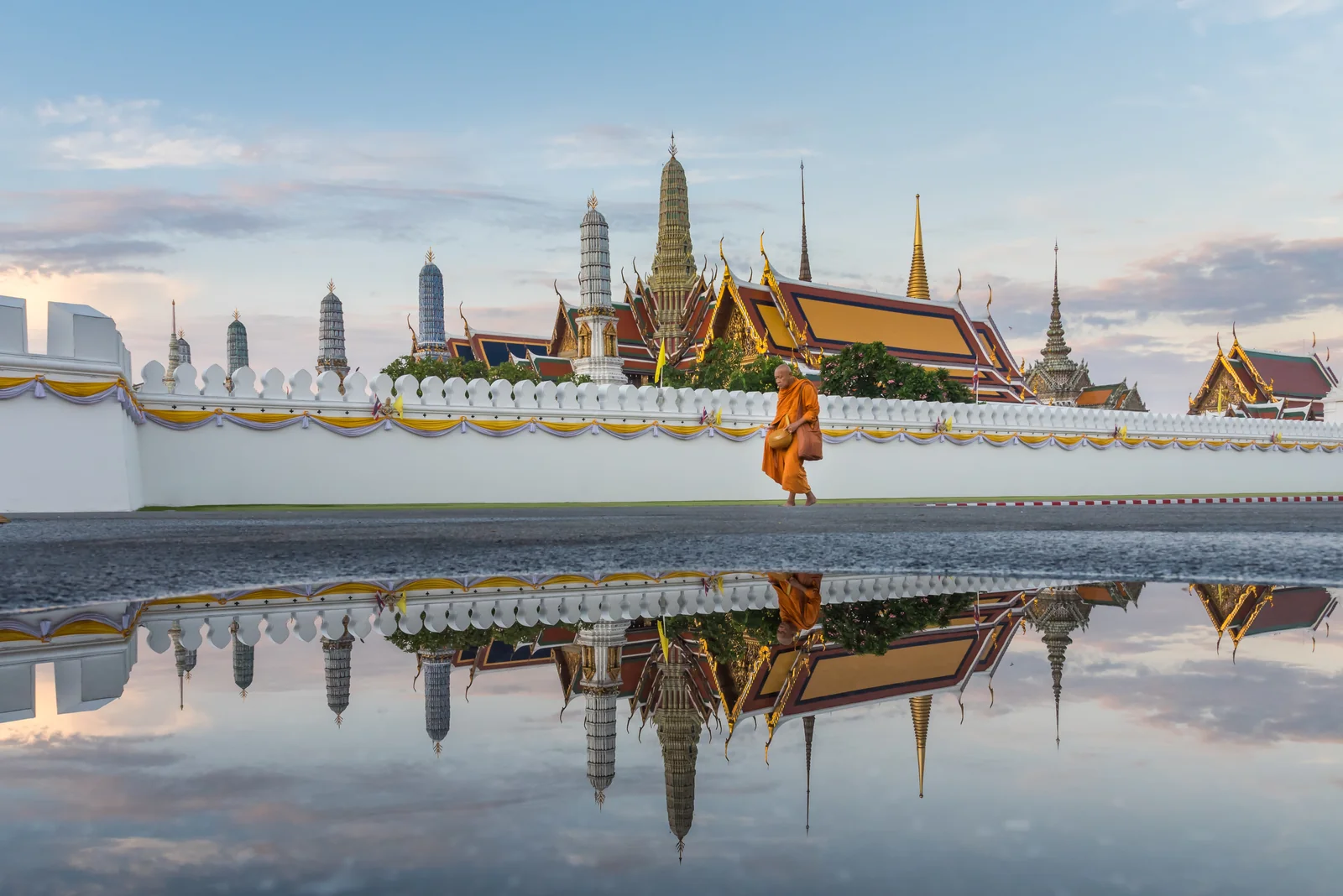
Bangkok holds the heavy concentration. Wat Pho is the reclining Buddha and the original Thai massage school, Wat Arun is the sunset photo icon, and the Grand Palace runs $6 (THB 200) entry with a strict dress code. Chiang Mai’s Wat Phra Singh, Wat Chedi Luang, and Doi Suthep, the mountain temple 15 km out, cover the northern Lanna style. Phuket’s Big Buddha, a marble statue 45 meters tall, anchors the Andaman south.
Temple etiquette is simple. Shoulders and knees covered, shoes off, and never point your feet at a Buddha image. Entry is typically free at smaller wats and $5 to $15 at the major palace temples.
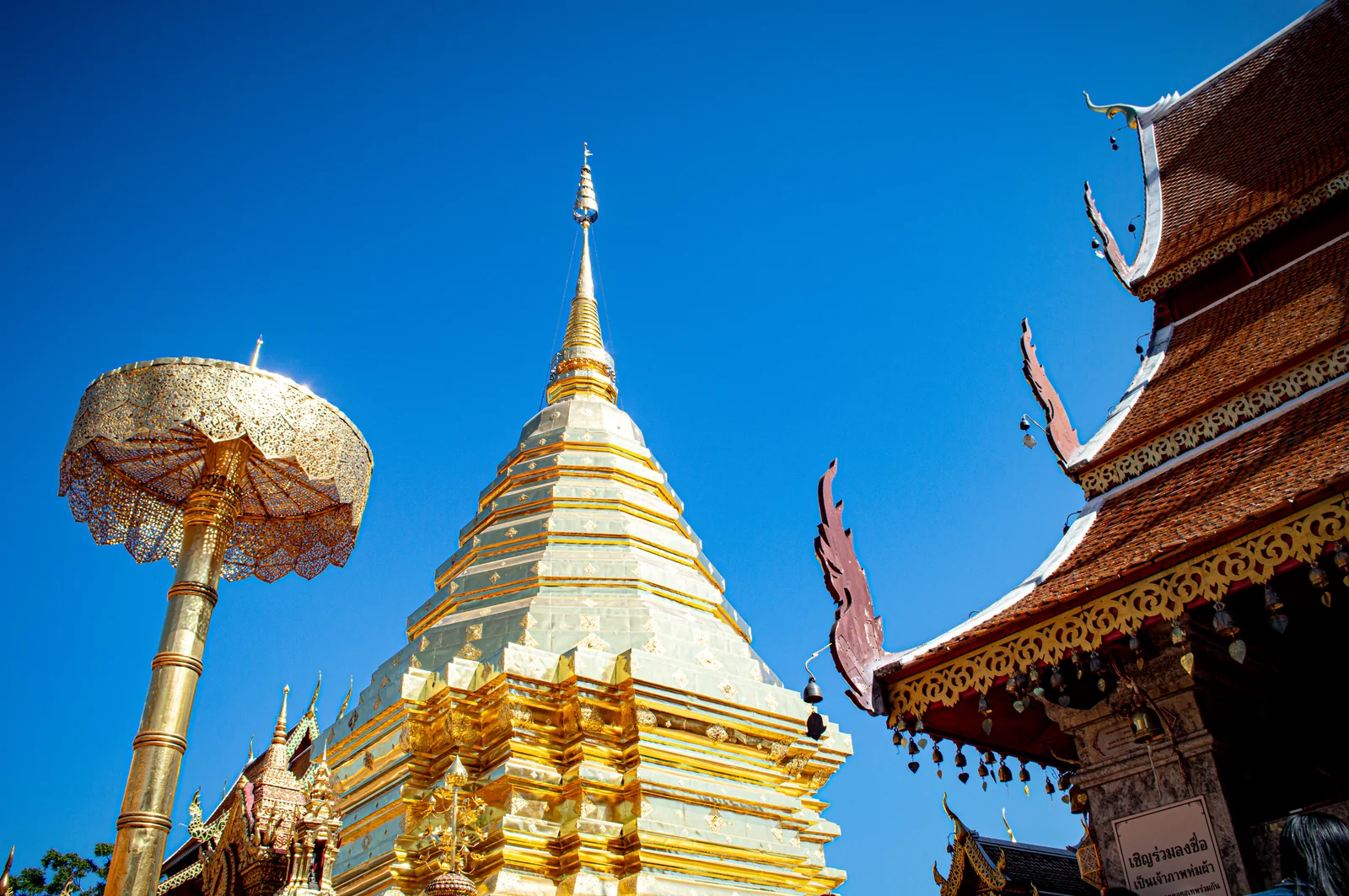 Photographer: Philip Nalangan. Source: Wikimedia Commons. License: CC BY 4.0.
Cooking classes (Chiang Mai, Bangkok, Phuket)
Chiang Mai is Thailand’s cooking class capital. A half day covers four dishes, and a full day adds a morning market visit. The established schools here include Thai Farm Cooking School, Smile Organic Farm, and Asia Scenic. Bangkok and Phuket have less consistent quality but solid options, among them Silom Thai Cooking School and Phuket Easy Cooking.
- Half day class: $25 to $50, four dishes.
- Full day with market visit: $40 to $80.
Traditional Thai massage
The Wat Pho massage school in Bangkok is the original source. An intro course costs $50 for 30 minutes. Full certification runs $200 and up over five days.
For travelers who just want a massage rather than to study one, the street rate is low. Wat Pho’s onsite massage clinic costs a little more but holds to the school’s standards.
- Foot massage: $6 to $12 per hour.
- Full body massage: $9 to $18 per hour.
The nature route through marine parks and jungles
Thailand’s nature stack splits between marine parks and inland jungle. The marine side covers Ang Thong, Similan, and Phi Phi. The inland side covers Khao Sok, Khao Yai, Doi Inthanon, and Erawan.
- Ang Thong Marine Park from Koh Samui: an archipelago of 42 islands, kayak and snorkel day tour $55 to $100, lunch included. November to April only.
- Similan Islands from Khao Lak: the strongest Thai diving, mid-October to mid-May only, since the park closes for monsoon. Day trip $90 to $150. Liveaboard $400 to $900.
- Khao Sok National Park (Surat Thani): rainforest and Cheow Lan Lake. Two day, one night package $80 to $200 per person. Best in the dry months from December to April but accessible year round.
- Khao Yai National Park (3 hours from Bangkok): day tours $40 to $80 from Bangkok. Wildlife viewing for gibbons, hornbills, and elephants, plus waterfalls and vineyards on the park edge.
- Doi Inthanon (1.5 hours from Chiang Mai): the highest point in Thailand at 2,565m. Day tour $25 to $50 from Chiang Mai including the King and Queen pagodas, Wachirathan waterfall, and a Karen village stop.
- Erawan Falls (Kanchanaburi): a waterfall hike of seven tiers, 2.5 hours from Bangkok. Day tour $40 to $80 including the River Kwai bridge.
The food route across markets and classes
Thai food is the single most consistent reason travelers come back. As an activity it breaks into three tiers.
Street food tours run two to four hours through Bangkok Chinatown (Yaowarat), Sukhumvit Soi 38, or Chiang Mai’s Sunday Walking Street. The walking pace covers six to ten stalls with a story behind each dish.
- Group tour: $30 to $70 per person.
- Private guide: $80 to $150.
Market visits without a guided tour cost nothing. Bangkok’s Or Tor Kor for premium produce, Damnoen Saduak floating market for the touristic but iconic version, and Chatuchak weekend market with its 15,000 plus stalls. Chiang Mai’s Warorot day market and Sunday Walking Street. Phuket Old Town’s Sunday street market.
Restaurant roundups for each city sit here. See Bangkok restaurants, Bangkok rooftop bars, and the curated lists in each city activity guide.
Damnoen Saduak photographs better than it feels in person. Tour buses arrive from about 09:00 and the canals get loud and crowded. Regulars who want the same scene without the crush go to Tha Kha or Amphawa instead, both quieter and closer to how a working market actually runs.
The nightlife layer across three cities
Nightlife clusters in three cities. Bangkok is the most diverse, Phuket centers on Patong, and Pattaya runs on Walking Street. Koh Phangan owns the Full Moon Party, held monthly on a Saturday.
Bangkok rooftop bars carry the upscale night out. Lebua Sky Bar, the Hangover 2 location, along with Vertigo, Octave, and Above Eleven cluster across Silom and Sukhumvit. Entry is usually free with a minimum drink purchase, while the ticketed nights run higher. Full coverage sits in the Bangkok rooftop bars guide.
- Free entry with minimum drink: around $15 to $30 spend.
- Ticketed events: $30 to $80.
The rooftop scene rewards an early arrival before the sunset crowd fills the rail.
Muay thai at Lumpinee Stadium and Rajadamnern Stadium in Bangkok is the authentic local night. Rajadamnern fights on Wednesday and Friday nights. Lumpinee runs Tuesday and Friday. Full coverage sits in the Bangkok muay thai guide.
- Ringside, the proper experience: $40 to $60.
- Second tier: $20 to $30.
The wellness stack for yoga and traditional medicine
Wellness tourism in Thailand concentrates in three places, each with a different character.
Koh Phangan’s Sri Thanu and Haad Salad neighborhoods hold the yoga retreat cluster. Operators here include Agama Yoga, Yoga Retreat Koh Phangan, and Orion Healing Center.
- Single drop in class: $10 to $20.
- Retreat for a week: $300 to $1,500 depending on the accommodation tier.
Chiang Mai is Thailand’s traditional medicine capital. Thai massage courses at the Old Medicine Hospital run five days for $200 to $300. Herbal compress, cupping, and other traditional therapies are available at studios across the Old City.
Many travelers pair a week in Chiang Mai with a daily Thai massage of two hours at $12 to $18 each. Over seven days that keeps the total massage spend modest.
Phuket and Koh Samui hold the luxury spa retreat tier. Six Senses Yao Noi in Phang Nga Bay, Kamalaya on Koh Samui, and Banyan Tree Phuket run five to seven day wellness packages from $2,000 to $8,000 per person, all inclusive.
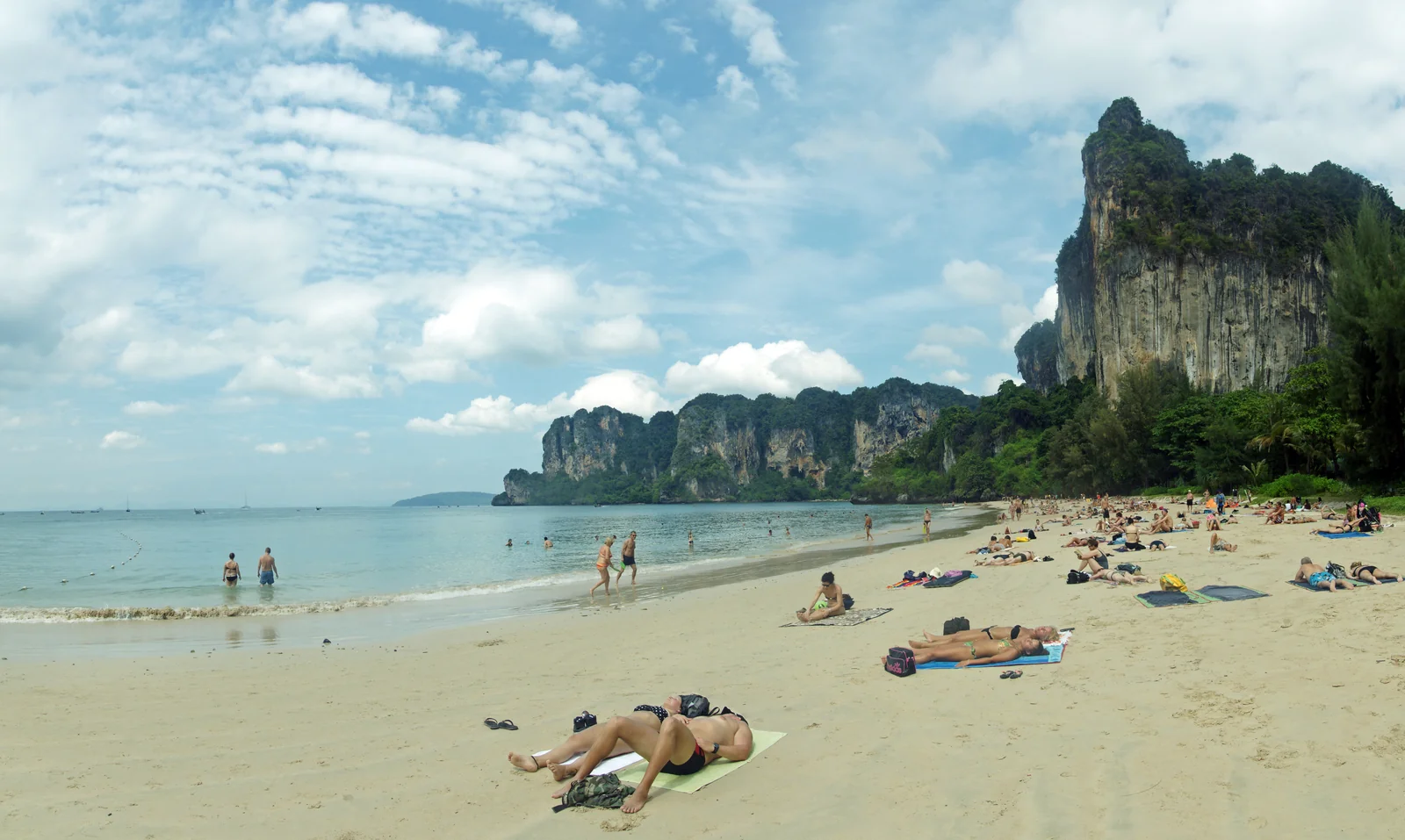 Photographer: kallerna. Source: Wikimedia Commons. License: CC BY-SA 3.0.
Matching activity choice to your traveler type
Here is the city and activity matrix matched to what you actually came to do.
- First-time visitor with 7 days: Bangkok for two days of temples, food, and a rooftop, then Chiang Mai for two days of a cooking class, an elephant sanctuary, and a temple tour, then Phuket or Krabi for three days of islands and beach time. See our 3 days in Bangkok, 3 days in Chiang Mai, and 3 days in Phuket itineraries.
- Adventure-focused: Railay rock climbing for three days, Koh Tao diving certification for four days, Khao Sok rainforest for two days. Skip Bangkok.
- Cultural-focused: Chiang Mai for five days of temples, cooking, and crafts, plus Sukhothai for a day at the historical park, Ayutthaya for a day from Bangkok, and Bangkok temples for two days.
- Beach and nightlife: Phuket Patong for three days, then Koh Phi Phi for two days, then Koh Phangan for the Full Moon Party, timed to the date.
- Family with kids: Bangkok for two days of Safari World, Sea Life, and Dream World, then Hua Hin or Cha-Am for three days at the beach. Pattaya suits families less well.
- Wellness retreat: Koh Phangan Sri Thanu for five to seven days of yoga, or Chiang Mai for five days of a Thai massage course and temples.
Best booking strategy and what to skip
Two booking patterns work for Thailand activities, and the right one depends mostly on the season.
Turning up on the day works for most activities outside peak season. Phi Phi Leh tours from Phuket sell out three to seven days ahead in high season but can usually be booked a day before in the low months. Cooking classes in Chiang Mai take bookings on the day year round. Temple visits need no booking at all.
Advance booking through the larger tour operators works best for popular Phi Phi day tours, Khao Sok overnight packages, and elephant sanctuary visits, where Elephant Nature Park books seven or more days out. The operator price usually matches the direct price, and the operator handles transfers and includes an English-speaking guide as default. You can find and compare day tours across all six cities in one place.
Travelers who reach the Maya Bay slot before 09:00 usually get the lagoon close to empty, while groups who arrive after lunch tend to find it packed or skipped entirely. The same early pattern holds at Doi Suthep and the Grand Palace, where the first hour after opening is the calm one.
What to skip is its own short list. Tiger attractions where animals are kept sedated for photos, elephant rides, the overrun Damnoen Saduak floating market, where Tha Kha or Amphawa are better, and any show that puts captive animals on display. Welfare groups have flagged the first and last of these for years.
Getting to the activity destinations around Thailand
This is the transport layer to reach each activity hub. A private transfer from the airport is the easy first move on arrival day, and you can book a private transfer for any of the cities below.
- Bangkok: BKK or DMK airport, see flights in Thailand
- Chiang Mai: CNX airport, 1h 20min flight from Bangkok
- Phuket: HKT airport, 1h 30min flight from Bangkok
- Koh Samui: USM airport (Bangkok Airways) or via Surat Thani plus ferry
- Krabi: KBV airport plus a taxi of about 35 minutes to Ao Nang
- Koh Phi Phi: ferry from Phuket or Krabi, see Thailand ferry guide
- Koh Phangan: ferry from Surat Thani (Donsak) or Koh Samui
- Pattaya: 2h bus from Bangkok Ekkamai or Mo Chit terminals
See also our What Is SHA Extra Plus? Thailand’s Hotel Certification, Explained (2026).
See also our How Much Do Hotels in Thailand Cost? (2026 Price Guide).
See also our Best Restaurants in Phuket 2026, Old Town to PRU.
Frequently asked questions about things to do in Thailand
What is the must-do activity in Thailand?
How much should I budget for activities in Thailand?
When is the best time for Thailand activities?
Are elephant sanctuaries in Thailand ethical?
Can I do Phi Phi as a day trip from Phuket?
What activities can families do in Thailand?
How do I book activities in Thailand?
Do I need to tip for activities and tours in Thailand?
For activity-specific guides, drill into the city pages linked above. For getting between activity destinations, see our Thailand ferry guide and Thailand flight guide. For where to stay near each activity hub, see the SHA hotels guide for Bangkok and equivalent guides for other cities.