Walk the back of Bophut for an early run and the air smells like coffee, frangipani, and something frying that isn’t breakfast yet. Two old fishermen mend a net under a casuarina tree the way other people read newspapers. A monk crosses the beach in saffron and doesn’t look up. Koh Samui does this in the first hour of any morning if you give it a chance.
The island spends most of its visitor budget on the beach and the resort. That works in its favor when you want a flop and drop week. It works against you when you assume the rest of the island is just transit between sun loungers. The interior climbs into rubber plantations and jungle waterfalls. The northern temples line a coast road that takes forty minutes to drive. Koh Phangan and the Ang Thong archipelago are inside a day trip radius. None of that turns up unless you plan around it.
What follows are ten ways to spend your time on Koh Samui that hold up to a second visit. Some are famous and earn the fame. One or two ask you to pick a side on animal tourism. None of them require leaving the resort district behind, but most of them get better if you do.
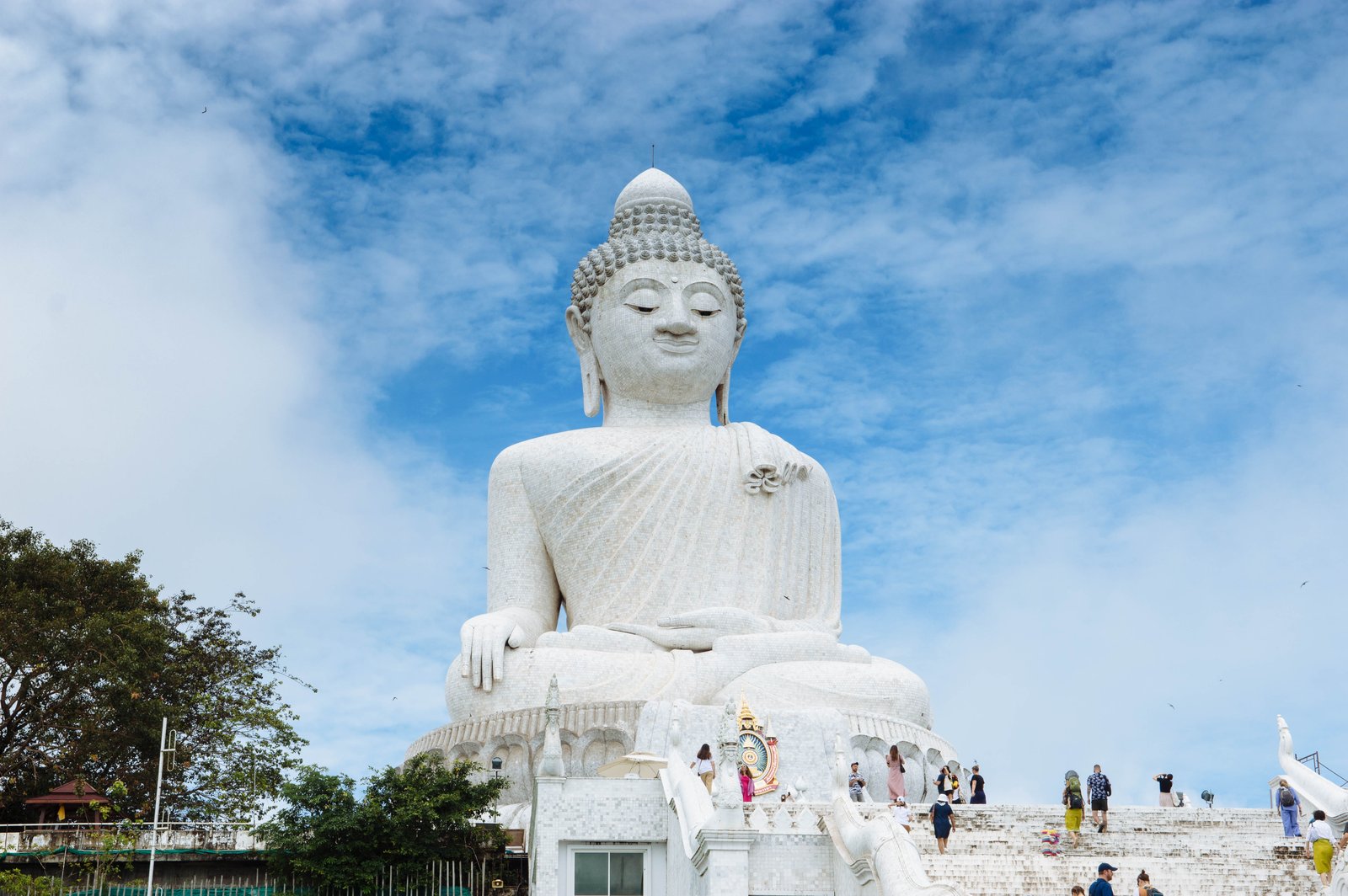
Wat Phra Yai, the Big Buddha on the Bophut headland
 PLACE
PLACE
Wat Phra Yai (Big Buddha) (วัดพระใหญ่)
The 12-meter gold-leaf Buddha on a small islet at the northeast corner of the island, connected to Bophut by a short causeway road. The temple is open from dawn to roughly 6pm and is busiest in the late afternoon when tour vans stop for sunset. Climb the naga staircase to the platform around the base of the statue, walk the clockwise circuit, and look back across the Gulf toward Koh Phangan. The market stalls on the approach sell amulets, mango with sticky rice, and decent coconut ice cream.
Shoulders and knees covered for the upper platform, shoes off at the base of the statue. Sarong wraps are usually available at the gate for a small donation if you forgot. The temple sits roughly five minutes by scooter from Bangrak Pier. That’s where the boats from Donsak and the airport shuttles arrive. It pairs naturally with the first or last hour of your trip rather than blocking out half a day.
Wat Plai Laem is a 10-minute drive further along the same coast road and is the natural companion temple. Its eighteen-arm Guanyin statue stands on a small lake and is photographed more often than the Big Buddha itself. The two together make a one-morning circuit before the heat builds.
Timing tip. Reach the Big Buddha and Wat Plai Laem before 10am if you can. The tour vans arrive mid-morning and the parking area near the causeway fills fast. Early light also keeps the climb up the naga staircase out of the worst heat, which matters more than it sounds in March and April.
Ang Thong Marine National Park, the 42 island day trip
 STAY
STAY
Ang Thong Marine National Park tour (อุทยานแห่งชาติหมู่เกาะอ่างทอง)
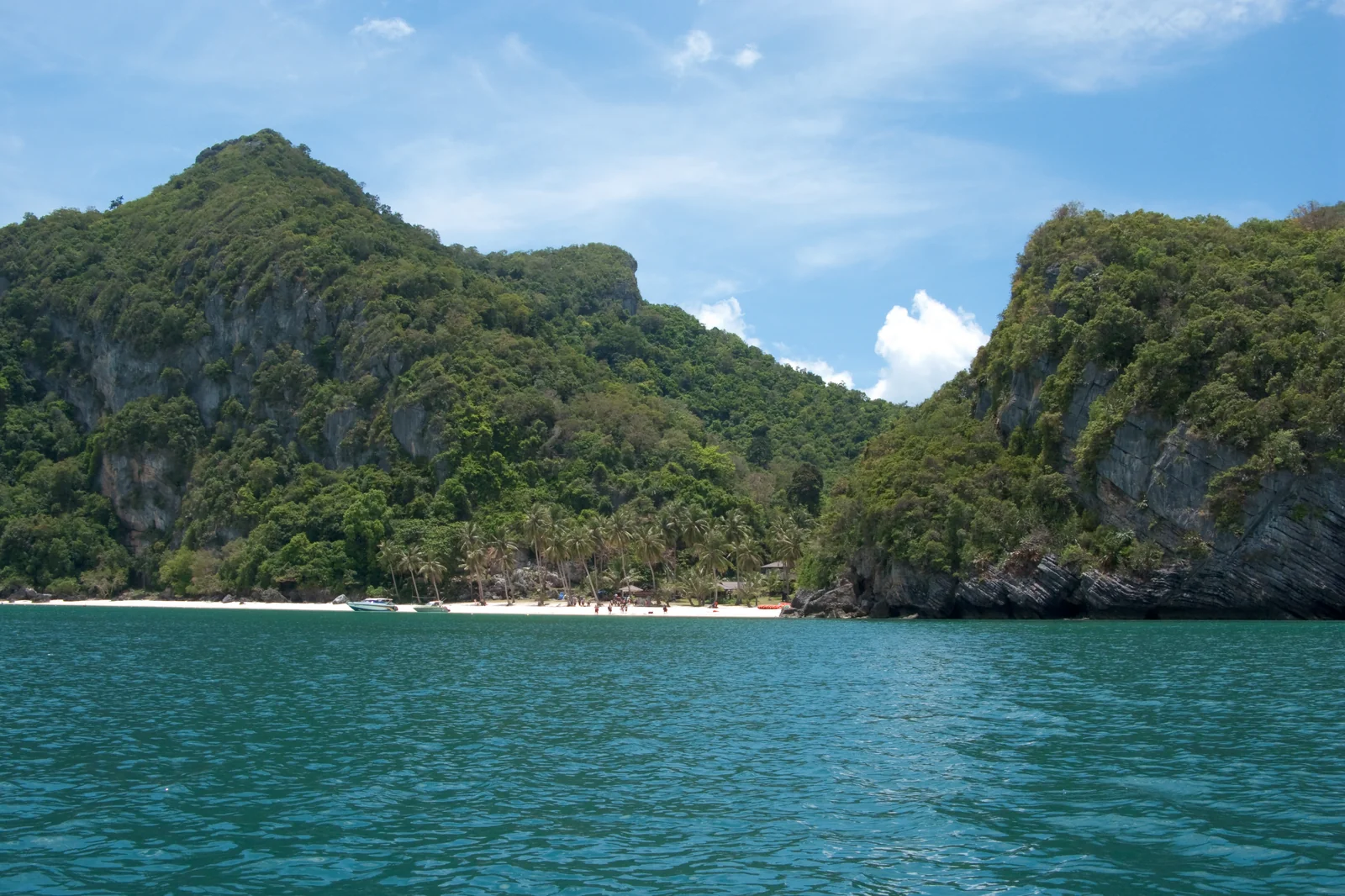
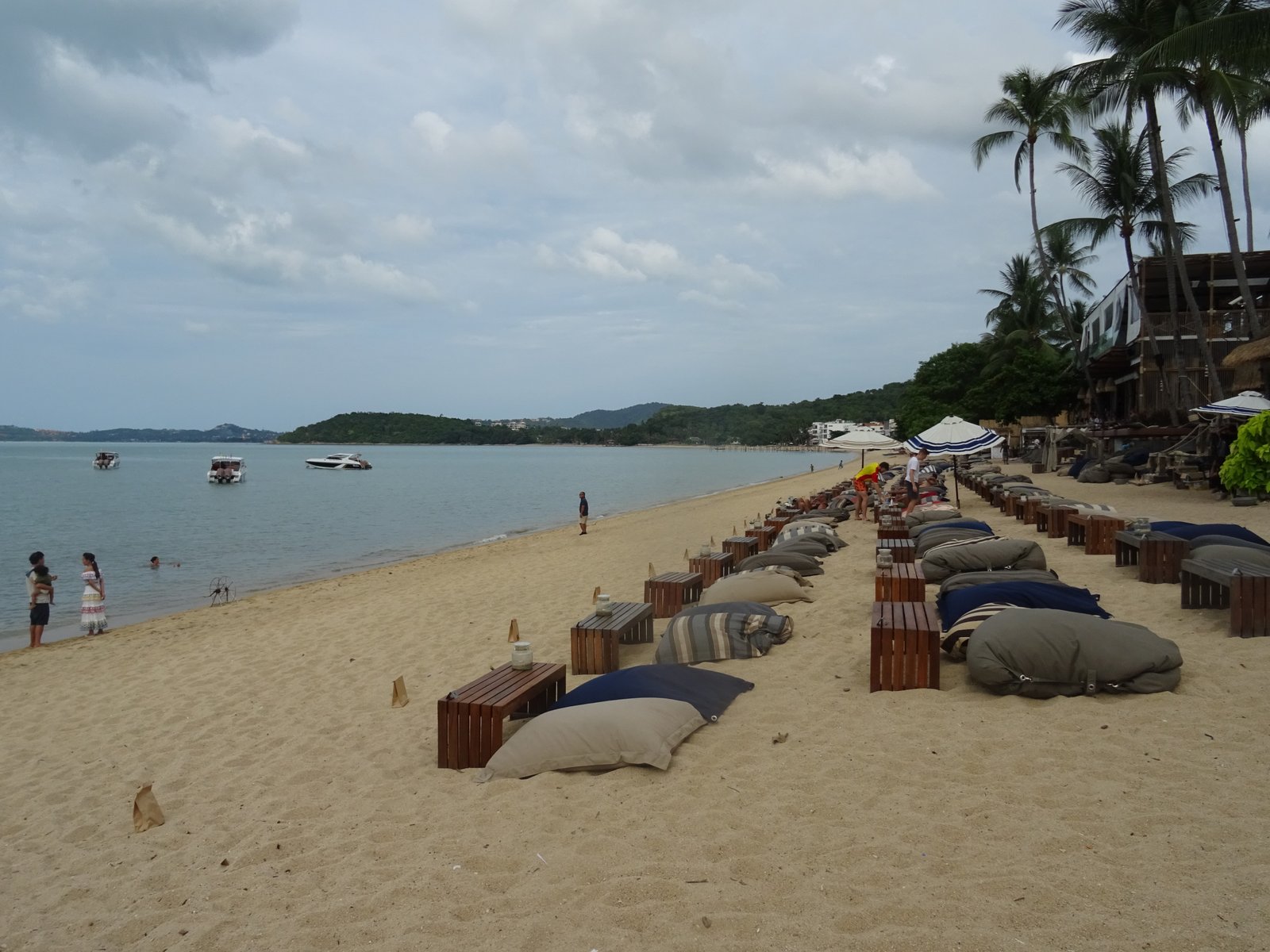
The archipelago of 42 limestone islands roughly 30km northwest of Samui, protected as a marine national park since 1980. Day tours leave Nathon or Bophut around 8am and return by 5pm; the itinerary usually includes a viewpoint hike on Koh Wua Talap, a kayak or stop at Koh Mae Koh's emerald saltwater lake (Talay Nai), and snorkeling at one of the smaller reefs. Speedboat tours run faster and shorter; longtail tours take the full day and feel less rushed.
Tours get cancelled in monsoon swell, typically from late October through early December on the Samui side. If your trip falls in that window, book the day tour for the front half of your stay so a cancellation gives you a chance to rebook. The boat operators are honest about the conditions. If they call it off, they call it off.
Bring reef shoes for the Wua Talap viewpoint climb. It’s a steep half-hour scramble on rough limestone. Bring water and a hat. The boats provide lunch and snorkeling gear. The park fee is paid on arrival, in cash, and is not in the tour price. Lonely Planet’s Koh Samui section has a useful primer on which tour operator runs which kind of boat if you want to compare before booking.
Fisherman’s Village Friday Walking Street in Bophut
 FOOD
FOOD
Fisherman's Village Walking Street (ถนนคนเดินหมู่บ้านชาวประมง)
Every Friday evening from 5pm until around 11pm, the main street through Bophut's old town closes to traffic and turns into a market that runs along the beachfront. Crafts and clothing at the eastern end, food stalls and small bars in the middle, and live music in the open courtyards behind the wooden shophouses. The food side is more interesting than the souvenir side; look for the grilled seafood vendors at the middle junction and the pad Thai stand at the back of the temple yard.
Chaweng has its own walking street on Sundays that is more touristic and less interesting. The Lamai Walking Street on Sundays sits somewhere in between. If your trip doesn’t cross a Friday, the Bophut waterfront itself is still worth the evening for the row of small restaurants in the wooden shophouses, all of which run normal hours through the week.
Cash is the easier currency for the food stalls. Most of the craft sellers take Thai QR pay but only if you have a local bank app, which most short stay travelers don’t.
Local note. Bophut’s old town is the quietest of the three main beach bases and the most walkable in the evening. The wooden shophouses are former Hokkien-Chinese merchant homes, which is why the street looks nothing like Chaweng. Locals still call it Ban Bo Phut, and the Friday market is as much a community night out as a tourist draw.
Na Muang Waterfalls 1 and 2, the jungle interior of the island
 PLACE
PLACE
Na Muang Waterfalls (น้ำตกหน้าเมือง)
A pair of waterfalls in the center of the island, roughly 12km south of Nathon and 8km from the Chaweng-Lamai turnoff. Na Muang 1 is the easy one: a five-minute walk from the parking lot to a 18-meter cascade with a swimming pool at the base. Na Muang 2 is the work: a 30-minute uphill jungle trail to a taller 80-meter fall, less crowded and the better swim. Wear shoes that grip wet rock; the path is muddy after rain.
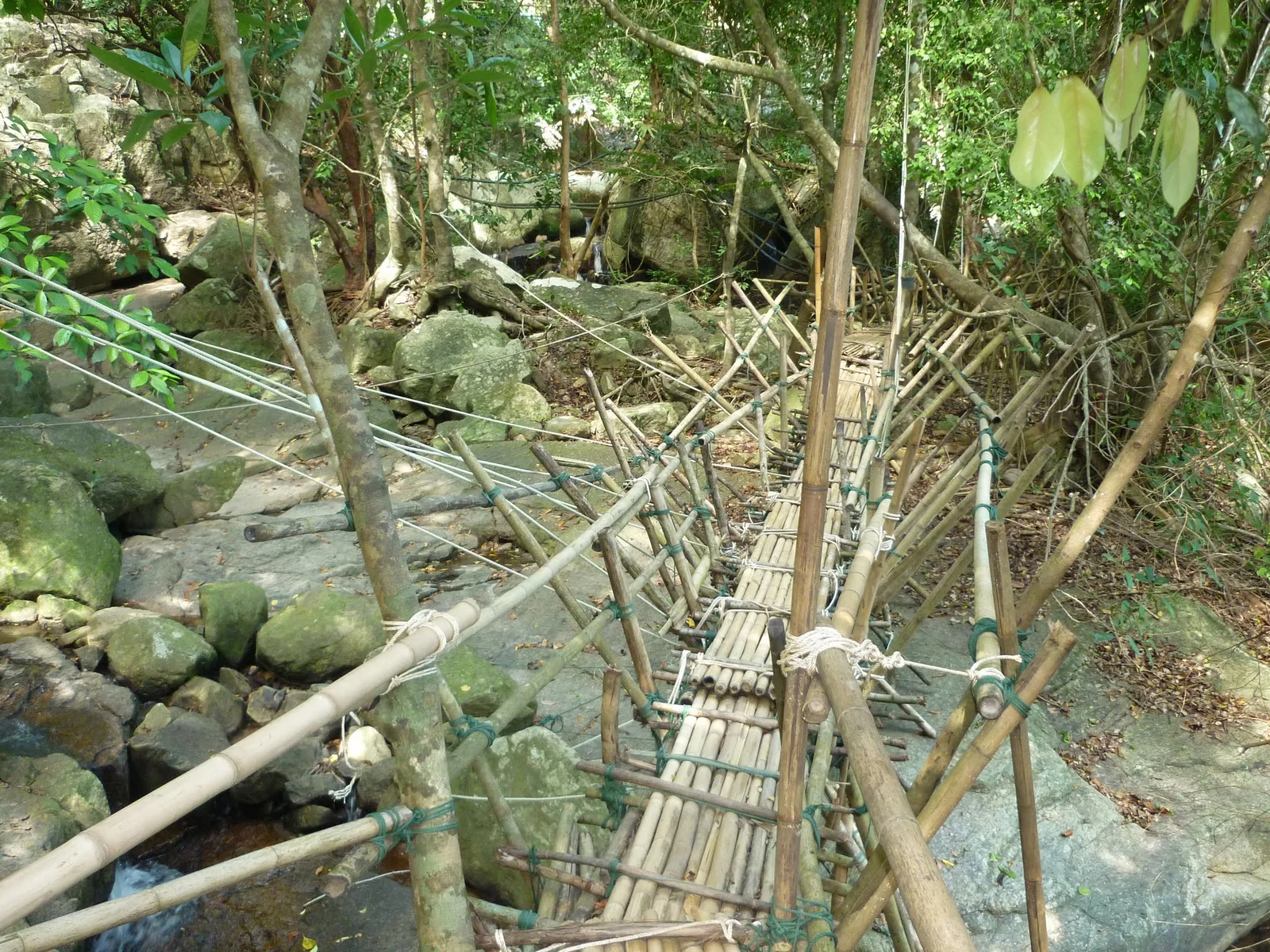
You can walk straight past the elephant operations at the bottom of the access road. The waterfalls themselves are public and free. The elephant camps are private businesses on adjacent land, and several visitors note the welfare conditions there read as a long way from the no-riding sanctuary further north. If that matters to you, keep walking to the falls and skip the gate.
The Na Muang Safari ATV tracks also run from the same parking area. They are loud and they tear up the trails, but they exist if that’s the trip. Most visitors prefer the falls alone.
Lad Koh Viewpoint, the cliff stop between Chaweng and Lamai
 NIGHTLIFE
Lad Koh Viewpoint (จุดชมวิวลาดเกาะ)
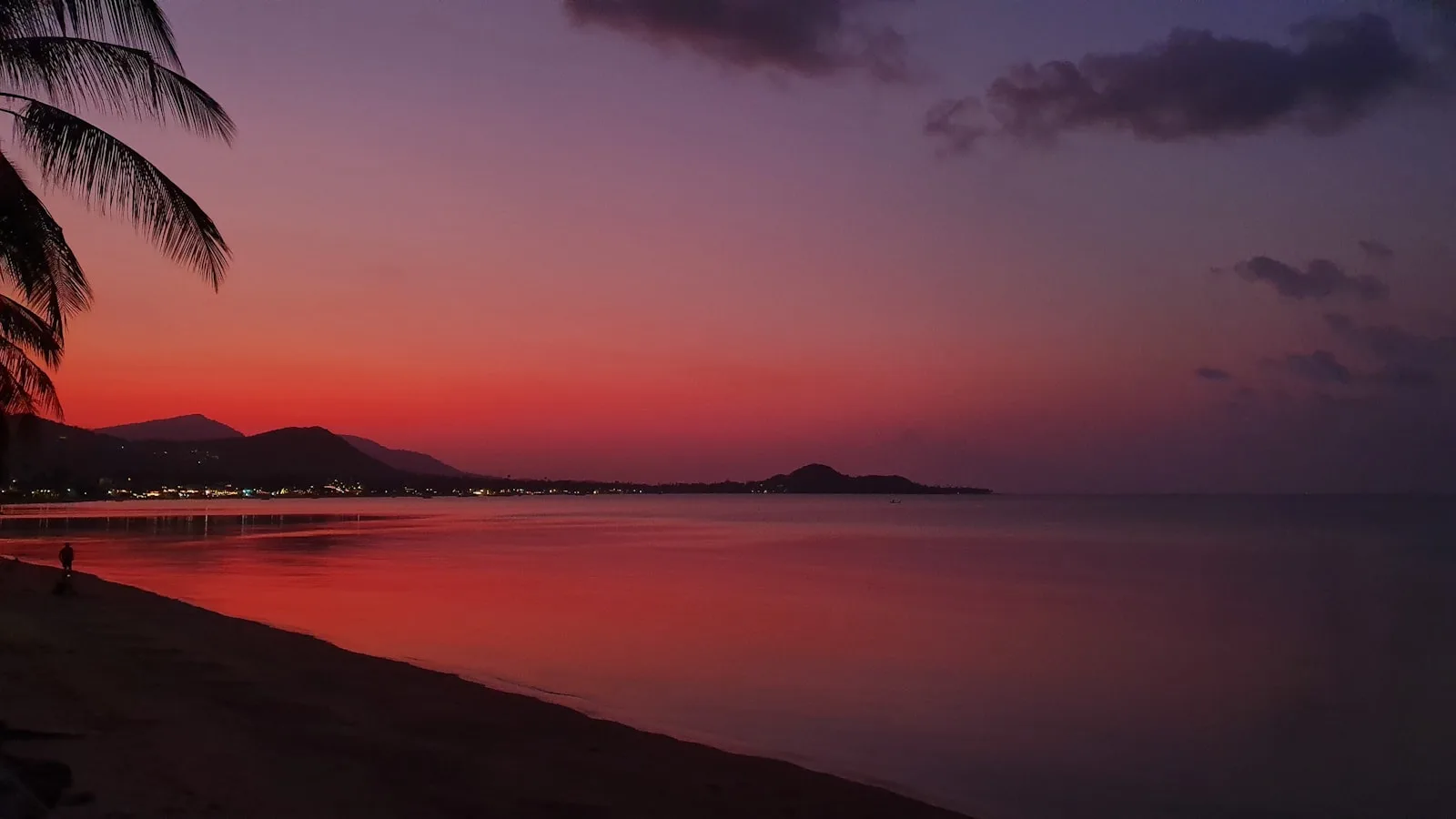
A small roadside viewpoint on Route 4169 between Chaweng and Lamai, perched on the cliff that drops to the southeastern coast. Park at the wooden platform, walk to the observation deck, and look down to the rocks and out across the Gulf. The viewpoint is best in the late afternoon when the light hits the coast at an angle and the sea takes on its deeper blue. A couple of small drink stalls run from a kiosk at the back of the lot.
The viewpoint sits 10 minutes by scooter from either Chaweng or Lamai center, which makes it a natural stop on a half-day southern loop that takes in Hin Ta Hin Yai a few minutes further on. The coast road south from here gets quieter quickly. The resorts thin out past Lamai and the small fishing settlements of Hua Thanon and Bang Kao take over.
Hin Ta and Hin Yai, the rock formations at the south end of Lamai
 FOOD
FOOD
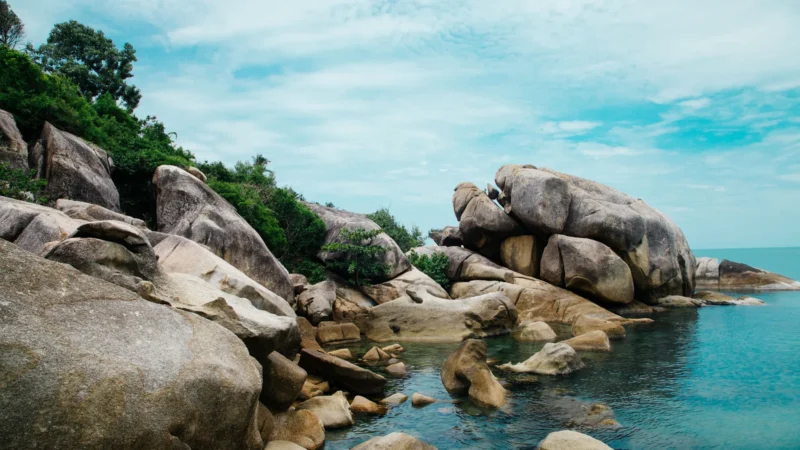
Hin Ta Hin Yai (Grandfather and Grandmother Rocks) (หินตา หินยาย)
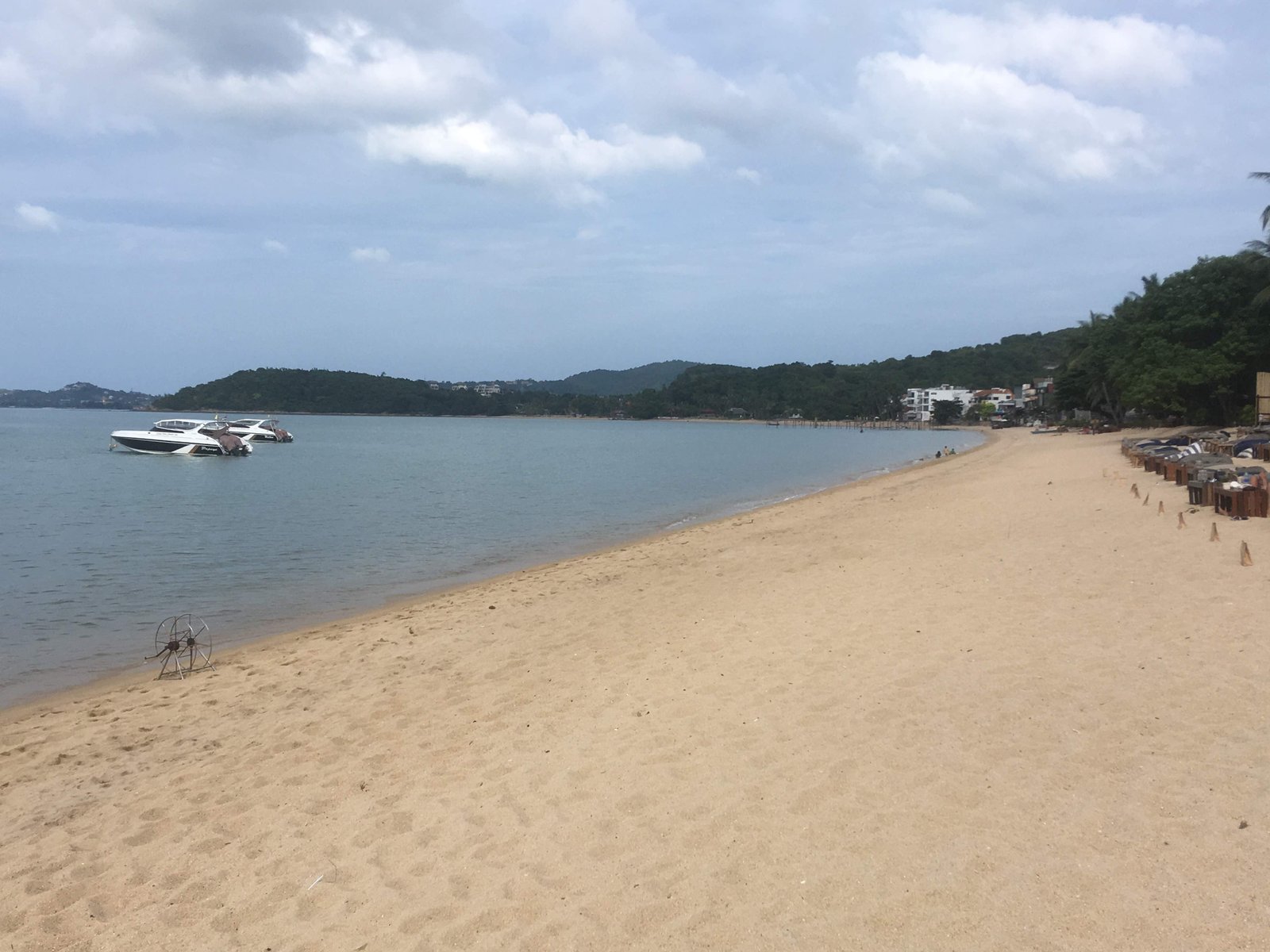
Two natural rock formations on the foreshore at the southern end of Lamai Beach, named for their unmistakable resemblance to male and female anatomy. The Thai folklore attached to the rocks is a tragic shipwreck story about an elderly couple drowned offshore; the rocks are read as their stranded remains. Visit at low tide when the path between the rocks and the shore is fully walkable. The path is short, the parking is free, and the small market behind the access stairs is the local source for kalamae (a Lamai-specific sticky coconut sweet).
The rocks draw tour vans in the late morning. Come at 8am or after 4pm for the quieter version. The combined drive from Chaweng is about 25 minutes. From Bophut it’s 40. Pair with Lad Koh Viewpoint for a half-day southern circuit and end at one of the Lamai beachfront restaurants for dinner.
Samui Elephant Sanctuary, and the animal tourism question
 PLACE
PLACE
Samui Elephant Sanctuary (ศูนย์อนุรักษ์ช้างเกาะสมุย)
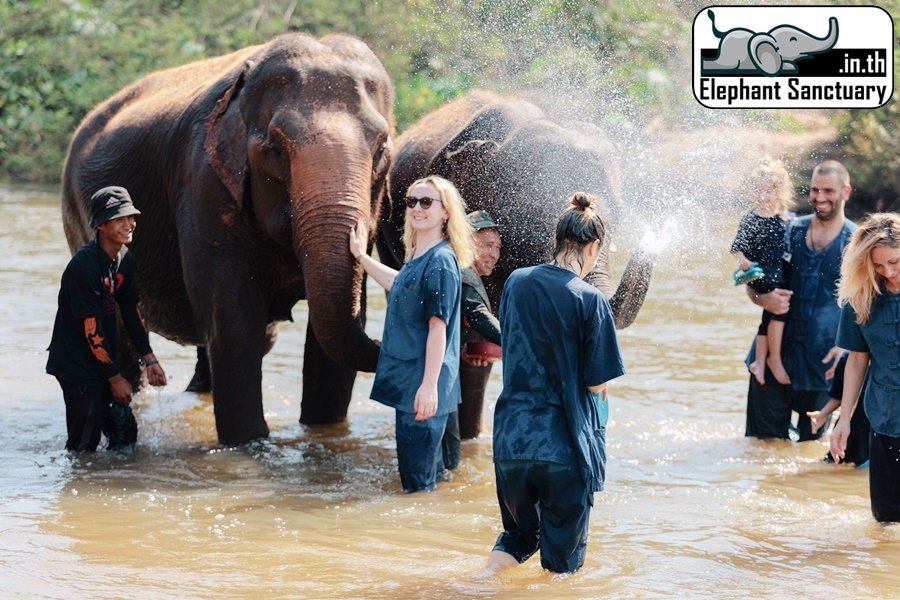
The first ethical elephant sanctuary on Koh Samui, opened in 2018 in the hills above Bophut as a partner project of Lek Chailert's Save Elephant Foundation (the organization behind Chiang Mai's Elephant Nature Park). Visits are half-day morning or afternoon. You feed and walk alongside the elderly elephants rescued from logging and tourist-riding camps. You don't ride them and you don't bathe them. Pickup and drop-off from Bophut, Chaweng, and Lamai are included; book at least a week ahead in peak months.
Elephant tourism on the island runs across a wide spectrum, and travelers increasingly want to know where a venue sits before they book. Some venues advertise bathing sessions, which animal-welfare groups have questioned in recent years because the bathing is still a routine the animal has been trained to tolerate. Venues that offer rides sit further along that spectrum again. The Samui Elephant Sanctuary positions itself at the no-riding, no-bathing end and follows the model the Save Elephant Foundation built in Chiang Mai. If a booking page mentions bathing or riding, it’s a different kind of operation, and that’s the line most readers tell us they care about.
For wider reporting on the welfare debate around elephant tourism in Thailand, The Guardian’s Thailand travel coverage has tracked the shift toward no-riding sanctuaries over the past decade.
A Thai cooking class in Bophut or Mae Nam
FOOD
Thai cooking class (half-day with market visit) (คลาสทำอาหารไทย)
The better schools open with a half-hour market walk in Bophut or Chaweng for an ingredient orientation, then return to the kitchen to cook four dishes: a curry paste from scratch, a soup, a stir-fry, and a dessert (usually mango sticky rice). The signature dish on Koh Samui is usually massaman curry, which leans on the Muslim-southern Thai cooking tradition of the lower Gulf coast. Vegetarian and halal substitutes are routine if you ask at booking.
Full-day classes with farm visits are less common on Samui than they are in Chiang Mai because the island has fewer working farms close to the resort areas. The half-day market and kitchen format is the local norm. Lamai Thai Cooking Academy and Samui Institute of Thai Culinary Arts (SITCA) in Chaweng are the two longest-running schools. Both teach in English and both run vegetarian-friendly menus.
Most schools cap groups at 8 to 12 people. Smaller classes are worth the extra cost if you have the budget. The hands-on time per dish doubles when there are six of you rather than twelve.
A Koh Phangan day trip, with or without the Full Moon
STAY
Koh Phangan day trip (ทริปวันเดียวเกาะพะงัน)
Koh Phangan is the next island north, a 30-minute ferry ride from Bophut or Bangrak pier. The Lomprayah catamaran service runs three or four times a day and is the smoother option in chop. The classic day-trip target is Bottle Beach (Haad Khuat) on the north coast, reached by longtail from Chaloklum village, or the granite-strewn Haad Khom for swimming. Skip the Full Moon scene unless you're on the island specifically for it; the day after a Full Moon, Haad Rin is unpleasant by daylight.
The Full Moon Party in Haad Rin is the reason most travelers under 25 know the name Koh Phangan. The party runs once a month on the full moon, plus a smaller Half Moon and Black Moon schedule that fills the gaps. If your dates land on a Full Moon and you don’t want the party, stay on Samui that night. Visit Phangan a day later when Haad Rin has been hosed down and the rest of the island returns to a quieter version of itself. Our Koh Phangan ferry guide covers operators, piers, and crossing times.
The Sanctuary Thailand wellness retreat on the east coast of Phangan runs day-use passes for yoga and the sauna circuit if you want a wellness-shaped day trip rather than a beach one. Booking ahead is required.
Secret Buddha Garden, the jungle hike most travelers miss
NIGHTLIFE
Secret Buddha Garden (Magic Garden) (สวนพระพุทธลับ)
A folk-art garden in the interior jungle at the peak of Khao Pom, built by a Samui farmer named Nim Thongsuk starting in 1976 and filled with concrete Buddha statues, animals, and his own family figures. The drive is the limiting factor: the last few kilometres are steep dirt-and-rock road that needs a 4x4 or a confident scooter rider. Most travelers book a Samui jungle tour that includes the garden along with a viewpoint stop and a small waterfall. The garden itself takes 30-45 minutes to walk through.
The garden sits at roughly 400 meters of elevation and the temperature at the top is several degrees cooler than the coast. Mornings are the most reliable for clear sky. The afternoons in monsoon months can fog over completely. Bring water. There’s a small stall at the entrance but nothing on the access road.
The story of the garden is part of what makes it worth the climb. Nim Thongsuk built it over the last two decades of his life as a personal devotional project, and the family still maintains it. The folk-art sensibility is closer to Sala Keoku in Nong Khai or the Wat Pa Lak Roi temple grounds in Korat than to anything else on Samui.
How to fit the ten into four or five days
A workable four-day plan. Arrive day one and spend the afternoon at the Big Buddha plus Wat Plai Laem with sunset on the Bophut beach. Day two is the Ang Thong day tour. Day three is the southern loop with Lad Koh Viewpoint, Hin Ta Hin Yai, and a Lamai beach afternoon, followed by the Friday Walking Street if your dates align. Day four is split between the morning cooking class and the afternoon Samui Elephant Sanctuary visit.
Stretch to five days and you add the Na Muang Waterfalls morning followed by the Secret Buddha Garden in the afternoon, both reachable from the same central-island route. The Koh Phangan day trip is the natural sixth-day choice if you have it. Otherwise it replaces the cooking class or the elephant visit if you want to see another island.
Book at least a week ahead for three things. The Samui Elephant Sanctuary sells out two to three weeks ahead in peak months, December to February and July to August. Ang Thong tours fill the smaller speedboat groups first. The bigger longtail boats almost always have space. The Lomprayah ferry to Koh Phangan is fine to book the day before in low season but fills up around the Full Moon dates.
Where to stay in Koh Samui
Bophut puts you next to Fisherman’s Village and the closest access to the Big Buddha and the airport. Chaweng is the longest beach with the most beach-bar density, the closest fit for the flop and drop trip. Choeng Mon is the quieter family stretch on the northeast corner. Lamai is the southern alternative if Chaweng feels too busy. The three SHA-certified hotels we recommend below sit across the first three of those areas.
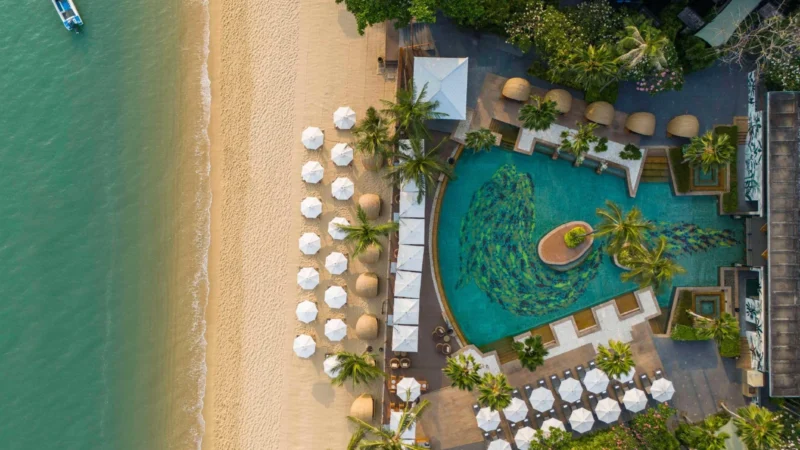
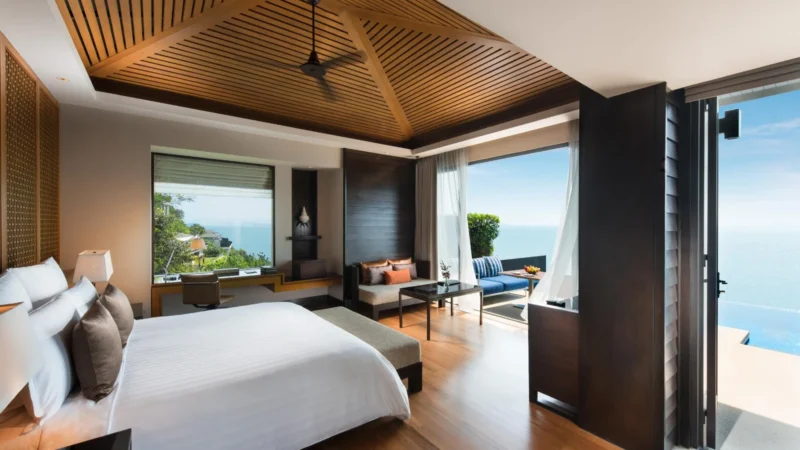
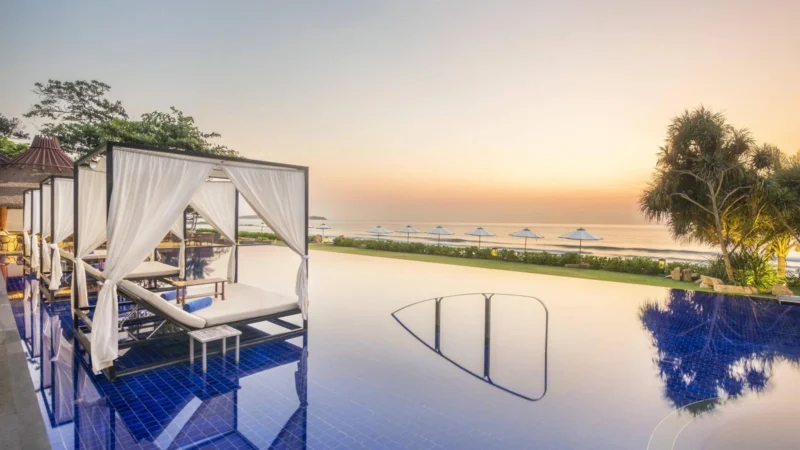
For the full SHA-certified roster across all the beach areas, see our Koh Samui hotel guide. If you want the deep review on one Bophut property, the Anantara Bophut Koh Samui review covers the Fisherman’s Village base in detail. For the day-by-day pacing that combines these activities with a hotel-night plan, see our 3 days in Koh Samui itinerary. For the pacing companion that combines these activities with a hotel-night plan, our Chiang Mai equivalent shows the same structure for a northern trip.
Frequently asked questions
What is the best time of year to visit Koh Samui for outdoor activities?
How many days do I need to do the main things to do in Koh Samui?
Is the Ang Thong day tour worth the time and money?
How do I get from Chaweng to the Big Buddha temple?
Is it safe to ride a scooter on Koh Samui?
For Thailand activities by type, adventure, cultural, nature, food, wellness, nightlife, see our complete Thailand activities guide.