The alarm goes off at 5:45am at a guesthouse inside the old city moat. By 6am, monks in saffron robes are walking single file down Ratchadamnoen Road, barefoot on warm concrete, collecting alms from residents kneeling on the pavement with offerings of rice and fruit. The monks do not make eye contact. The residents do not speak. The whole sequence takes less than ten minutes, and when it ends, the street empties again. By the time the coffee shops open at 8am, tourists are ordering flat whites and taking photos of the moat. Both things happen in the same city, on the same morning, 200 meters apart. That is Chiang Mai.
The city holds its contradictions without apology. The old city is a 2.5-square-kilometer square of moats and ancient temple walls. Directly west of it is Nimman (นิมมาน), a neighborhood of design hotels, third-wave coffee, and weekend markets that could be in Portland or Melbourne. Thirty kilometers north, Karen and Hmong hill tribe villages sit at 1,200 meters. The cultural distance between those three zones is immense. The physical distance is a 40-minute songthaew ride. This guide is for the traveler who wants to move across all three.
 Photographer: Boonchai C. Source: Wikimedia Commons. License: CC BY 3.0.
Quick itinerary overview of what to expect each of the three days
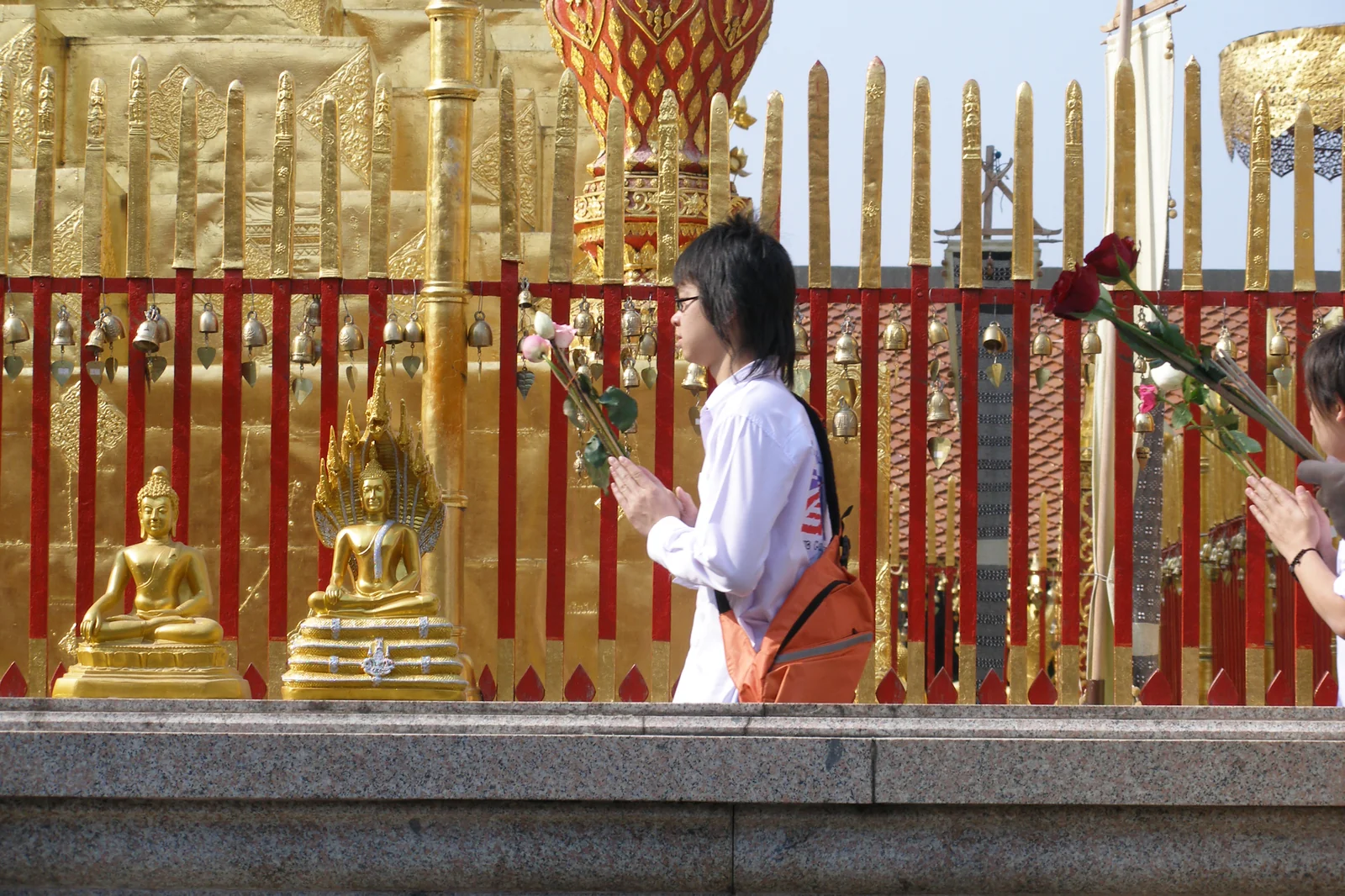 Photographer: Vyacheslav Argenberg. Source: Wikimedia Commons. License: CC BY 4.0.
- Day 1: Focus: Old City + Doi Suthep + Night Market. Highlights: Wat Phra Singh, Wat Chedi Luang, Doi Suthep temple, Night Bazaar. Budget (per person): $24-35
- Day 2: Focus: Doi Inthanon + Elephants + Cooking. Highlights: Doi Inthanon National Park, Elephant Nature Park, Thai cooking class. Budget (per person): $132-162
- Day 3: Focus: Chiang Rai day trip or Local Chiang Mai. Highlights: White Temple, Blue Temple, Black House or Warorot Market, Doi Suthep hike. Budget (per person): $18-35
Day 1 in the Old City temples and the Night Bazaar
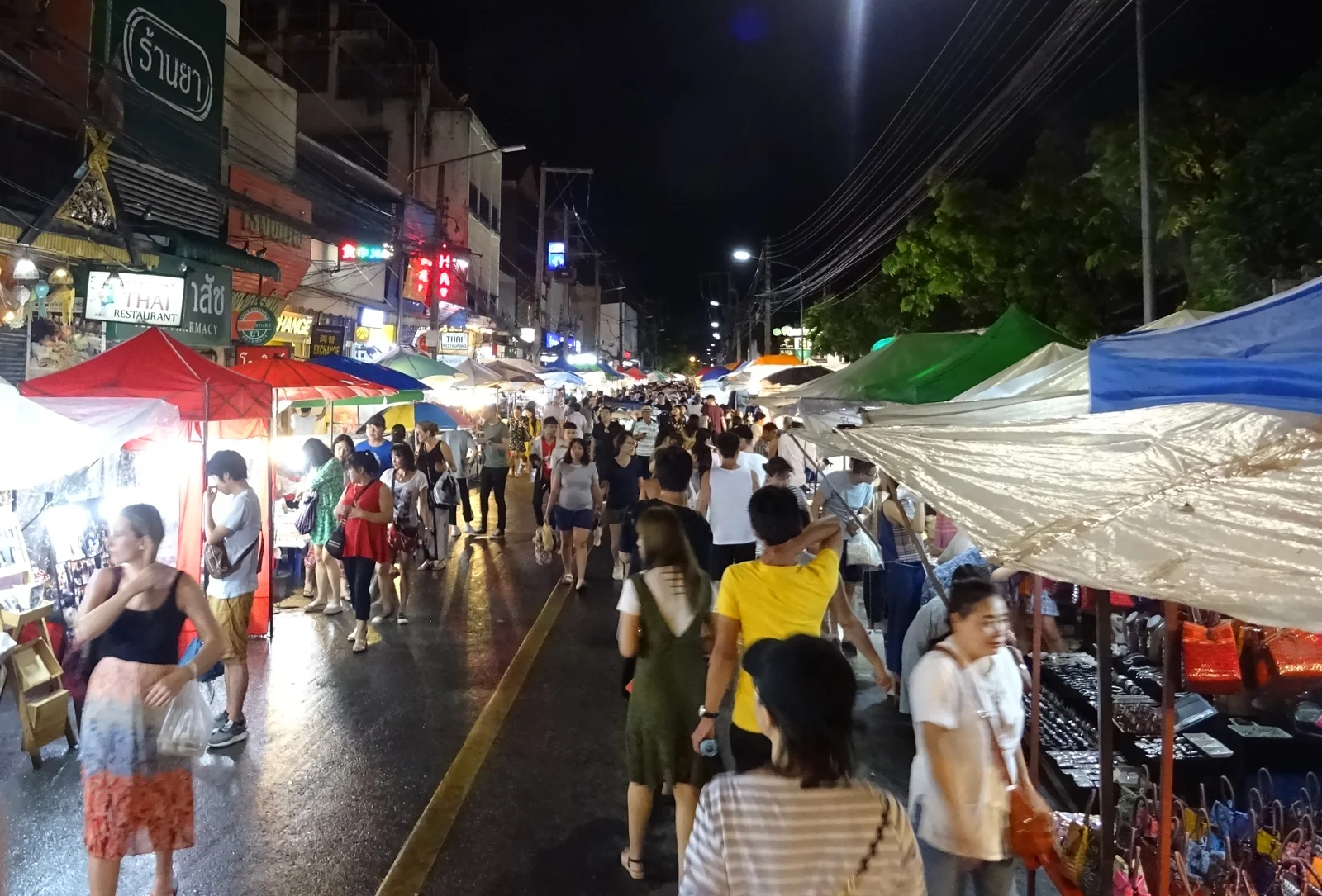 Photographer: Christophe95. Source: Wikimedia Commons. License: CC BY-SA 4.0.
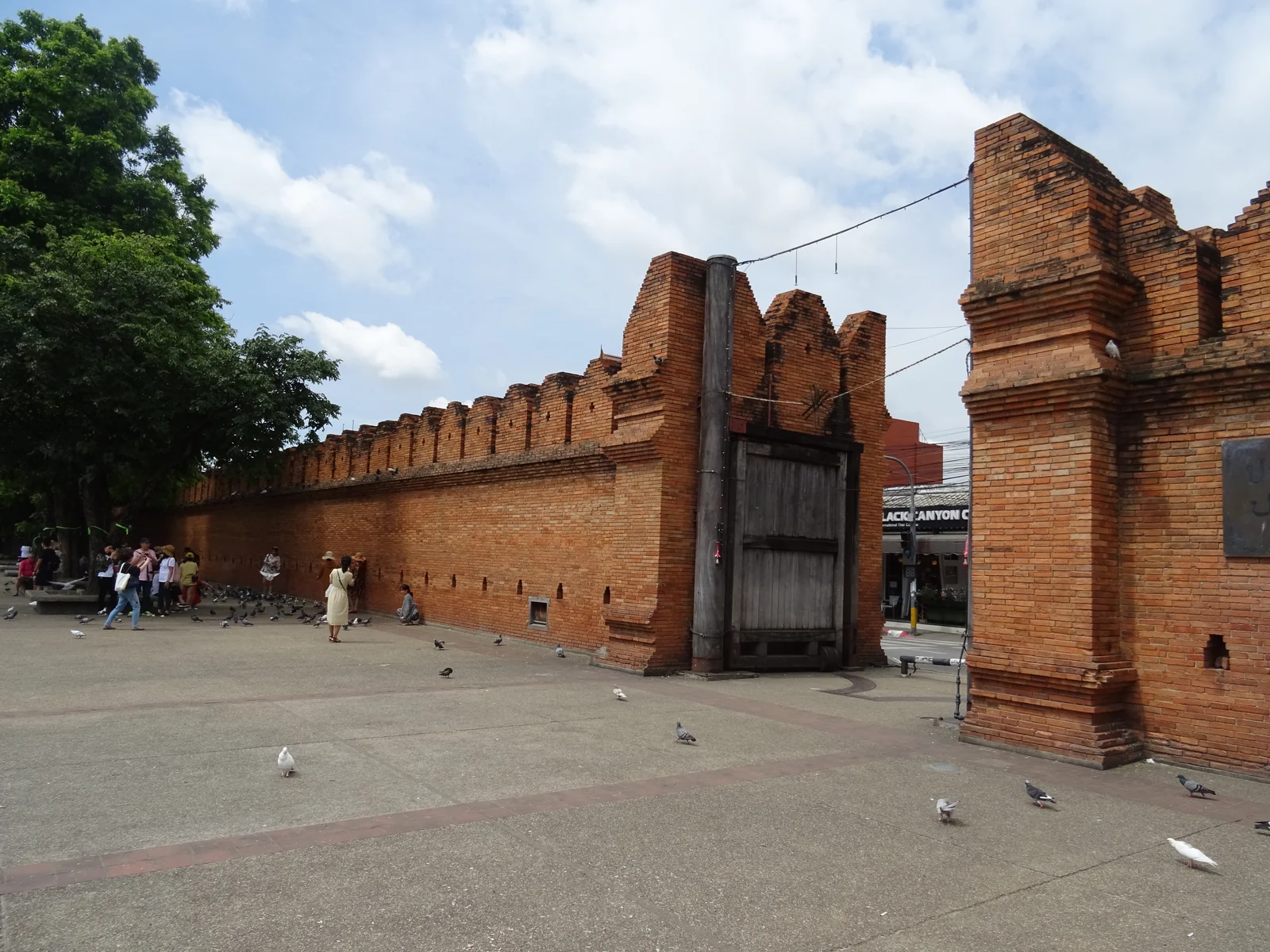 Photographer: Christophe95. Source: Wikimedia Commons. License: CC BY-SA 4.0.
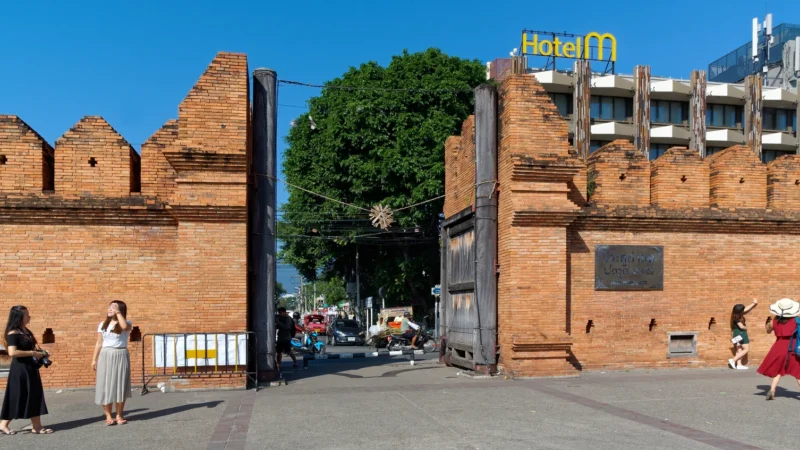
The old city sits inside a near-perfect square moat, 1.5 kilometers on each side. The walls that once surrounded it are mostly gone, but the four moat corners remain. So does the logic of the place. Everything important to northern Thai Buddhism was built within this square, and most of it is still here. Walking the old city’s temple district is not sightseeing in the conventional sense. The temples are active. Monks live in them, study in them, eat in them. The buildings that look like ruins are ruins. The ones that gleam with gold leaf gleam because local families paid for that restoration. The physical fabric of the place is a record of who valued what, across 700 years.
Morning: The Three Essential Temples
You can cover all 3 old city temples on foot in a single morning. Start by 8am to beat the heat and the tour groups. Total walking distance: approximately 1.8 kilometers between all three sites.
Wat Phra Singh (วัดพระสิงห์) is the most visited temple in the city for a specific reason: it houses the Phra Singh Buddha image, one of the most revered in northern Thailand. Entry is free, with a $1 donation requested. Located on Samlan Road at the west end of the old city, open 6am-6pm. Plan 30 minutes. Dress code is enforced: covered shoulders and knees. The on-site dress loaners are free to use if you arrive underprepared. Limitation: the grounds fill quickly by 9:30am on weekends, which disrupts the calm the temple is genuinely designed to produce.
Wat Chedi Luang (วัดเจดีย์หลวง), 12 minutes’ walk east, is the most architecturally significant structure in the old city. The chedi (stupa) is 600 years old and was partially destroyed by an earthquake in 1545. It has not been fully reconstructed. What you are looking at is genuine ancient ruin, not a restoration project. Entry is free. The resident monks run a “Monk Chat” program daily from 9am to 6pm: you can sit with a monk and ask questions about Buddhism, their lives, or Thai culture. This is not a tourist performance. It is an actual conversation, and it is worth the 20 minutes. Limitation: the interior sanctum lighting is poor, which makes photography difficult.
The three Old City temples (Phra Singh, Chedi Luang, Phan Tao) cover in 90 minutes on foot starting at 8am. Doi Suthep is the only one that requires a 15 km transfer and a 306-step climb, so plan it as a separate half-day rather than tacking it onto the morning loop.
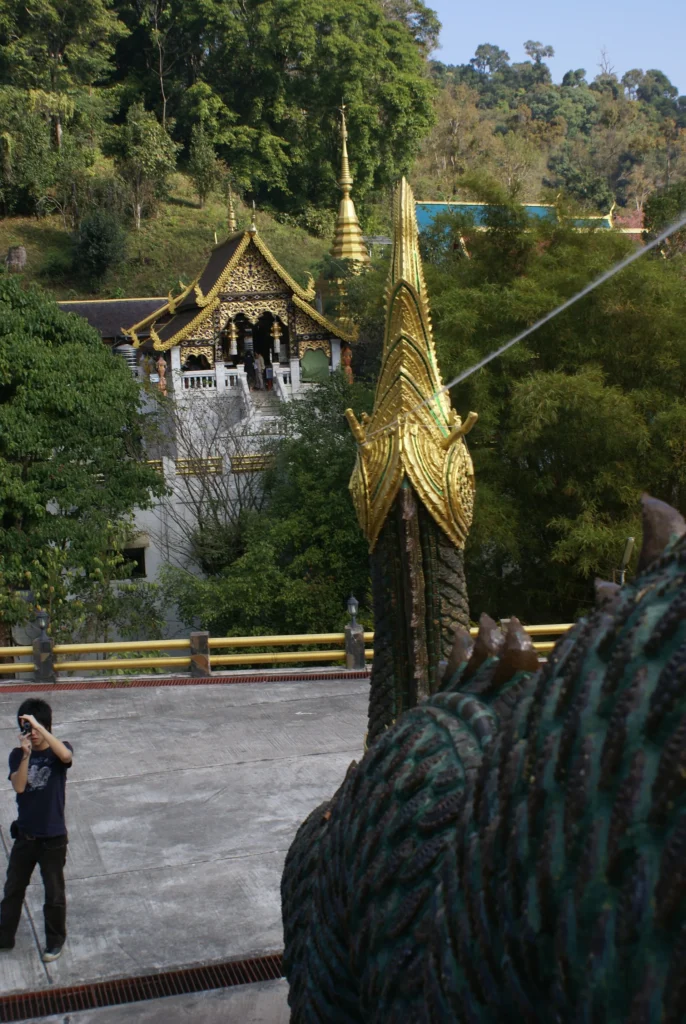
Wat Phra That Doi Suthep (วัดพระธาตุดอยสุเทพ) requires a separate journey. The temple sits at 1,073 meters elevation, 15 kilometers from the old city. It is the most important temple in northern Thailand, and the effort to reach it is part of the experience. From the parking area at the base, you can climb 306 steps free, or take the cable car up. On clear mornings, the terrace gives views across the entire Chiang Mai valley. Plan 1.5 to 2 hours including travel. Open 6am-8pm. One firm limitation: on weekends and public holidays this temple is packed. Aim for Tuesday or Wednesday morning if your schedule allows (verified by SHA Thailand editorial, May 2026).
- Cable car (round-trip): $1
- Temple entry: $1
- Taxi from old city (one way): $6-9
Afternoon: Nimman
Nimman (นิมมาน) is the version of Chiang Mai that confuses visitors who came expecting only temples. The neighborhood runs along Nimmanhaemin Road and its numbered sois (lanes), and it operates on a different frequency from the old city entirely. The architecture is low-rise but deliberate: glass-fronted coffee shops, boutique hotels behind wooden fences, galleries selling work by northern Thai artists alongside ceramics from Japan. The residents are a mix of Chiang Mai University students, digital nomads who never left after a month’s trial, Thai design professionals, and retirees who made the same calculation. The afternoon pace in Nimman is for walking and sitting. Pick a cafe that interests you and stay for an hour. The street energy here rewards attention paid slowly.
Evening: Night Bazaar or Sunday Walking Street
You have 2 options for the evening, depending on which day you arrive.
If it is Sunday: the Sunday Walking Street (ถนนวัวลาย) runs along Wualai Road from approximately 4pm to 10pm. Roughly 500 stalls selling northern Thai crafts, silver work, textiles, and food. Entry is free. This is the better market: more local vendors, more handmade goods, less tourist-facing pricing. Budget $6-14 for food and shopping.
Any other night: the Night Bazaar (ไนท์บาซาร์) on Chang Khlan Road runs 7 nights a week from approximately 6pm to midnight. More commercial than the Sunday market, with a mix of tourist souvenirs and genuine northern Thai products. The Kalare Food Court inside the complex serves northern Thai food from $2-3 per dish. Grab from the old city runs $1-2. Walking from Nimman takes 25 minutes.
Day 2 at Doi Inthanon and an ethical elephant experience
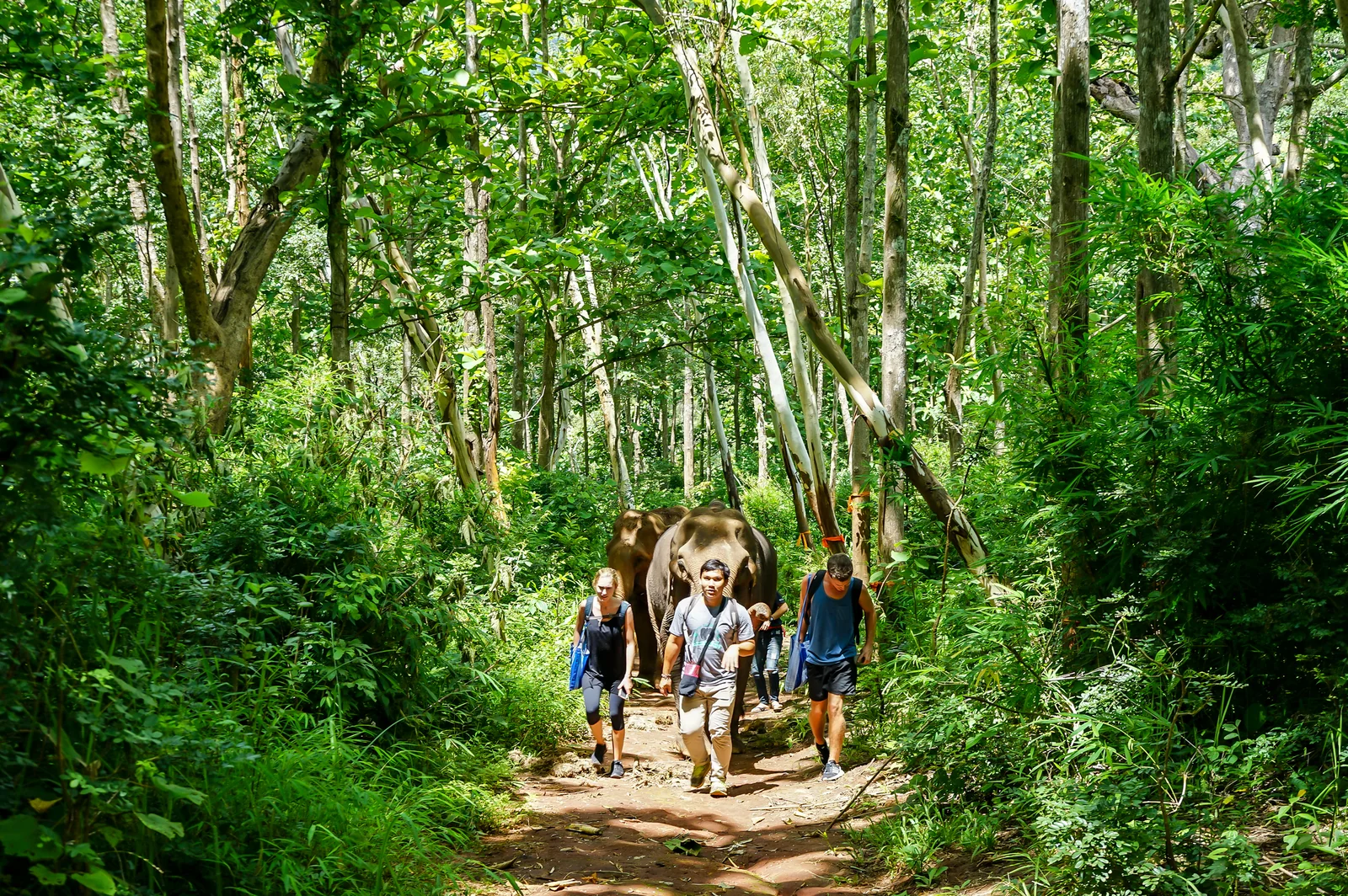 Photographer: Nina R from Africa. Source: Wikimedia Commons. License: CC BY 2.0.
Doi Inthanon (ดอยอินทนนท์) is Thailand’s highest point at 2,565 meters. The mountain is 90 kilometers south of Chiang Mai. The drive alone passes through a landscape the valley does not prepare you for. Dense cloud forest, waterfalls visible from the road, and a temperature that drops to 8-10 degrees Celsius at the summit on cold-season mornings. This is not decorative nature. The national park contains two twin royal chedis, a hill tribe village operating a royal agricultural project, and a series of trails into cloud forest that see a fraction of the visitors Doi Suthep receives. Day 2 packs the most distance, so an early start matters.
Morning: Doi Inthanon National Park
Depart Chiang Mai by 7am. The park entrance is 90 kilometers south, approximately 1.5 hours by private car or songthaew hired for the day. Key stops inside the park include three main draws. The Wachirathan Waterfall sits 4km from the entrance gate and is reached by a short walk. The twin royal chedis Naphamethanidon and Naphaphonphumisiri stand at the 2,565m summit. The Ang Ka Nature Trail is an 800-meter boardwalk loop through cloud forest. Allow 4 hours minimum inside the park. Limitation: the summit is frequently clouded over by 11am. Arrive at the chedis before 9:30am for the best visibility (verified by SHA Thailand editorial, May 2026).
- National park entry (per person): $9
- Hired songthaew (full day, vehicle): $43-57
- Private tour with pickup (per person): $23-34
Afternoon: Ethical Elephant Experience
Leave the national park by noon and head north toward the elephant sanctuary. You have 2 good options, and they suit different travelers.
Elephant Nature Park (ENP) is 60 kilometers north of Chiang Mai city, founded in 1995 by Lek Chailert. It is one of the original ethical elephant sanctuaries in Thailand, with no riding, no performances, and no elephant tricks. Book 1-2 weeks in advance. The park has limited daily capacity and consistently sells out. The practical limitation: heavy rains between July and September can affect the walking paths to the elephants. ENP still operates, but check conditions if you visit in the wet season.
- Half-day program: $74
- Full-day program: $103
- Pickup from old city or Nimman: $3 extra
Elephant Jungle Sanctuary is an alternative located 20 kilometers from the city center. Half-day programs run $59-74. The program is ethical (no riding, no bullhooks). Less name recognition than ENP, which means you can often book 2-3 days ahead rather than a week. Better fit if you are planning late. Travel time from the national park: approximately 2 hours.
Evening: Thai Cooking Class
A 3-4 hour cooking class fits cleanly after returning from the elephant sanctuary, typically around 5pm or 6pm. Two reliable schools at $29-43:
Thai Farm Cooking School includes a 30-minute market visit and a farm visit where you see the ingredients growing before you cook them. The class runs approximately 3 hours and covers 6 dishes. Price: $44. Book 1-2 days ahead. Limitation: the farm component makes this a half-day commitment, which only works if your elephant sanctuary visit ends by 4pm.
Zabb-E-Lee Thai Cooking School is more central and more compact: 3 hours, $29. No farm or market component, which makes it the better fit after a full day at Doi Inthanon and the elephant sanctuary. You cook 5-6 dishes, and recipes go home with you. Book 1-2 days ahead. Both schools require advance booking. Walk-ins are not reliably accommodated.
Day 3 as a Chiang Rai day trip or a slower final day in Chiang Mai
You have a genuine choice on Day 3, and the right answer depends on your travel pace rather than a universal recommendation. Both options are good. One requires an early alarm and full physical commitment. The other rewards the traveler who has not yet slowed down enough to actually feel the city.
Option A: Chiang Rai Day Trip
Chiang Rai is 200 kilometers north of Chiang Mai. A minivan from Arcade Bus Terminal departs from 7am and arrives in approximately 3 hours. If you do Option A, leave Chiang Mai by 7am. The last minivan back departs Chiang Rai at 5pm. Miss it and the taxi option is the expensive one.
- Minivan one-way (Chiang Mai to Chiang Rai): $6-7
- Guided day tour including 3 site entries: $18-24 per person
- Last minivan back from Chiang Rai (5pm): $6
- Taxi back if you miss the last minivan: $57 and up
Wat Rong Khun (วัดร่องขุ่น) is the White Temple: constructed by living artist Chalermchai Kositpipat starting in 1997 and still under construction as of 2026. Entry $3. Located 30 minutes from Chiang Rai city. The visual effect is deliberate and extreme: all white with embedded mirror chips, surrounded by a reflecting pool. The interior murals include contemporary Thai pop culture figures alongside Buddhist imagery. This is the most photographed site in northern Thailand, and you will be sharing it with several hundred people on any given morning. Arrive before 10am for manageable crowds.
Wat Rong Suea Ten (วัดร่องเสือเต้น) is the Blue Temple, 10 minutes from the White Temple. Free entry. Built in 2005 as a reconstruction, the color scheme is an intense cobalt blue and gold that reads as modern Thai Buddhist visual language pushed to its limit. Less crowded than the White Temple, and architecturally as impressive on the inside as the outside.
Baan Dam (บ้านดำ), the Black House, is artist Thawan Duchanee’s compound: multiple dark-lacquered buildings filled with animal skulls, skins, bones, and carved wood. Entry $2. This is the deliberate counterpoint to the White Temple. Where Kositpipat works in white and aspiration, Duchanee worked in black and mortality. Allow 45 minutes. Limitation: the site is intentionally unsettling. It is not appropriate for young children.
Logistics summary for Option A. You will cover 400 kilometers round-trip across 3 sites. It is a full day, not a gentle one.
- Site entries (3 temples combined): $5
- Transport (minivan or shared tour): $11-14
- Total day cost per person: $23-34
Option B: Final Day in Chiang Mai
This is the option for the traveler who has moved fast for 2 days and wants to actually inhabit the city rather than check off a list. For most 3-day visitors, Option B is the stronger choice. Chiang Rai is spectacular, but it compresses into a relentless transit day. A morning in Warorot Market and an afternoon on Doi Suthep’s hiking trail gives you something more durable.
Warorot Market (กาดหลวง) is the largest local market in Chiang Mai, 2 blocks east of the Ping River. Open from 4am (wholesale food hours) through approximately 6pm. The most interesting window is 7am-10am. Three floors: ground floor for fresh produce, dried goods, and northern Thai street food. Upper floors for textiles, household goods, and ceramics. No entry fee. Budget $3-9 for food and small purchases. Grab from the old city: $1-2 10 minutes.
Doi Suthep hiking trail: the paved naga staircase has 306 steps from the cable car station to the temple. For a longer approach, the Monk’s Trail (also called the Doi Suthep Nature Trail) departs from Wat Palat (วัดผาลาด) approximately 2 kilometers below the temple. The trail is 1.7 kilometers of forest walking, with orchids visible in season and near-zero crowds on weekday mornings. Trail start: 30 minutes by songthaew from the old city for $1 per person. Temple entry: $1. Allow 2.5-3 hours for the round trip on foot.
If Day 3 is a Saturday: the Saturday Night Market (ถนนวัวลาย) on Wualai Road operates 4pm-10pm with approximately 300 stalls. Silver handicrafts are the specialty. Similar setup to the Sunday Walking Street, somewhat smaller.
How this itinerary compares to the major Chiang Mai editorial coverage
Across recent editorial coverage of Chiang Mai itineraries, the same three pillars recur. Old City temples plus Sunday Walking Street plus Doi Suthep on day one. Doi Inthanon or elephant sanctuary on day two. Chiang Rai or a slow third day. Time Out Chiang Mai ranks the Old City temple-walk as the strongest day-one structure. Lonely Planet emphasizes Doi Inthanon over Chiang Rai for travelers prioritizing nature. For the official destination database, see the Tourism Authority of Thailand Chiang Mai page. To go deeper on activities, read our roundup of the best things to do in Chiang Mai.
Getting to Chiang Mai by flights, train, and bus from Bangkok
You have 4 options from Bangkok, across a range of cost and comfort. All prices below are per person, one-way, and exclude booking fees. (verified by SHA Thailand editorial, May 2026)
Flight from Bangkok: Chiang Mai International Airport (CNX) is served by multiple airlines from Don Mueang (DMK) and Suvarnabhumi (BKK). Flight time: 1 hour. Fares: $26-59 on budget carriers (Nok Air, Lion Air, Thai AirAsia). Book 2-3 weeks ahead for the lower end of that range. Taxi from CNX to the old city: $4-5 by metered taxi, approximately 15 minutes. This is the fastest and often the cheapest option when you factor in 12 hours of overnight transport time saved by the alternative.
Night train from Bangkok: Departures from Hua Lamphong Station or Bang Sue Grand Station. Travel time: 12-14 hours overnight. Fares: $24-35 for a second-class sleeper berth. Book through the State Railway of Thailand website or a booking aggregator. The experience is genuine. The berths are clean and narrow. Arrive at Chiang Mai train station at 7am with the city ready in front of you. Limitation: the overnight train runs consistently late by 1-3 hours on this route. Build buffer into your Day 1 start. Our guide to the Bangkok to Chiang Mai train covers classes and booking in detail.
The Bangkok-to-Chiang-Mai flight beats the overnight train on total cost when you factor in the daylight hour you lose to ground travel. Book the morning flight 2 to 3 weeks ahead for the $26 fare. Build a 1 to 3 hour buffer into the Day 1 morning if you take the train.
Bus from Bangkok: Multiple operators from Mo Chit Bus Terminal (Bangkok). Travel time: 10-11 hours. Fares: $18-24. VIP coaches have reclining seats, toilets, and one meal stop. Arrives at Arcade Bus Terminal in Chiang Mai, 4 kilometers east of the old city.
From Chiang Rai: Minivan from Chiang Rai Bus Terminal to Arcade Bus Terminal Chiang Mai. Travel time: 3 hours. Fare: $6. Departures approximately every hour from 6am to 6pm.
For Bangkok-based travelers planning a broader Thailand trip, the best SHA hotels in Bangkok article covers where to base yourself before flying north.
Getting around Chiang Mai on a 3-day itinerary with rentals and rides
The old city is compact enough to walk, but the wider city requires wheels. You have 4 practical options, and the right one depends on where you are going. (verified by SHA Thailand editorial, May 2026)
Red songthaew (สองแถว): The red shared pickup trucks are the classic Chiang Mai transport. Within the old city and immediate surroundings, shared rides cost $1 per person. You flag one down, state your destination, and the driver either accepts or shakes his head. For destinations farther out (Nimman, Night Bazaar), a chartered red songthaew costs $2-3. The limitation: drivers negotiate prices and will quote higher for obvious tourists. Know the standard rate before you board.
Grab is consistently available in the old city and Nimman. It is the most predictable option for the first day before you have your bearings. Limitation: surge pricing occurs during peak hours and on rainy days.
- Most trips within the old city: $1-2
- Fare to the Night Bazaar: $2-3
- Fare to the airport: $3-4
Bolt: Often 10-20% cheaper than Grab in Chiang Mai. Driver availability is slightly lower, particularly late at night, but reliable during daytime hours. Worth checking both apps before booking.
Scooter rental: Available throughout the old city for $6-10 per day. You need a Thai motorcycle license or a valid international driving permit that covers motorcycles. Most rental shops do not check documentation rigorously, but Thai traffic police do conduct license checks on popular tourist routes (particularly the road to Doi Suthep). Riding without a valid license voids your travel insurance in most policies. For Doi Inthanon and Doi Suthep day trips, a scooter gives you maximum flexibility. For the old city itself, it is unnecessary.
Where to Stay in Chiang Mai
The neighborhood you choose shapes what your trip feels like. The old city moat area puts Wat Phra Singh and Wat Chedi Luang at walking distance, and the morning alms-giving on Ratchadamnoen Road at your doorstep. This is the right base for a first visit. Nimman (นิมมาน) is 15 minutes west by songthaew: better coffee, more international restaurant options, and a lower noise floor at night, but you will need transport to reach the temples each morning. The Riverside (ริมปิง) sits east of the old city along the Ping River, quieter than Nimman, with a few genuinely excellent boutique hotels and direct access to Warorot Market on foot. For a deeper comparison of SHA-certified accommodation in the city, see the full Chiang Mai hotel guide.
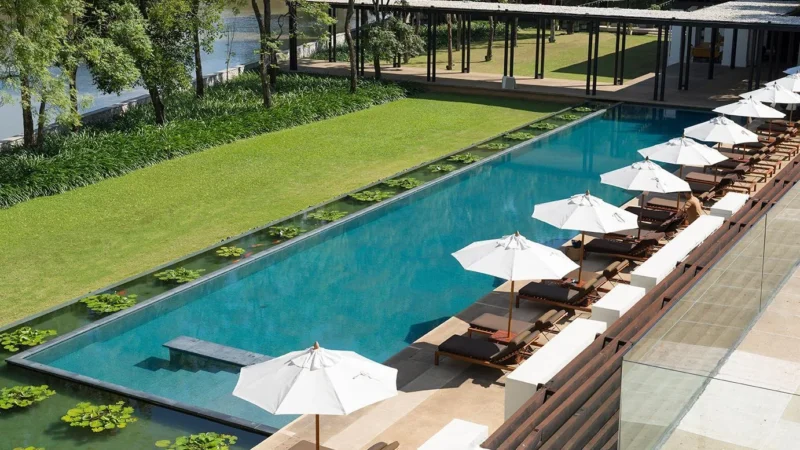 SHA Extra Plus
★ 9.0
SHA Extra Plus
★ 9.0
Anantara Chiang Mai Resort
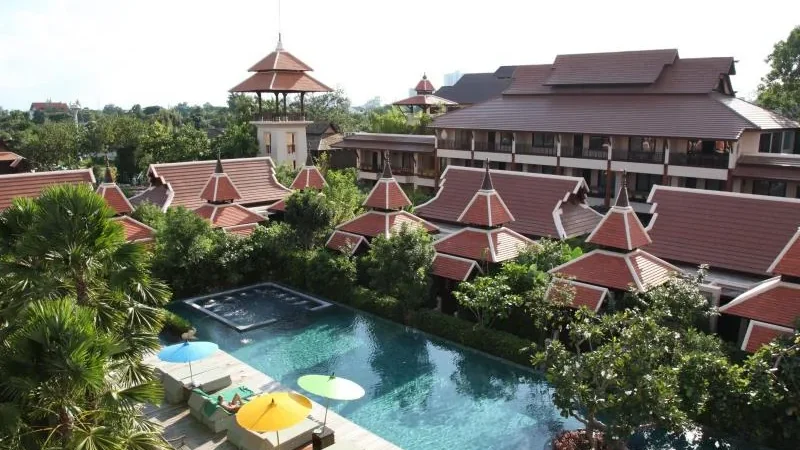 SHA Plus
★ 8.1
SHA Plus
★ 8.1
Siripanna Villa Resort & Spa
Planning a broader northern Thailand trip? The SHA-certified hotels in Phuket and Koh Samui hotel guide cover the south if you are extending your stay. For a complete Thailand trip, see the Bangkok hotel guide as your starting point.
What to watch for on a first Chiang Mai trip
Burning season, late February to April. Agricultural burning in the hills pushes Chiang Mai air quality past 200 AQI in March and April, with weeks above 300. Doi Suthep loses its view, Doi Inthanon loses its sky, and the temple-walking morning becomes a respirator question. If your dates are flexible, the November-to-February window is the right one. If they are not, travel insurance for Thailand covers air-quality cancellation refunds.
Scooter rentals without a valid license. Most rental shops do not check documentation, but Thai police do, particularly on the road to Doi Suthep. Riding without a valid international permit voids your travel insurance. The road from the old city to Doi Suthep is a winding climb with documented single-vehicle accidents on weekends. If a scooter is a non-negotiable, the regulated Nimman rental shops include the helmet and an English-language license check at intake.
Doi Suthep on a Sunday or public holiday. The temple terrace fills with local merit-makers from 8am. Tuesday and Wednesday mornings are the right windows for the silent terrace and the long view across the valley. The famous photograph is from the back terrace, not from the chedi side.
Elephant park bookings during peak weeks. Elephant Nature Park caps daily capacity and sells out 7 to 14 days ahead in December and January. Book before you arrive. Elephant Jungle Sanctuary works as the late-booking alternative.
The four most-cited Chiang Mai gotchas are the burning season, the unlicensed scooter rental on the Doi Suthep road, the Sunday-crowd Doi Suthep timing, and the elephant-park late booking. Plan around all four before you fly.
Practicalities for a 3-day Chiang Mai trip
The booking the trip needs, in one block. All cloak links open in a new tab.
- Airport transfer. CNX Airport Private Transfer. Driver tracks the flight, beats the 20 minute taxi queue after a Bangkok arrival, runs $14 to $22 for up to 3 passengers.
- Doi Inthanon tour. Doi Inthanon National Park Day Tour. Includes the twin royal chedis, Wachirathan Waterfall, and the Ang Ka cloud forest boardwalk.
- Thai cooking class. Cooking Class with Market Visit. Three hours, six dishes, recipes home with you.
- Ethical elephant experience. Ethical Elephant Sanctuary Half-Day. No riding, no performances, observation and supervised feeding only.
- Inter province transit. Bangkok to Chiang Mai. Overnight sleeper train $24 to $40, 1 hour 15 minute flight $30 to $110.
- Travel insurance. travel insurance for Thailand. From $2 a day. Covers burning-season air-quality cancellations, monsoon flight delays, scooter risk, and medical evacuation.
Frequently asked questions about a 3-day Chiang Mai itinerary
How many days do you need in Chiang Mai?
What is the best time to visit Chiang Mai?
Is Chiang Mai worth visiting over Bangkok?
How do you get from Bangkok to Chiang Mai?
Is one day in Chiang Mai enough to see the highlights?
Is the Chiang Mai burning season really that bad in March and April?
Back inside the old city moat at 5:45am on Day 4, the same monks in saffron will walk Ratchadamnoen Road. The same residents will kneel with rice and fruit. The same flat-white tourists will be ordering coffee 200 meters away by 8am. Three days is the length of one short cycle on this city. It is enough to learn the rhythm. Morning belongs to the temple terrace, afternoon to the hill country, sunset to the riverside, evening to the walking street. After three days a visitor knows which hour Chiang Mai is most itself in, and which hour to be elsewhere. That is the trip.
Full property review: Read our Four Seasons Resort Chiang Mai review, the Mae Rim option if you want jungle quiet over Old Town walkability.
For multi-city Thailand routing decisions, trip-length frameworks, and season planning, see our complete Thailand itinerary guide.