The best temples in Bangkok are not a ten list. They are four short neighborhood walks, and the question first trip travelers actually need answered is which walk to spend a morning on rather than which ten temples to memorize. Most online guides default to the same three icons (Wat Phra Kaew, Wat Pho, Wat Arun) and tack on the Golden Mount as an afterthought. That order works for one full day. It does not work for travelers with two mornings, families with small children, or anyone who wants to see a working temple where monks actually live rather than tour groups passing through on a tight schedule.
We have not personally led every temple tour in Bangkok, but we built this guide from three Rattanakosin walking mornings, an evening Wat Arun crossing from Tha Tien, and review patterns across English, Thai, Japanese, and French sources. The ten picks below cover the four neighborhood routes that justify the trip, with the entry fee, the right hour, and the dress code surfaced before the photography note. Where the routing differs from the standard three temple tour, we cross-checked against the French Petit Futé Bangkok religious-monument index and the Japanese JTB Travel Bangkok guide to confirm the local-language consensus on opening windows and dress enforcement.
 Photographer: Radek Kucharski. Source: Wikimedia Commons. License: CC BY 2.0.
Bangkok temples, four neighborhood walks rather than one ten stop list
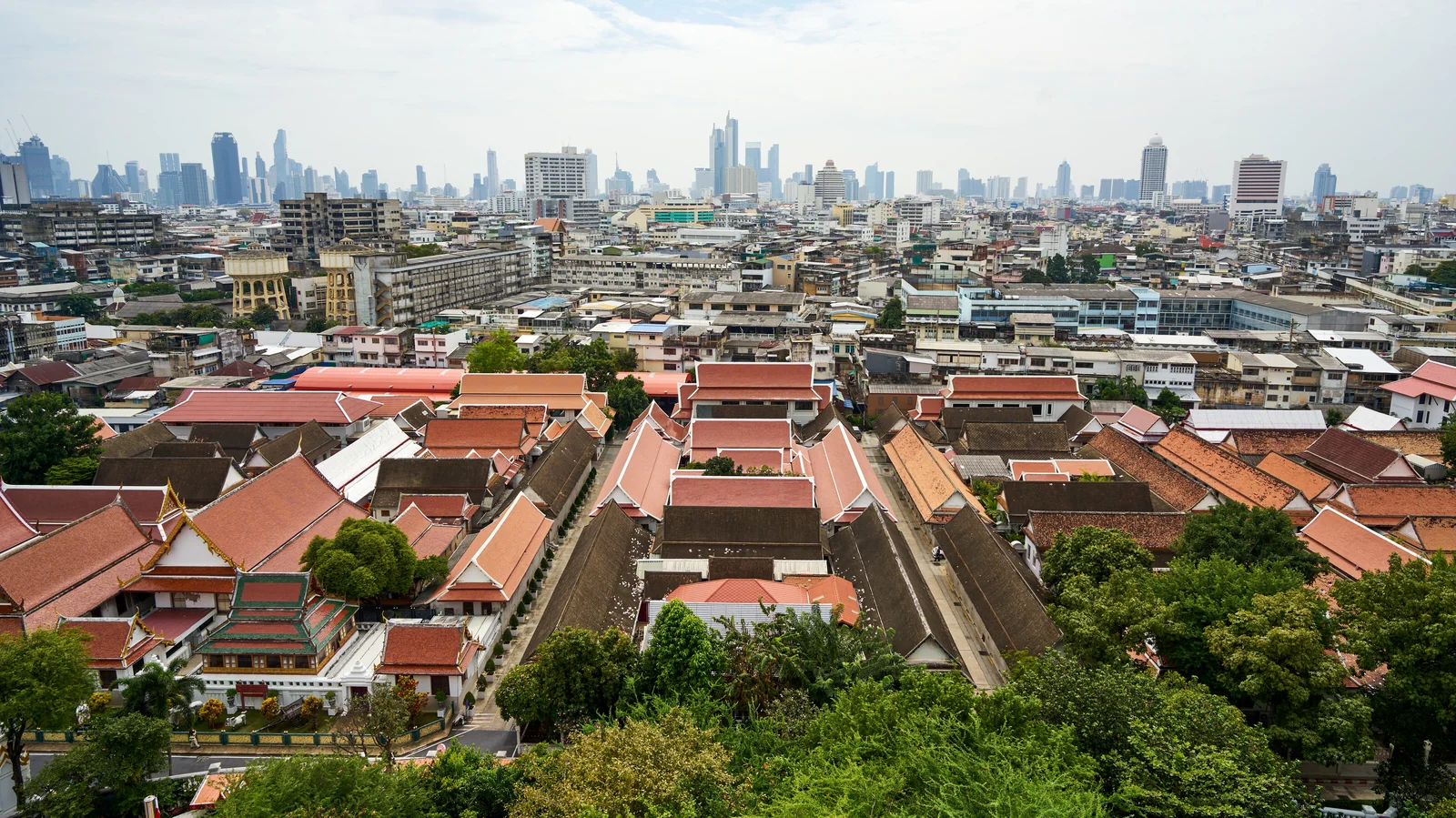
Bangkok has more than 400 Buddhist temples. Ten of them are worth a tourist morning. They cluster on four walks. The first is the Rattanakosin loop on the eastern bank, where the Grand Palace, Wat Phra Kaew, Wat Pho, Wat Mahathat, and Wat Saranrom sit inside a 1.5 kilometer triangle. The second is the short Tha Tien ferry crossing to Wat Arun on the Thonburi side, best done before sunset. The third is the Phra Khanong northern arc that links Wat Saket, Wat Suthat, and Wat Ratchanatdaram across the Phan Fa intersection. The fourth is the Dusit detour for Wat Benchamabophit, the Carrara marble outlier, and the Chinatown stop for Wat Traimit’s solid gold Buddha.
The cost of seeing the headline five runs about 1,200 THB ($34) per person before food and transport. Wat Phra Kaew with the Grand Palace is the only ticket that exceeds $6. Most of the smaller temples charge between 20 and $3 or nothing at all. Two of them (Wat Mahathat, Wat Saranrom) ask only for respectful conduct at the gate.
We treat Wat Phra Kaew, Wat Pho, and Wat Arun as the unavoidable first morning. Everything else is a second morning choice. A single day attempt to hit ten temples across the city in one go produces a flat list of selfies, not a feel for the place. Pick one neighborhood walk per morning instead.
Wat Phra Kaew and the Grand Palace, the unavoidable first stop
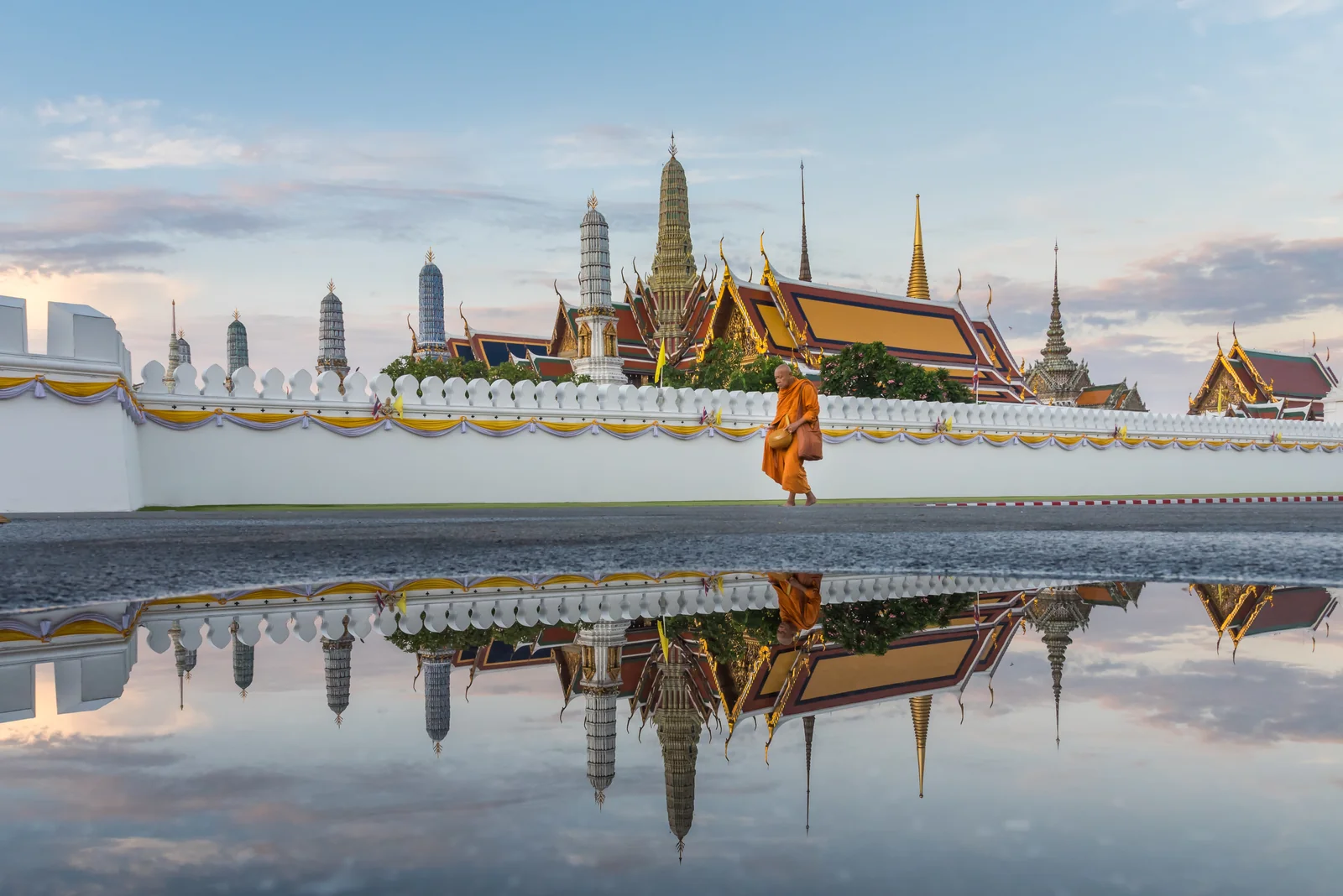
Wat Phra Kaew (วัดพระแก้ว) sits inside the Grand Palace compound on Na Phra Lan Road. The 66-centimeter jadeite Emerald Buddha is the holiest object in Thailand. The King changes its robes three times a year for the hot, rainy, and cool seasons. The combined ticket covers Wat Phra Kaew plus the Grand Palace throne halls and runs 500 THB ($14) per adult, with under-12 entry free. Doors open at 08:30 and close at 15:30 sharp.
 Photographer: Nawit science. Source: Wikimedia Commons. License: CC BY-SA 4.0.
The dress code is the strictest in Bangkok. No shoulders, no above-the-knee bottoms, no sheer fabric, no torn jeans. The compound runs a sarong rental booth at the entrance for $6 plus a $6 refundable deposit, but the line takes 30 minutes during peak hours. Wear long pants and a sleeved shirt before you arrive. We line up at 08:15 in dry season to clear the queue before 10:00. After 10:30 the wait stretches past 90 minutes.
Book an airport transfer to your hotel if you land the night before and want to be at Sanam Chai MRT exit 1 by 08:00. The walk from Sanam Chai to Wat Phra Kaew runs 12 minutes through the southern edge of the Grand Palace wall.
Wat Pho, the Reclining Buddha and the traditional Thai massage school next door
Wat Pho (วัดโพธิ์) is a five minute walk south of the Grand Palace exit. Its 46-meter gilded Reclining Buddha stretches the length of the viharn. The soles of the feet are inlaid with 108 mother-of-pearl panels showing the auspicious signs that identify a Buddha. The entry fee is 300 THB ($8.50) and includes a small bottle of water at the gate. The compound is older than Bangkok itself and was rebuilt by Rama I in the 1780s.
The traditional-medicine and Thai-massage school inside the compound is the oldest in the country, founded in its current form in 1955. One-hour foot massages start at 480 THB ($14) and full body Thai massages run 680 THB ($19). UNESCO inscribed the temple’s stone epigraphs into the Memory of the World register in 2008, which is why the inscribed slabs along the inner walls have explanatory placards in three languages.
The Reclining Buddha hall closes at 18:30 but the corridor around the feet becomes a single file shuffle between 10:00 and 14:00. We arrive at 09:00 from Wat Phra Kaew or push to 16:00 after the bus tours have left. The massage school waiting list runs 60 to 90 minutes from 11:00 to 15:00. Book the 09:00 or 17:00 slot if you want a massage the same day.
Wat Arun, the sunset prang on the Thonburi side
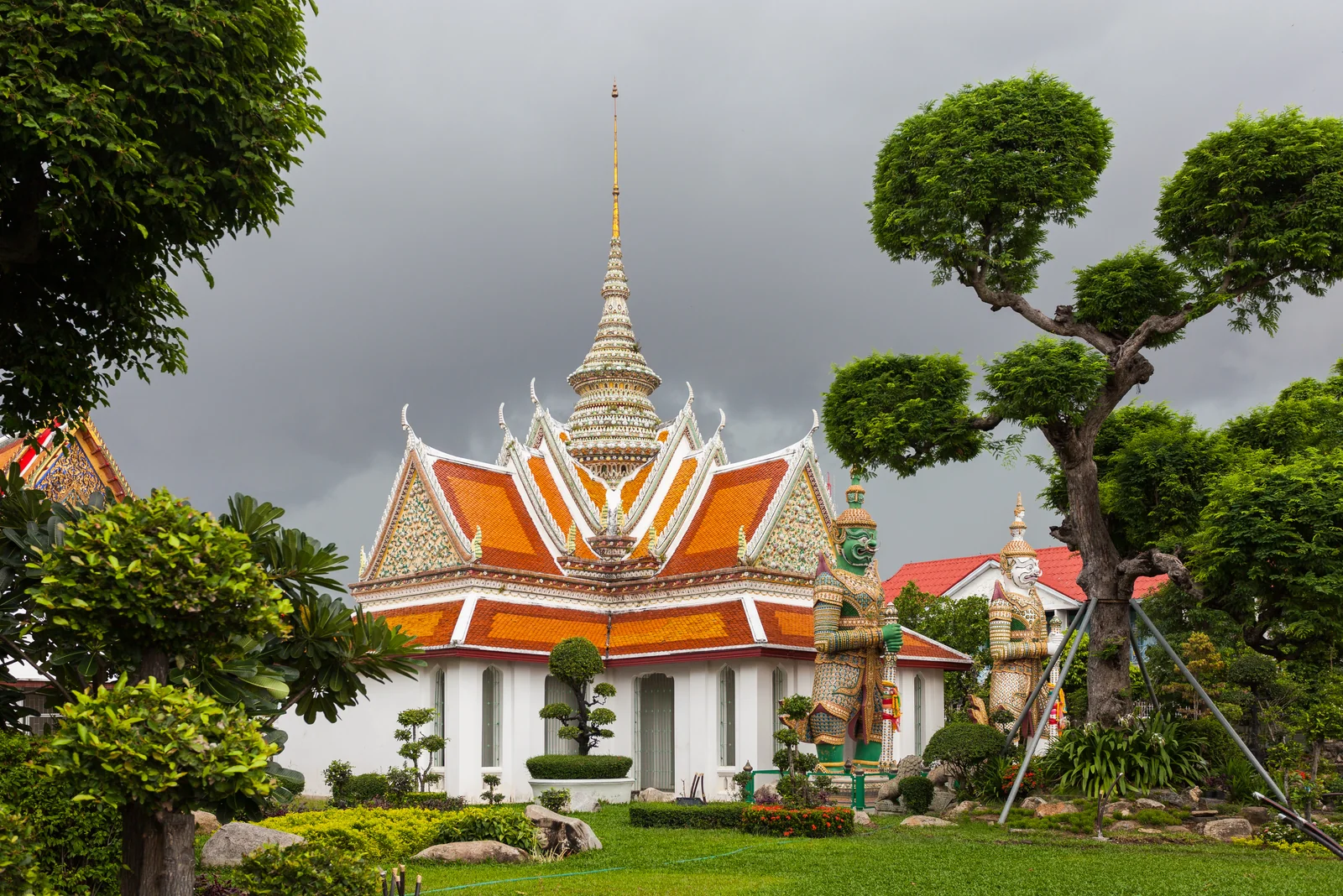
Wat Arun (วัดอรุณ) sits across the Chao Phraya from Wat Pho. The cross river ferry from Tha Tien (Maharaj Pier 8) runs every 10 minutes from 06:00 to 22:00 and costs $1 one way. The crossing takes three minutes. The central prang rises between 66.8 and 86 meters depending on which survey you trust, and the surface is encrusted with porcelain fragments that catch the sunset from the eastern bank.
 Photographer: Diego Delso. Source: Wikimedia Commons. License: CC BY-SA 3.0.
Entry runs 200 THB ($5.70) and includes the steep climb to the second terrace. The upper level stairs are 60 degrees with shallow treads and a single rope handrail. Travelers with knee issues stop at the first terrace, which still gives a 360-degree view of the riverbank. The 2013-17 restoration replaced cracked porcelain shards with newer pieces, which leaves the prang lighter and more uniform than older photographs suggest.
The best sunset view of Wat Arun is from the eastern bank at Tha Tien, not from the temple itself. The Eagle Nest rooftop bar at the Sala Rattanakosin hotel and the rooftop of Arun Residence both have unobstructed prang views from 17:30 onward. Check availability at the Peninsula across the river if you want the prang view from a riverside room.
Wat Mahathat, the quiet meditation temple between Pho and Phra Kaew
Wat Mahathat (วัดมหาธาตุ) sits between the Grand Palace and Sanam Luang, opposite Thammasat University. Entry is free. The temple houses the Mahachulalongkornrajavidyalaya University, one of two main Buddhist universities in Thailand. The Vipassana meditation center inside Section 5 runs free 07:00 to 10:00 introductory sessions in English on Saturdays and most weekdays.
Most online guides skip Wat Mahathat because it has no headline relic and the compound looks unimpressive from the outside. That is exactly why we keep it on the Rattanakosin walk. The inner sanctuary holds working monks chanting morning and evening pali, and the compound’s two story library has hand painted murals dating to the early Rama era. The meditation sessions require advance email registration through the university office.
Wat Saket and the Golden Mount, the 318-step panoramic exit
Wat Saket (วัดสระเกศ) sits at the eastern edge of the Old City. The Golden Mount itself is an 80-meter artificial hill built on a layer of broken brick because the soft Bangkok soil could not support a true stupa at that height. The climb to the summit chedi runs 318 spiraling steps with garden landings and water prayer bells along the way. The 100 THB ($2.80) entry covers the climb and the summit terrace.
The summit gives Bangkok its only proper panoramic viewpoint accessible without a rooftop bar minimum. The view stretches from the Grand Palace spires to the Phra Khanong skyline. The chedi installed water dispensers at the halfway landing in 2023 after older visitors stopped there in heat exhaustion. Sunset crowds bottleneck the narrow circular walkway at the top, so we climb at 16:30 for the golden hour or at 06:30 for sunrise.
The annual Loi Krathong fair in November fills the base courtyard with food stalls, candle floats, and a red cloth-wrapped chedi circling procession. Add travel insurance if you plan to climb the 318 steps in hot season, when heat exhaustion is a real risk for anyone over 55.
Wat Suthat and the Giant Swing, the eight meter Sukhothai Buddha
Wat Suthat (วัดสุทัศน์) is a 10-minute walk south of Wat Saket along Bamrung Mueang Road. The viharn holds the eight meter Phra Sri Sakyamuni Buddha, transported from Sukhothai in pieces in the early 19th century and reassembled by Rama I. The 27-meter teak Giant Swing (Sao Ching Cha) frames the entrance from the avenue side. Entry to the viharn runs 100 THB ($2.80). The compound is quieter than any of the Rattanakosin temples.
The Giant Swing is no longer functional. The last royal Brahmin swinging ceremony was discontinued in 1932 after repeated injuries to participants. The current poles are a 2007 teak reconstruction. The temple compound is surrounded by Bamrung Mueang Road’s religious supplies shops, where monks buy robes and alms bowls. We stop at the swing for ten minutes and spend 40 inside the viharn looking at the murals around the Sukhothai Buddha.
Wat Traimit, the 5.5-ton solid gold Buddha in Chinatown
Wat Traimit (วัดไตรมิตร) sits at the western gate of Chinatown, opposite the Hua Lamphong MRT exit 1. The temple’s 5.5-ton solid gold Buddha was rediscovered in 1955 when workers moving the statue dropped it and the plaster casing cracked open. Entry to the upper floor shrine runs 100 THB ($2.80) and includes a small Chinatown history exhibition on the floor below.
The temple is the most accessible in Bangkok for older visitors and travelers with mobility issues. The compound has elevator access, climate controlled shrine halls, and an MRT exit three minutes away. The Chinatown exhibition floor adds an extra $3 that most first trip travelers can skip without losing the visit. After the temple, the Yaowarat street-food walk starts five minutes east. See our Bangkok Chinatown guide for the dinner route.
Wat Benchamabophit, the Carrara marble temple in Dusit
Wat Benchamabophit (วัดเบญจมบพิตร) is the only major Bangkok temple clad in white Carrara marble imported from Italy. Prince Naris designed it in 1899 under Rama V’s commission and mixed Italian-cruciform architecture with tiered Thai roofs. The 50 THB ($1.40) entry makes it the cheapest of the headline temples.
The compound sits in Dusit, outside the Rattanakosin temple cluster. The taxi from Khao San runs 25 minutes in light traffic. The MRT does not reach Dusit directly, so the practical option is a Grab car or a Saen Saep canal boat plus a 15-minute walk. The marble surface in midday sun glares hard enough to flatten photographs, so we visit between 16:00 and 17:30 when the western light softens the white facade. The temple pairs with the Ananta Samakhom Throne Hall (currently closed for renovation through late 2026) and the Dusit royal palace area.
Wat Ratchanatdaram and Loha Prasat, the 37-meter metal castle
Wat Ratchanatdaram (วัดราชนัดดาราม) sits opposite Wat Saket across the Phan Fa intersection. The compound’s Loha Prasat is a 37-meter metal castle with 37 black spires representing the 37 virtues toward enlightenment. The structure is the only one of its kind in Thailand and one of three Loha Prasats ever built worldwide. Entry to climb the central spire runs 20 THB ($0.60).
Most online itineraries leave Wat Ratchanatdaram off the top five lists because it sits in the shadow of Wat Saket across the road. We add it because the spire climb gives a closer view of the Wat Saket Golden Mount than any of the surrounding rooftop bars, and the $1 ticket is the cheapest temple climb in Bangkok. The metal spire internal staircases are narrow and bottleneck quickly even with under-50 visitors at a time, so we climb between 11:00 and 14:00 when the day tour buses are clustered at Wat Pho instead.
Dress code, photography rules, and the temple etiquette every visitor breaks once
 Photographer: Gisling. Source: Wikimedia Commons. License: CC BY-SA 3.0.
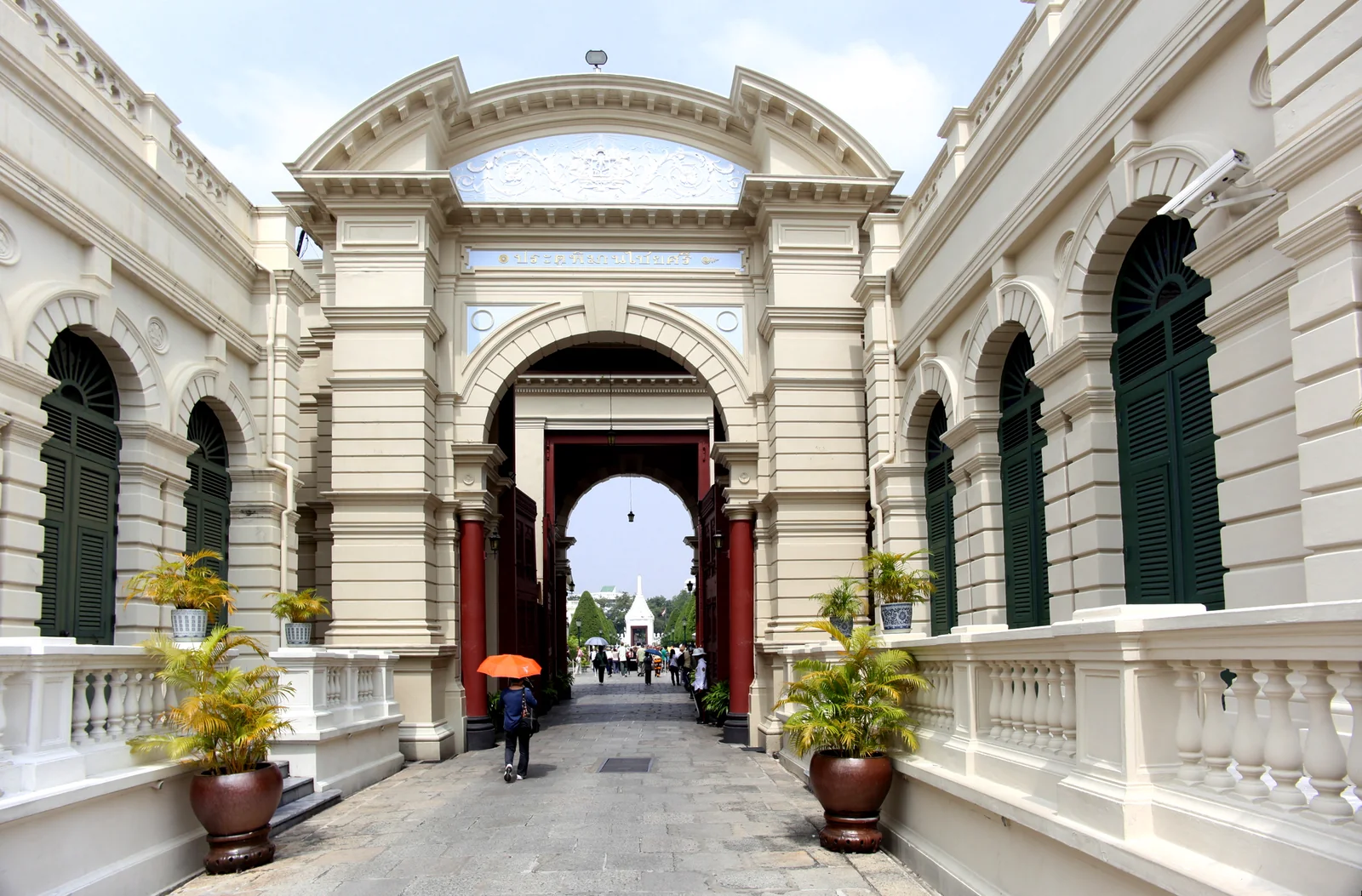
Every Bangkok temple requires the same baseline: shoulders covered, knees covered, shoes removed before entering any building with a Buddha image, and no pointing your feet at the statue when seated. The Grand Palace and Wat Phra Kaew enforce dress most strictly with a sarong rental booth at the entrance. The smaller temples (Wat Mahathat, Wat Saranrom, Wat Ratchanatdaram) rely on monks at the gate to redirect inappropriately dressed visitors, which usually means a polite refusal rather than a sarong rental.
Photography rules are stricter than visitors expect. Flash is banned inside every viharn and ubosot (ordination hall). Tripods are banned inside the Grand Palace compound. No photographs of the Emerald Buddha are allowed from inside Wat Phra Kaew’s main hall, although the exterior architecture is fair. Standing with your back to a Buddha image for a selfie is a serious offense and gets visitors removed at the Grand Palace.
Women may not touch a monk or hand anything directly to a monk. The standard workaround is a cloth on a table between you and the monk, or the monk’s lay attendant accepting the item on his behalf. Most monks at the headline temples speak enough English to redirect tourists who break this rule, but the smaller temples assume visitors know.
The “no pointing your feet at the Buddha” rule is real, but tour group floors are wide enough that most visitors never have to actively pose. The rule that matters more in practice: do not climb on Buddha statues for photographs. Bangkok police arrested four foreign tourists between 2023 and 2025 for climbing on Wat Arun’s prang ledge and the Wat Pho Reclining Buddha’s foot soles. The fine is 50,000 THB ($1,420) plus possible deportation.
Where to stay near the temple walks
The temple walks all sit within a 2 kilometer radius of the river. Three SHA-certified hotels cover the practical price range from premium to mid range without compromising on the Rattanakosin walk’s start point. For the full list, see our guide on where to stay in Bangkok.
 SHA EXTRA PLUS
★ 9.2
SHA EXTRA PLUS
★ 9.2
The Peninsula Bangkok
Forbes Travel Guide 5-Star on the west bank of the Chao Phraya. 367 rooms in a W-shaped tower where every key looks at the river. Old-money quiet, three-tier pool, the colonial-style Peninsula Spa across three floors.
 SHA CERTIFIED
★ 8.7
SHA CERTIFIED
★ 8.7
Amara Bangkok Hotel
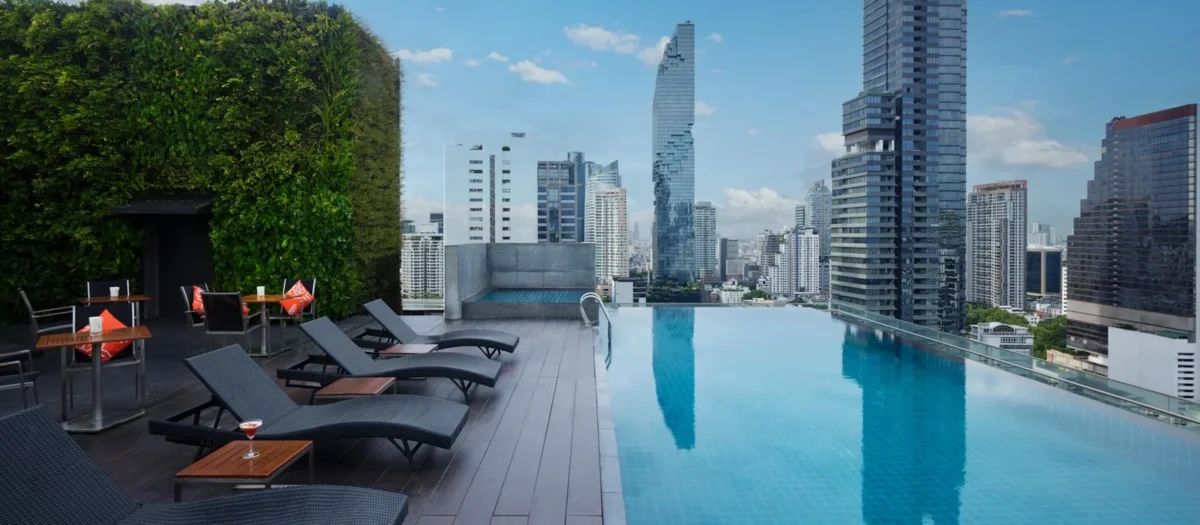
Amara is the design-conscious budget pick in central Bangkok. The hotel sits two minutes from Saint Louis BTS on a quiet stretch of Sathorn, with the Silom Soi 4 nightlife corridor 8 minutes east on foot. Rates start around $94 per night for a standard room, which is the lowest sub-$100 four-star option on this list. For travelers who want a real BTS-connected hotel rather than a hostel with a pretty website, this is the price floor.
The rooftop pool is on the 27th floor with a panoramic city view, smaller than at Eastin but the view is comparable. Rooms are deliberately compact (the standard is 28 sqm, ten sqm smaller than Eastin), so what you save in price you give up in floor space. The bathroom is open-plan with a glass shower wall, which photographs well but means you'll see the bathroom from the bed at all times. Book a different hotel if that bothers you.
Breakfast is included in most rate plans and runs the standard four-star spread. Service at check-in tends to be quick rather than warm. Skip Amara if you want spacious rooms or polished service. Book it if you want a clean, modern, sub-$100 city hotel with good BTS access.
 SHA EXTRA PLUS
★ 9.0
SHA EXTRA PLUS
★ 9.0
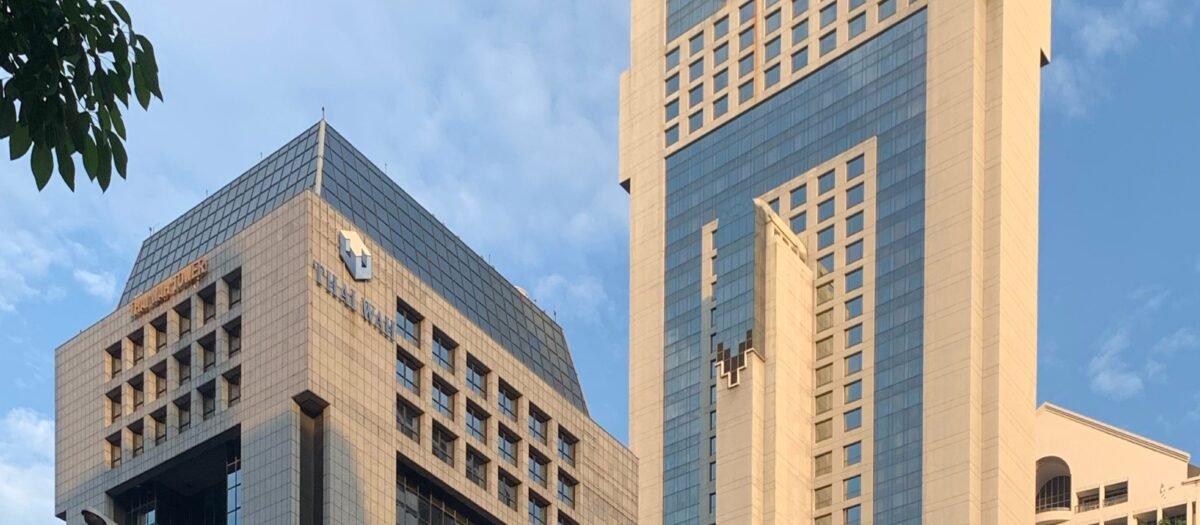
Banyan Tree Bangkok
Sathorn tower with one of Bangkok original sky bars on the 61st floor. 327 keys, Vertigo + Moon Bar rooftop circuit, Banyan Tree Spa pavilion, MRT Lumphini walking distance.
Practicalities and what to book before you arrive
Suvarnabhumi (BKK) and Don Mueang (DMK) are the two Bangkok airports. The Airport Rail Link runs from BKK to Phaya Thai BTS in 26 minutes for 45 THB ($1.30), but the link does not reach Rattanakosin directly. The practical route is BKK to Sanam Chai MRT via Makkasan-to-Phetchaburi transfer in 50 minutes, or a private transfer in 35 minutes.
- Airport transfer to Sanam Chai or Khao San from 800 THB ($23) for a sedan
- Compare flights to Bangkok from regional hubs
- Travel insurance for the trip covering the temple climbs and the 318-step Golden Mount
- Guided temple walking tours from a Rattanakosin pickup point
Cross-reference the best time to visit Thailand guide for the temple season calendar, and the Bangkok scams guide for the tuk-tuk-detour to a tailor scheme that most often targets first trip temple visitors at the Wat Pho exit.
Frequently asked questions about Bangkok temples
What is the most important temple in Bangkok?
How much does it cost to visit Bangkok temples?
What should you wear to visit a temple in Bangkok?
How many temples should you visit in Bangkok?
What time do Bangkok temples open?
Can you visit Wat Phra Kaew and Wat Pho on the same day?
Which is better Wat Arun or Wat Pho?
For travelers with families, see our Thailand with kids guide for the under-12 free entry policy at Wat Phra Kaew and stroller routing through the Rattanakosin walk. For visa logistics before the trip, see our Thailand visa guide. For the SHA review method, see how we review. To frame the temple days inside a full trip, see our Thailand itinerary guide.