Suvarnabhumi arrivals at 11pm. A traveler steps past the rope. The taxi tout opens with “very fast, very cheap” and quotes a number that is neither. The metered cab next to the kiosk runs about $12 to Sukhumvit Soi 11. The Airport Rail Link to Phaya Thai with one MRT change clears the same trip for under two dollars.
That gap is the shape of every cost decision in Thailand. Backpacker or honeymooner, the daily total is set by half a dozen of these moments. Get them right and Thailand is the cheapest serious travel country in Asia. Get them wrong and the budget runs at twice the brochure number. Use this guide if you want a real daily number to plan against, not a vibe. If you only need a rough ballpark, the three tier totals below are enough on their own.
This guide breaks down what Thailand actually costs in June 2026 across three honest tiers, then tracks how each tier shifts between Bangkok, Chiang Mai, the Andaman beaches, and the Gulf islands. We anchor every line item to a specific 2026 number, in USD with the local THB equivalent where the local currency is the natural unit. Verify high season hotel rates against current online quotes in the week before you book. The December to February peak swings island rooms 30 to 70 percent above the off season floor.
 Photographer: Marcin Konsek. Source: Wikimedia Commons. License: CC BY-SA 4.0.
The three honest tiers, to 0 a day
We use three round numbers travelers actually budget against. They are the floor, the median, and the comfortable ceiling, all in 2026 USD per person, per day.
- Budget tier, $30 per day. Hostel dorm, three street meals, BTS plus longtail, two beers, one cheap attraction. Holds in Bangkok and Chiang Mai. Breaks on the islands.
- Mid tier, $90 per day. Private double room with breakfast, two restaurant meals plus one street meal, Grab and a metered tuk tuk, one paid attraction. The honest 2026 number for most first time travelers.
- Luxury tier, $300 to $450 per day. Five star hotel room with breakfast supplement, fine dining once a day, private transfers, spa. Wider band than the lower tiers, because the gap between branded luxury Six Senses and boutique luxury Raya Heritage is real.
Every tier shifts by region. Bangkok and Chiang Mai sit at the floor of each band. Phuket, Koh Samui, and Koh Phi Phi push the floor up 30 to 50 percent during high season (mid December to mid February). A couple traveling for two weeks in May will land closer to $80 per person per day at the mid tier. The same couple in late December will land closer to $130. We flag the swing in every section below.
Budget tier ( per day) and where it breaks
The 2014 internet backpacker number (“Thailand on $20 a day”) is dead. The honest 2026 floor sits at $30 across Bangkok and Chiang Mai. The breakdown for a long stay traveler not chasing experiences hour by hour:
- Hostel dorm bed in Bangkok or Chiang Mai: $7 to $9 per night.
- Three street meals (pad krapao, khao man gai, fruit): $8 to $10 per day.
- Local transport (BTS, MRT, longtail, songthaew): $3 to $5 per day.
- Two domestic beers or two iced coffees: $4 to $5.
- One temple entry, laundry, or attraction: $3 to $5.
The same $30 day breaks the moment a traveler moves south to Phuket, west to Koh Phi Phi, or east to Koh Tao. Patong dorm beds run $14 in low season and the beer prices climb in step.
A beer at a Phi Phi beach bar quotes about $4.50, roughly double the Bangkok hostel rate. The math is the same on Koh Tao and on the southern Andaman beaches.
The real backpacker budget for a 3 week mixed trip with islands averages closer to $40 per person per day. A 4 week trip that includes Koh Phi Phi or Koh Tao should be planned at $45.
Two budget tier traps to budget against from day one. The Bangkok to Chiang Mai overnight sleeper train often costs more than a midweek Nok Air flight that arrives the same day. The train is worth taking when the goal is a hotel bed night saved on the route, not the lowest cost.
And the Suvarnabhumi airport SIM card counter doubles the price of the same AIS Traveller package available at any 7-Eleven downtown. The walk to the closest convenience store at arrivals saves about $8 on a 30 day SIM.
 Photographer: User:Diliff. Source: Wikimedia Commons. License: CC BY-SA 3.0.
The Suvarnabhumi airport SIM card counter charges $15 to $18 for the same AIS 30-day 30 GB tourist package that costs $10 at any 7-Eleven downtown. Walk to the nearest convenience store inside arrivals and save $8 on day one.
Mid tier ( per day) for most first time travelers
The mid tier honest 2026 daily total runs about $90 per person and covers the trip most first time visitors actually take. A private double room with hot water and breakfast. Two restaurant meals plus one street meal. Grab between neighborhoods. One paid attraction per day. The breakdown:
- Private double room with breakfast (three star Bangkok central, Chiang Mai Old City, Phuket Town): $55 per night, $27.50 per person on a twin share.
- Two restaurant meals plus one street meal: $20 per person.
- Grab and a metered tuk tuk: $7 per person.
- One paid attraction (Grand Palace, Doi Suthep, Wat Phra Kaew, museum, cooking class taster): $8 per person.
- One drink and one snack: $5 per person.
- Buffer for the night market browse, the unplanned massage, the ferry surcharge: $7 per person.
High season swings the room cost hardest. The same Phuket Town private double:
- June through October: $55 per night.
- Christmas through Chinese New Year: $90 to $135 per night.
- Chaweng Beach three star in low season: $75 per night.
- Chaweng Beach three star at peak: $125 per night.
The mid tier budget for a 10 day December trip on the islands should be planned at $115 per person per day, not $90.
Two mid tier traps. A hotel room that lists “breakfast included” sometimes charges a $30 to $35 supplement per person at the buffet, which is a common surprise on Phuket and Koh Samui resorts. Clarify with the property before booking.
The supplement gap compounds fast across a 7 night stay for two, often $250 or more, which is enough to upgrade an entire room category at most three star hotels.
And the Bangkok central versus Sukhumvit Soi 11 versus Thonglor decision moves the same mid tier hotel rate $20 a night. The same dinner moves $25 per person across those three areas without any change in the actual quality of either the room or the food.
The Bangkok central versus Sukhumvit Soi 11 versus Thonglor pricing gap is real and invisible on maps. The same 3-star private double room moves about $20 per night across those three areas. The same dinner moves $25 per person. Staying in Ari or On Nut instead of Soi 11 is the mid-tier move most first-time visitors miss.
Luxury tier and what it actually buys
Luxury Thailand sits at $300 to $450 per person per day and has the widest band of the three tiers. Branded luxury (the Six Senses Yao Noi villa) and boutique luxury (the Raya Heritage Chiang Mai suite) read very differently on the same line item. The honest breakdown for a smart luxury day:
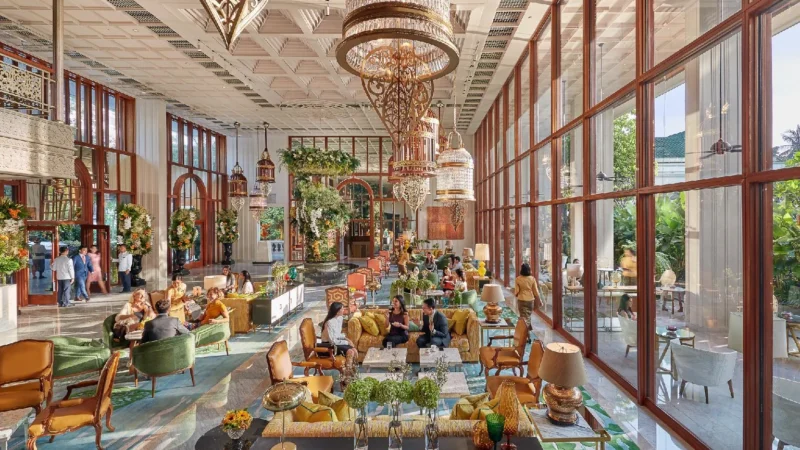
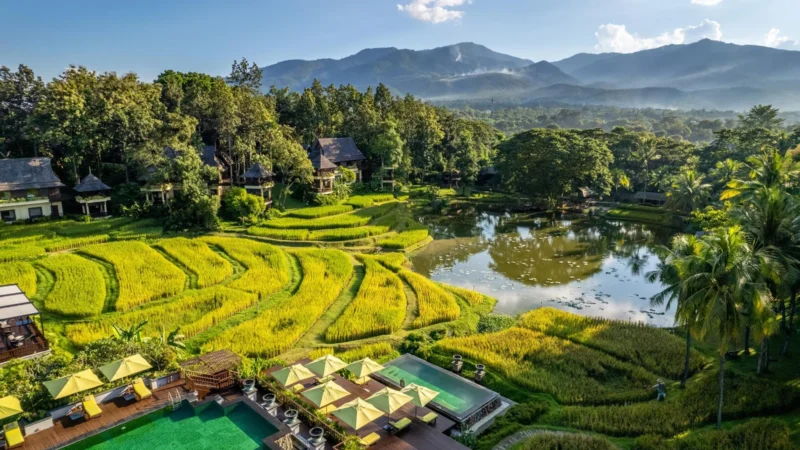
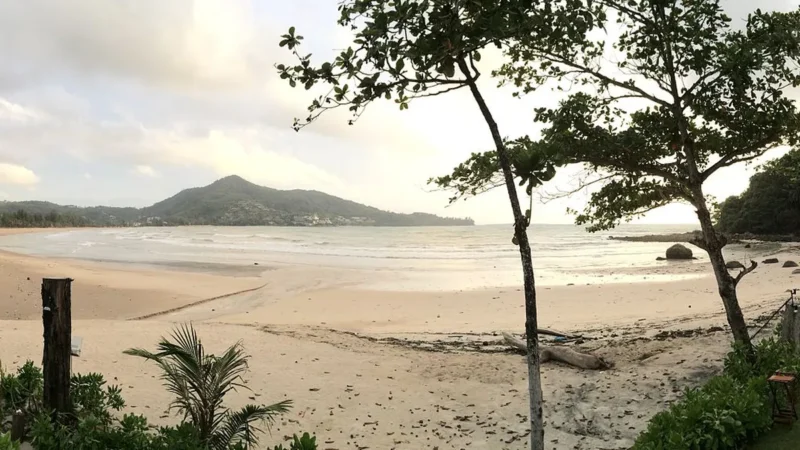
- Five star city or beachfront room (Mandarin Oriental Bangkok river view, InterContinental Phuket Kamala, Four Seasons Chiang Mai Mae Rim): $260 to $400 per night base.
- Breakfast supplement when not bundled: $35 per person at the buffet.
- Fine dining tasting menu (Le Normandie, Sorn, Pru, Sühring): $120 to $260 per person.
- Private airport transfer in a hotel car: $65 per leg.
- Spa hour or sunset cocktail: $40 to $90.
The smart 10 day luxury budget mixes one signature property with two boutique alternatives rather than running the high band for the whole trip. A sample arc opens with three nights at the Mandarin Oriental Bangkok at the river view rate. It pivots to four nights at a boutique Chiang Mai property, then closes with three nights at the InterContinental Phuket Kamala.
That arc lands at about $4,800 in hotels across 10 nights, or roughly $480 per night averaged. We treat that as the honest median of a luxury Thailand trip.
Where luxury Thailand breaks tradition. Five star hotel breakfast supplements at the Phuket and Koh Samui resorts often run $35 per person, which the Mandarin Oriental Bangkok already bundles in the river view rate.
A private boat to Phi Phi from Phuket runs about $1,200 for the day versus $25 for the Lomprayah ferry, which is the line item where luxury Thailand stops feeling like a rounding error.
The Bangkok Airways Samui flight as the only operator on that route is the fixed cost for travelers prioritising a same day arrival. The Surat Thani plus ferry alternative adds 6 to 8 hours but cuts the spend by about half.
Food is the cheapest line item at every tier
Of every category in a Thailand budget, food is the one that surprises travelers in the right direction. Street food and food court meals run $1.50 to $3.50 per plate across Bangkok, Chiang Mai, and the islands.
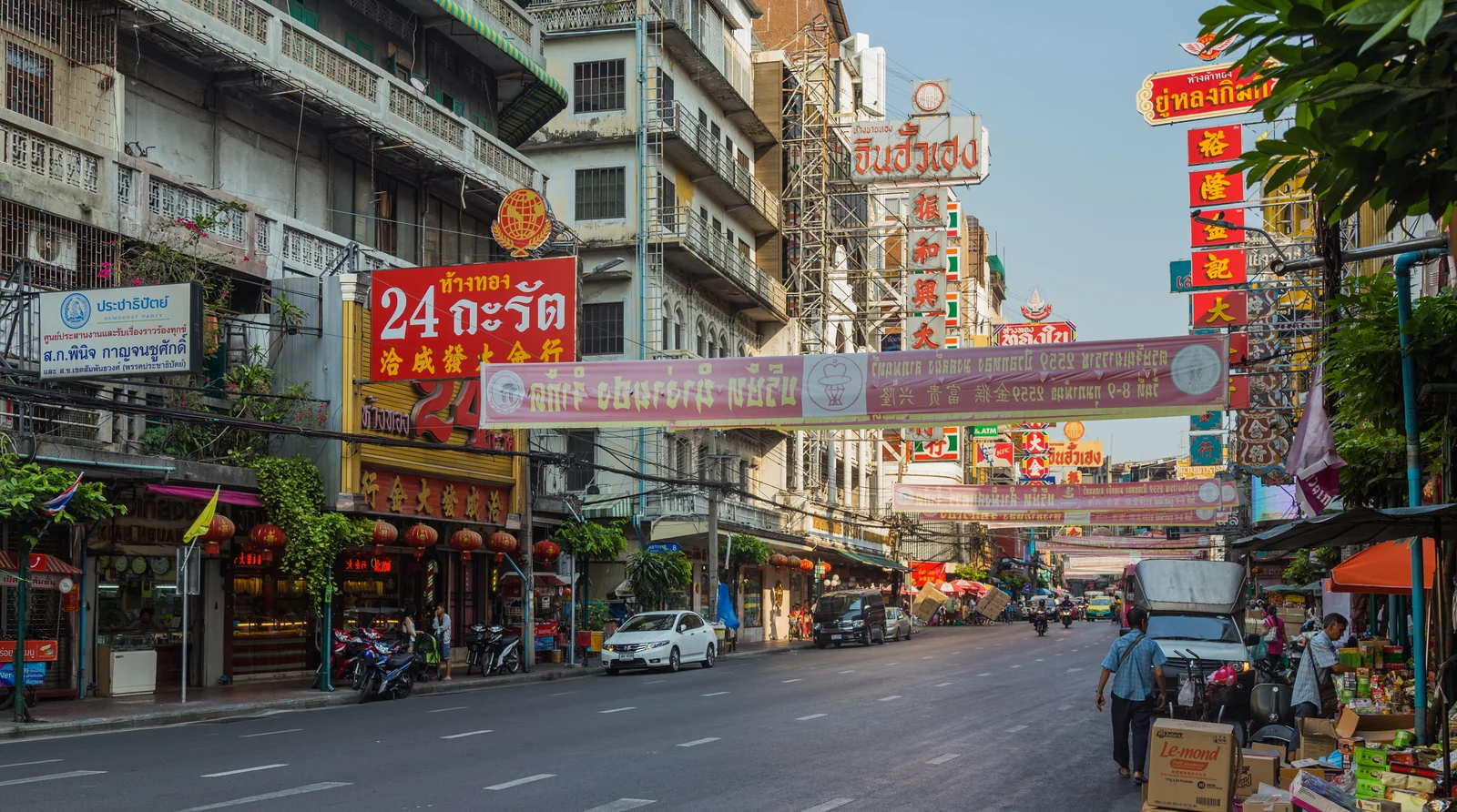
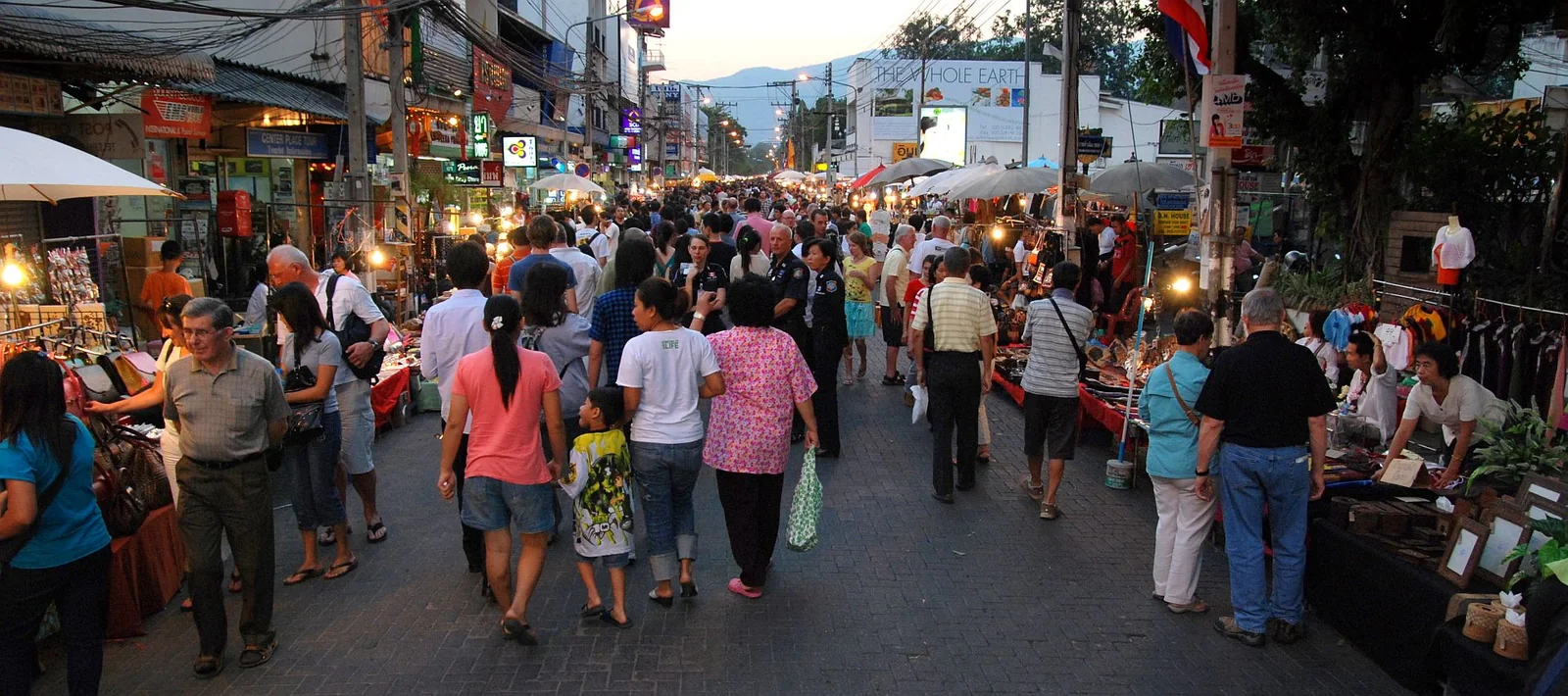
The Yaowarat noodle stalls and Or Tor Kor cooked food hall both sit inside that range. Chiang Mai’s Sunday Walking Street drops further, to about $2 a plate, for a khao soi a restaurant with table service charges much more for.
The price doubles the moment a traveler walks into a tourist zone. The same pad krapao that costs $2.50 at a Bang Rak hawker stall runs three times as much at Khao San Road and Patong Beach restaurants, with thinner egg and a smaller portion.
The rule of thumb that holds across every Thai city is simple. Walk one block off the tourist street and the price halves.
 Photographer: Takeaway. Source: Wikimedia Commons. License: CC BY-SA 4.0.
Mid tier restaurants with table service for two people, with a shared appetiser, two mains, two beers, and rice, follow a clear regional shape:
- Bangkok central or Old Town: $20 to $35 for two.
- Chiang Mai Old City or Nimman: $18 to $28 for two.
- Phuket and Koh Samui tourist zones: $30 to $55 for two.
- Bangkok Thonglor or Sukhumvit Soi 11 expat zone: $45 to $75 for two.
- Rooftop fine dining at Vertigo, Sirocco, or Sühring: $80 to $260 per person before drinks.
The honest food budget for a 14 day mixed trip at the mid tier sits at $20 per person per day. That covers two restaurant meals and one street meal.
Couples wanting one nice dinner per day at $50 for two add another $25 to the daily. Travelers eating entirely off the street can hold their food spend much lower without losing meal quality, because the street is where Thais eat too.
The 7-Eleven hot food counter (pad krapao bento, iced coffee, water) clears a working lunch for about $5 in any Thai city. Handy for travel days when the schedule is tight.
The 7-Eleven hot food counter (pad krapao bento, iced coffee, water) clears a full working lunch for about $5 at any Thai city branch. It is genuinely what Thais eat on busy workdays, not a tourist compromise.
Domestic flights, trains, and the night train math
Inter-city transport is where most budget plans actually break. The romance of the Bangkok to Chiang Mai sleeper train hides the math. The carriage tiers, all on the current sleeper schedule:
- 2nd-class fan upper berth on Train 9, 13, or 51: $30 to $50.
- 1st-class private cabin: $75 to $95.
- Journey length: about 13 hours, arriving 7am the next morning.
A midweek Bangkok to Chiang Mai LCC flight during a Tuesday in May quotes $25 and arrives the same day. The train wins only when the goal is a hotel bed night saved on the route, not the absolute lowest cost. Our full Bangkok to Chiang Mai train guide covers the breakdown carriage by carriage.
Domestic flight pricing across AirAsia, Nok Air, Thai Lion, Thai Vietjet, Thai Smile, and Bangkok Airways swings hard by season and route. The headline numbers for 2026:
- Bangkok to Chiang Mai LCC: $25 to $55 in June, $55 to $110 in December.
- Bangkok to Phuket LCC: $35 to $70 off peak, up to $120 in high season.
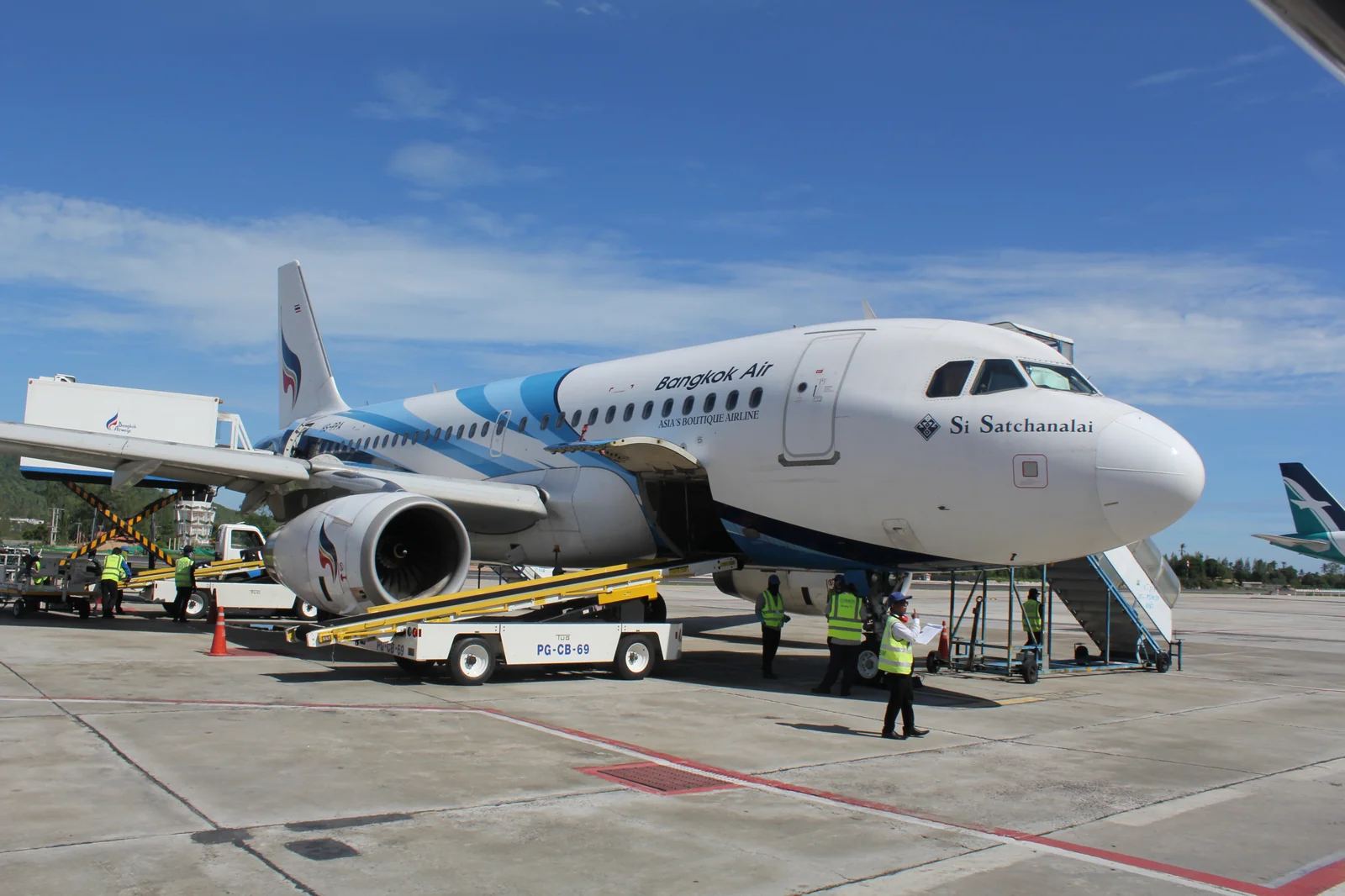
- Bangkok to Koh Samui (Bangkok Airways monopoly, no LCC flies USM): $120 to $200 one way year round.
- Bangkok to Krabi LCC: $40 to $85 off peak, $90 to $150 high season.
- Hong Kong to Bangkok (Cathay, HK Express, Thai): $120 to $260 round trip.
The Surat Thani plus Lomprayah ferry combo to Koh Samui at $42 total is the real alternative to the Bangkok Airways monopoly fare on that route. It costs an extra 6 to 8 hours and runs overnight from Bangkok Khao San Road and Sai Tai Mai bus terminal. The savings work out to about $80 per person each way on a trip for two people. Our full comparison of the Bangkok to Koh Samui options covers the trade off honestly.
 Photographer: D.G. Bouma. Source: Wikimedia Commons. License: CC BY-SA 4.0.
Bangkok ground transport and the airport taxi scam
Suvarnabhumi to Sukhumvit Soi 11 on the metered taxi from the official kiosk lands at about 330 to 380 THB ($9 to $11). That price includes the expressway tolls and the $2 airport surcharge.
The same ride quoted by the airport touts who fold the tolls into one price at the arrivals exit costs $30 to $45. The kiosk is at the basement level, marked Public Taxi, and the queue moves in under 10 minutes outside peak arrival waves.
The Skytrain and MRT cost less and run faster when they work:
- BTS Skytrain: 16 to 62 THB ($0.45 to $1.80) per ride. Air conditioned, fast, stops running at midnight.
- MRT: $1 to $2 per ride. Covers the Old Town and Chinatown that the BTS does not.
- Both systems integrate at Asok, Phaya Thai, Bang Sue, and Si Lom.
Our full BTS guide covers the math station by station. The pattern that holds: the train wins whenever the destination is within walking distance of a station, which is most of central Bangkok.
Grab is the ride hailing default for cross-Bangkok hops outside the BTS network. A Grab from Sukhumvit to the Old Town runs $3.50 to $5 at off peak hours.
The same ride costs $7 to $9 during the 5pm to 7pm Bangkok traffic wall. Tuk-tuks charge by negotiation, with an honest tourist rate of $3 to $6 for any short hop inside the Old Town. Never the $15 the driver opens with.
Island ferries and the high season contingency
Island ferries are the line items most travelers underbudget. A few honest 2026 numbers:
- Phuket to Koh Phi Phi via Lomprayah: about $25 one way.
- Surat Thani to Koh Samui via Lomprayah: about $26 one way.
- Krabi to Koh Lanta morning car ferry: $9 to $14 plus a minibus connection.
- Private speedboat charter from Ao Nang to a Hong Islands kayak loop: $65 to $85 split four ways.
The gotcha is the high season schedule, which often forces a two leg combination the dry season map shows as a direct ferry. A 2026 February island route from Phuket to Koh Lipe needs a speedboat to Krabi, then a bus to Trang, then a ferry to Koh Lipe, for a journey the off season map labels one direct boat. Verify current ferry schedules before booking. Add a 25 percent contingency to the ferry line of any high season Thailand budget.
Two ferry traps to watch. A booked 8am Phuket to Koh Phi Phi crossing may actually depart Rassada Pier at 8:30am after the hotel pickup runs from Patong at 6:45am. That is a real 75 minutes of waiting in a hotel lobby and another 30 in the van.
And the seat upgrade from economy to VIP on the Surat Thani sleeper ferry to Koh Tao adds about $10 and earns a bunk of 1.5 meters versus the 1.2 meter economy bunk. That difference is the line between sleep and not on a 6 hour overnight crossing.
Verify island ferry schedules the week before travel, not three months out. The dry season and high season timetables are different products. A route the April booking page shows as one direct boat may run as a two-leg combination by the time December arrives. Add a 25 percent contingency to any island ferry budget line.
Regional cost swing across the four main bases
The same day costs more in Phuket Patong than in Chiang Mai Old City, by a wide margin. The mid tier daily total at $90 in Chiang Mai and Bangkok climbs noticeably on the islands.
The luxury tier $300 floor in Chiang Mai climbs to $400 on the Andaman beaches in high season. The honest per region read:
- Chiang Mai. The cheapest base. Backpacker $25 per day. Mid tier $75. Luxury $260 to $400. Cooking class side budget adds $30 to $50 per class. Songkran (April 13-15) is the one week the city prices crowd up like an island.
- Bangkok. Budget $30. Mid tier $85. Luxury $400 to $815 with the river view luxury hotels at the top. Sukhumvit area pricing adds about $20 per night on hotels and $15 per dinner.
- Phuket. Budget $40. Mid tier $115 in high season. Luxury $290 to $1,090 depending on Yao Noi versus Kamala. Patong is the most expensive Phuket area and the least pleasant one.
- Koh Samui. Budget $40 because the cheapest hostel options are thin. Mid tier $115 in high season. Luxury $345 to $1,090. Bophut and Maenam read quieter than Chaweng for the same nightly rate.
Two regional rules the cost tables do not show. Bangkok is the cheapest city for the world’s top end fine dining relative to a five star New York or London experience. A Sühring or Le Normandie tasting menu lands about half what the equivalent costs in Hong Kong.
And Chiang Mai is the cheapest base for travelers staying 14 days or longer. The monthly serviced apartment market drops the nightly rate to $25 to $40 for stays over 21 nights.
A digital nomad working remotely from Nimman can hold the monthly cost all in under $1,200 across rent, food, transport, and a co-working membership. That is the line item that pulled most of the early DTV applicants into Chiang Mai through 2024 and 2025.
Fixed costs before the trip nobody budgets for
The line items most travelers forget come in three categories. Connectivity, documents, and insurance. The 2026 numbers:
- AIS or TrueMove tourist SIM, 30 days, 30 GB: $10 at any 7-Eleven, $15 to $18 at the Suvarnabhumi counter. Our eSIM versus physical SIM comparison covers the Airalo and AIS Traveller options for travelers who want the SIM ready before landing.
- e-Visa (only if visa exemption does not apply): $40 to $50 per applicant. Most Western, ASEAN, and East Asian passport holders use the free 60 day visa exemption instead. Our full Thailand visa guide covers the exemption list and the e-Visa path for nationalities outside it.
- TDAC (Thailand Digital Arrival Card): free. Filed online at tdac.immigration.go.th within 72 hours of arrival. Required for every foreign national.
- Travel insurance (14 days, 2 adults): $30 to $55. Coverage for Thailand starts at about $1.20 USD per day, including medical evacuation that matters more than the fine print until the moment it doesn’t.
- Recommended cash floor at immigration: $598 per traveler ($560), $1,196 per family. Immigration occasionally asks. Carry it in mixed THB and USD denominations.
- Tourist visa extension at any Thai immigration office: 1,900 THB ($54) for an extra 30 days.
The total for a couple traveling 14 days before the trip even starts, using the visa exemption, comes to about $85 to $120 in fixed costs before any hotel or food spend. Build that into the trip budget at the planning stage, not the day of arrival.
ATMs in Thailand charge a $7 foreign card fee per withdrawal regardless of amount. Withdraw $299 at a time rather than 3,000. Three withdrawals over a week at $90 each costs $20 in bank fees. One $299 withdrawal costs $7. The math is simple and most travelers miss it on day one.
Sample budgets for one week, two weeks, and one month
Three honest sample budgets, all in 2026 USD, all assuming a June to October low season trip. Add 30 percent for late December to mid February.
- 1 week in Bangkok plus Chiang Mai, backpacker (1 person). 7 nights hostel $60. 7 days food $75. Local transport $30. One BKK to CNX flight $35. Two paid attractions $16. SIM and insurance $40. Total about $256 per person. Plan against $300 to absorb impulse spend.
- 2 weeks in Bangkok plus Phuket plus Koh Samui, mid tier (couple). 14 nights mid range hotels $1,400 for two. Food at the mid tier $560 for two. Domestic flights and ferries $240 for two. Six paid activities and tours $300 for two. Grab and tuk tuks $140. Insurance and SIM $90. Total about $2,730 for the couple. Plan against $3,200 to absorb high season swings.
- 1 month in Chiang Mai plus Krabi plus Bangkok, luxury solo. 30 nights luxury hotels averaged across boutique and branded $9,600. Mixed fine dining and good Thai food $1,800. Domestic flights and a Phi Phi day tour $420. Spa and tours $800. Private transfers and Grab $350. Insurance, SIM, visa fees $150. Total about $13,120. Plan against $14,500 to absorb a couple of upgrades.
The pattern across all three honest budgets is consistent. Hotels are the single biggest line item. Food is the smallest as a share of total. The gap between the off season floor and the high season ceiling on the islands is what makes Thailand feel either cheaper or more expensive than the brochure quoted. Our season by season guide covers when each region is at its cheapest.
Where to stay across the three tiers
Once the budget shape is set, the hotel choice is the single decision that locks in 40 to 60 percent of the daily total. A few starting points across the country at the mid and luxury tiers, all SHA-certified.
 SHA Extra Plus
★ 9.1
SHA Extra Plus
★ 9.1
Mandarin Oriental Bangkok
 SHA Extra Plus
★ 9.2
SHA Extra Plus
★ 9.2
Four Seasons Resort Chiang Mai
 SHA Plus
★ 9.1
SHA Plus
★ 9.1
InterContinental Phuket Resort By IHG
For deeper city-by-city coverage, see our Bangkok hotel roundup, Phuket hotel roundup, Chiang Mai hotel roundup, Koh Samui hotel roundup, and Krabi hotel roundup. For first-trip planning, our 3 Days in Bangkok, 3 Days in Phuket, and 3 Days in Koh Samui guides cover the first time essentials per city.
Two non-hotel notes before you book. Most hotels file the legally required TM30 accommodation address registration on your behalf within 24 hours of check-in. Private rentals through Airbnb often skip this and can complicate a future visa extension if you stay long enough to need one. And inter-city transport between bases often costs more than the night you saved at the hostel, so plan the route before locking the cheapest sleep.